
Doune Castle
Castle In Stirling, Scotland
A famous 14th century castle popular as a filming location, including Monty Python and Outlander.
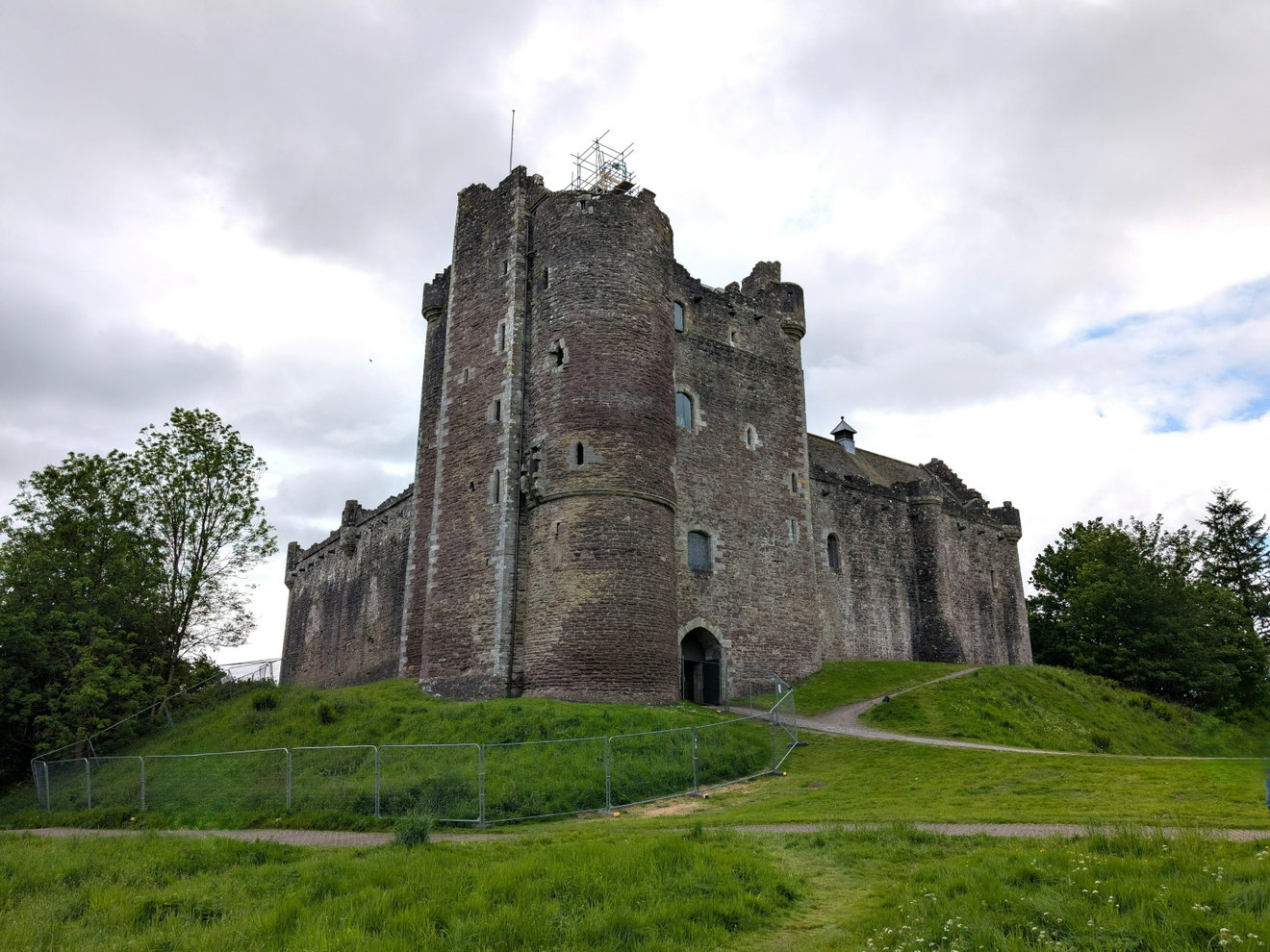
Doune Castle may well look familiar; that is because it has featured on our TV screens. It has been used as a filming location for Ivanhoe in 1952, Monty Python and the Holy Grail in 1975, Game of Thrones from 2011, Outlander from 2014, Outlaw King in 2018, and Mary and George in 2024.
What's more, when you visit the castle you get to listen to a rather amusing audio tour which is narrated by Terry Jones, one of the creators of Monty Python.
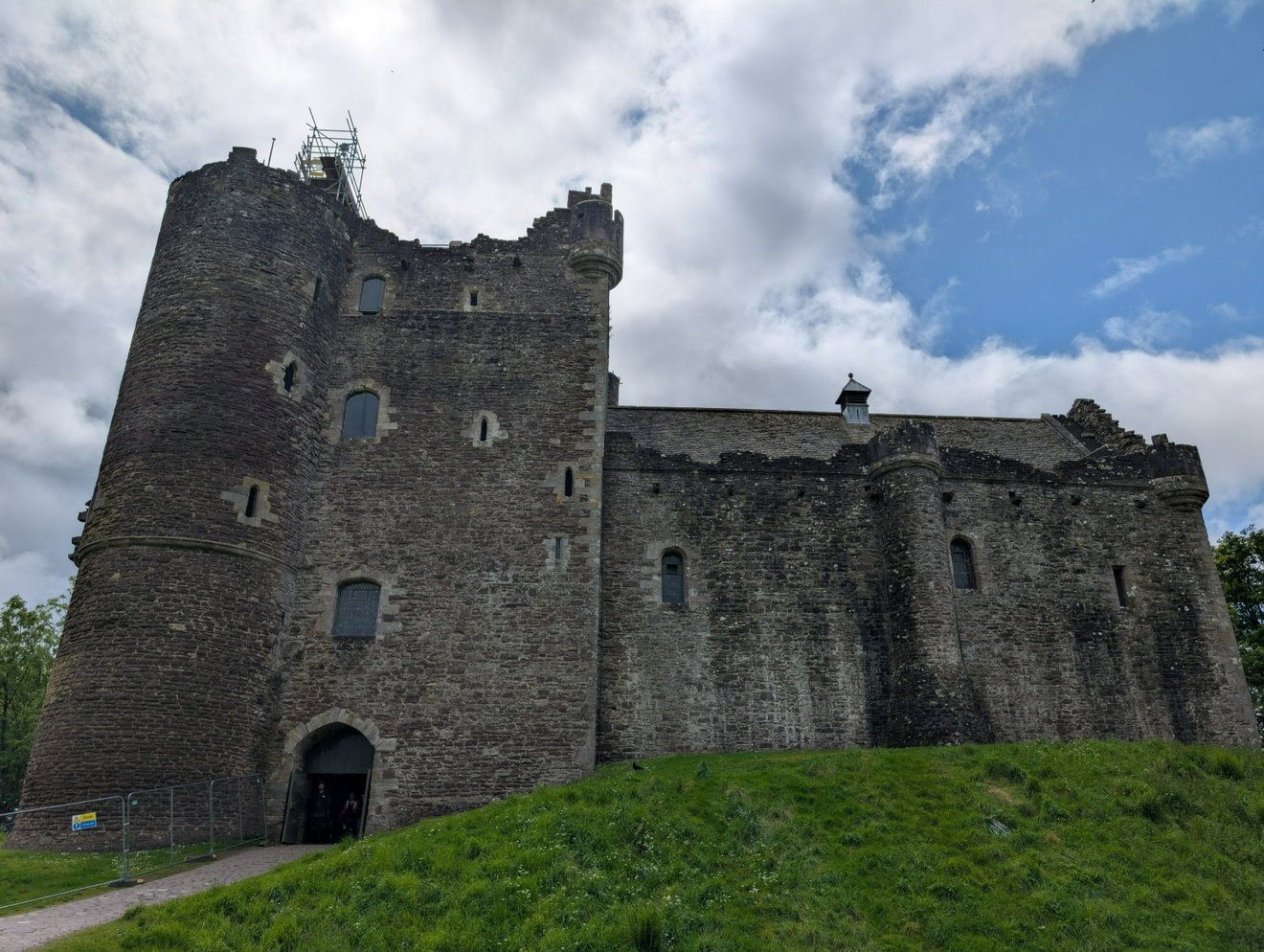
Before we enter the castle, let's start with a little bit of history on this substantial fortress. Robert Stewart, the 1st Duke of Albany, acquired the castle when he married Margaret Graham, the Countess of Menteith in 1361. The castle was built by Albany around 1400, on the site of an earlier castle. Albany would go on to become the Governor of Scotland.
In 1406, Albany ended up ruling Scotland when his brother Robert III died, and his nephew James I of Scotland was captured and held prisoner by the English. He would continue to rule until his death in 1420.
Doune then passed to Albany's son Murdoch, who came to a sticky end in 1424 at the hands of his cousin, James I. James and the future monarchs went on to use the castle as a hunting lodge and royal retreat, until in 1603 when James VI went to London to become James I of England.
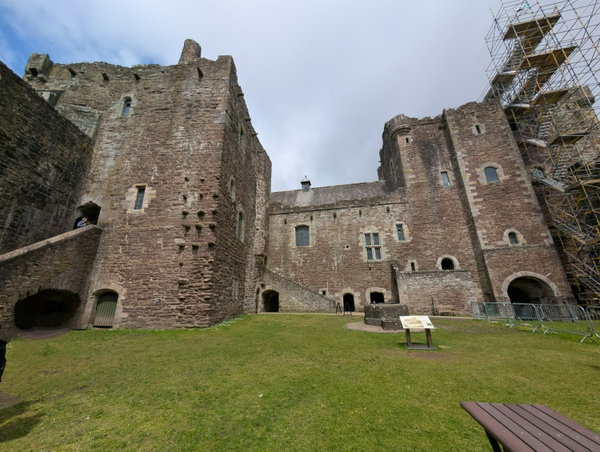
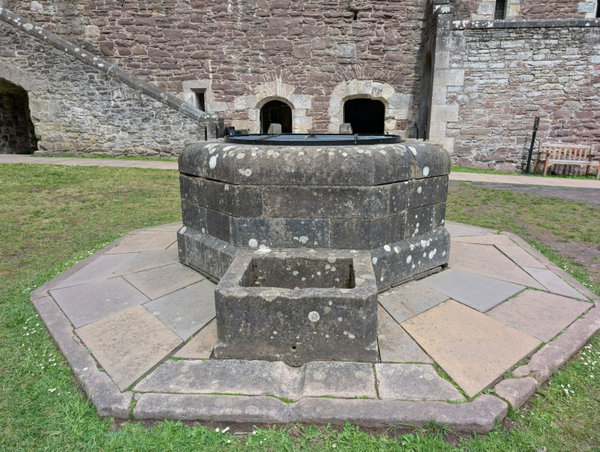
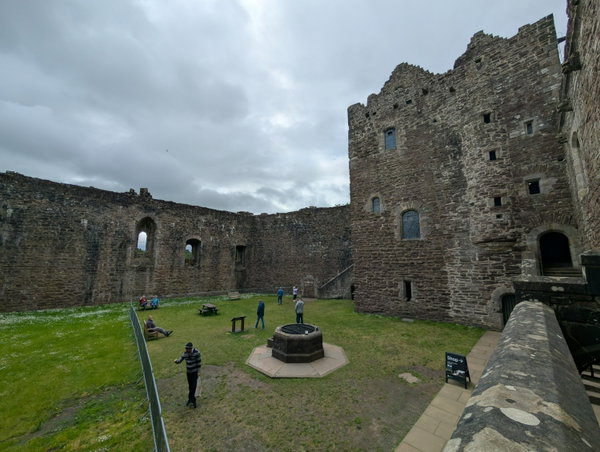
Time to enter the castle. Once inside, you will spot the large well in the middle of the courtyard and buildings along the north and north-west walls.
The castle has two towers. The one in the north-west corner contains the kitchen and guest accommodation, and the north-east tower contains the Duke's accommodation. The towers are joined by a building containing the Great Hall.
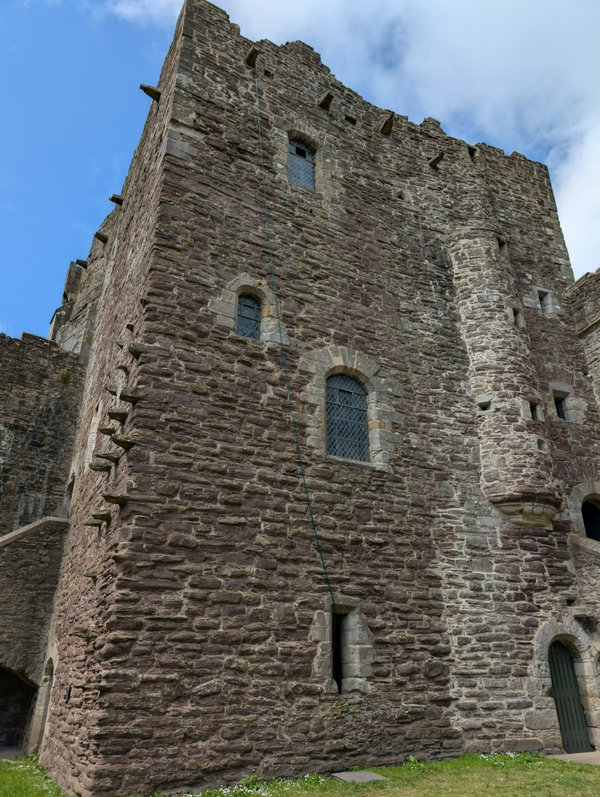
Let's start in the north-west tower. The ground level of the tower contains cellars that were used for storage.
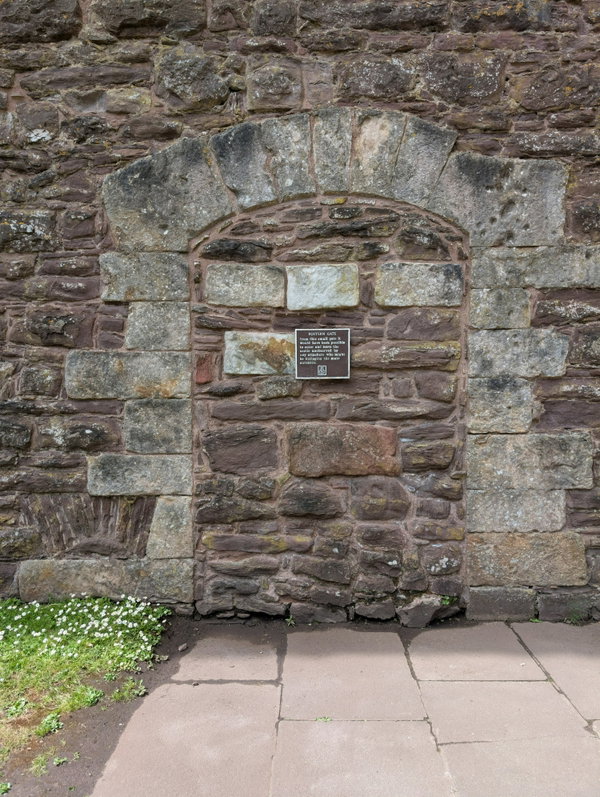
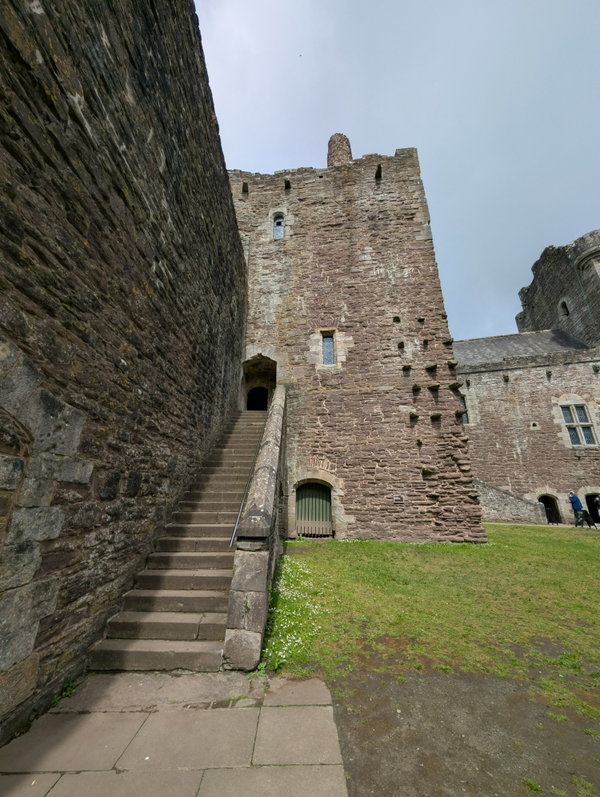
Before heading up the steps to the first floor, notice the blocked up Postern Gate on the west wall. This was an additional entrance to the castle which was used as a back gate.
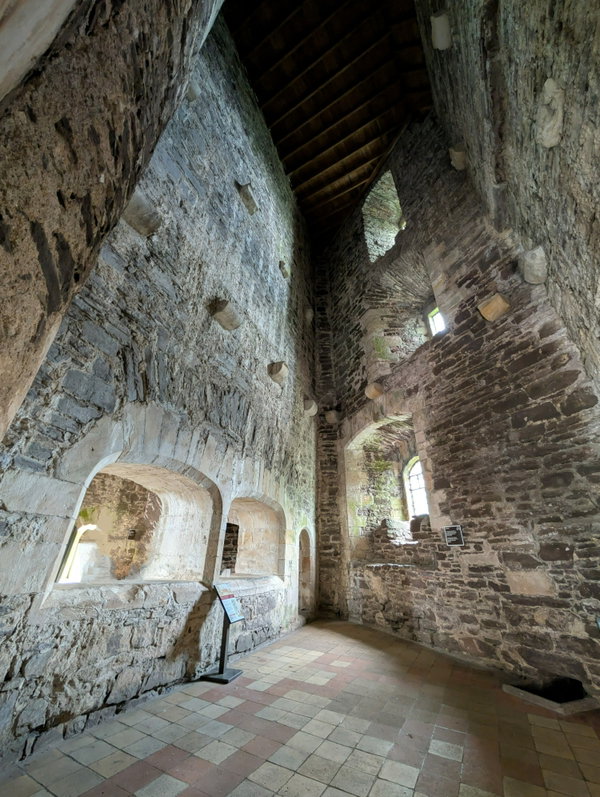
Once up the steps, you enter a huge space containing two large serving hatches. The servery is where the prepared food would be placed from the kitchen and taken to the neighbouring Great Hall.
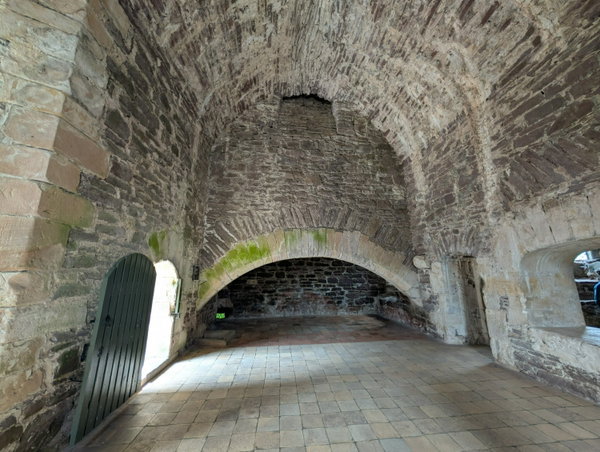
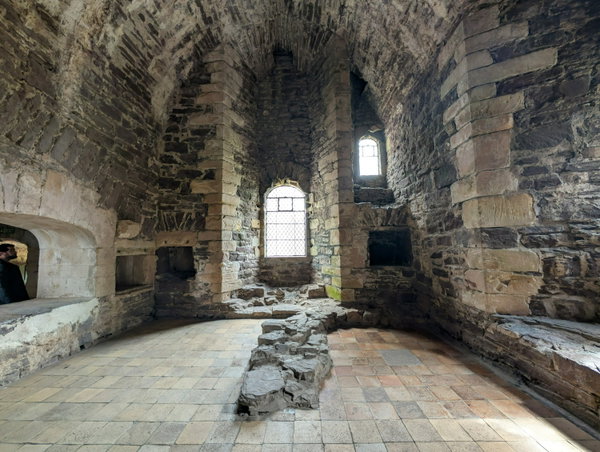
Behind the serving hatches is the well equipped kitchen. This is where the food would be prepared for the large parties and banquets held by Albany. The fireplace is big enough to roast an entire cow! It has a variety of places where food can be prepared and cooked simultaneously.
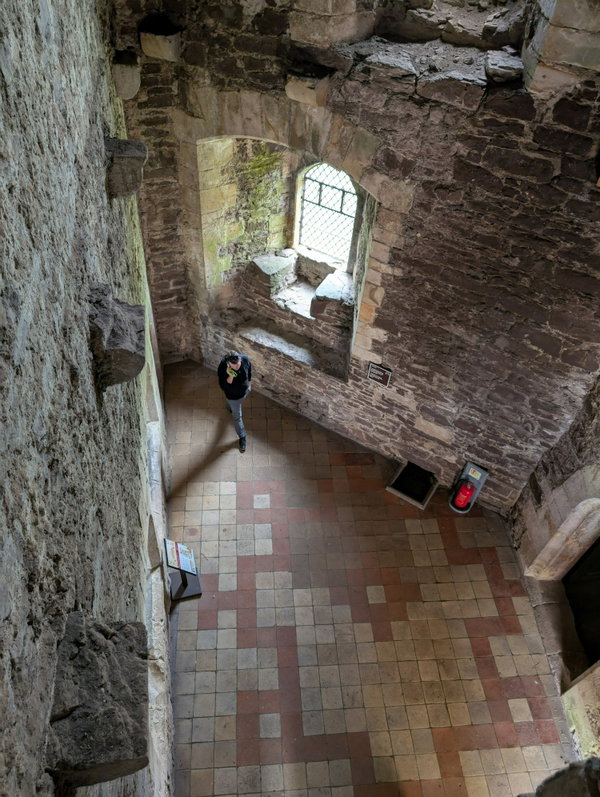
A staircase provides access to the rooms above the kitchen. The floor above the servery is now missing, but you can see the corbels that would have supported the floor.
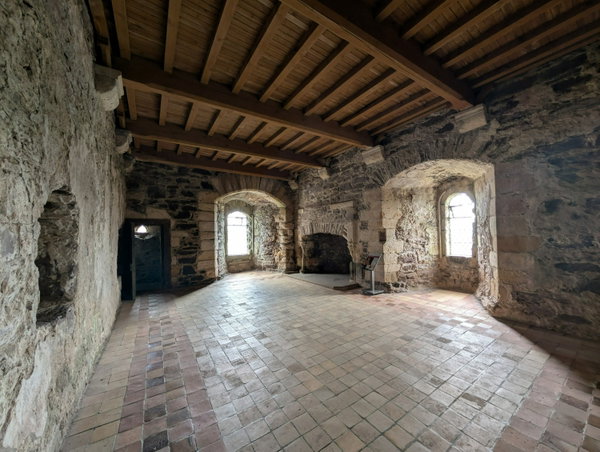
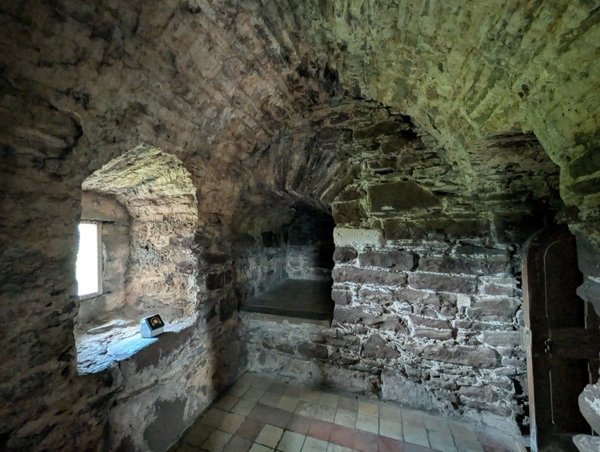
Above the kitchen is an apartment where high ranking officials would have stayed. One guest is rumoured to have been Mary, Queen of Scots.
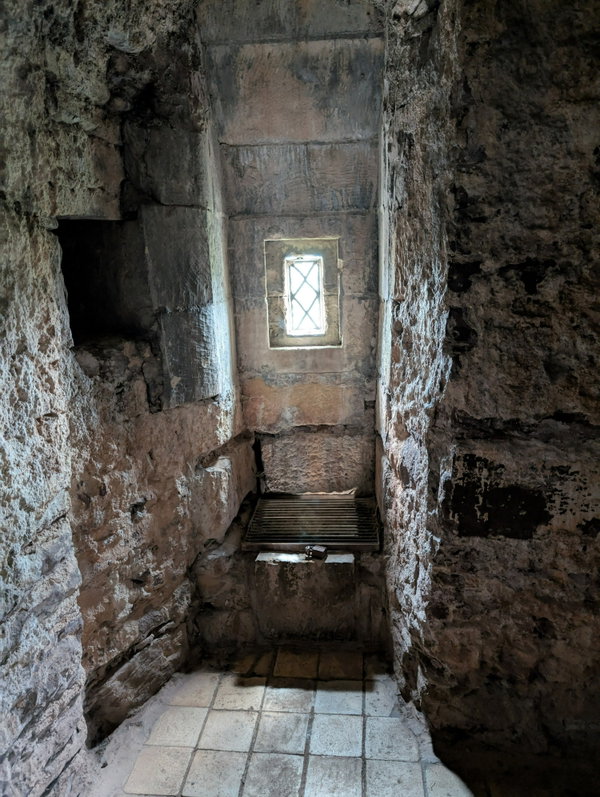
It even has its own fancy garderobe (room with a loo).
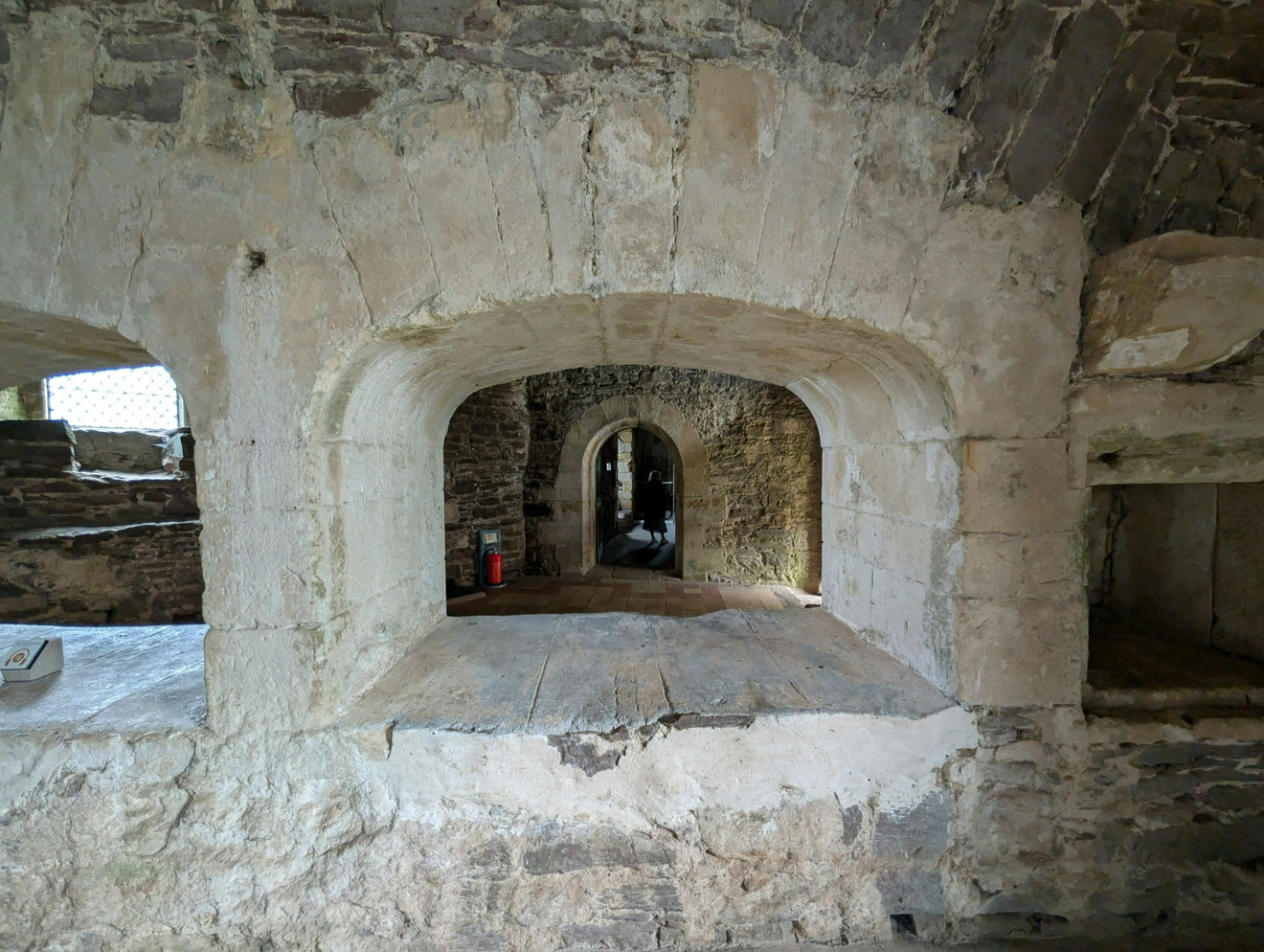
Heading back downstairs, let's see where all this food went after it left the kitchen.
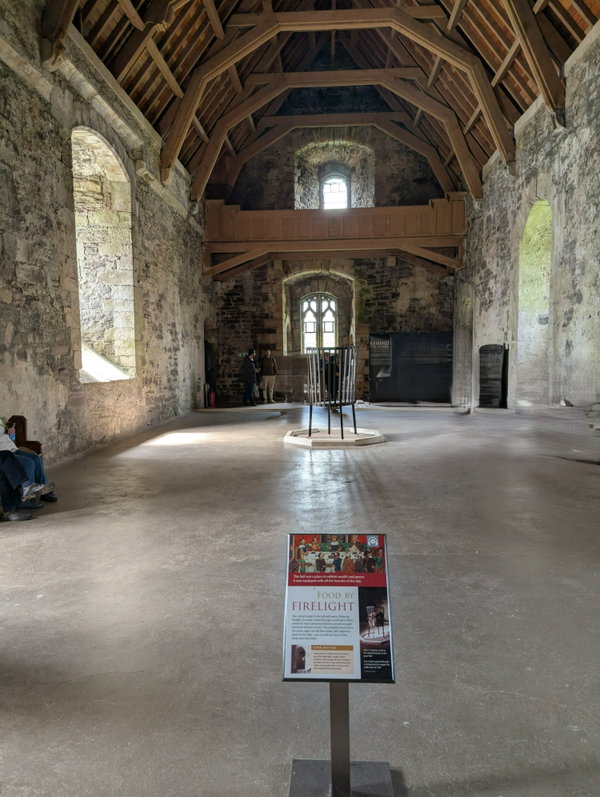
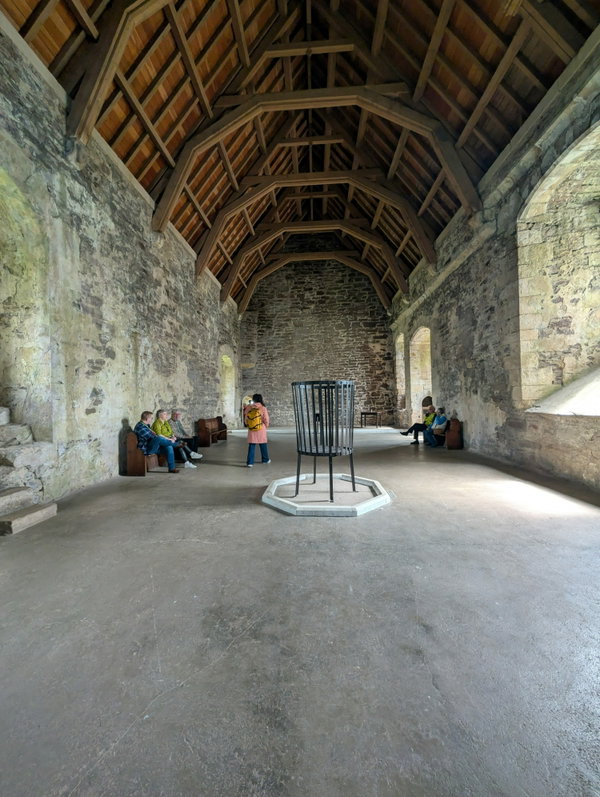
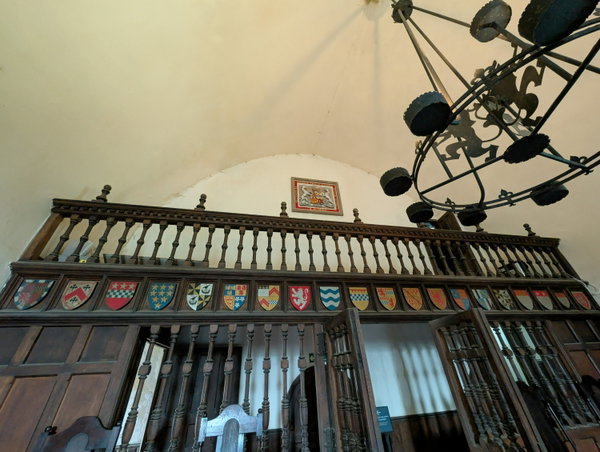
In the neighbouring building but on the same level as the kitchen, a screen would have been placed at the end of the Great Hall to hide the scurrying around of the staff as they served Albany's important guests.
The huge room was warmed by a fire in a brazier located in the middle of the room with a hatch in the roof providing ventilation. Minstrels would play music from the gallery to entertain the guests, while tapestries would adorn the walls to impress them.
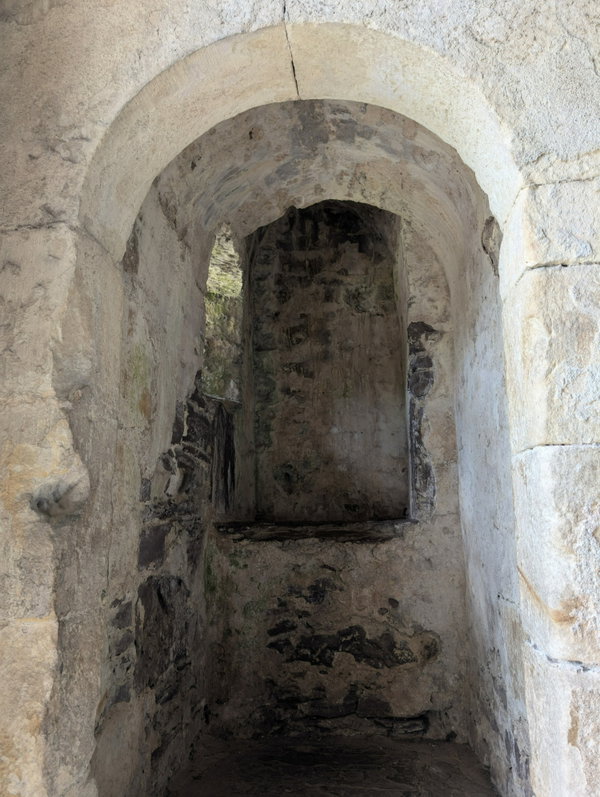
The latrine in the Great Hall was for the exclusive use of those seated at the high table.
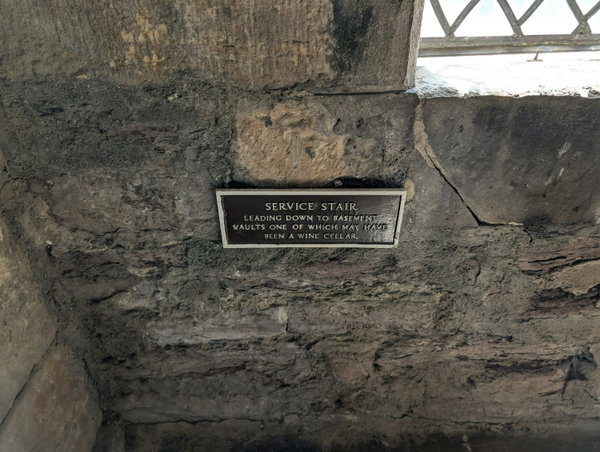
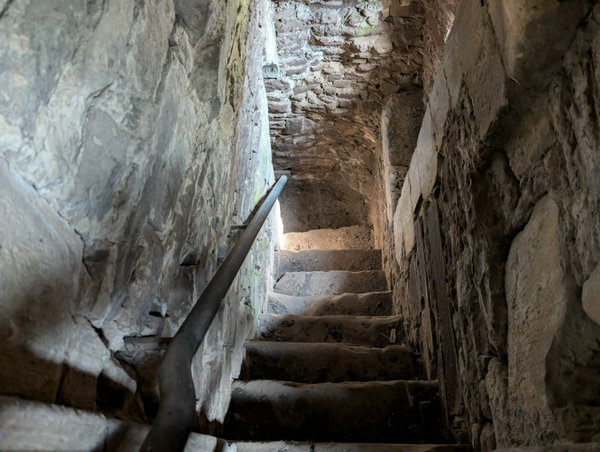
Albany was renowned for his extravagant parties, which of course required plenty of wine for the host and his guests. This was easily obtained from the wine cellar below, which was accessed by a staircase.
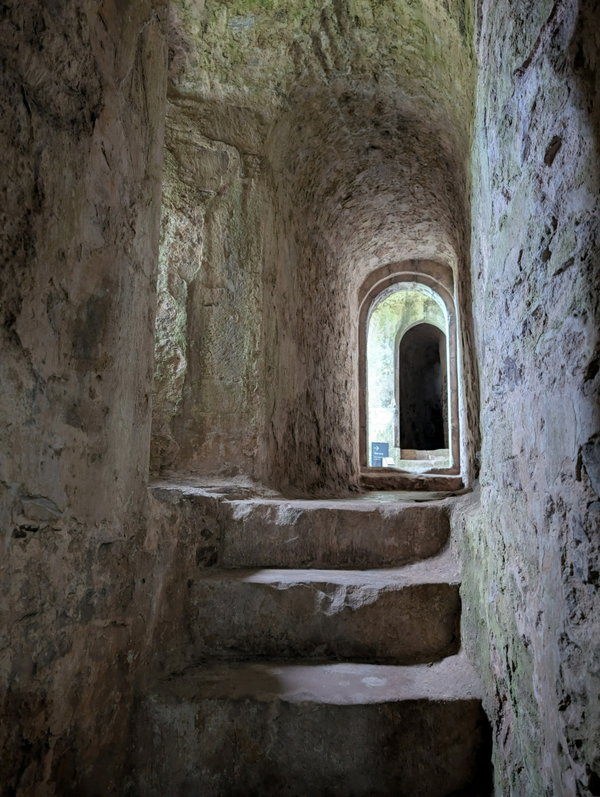
The Great Hall is connected to the north-east tower by a corridor. This tower contains the Duke's personal accommodation and business space.
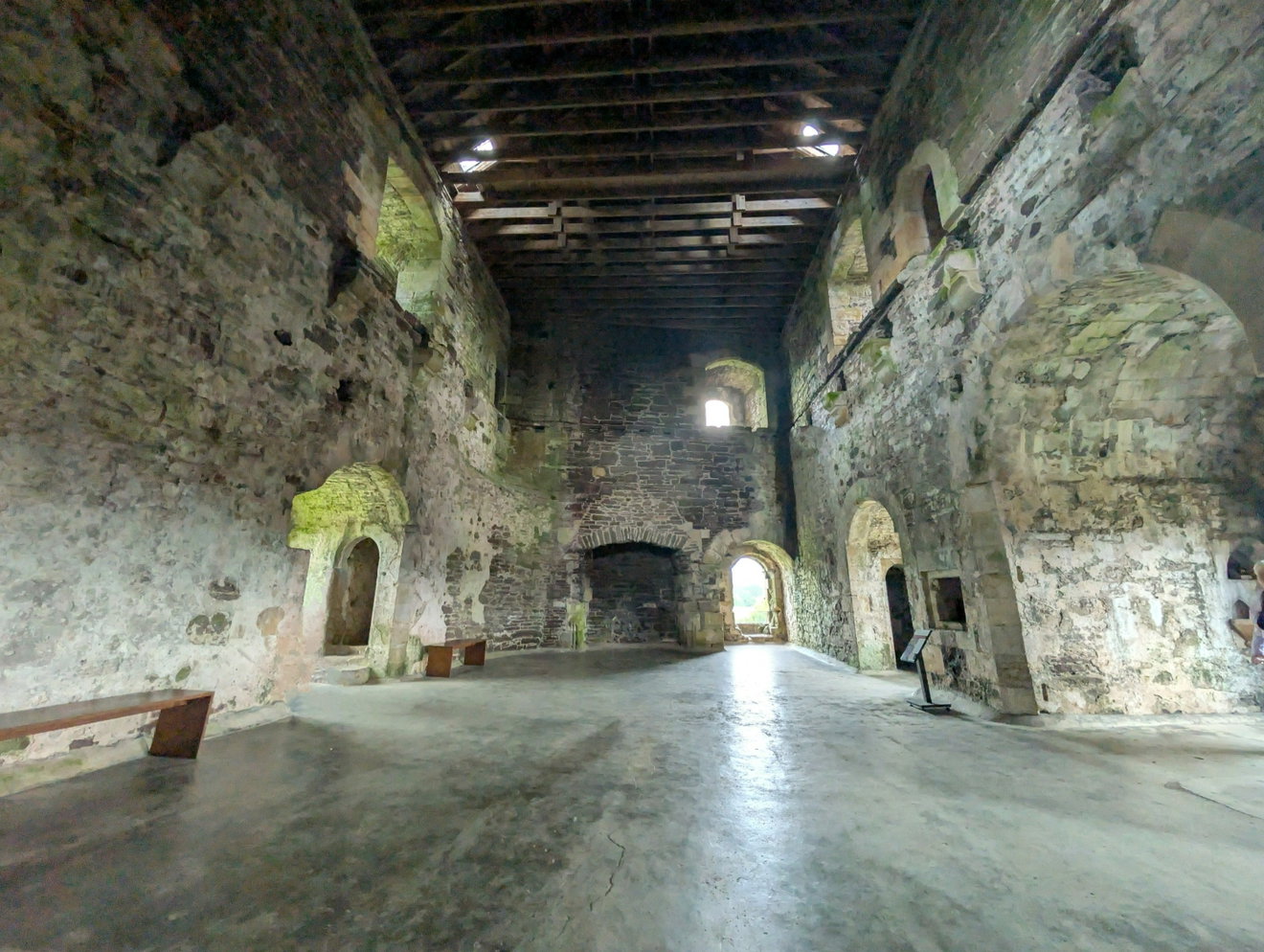
The first room to be entered is the enormous Duchess's Hall (also known as the Upper Hall). This is where the family would spend most of their time together.
The room would have contained a highly decorated bed of estate (large canopied throne) from which the Duke would have conducted business.
You can see the corbels that would have held a floor above. These rooms were most likely used by the family or their staff.
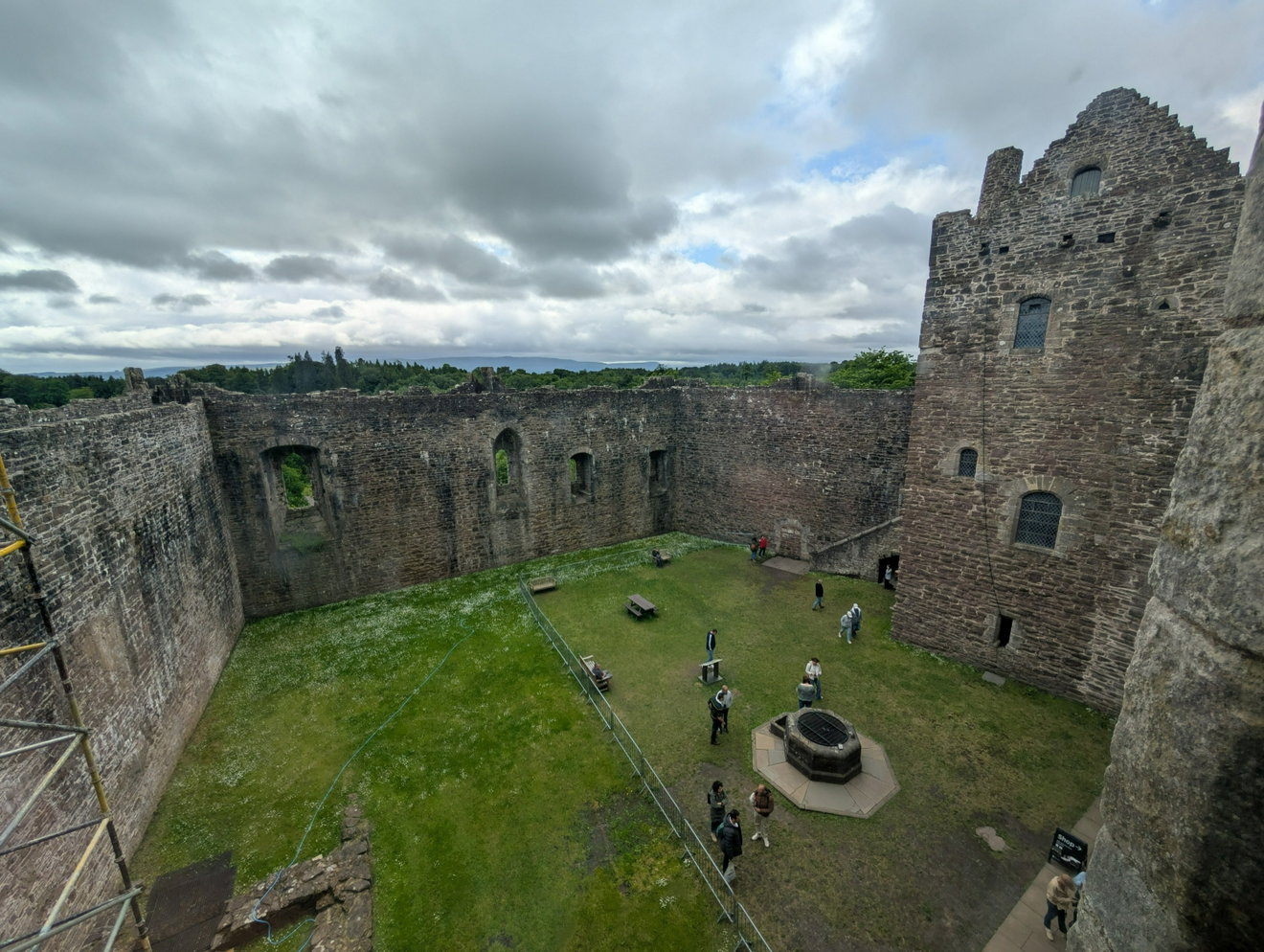
The large windows in the hall would allow Albany to keep an eye on the comings and goings in the courtyard below.
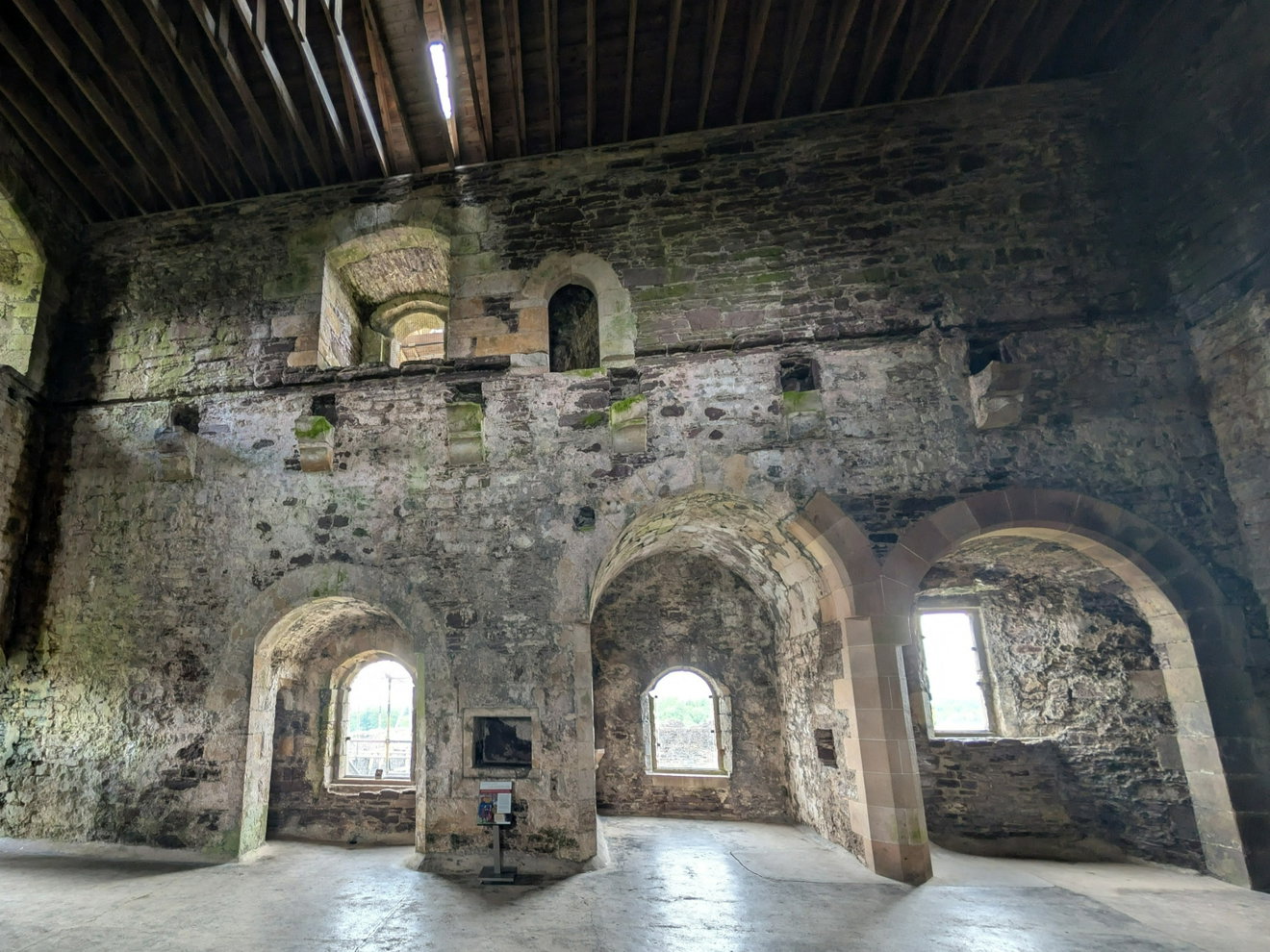
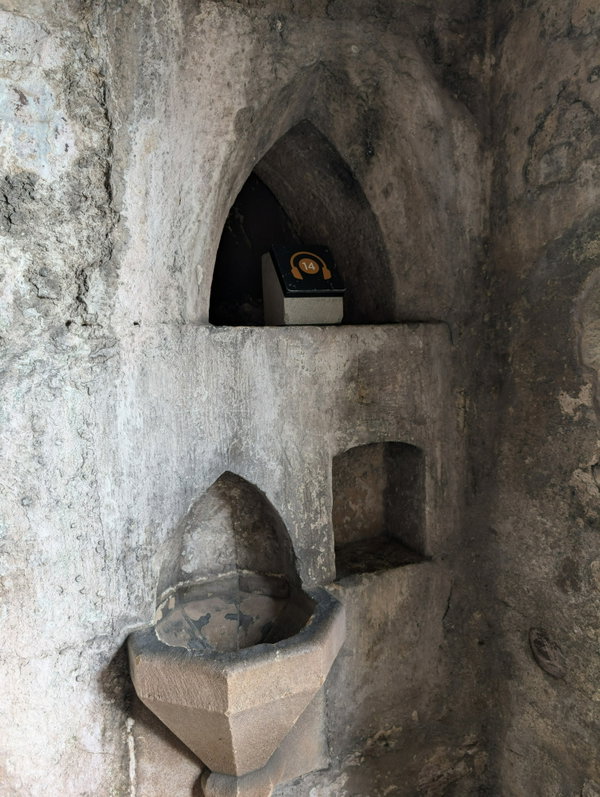
The middle window contains an oratory (area used as a chapel). It contains a piscina (basin for draining religious vessels) and aumbry (to store the vessels).
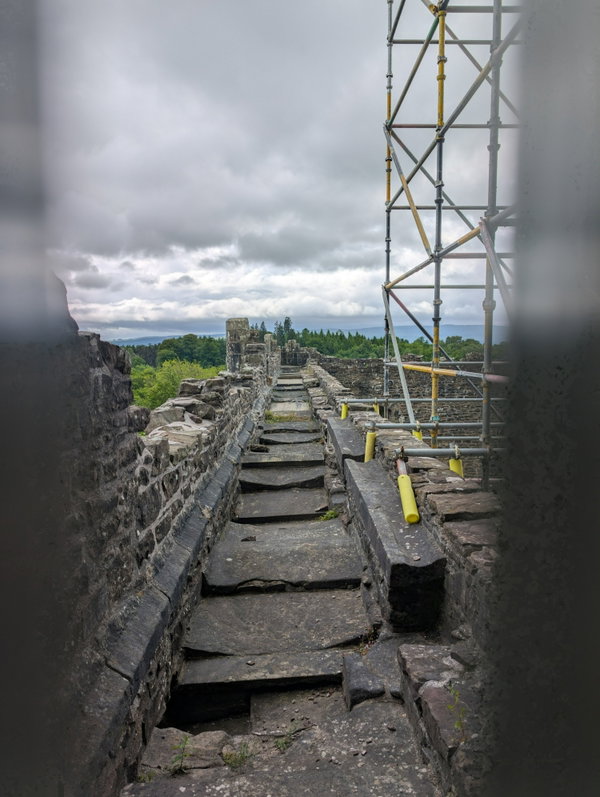
There is also access to the wall walk, from where Albany could survey his surrounding lands and spot approaching friends and enemies.
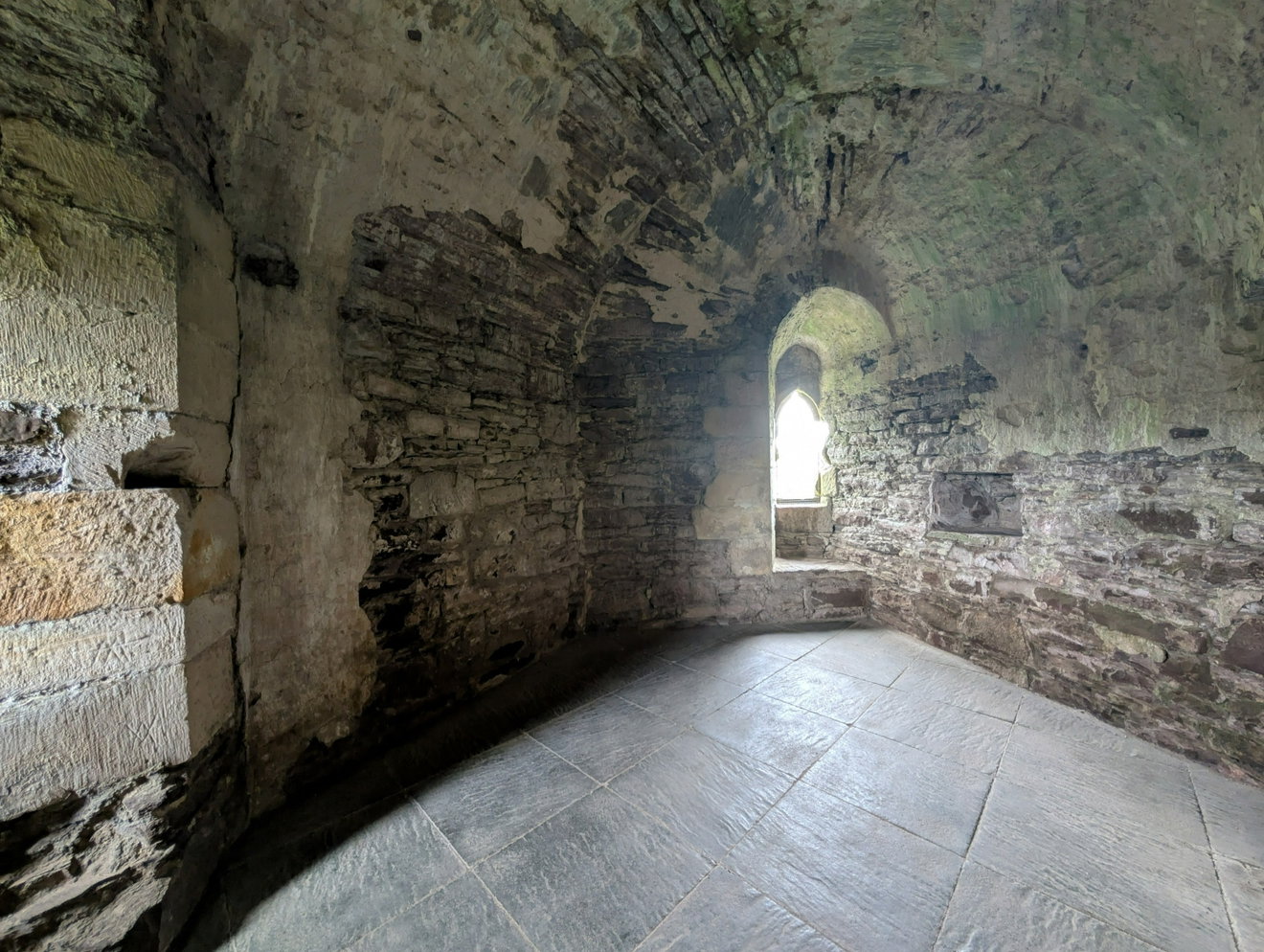
A corridor from the hall provides access to the Duchess's Chamber. This is where the Duke's second wife would entertain personal friends.
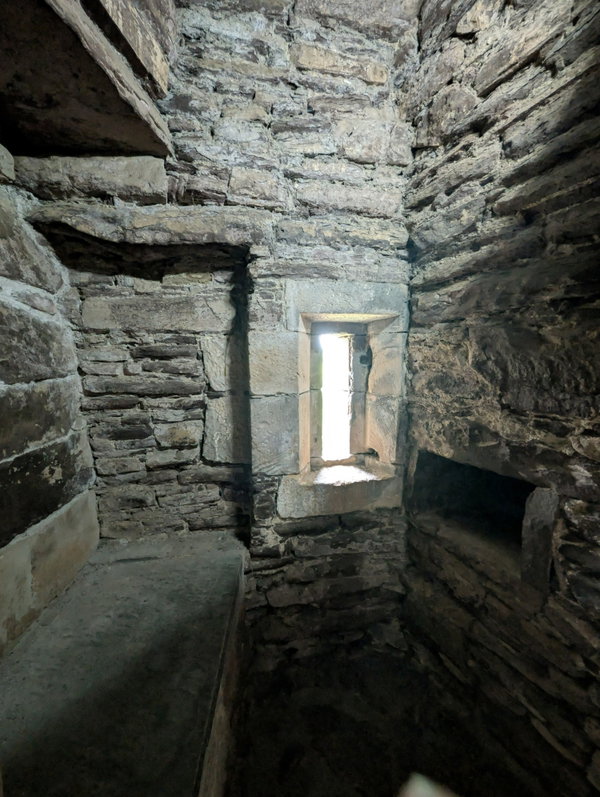
Just up the hall from her chamber is her own personal loo.
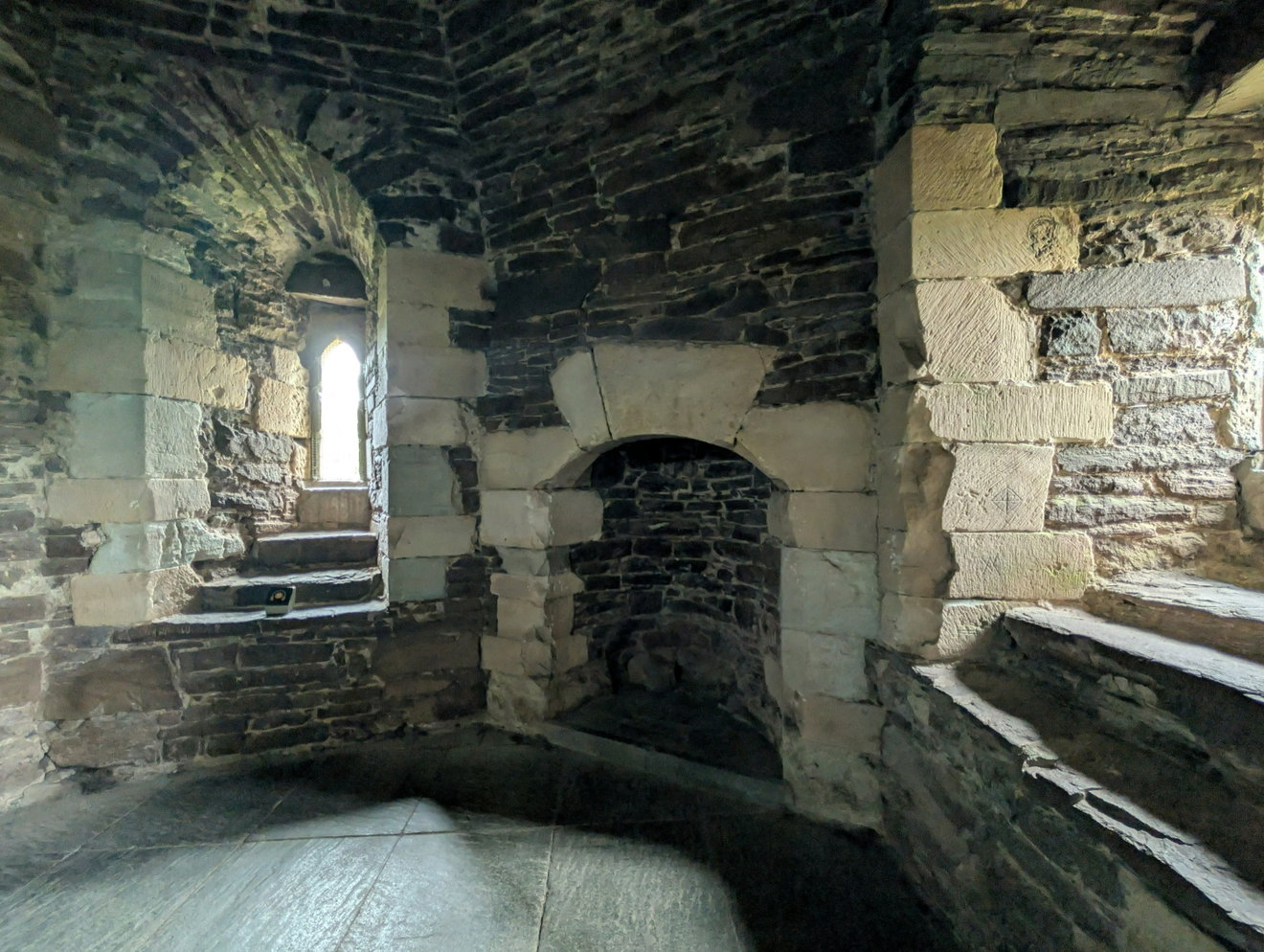
Continuing on, you will find the Duke's Chamber. This fabulous six-sided room is where Albany would have slept.
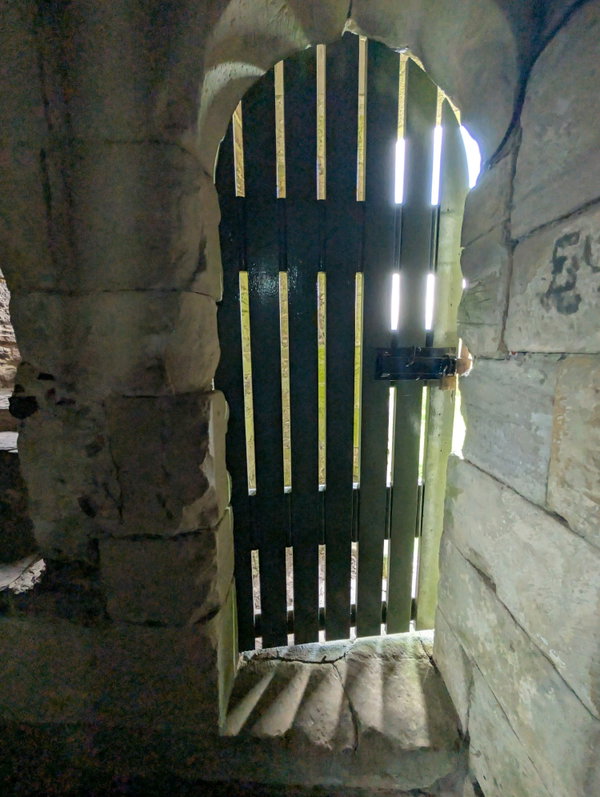
It has its own en-suite latrine which is now blocked off by a door. Its location makes it perfect to throw stones or other items down onto unwanted guests.
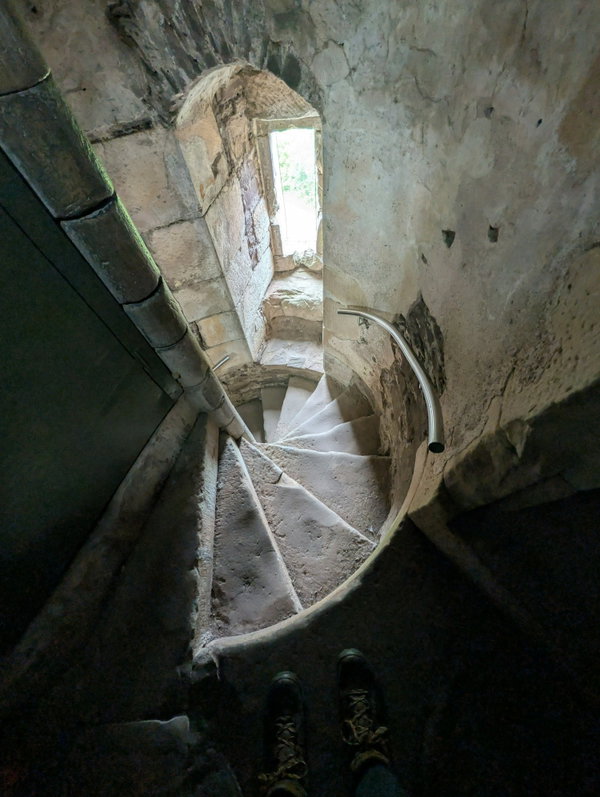
Time to head down to the final room in this tower.
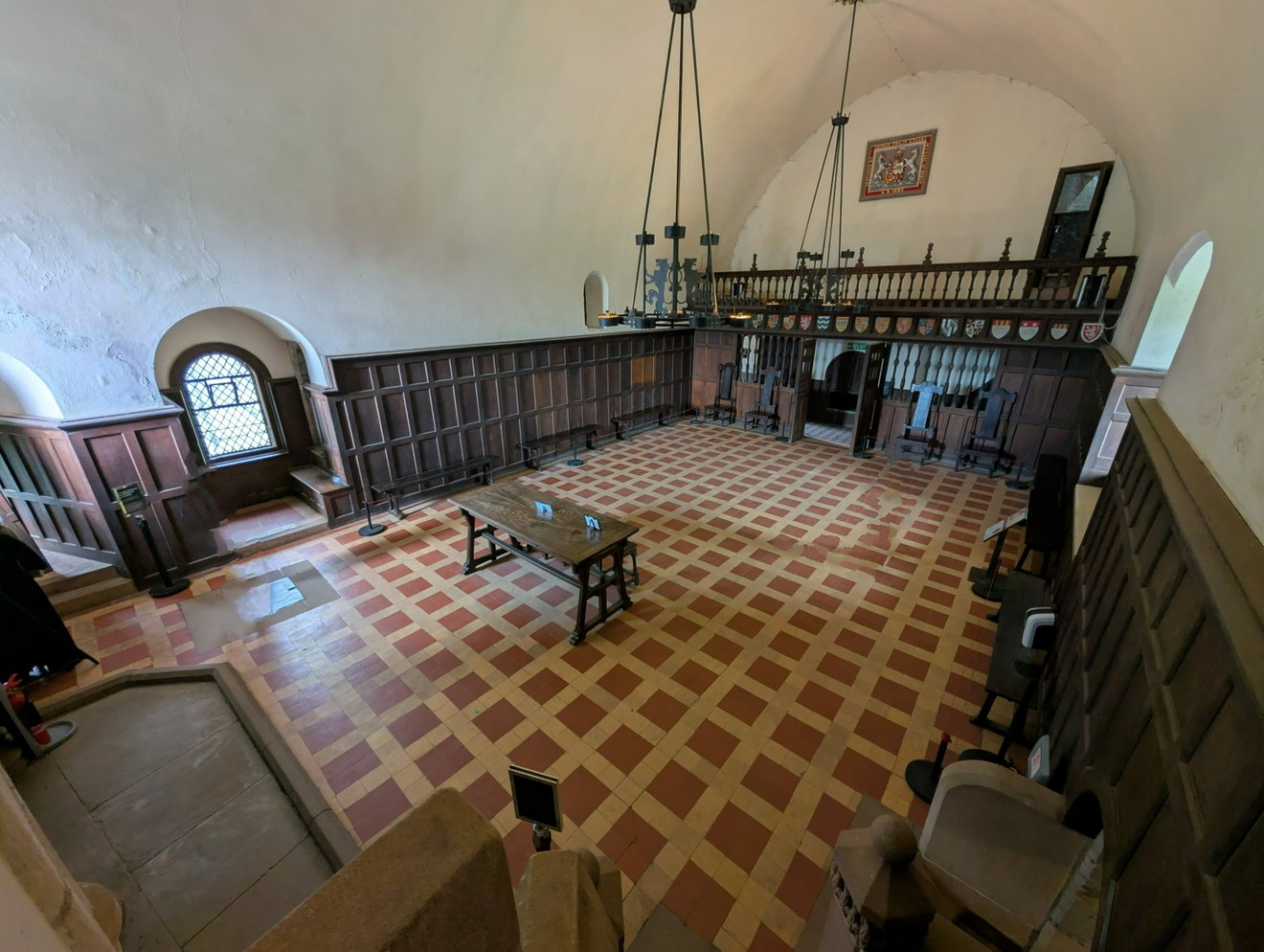
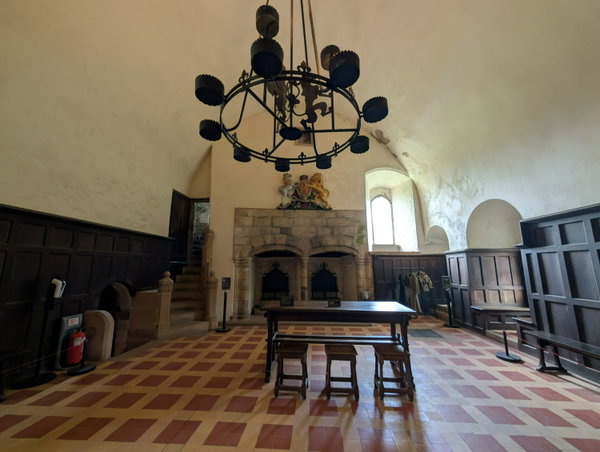
The Duke's Hall has a completely different feel to the rest of the castle. This is because it was restored by the 14th Earl of Moray in 1883.
In Albany's day, he would have held formal meetings in this room. As a show of his status, the room would have been dominated by another ornate bed of estate from which he would have conducted business. There is not one but two fireplaces and he would have provided entertainment once the business of the day was concluded.
Time to head back out to the courtyard.
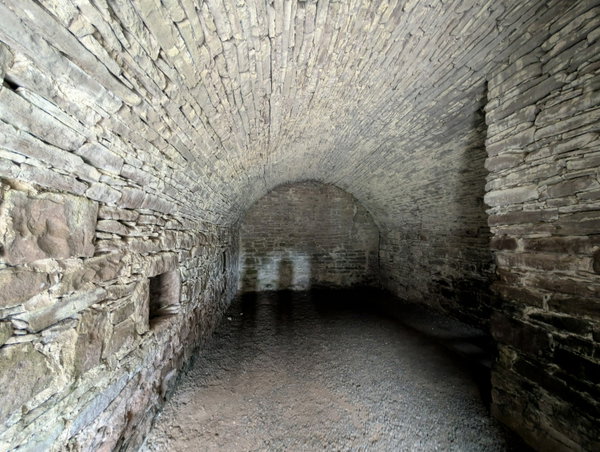
Beneath the Duke's Hall is a prison and vaulted cellars.
To complete the history of Doune Castle, it saw military action during the Wars of the Three Kingdoms, and the Glencairn and Jacobite risings in the 17th and 18th centuries.
The castle was in a state of ruin by 1800, but restored in the 1880s.
It is now a Scheduled Monument in the care of Historic Environment Scotland.
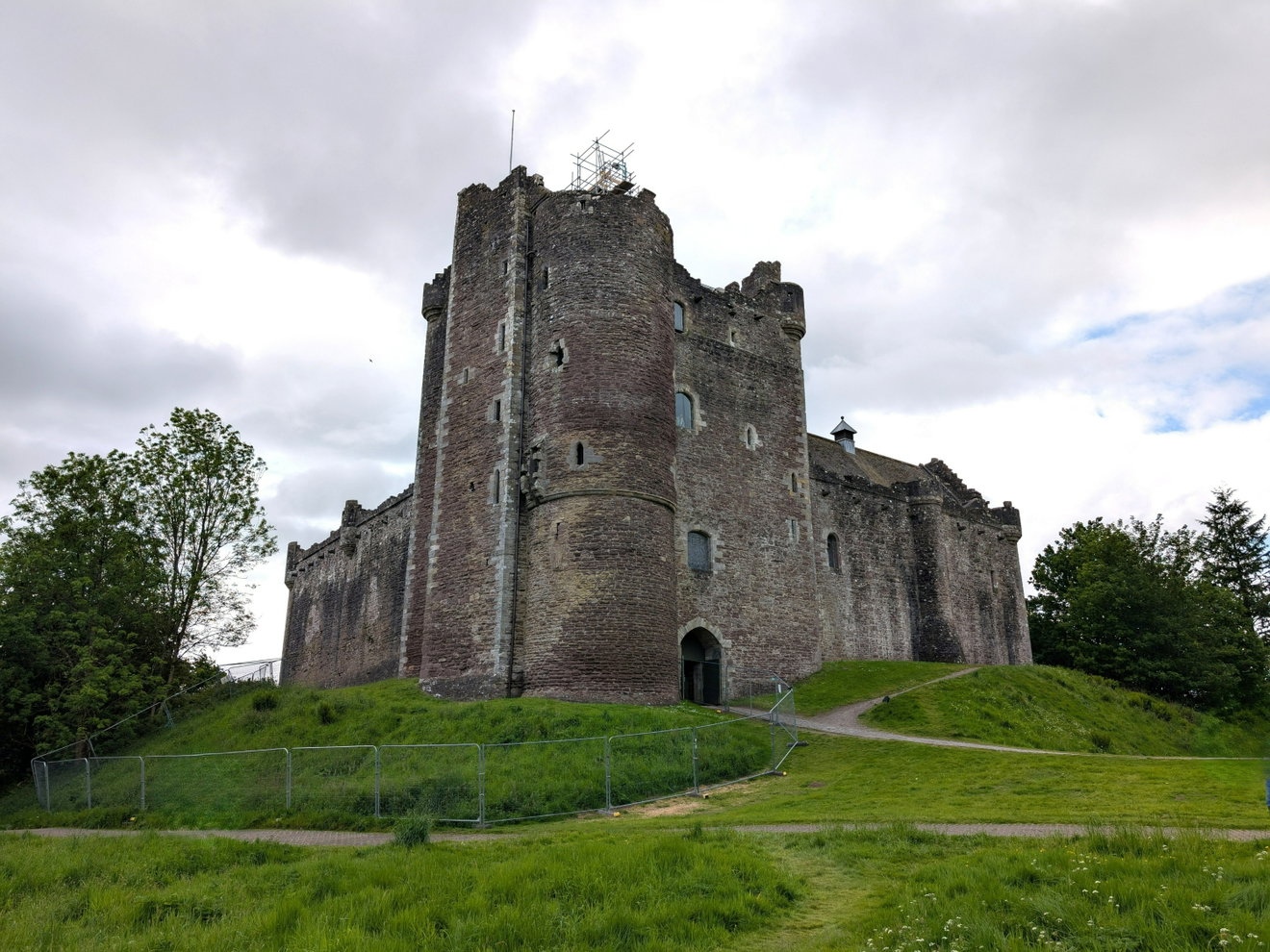
I hope you enjoyed this quick tour of Doune Castle, but the best way to experience this amazing place is to go and visit it yourself.
Get 3 points if you have visited this place. Already visited by 17 VIPs.
Login to bag this placeHelp fuel the next adventure
Fabulous North is free, with no annoying adverts and fuelled by an unhealthy desire to poke around castles, hills, churches and suspicious-looking bits of stone.
If you enjoy what we do, you can help keep us exploring.
Champion This Place
Got a special memory of Doune Castle, a story to tell or simply a soft spot for it? Champion Doune Castle and we'll add your name, photo and a short message to this page, while your support helps us keep Fabulous North exploring.
How To Find Doune Castle
Where Is Doune Castle?
Lat / Long
56.185112568396185, -4.050204066881038
What three words
Where To Park For Doune Castle?
Lat / Long
56.18589210529853, -4.050740156008519
What three words
There is a car park next to the castle.
Contributed by Lorraine London
I have been a keen hill walker for many years and more recently enjoy trig bagging. When I'm not exploring Northumberland, County Durham and Yorkshire, I spend most of my holidays in bonny Scotland. Other than hills, I love investigating ruinous buildings and waterfalls. I have been a member of NT and EH for years, which also gives me access to Historic Environment Scotland places.
More Places from Lorraine
More Places In Stirling
Find more fabulous places in Stirling, Scotland and if you know of a place we haven't listed, then let us know.
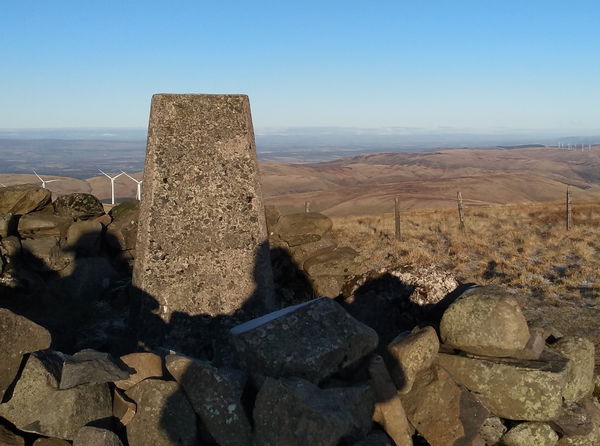
Ben Cleuch Trig Point
Trig Point Stirling ScotlandThe Ben Cleuch trig point sits on the Ochil Hills (721m) near Tillicoultry.
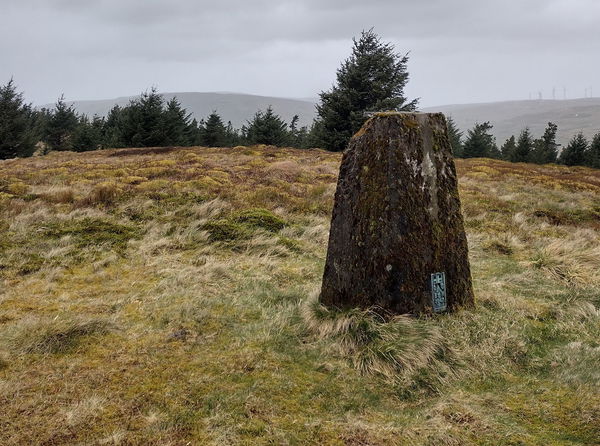
Cairnoch Hill Trig Point
Trig Point Stirling ScotlandThe Cairnoch Hill trig point is sits above the Carron Valley Reservoir (413m) near Kilsyth.
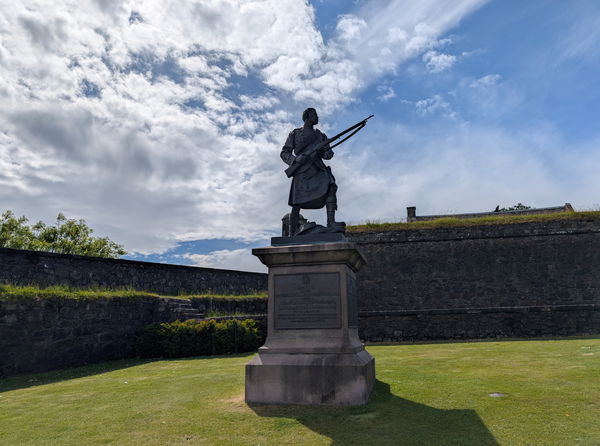
Boer War Memorial Stirling Castle
Statue Stirling ScotlandA statue outside the entrance to Stirling Castle commemorating the second Boer War.
More Castles
So this castle wasn't enough and you want more? Don't worry we have you covered.
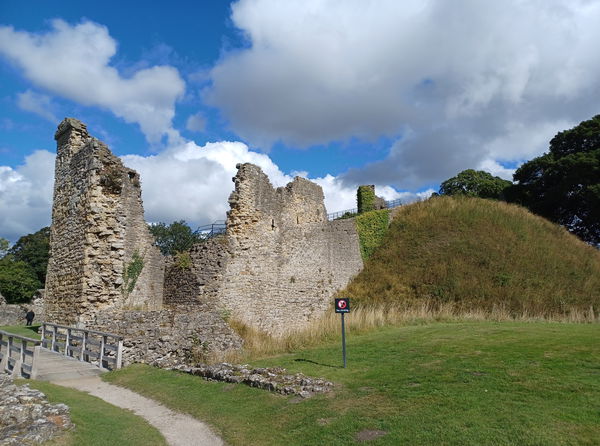
Pickering Castle
Castle Pickering North YorkshireA ruined castle in the centre of Pickering that dates from the Norman period.
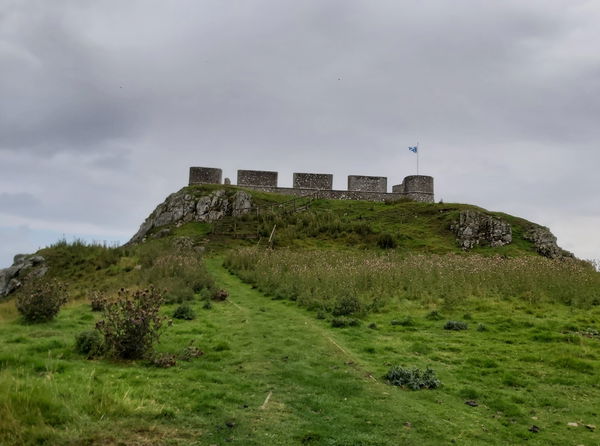
Hume Castle
Castle Kelso BordersA heavily modified ruin of an early 13th century castle held by the powerful Hume family.
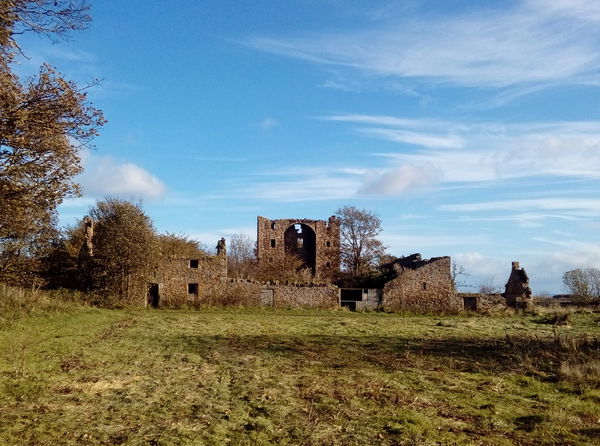
Saltcoats Castle
Castle East Lothian BordersSaltcoats Castle is a ruinous courtyard castle near Gullane in East Lothian.
Never Miss A Fabulous Place
If you are afraid of missing out on all the fabulous places we post, or just want to be the first to know, then sign up to the Fabulous North.
Each week we will email you all the brand new places that we visit.
Sign Up To Alerts

Find Us On Facebook
We post all our new places daily on our Facebook Groups page, so join the group today and be notified when we add a new place.
Join Our Facebook Group