
St Monans Windmill
Windmill In Fife, Scotland
An 18th century windmill that was used to pump sea water into the neighbouring salt pans.
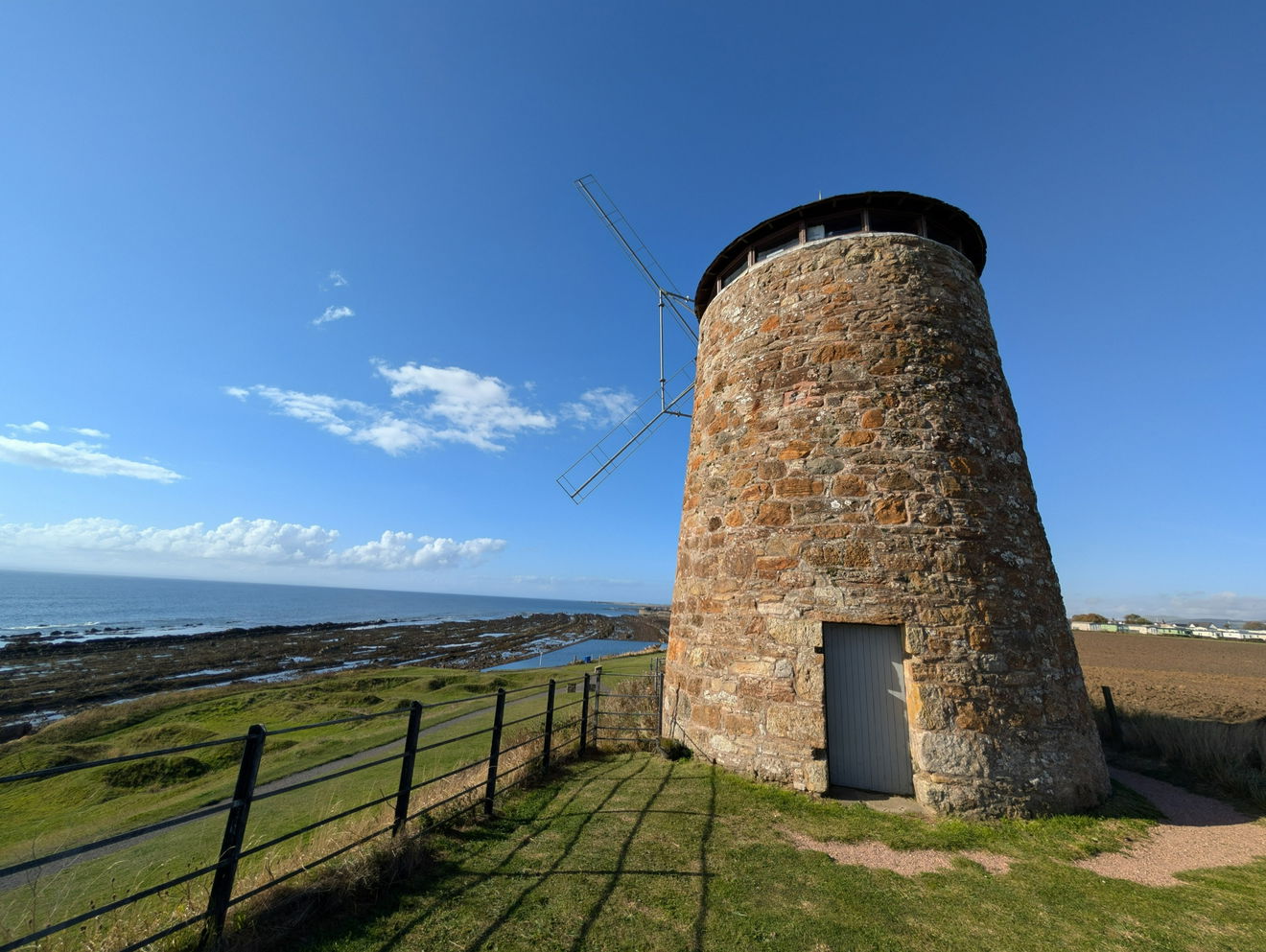
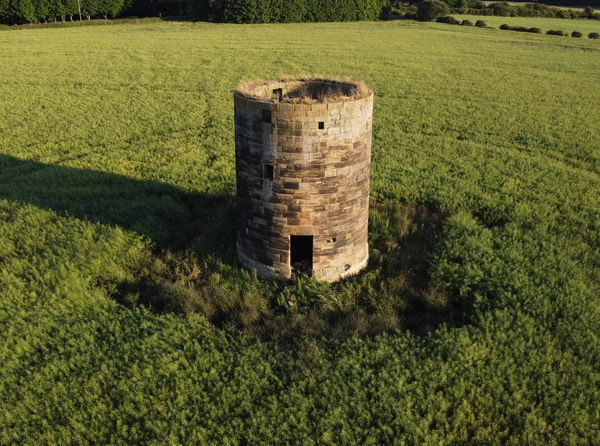
The stone tower of St Monans Windmill was built in the 18th century and played a vital role in moving seawater into the neighbouring salt pans as part of the St Philips Salt Works.
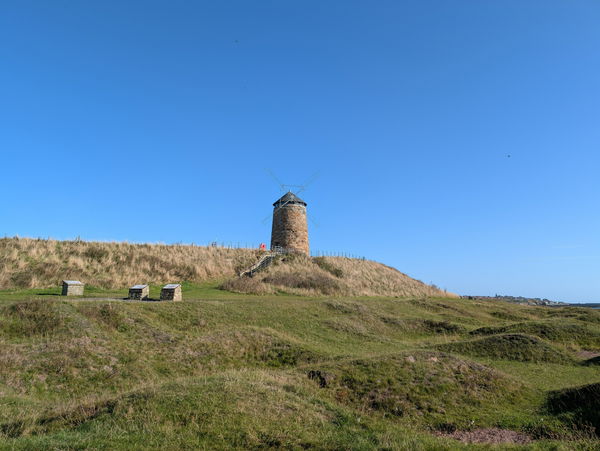
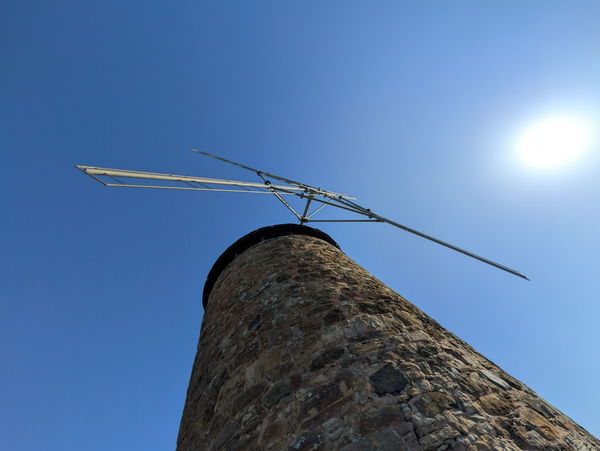
Salt has been a valuable commodity through the ages, dating back to the Romans paying their soldiers with the substance. This is where the word salary emerged from Salarium which is Latin for 'Salt Money'. Also the phrase 'Worth their weight in salt' comes from the same origins. So high was its value, that it was stored in bonded buildings and was smuggled as a way of avoiding paying duty.
It can be mined as Rock Salt, however a later technique of evaporating sea water in shallow ponds was used to produce Bay Salt. The Firth of Forth was a prime location for such a salt works as coal, seawater and wind were in abundance.
In 1771, Sir John Anstruther and his business partner (brother-in-law) Robert Fall, established the Newark Coal and Salt Company. An integral part of the salt business was to fill salt pans with seawater and this is where the windmill came in. The wind would turn the windmill sails, which in turn would operate a pump which moved the seawater from filled rock reservoirs into the salt pans.
In around 1773, the company started extracting coal from the land behind the windmill, known as Coal Farm. Some of the extracted coal was then used to fuel the fires under the salt pans which evaporated the water leaving the salt.
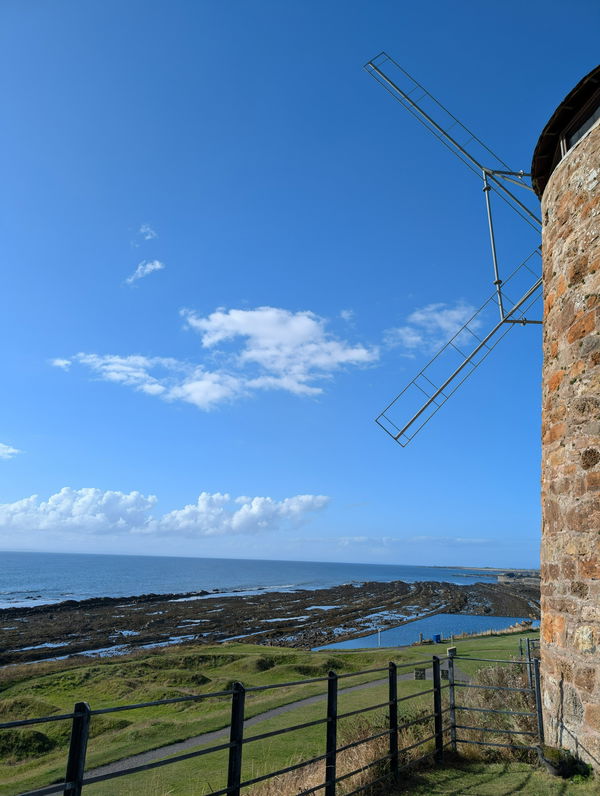
The Salt Works would have run 24x7, and employed 20 men at the windmill and saltpans with the coal mine employing a further 36.
The Salt Works fell out of operation on or before tax changes in 1823, which meant the industry was no longer viable in Scotland. The windmill fell into disrepair and ended up a mere stump.
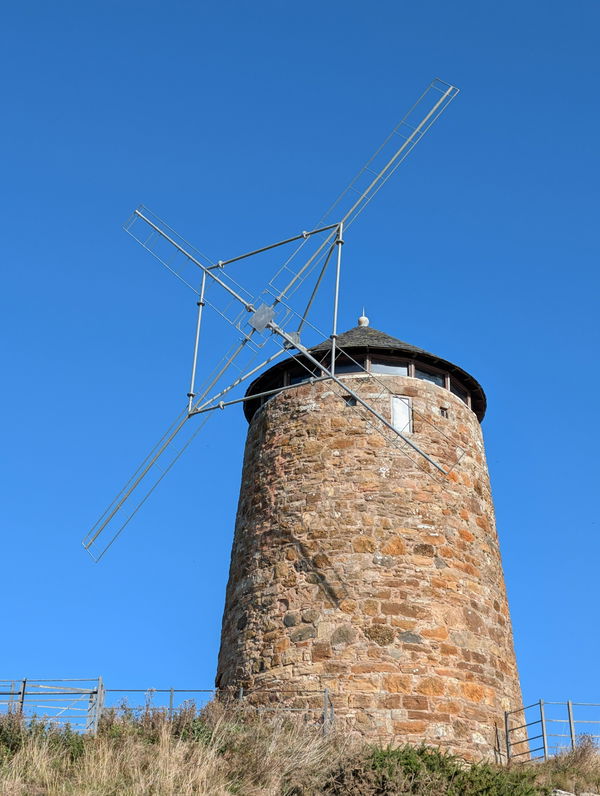
In 1992, the windmill, or wind engine tower, underwent a reconstruction programme that included re-roofing, replacing the engine, installation of a new spiral stairway and upper viewing platform. Sadly, the windmill is no longer accessible, so we were unable to see all the hard work.
It now stands around 9m high, 4.5m in diameter with 1m thick sandstone and rubble walls, and from it's elevated position can be seen from miles around.
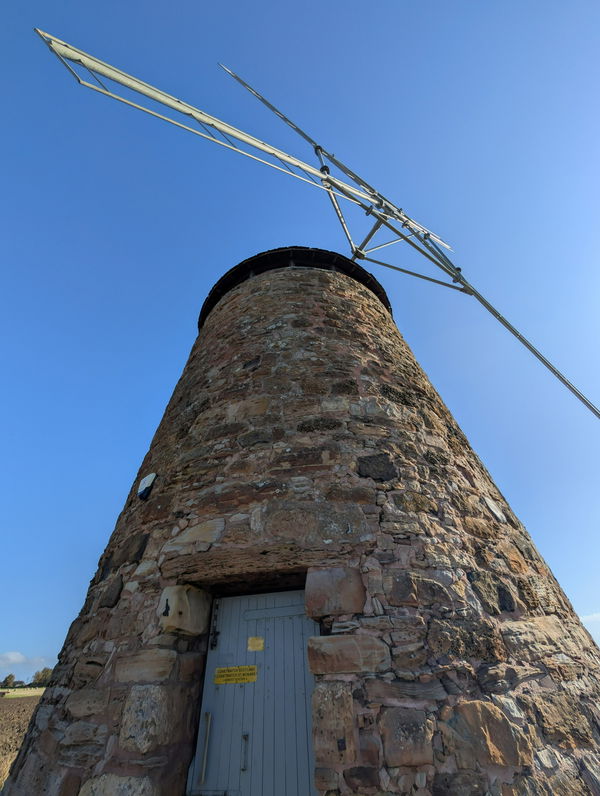
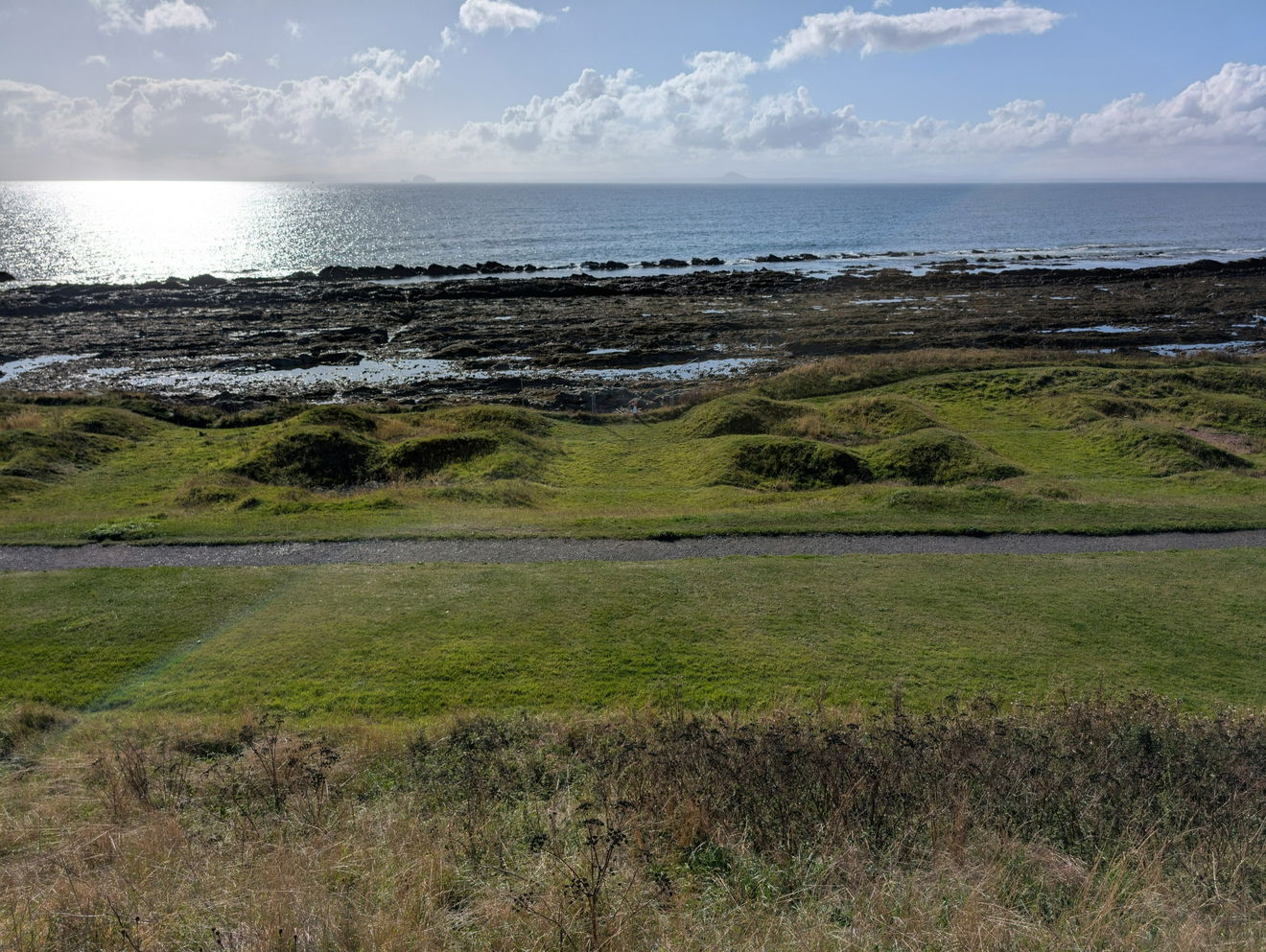
Once you have visited the windmill, head back down to the coastal path and take a look at the Salt Pans where you can find further details of Salt Works.
The windmill is easily reached by heading east along the coastal path from the car park.
St Monans Windmill is a Scheduled Monument with Historic Environment Scotland.
Get 2 points if you have visited this place. Already visited by 12 VIPs.
Login to bag this placeHelp fuel the next adventure
Fabulous North is free, with no annoying adverts and fuelled by an unhealthy desire to poke around castles, hills, churches and suspicious-looking bits of stone.
If you enjoy what we do, you can help keep us exploring.
Champion This Place
Got a special memory of St Monans Windmill, a story to tell or simply a soft spot for it? Champion St Monans Windmill and we'll add your name, photo and a short message to this page, while your support helps us keep Fabulous North exploring.
How To Find St Monans Windmill
Where Is St Monans Windmill?
Lat / Long
56.20677091415813, -2.7542906631039776
What three words
Where To Park For St Monans Windmill?
Lat / Long
56.205280033706735, -2.760929839653713
What three words
There is a small car park at the end of the coastal path that leads to the windmill.
Contributed by Lorraine London
I have been a keen hill walker for many years and more recently enjoy trig bagging. When I'm not exploring Northumberland, County Durham and Yorkshire, I spend most of my holidays in bonny Scotland. Other than hills, I love investigating ruinous buildings and waterfalls. I have been a member of NT and EH for years, which also gives me access to Historic Environment Scotland places.
More Places from Lorraine
More Places In Fife
Find more fabulous places in Fife, Scotland and if you know of a place we haven't listed, then let us know.
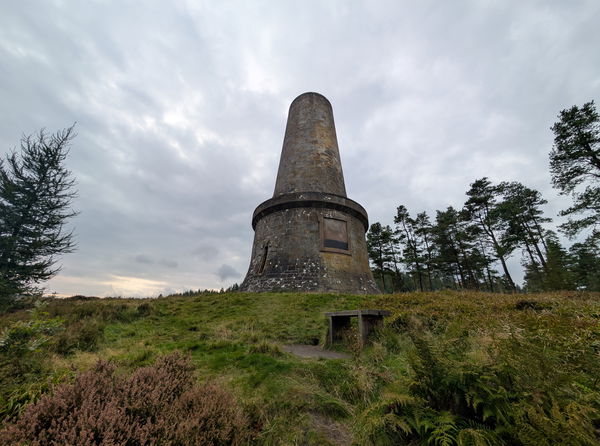
Tyndall-Bruce Monument
Landmark Fife ScotlandA huge monument, built in 1857 to commemorate Onesiphorus Tyndall-Bruce, a significant figure in the area.
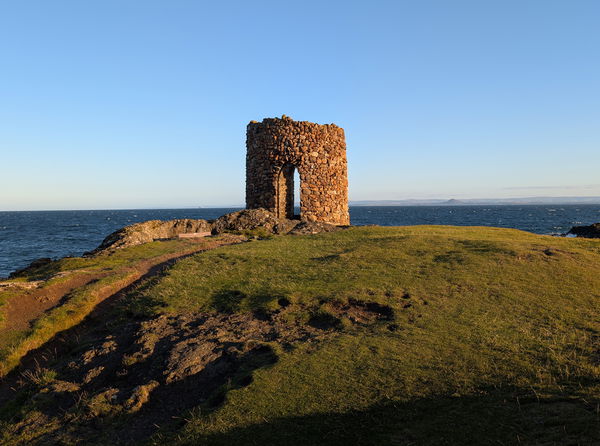
Lady's Tower
Folly Fife ScotlandA folly that sits on the headland at Elie with stunning views over the Firth of Forth.
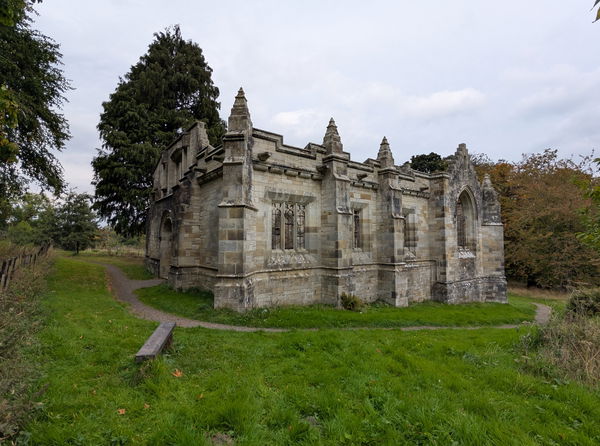
Crichton-Stuart Memorial Chapel
Religious Place Fife ScotlandThe ruin of the a 1912 memorial chapel, containing graves of the Crichton-Stuart family.
More Windmills
So this windmill wasn't enough and you want more? Don't worry we have you covered.
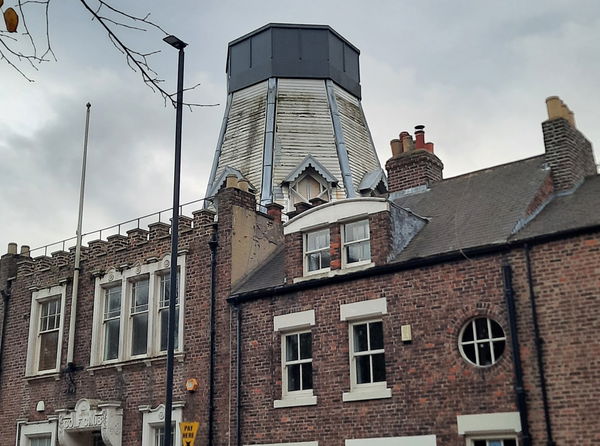
Chimney Mill
Windmill Newcastle City Centre Tyne And WearThe first five sailed smock style windmill in Britain and the only remaining one in the North East.
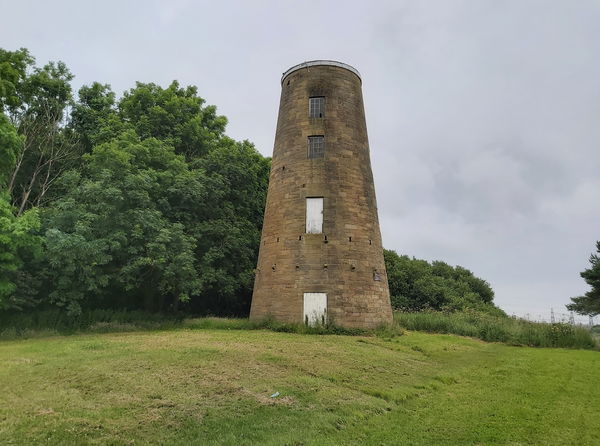
Cramlington Windmill
Windmill Cramlington NorthumberlandAn old sail-less windmill situated within a farmers field.
Never Miss A Fabulous Place
If you are afraid of missing out on all the fabulous places we post, or just want to be the first to know, then sign up to the Fabulous North.
Each week we will email you all the brand new places that we visit.
Sign Up To Alerts

Find Us On Facebook
We post all our new places daily on our Facebook Groups page, so join the group today and be notified when we add a new place.
Join Our Facebook Group