
Wallace Monument
Tower In Stirling, Scotland
A superb 67m tower, containing exhibitions on each of the three floors, then the crowning glory at the top.
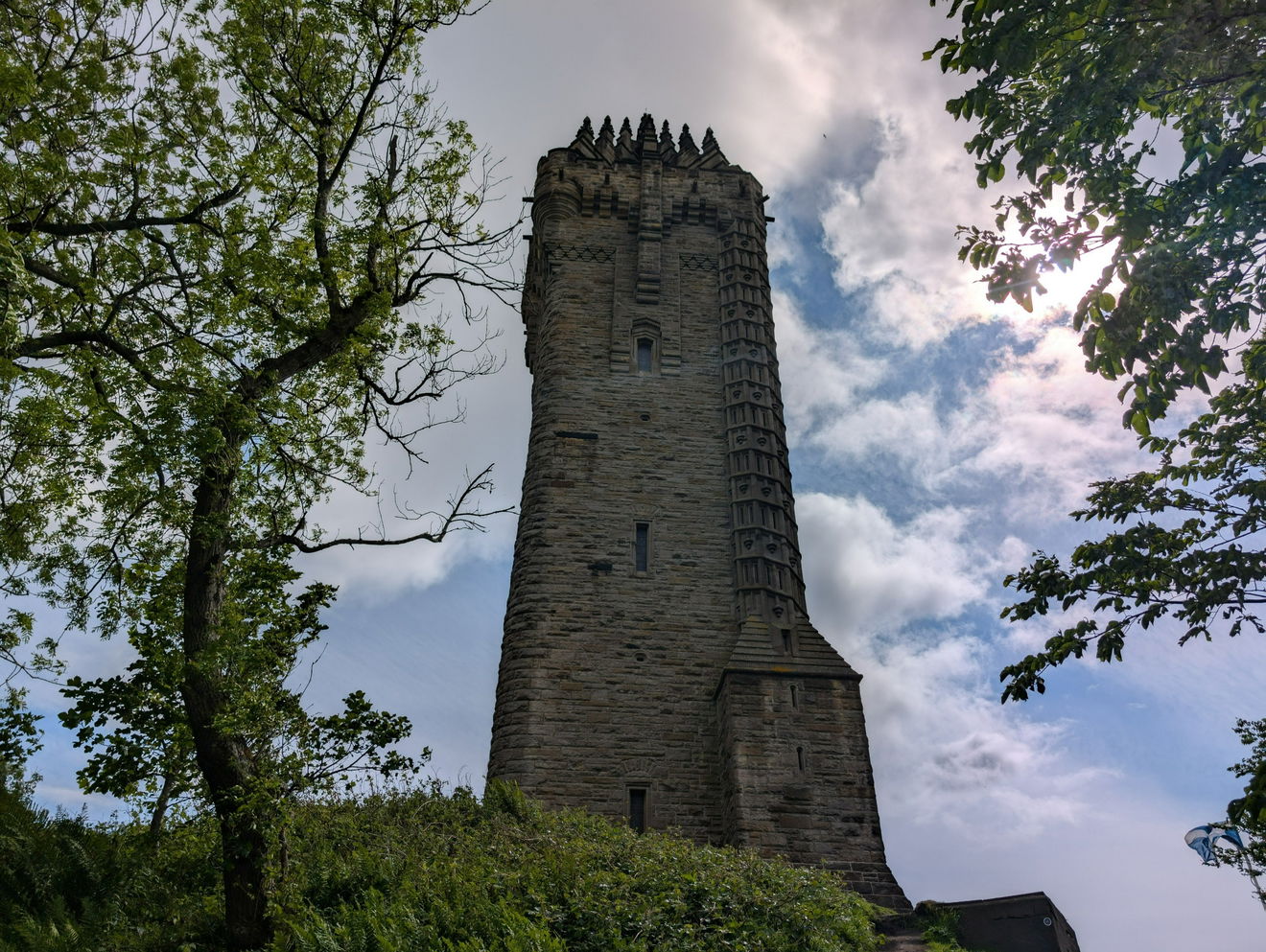
The National Wallace Monument is a famous landmark that honours the national hero of Scotland, Sir William Wallace.
If you have been to Stirling, it is unlikely that you missed the stunning tower that can be seen for miles around. It was the Reverend Charles Rogers who first proposed a national monument to Wallace in 1851, and four years later he set up a building committee. By 1858, John Thomas Rochead had successfully entered his design into the architectural competition to design the tower.
It was funded solely by public contributions totalling more than £15,000, of which Reverend Charles Rogers was largely responsible, followed by William Burns when Rodgers stepped down.
On the 24th June 1861, which just so happens to be the anniversary of the Battle of Bannockburn, over 80,000 people came to see the laying of the Foundation Stone. Just over eight years later, the monument was opened to the public on 11 September 1869.
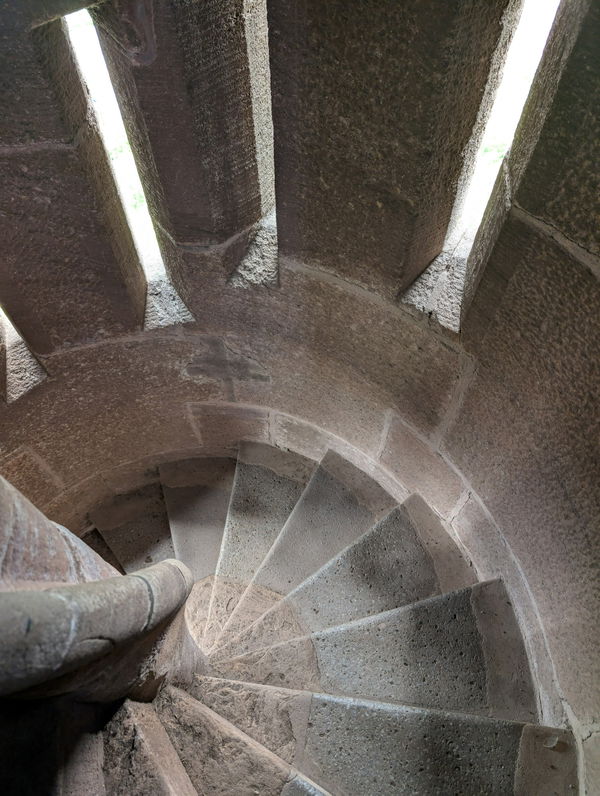
The 67 metre tower was built on the shoulder of Abbey Craig, containing three floors of exhibitions and the crowning glory at the top. The bidirectional spiral staircase has a total of 246 steps, so each floor is a welcome relief.
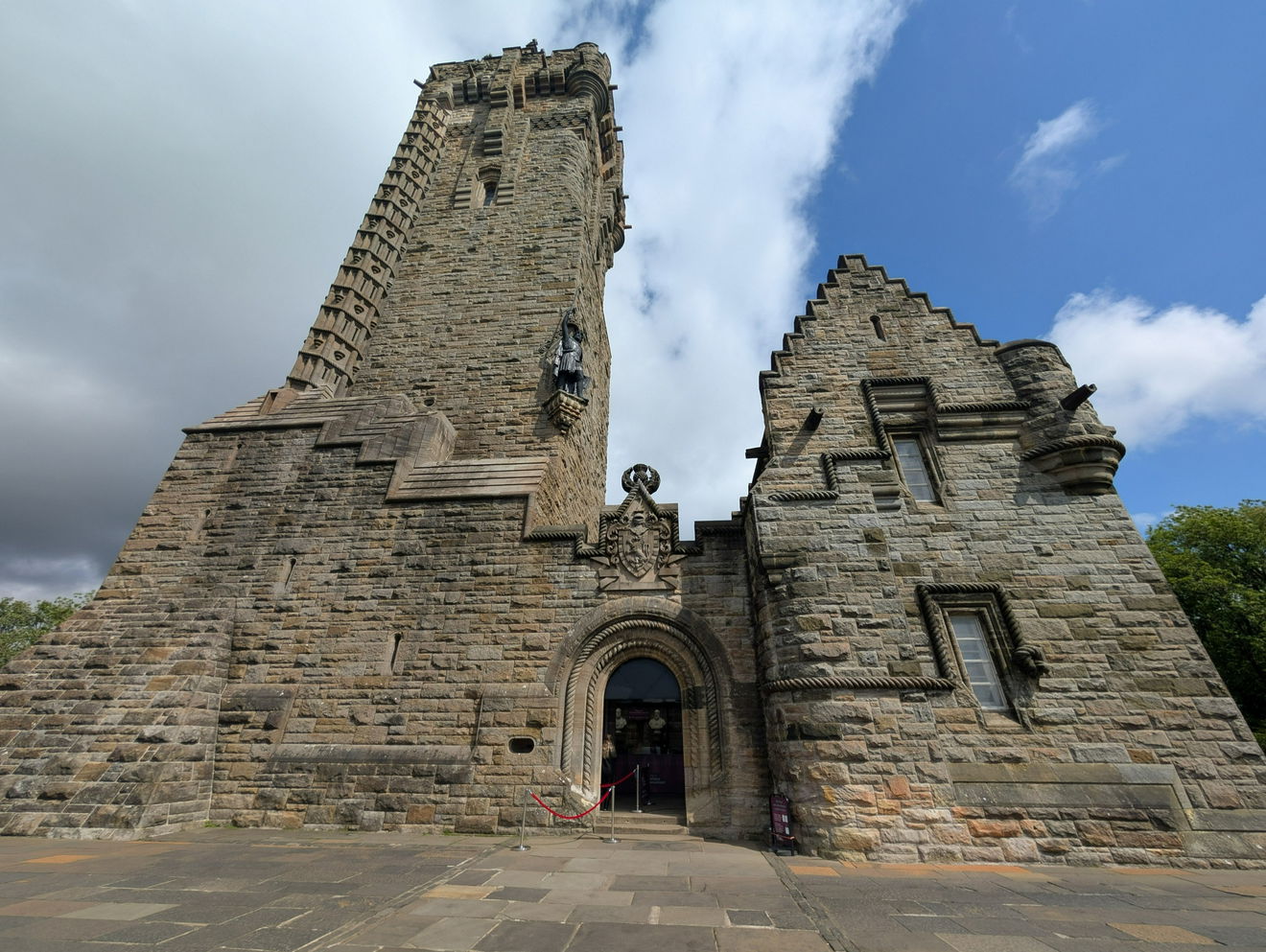
Just in case you are curious, the building to the right of the entrance is the Keeper's Lodge.
Before entering the tower, take a look up!
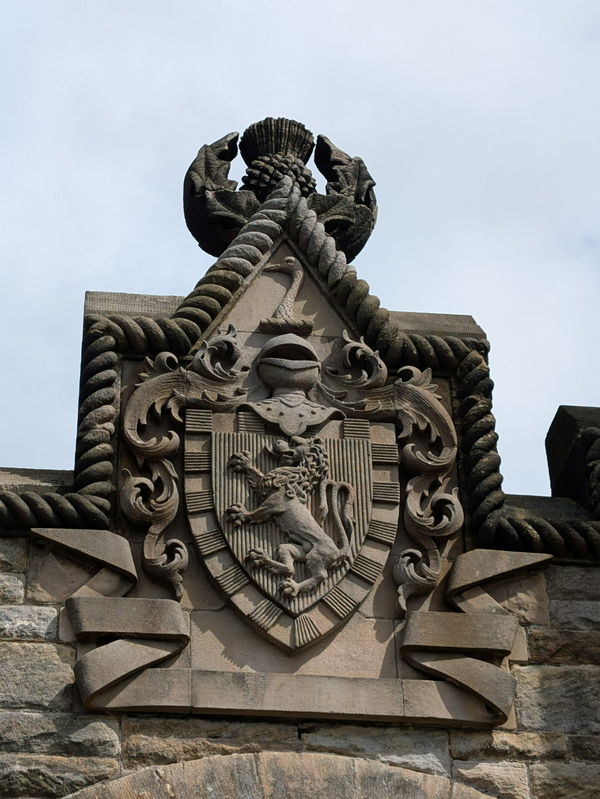
Above the door, you will find a carving of the Wallace family Coat of Arms, topped off with the national flower of Scotland, the thistle.
The thistle symbolises resilience, strength and protection, and has been used since the 13th century.
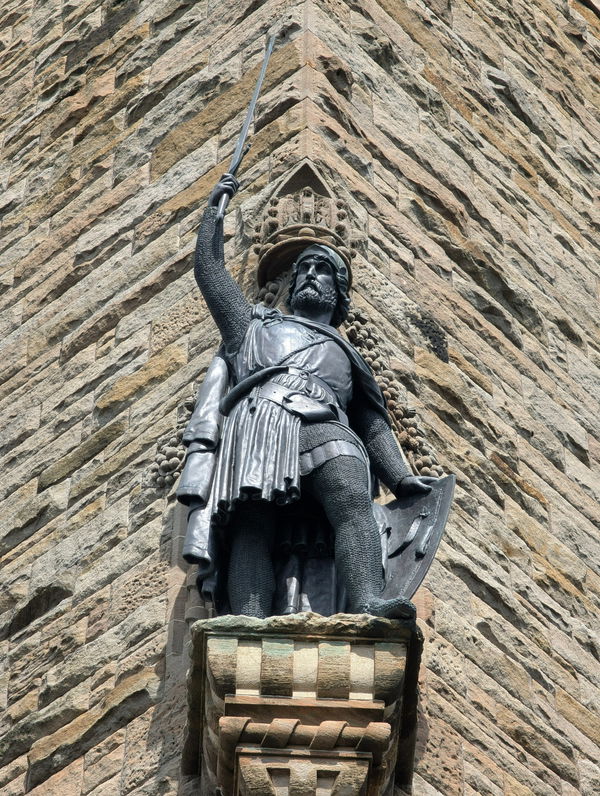
Above the Coat of Arms, sitting on a niche on the corner of the tower is a 4 metre bronze statue of William Wallace. It was created by Scottish sculptor David Watson Stevenson and was unveiled on June 25 1887.
In 2019, the statue underwent major restoration work. I think you'll agree that it's rather striking.
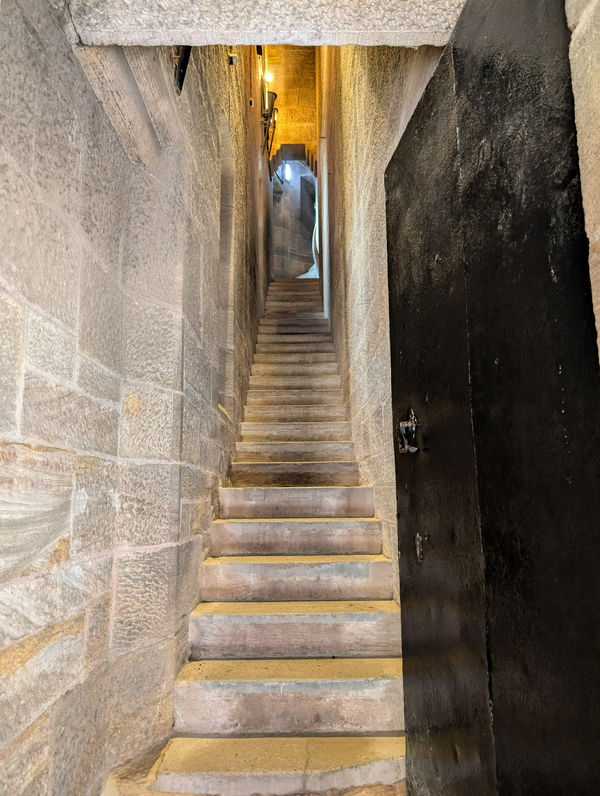
Once inside the reception area, you are guided to a staircase to the left. This straight staircase has nice wide steps, but don't let this lull you into a false sense of security.
You soon reach the first set of spiral steps, in total there are 75 of them to reach the first floor. Beware of people coming down, as they are bidirectional.
First Floor - Hall of Arms
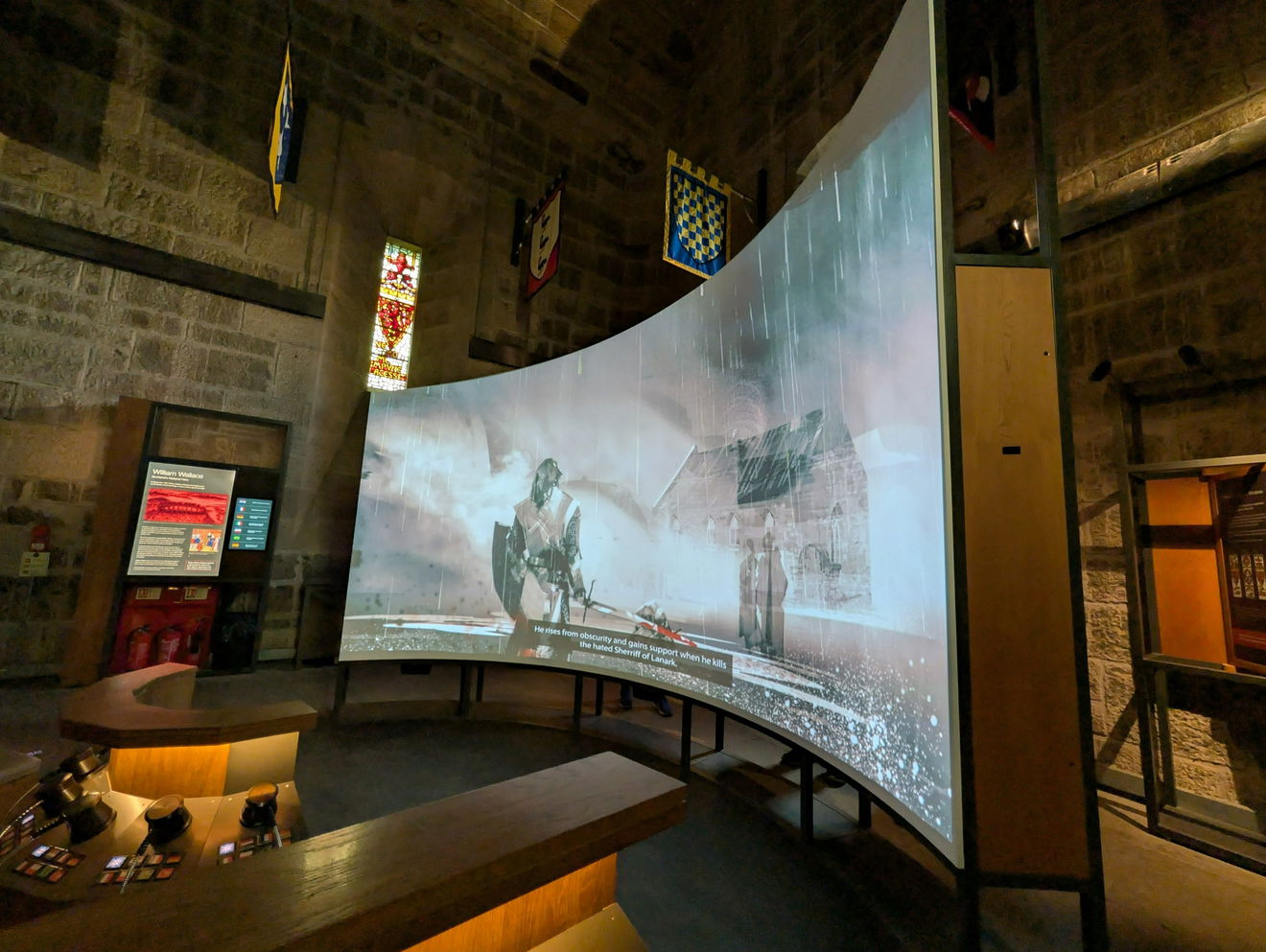
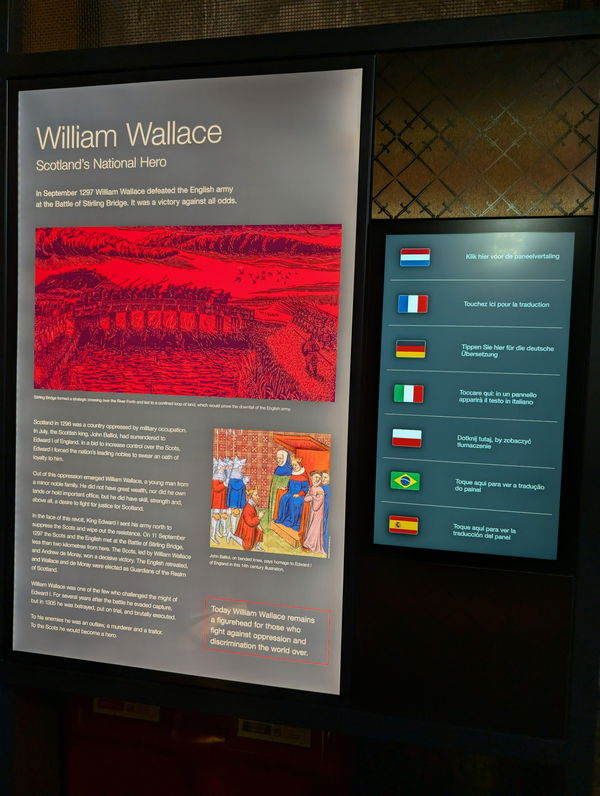
The Hall of Arms takes a look at William Wallace himself. There is a great little film, 'Wallace - The Making of a Hero', which shows how a little known man ended up paying such a viral role in the Wars of Scottish Independence and becoming leader of the Scots.
Let's have a very brief look at the life of William Wallace:
He was believed to be born around 1270 in Renfrewshire or Ayrshire, but little is known of his childhood.
In 1286, on the death of Alexander III, Scotland was left with no monarch. Eventually, a group called the Guardians of Scotland and Edward I of England, chose John Balliol to be King of Scots in 1292. Balliol's alliance with France, was seen as a betrayal by Edward, and it all kicked off.
Balliol was defeated at the Battle of Dunbar in 1296 and forced to give up his throne. Scotland was now under English rule.
Wallace first became known during the Wars of Independence in May 1297, when he assassinated William Heselrig, the Sheriff of Lanark. The same year, knowing the landscape around Stirling, he used Abbey Craig as a viewpoint and successfully defeated the English at the Battle of Stirling Bridge. As a consequence of this battle, Wallace was knighted and became the Guardian of Scotland.
In 1298, King Edward angry at the defeat headed up to deal with things himself. The Battle of Falkirk saw Edward as the successor, and Wallace retreated with heavy losses and resigned his position as Guardian of Scotland.
On 5 August 1305, Wallace was captured in Glasgow, after being betrayed by John Menteith. He was found guilty of treason and sentenced to death in London, where he was horrendously hung, drawn, and quartered.
In 1306, Robert the Bruce would take over from Wallace, continuing the fight for Scottish independence.
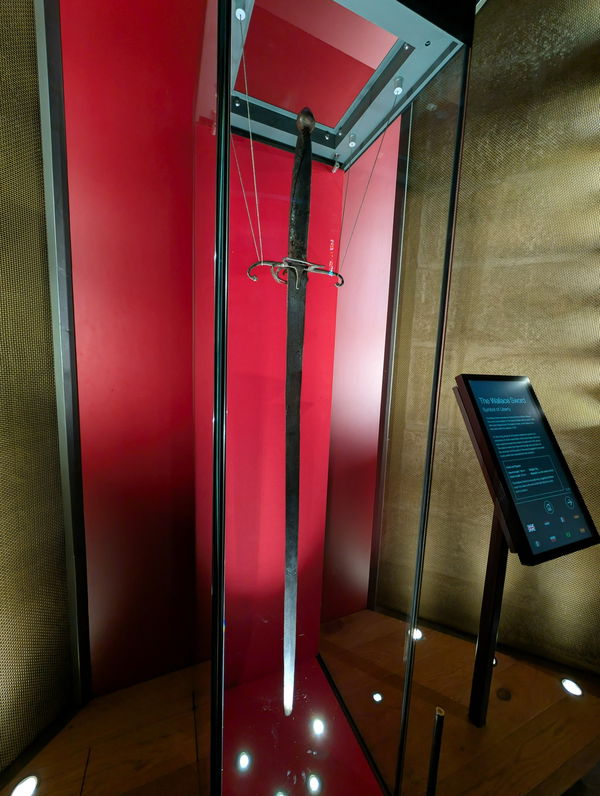
The Wallace Sword is an unmissable feature on this floor of the monument. It measures 1.68m and weighs around 3kg. This two-handed sword was first recorded in Dumbarton Castle, where he was held after his capture in 1305.
It is believed that the sword was taken from him and left undisturbed in the Dumbarton Castle, until King James IV ordered the handle to be repaired some time between 1473 and 1513.
The sword was moved to the monument in 1888, since when it has seen more recent action. In August of 1912, the suffragette, Ethel Moorhead (Edith Johnston), smashed the sword case to draw attention to women's rights. Then it was stolen 8th November 1936 by four masked men, only to be recovered at Bothwell Bridge three years later. It was then stolen again in May 1972, fortunately being returned in October of the same year.
I hope you have had a good rest while looking around, as it's time to tackle the 63 steps to reach the second floor.
Second Floor - Hall of Heroes
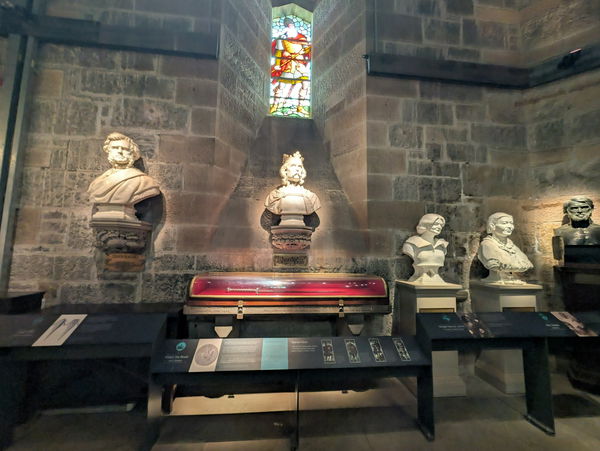
When you walk into the Hall of Heroes, a sea of white faces stare back at you. These are all Scottish individuals that have left their mark on history. They were donated at different times over the years, some by subscription and others by a donor.
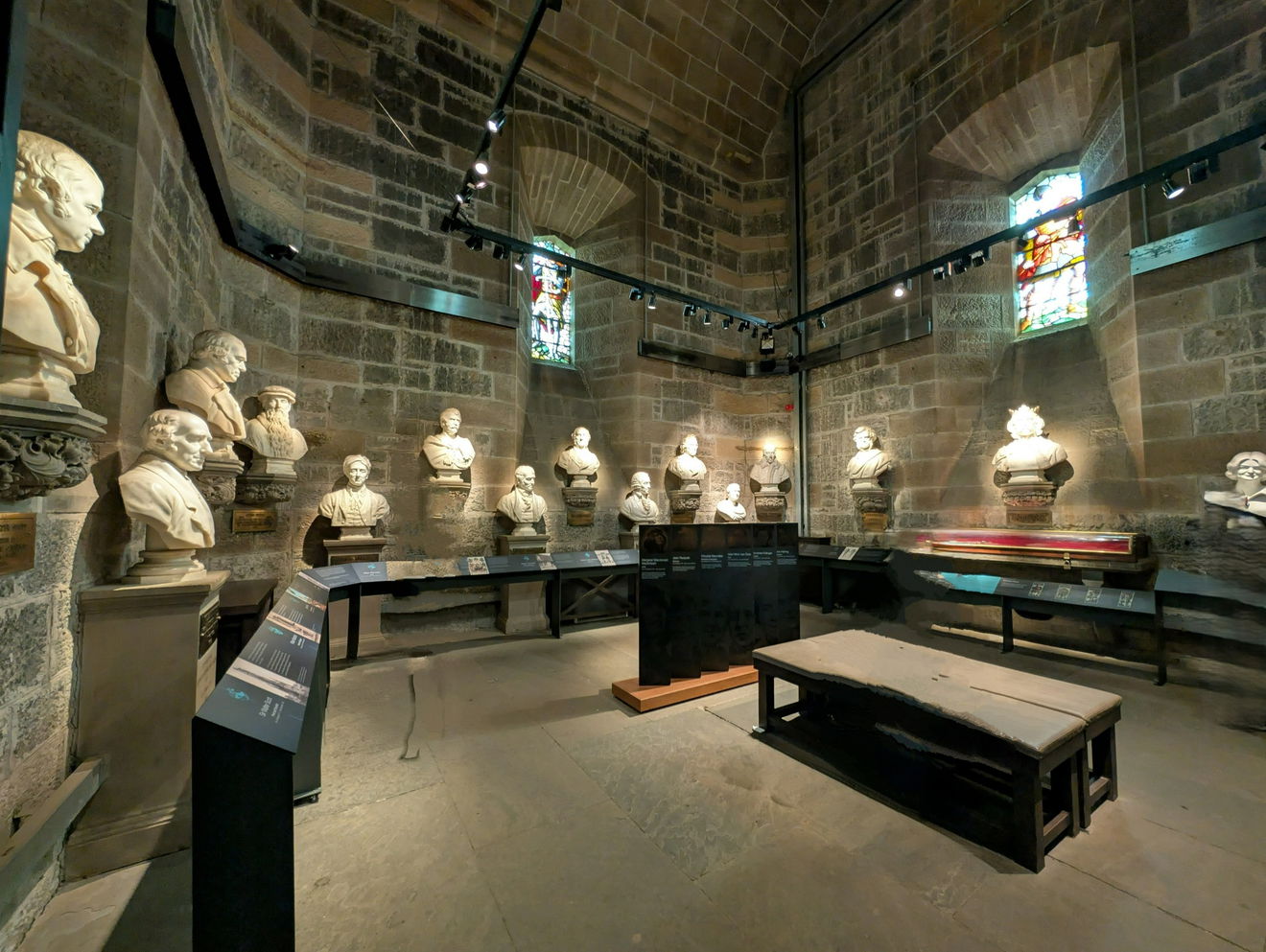
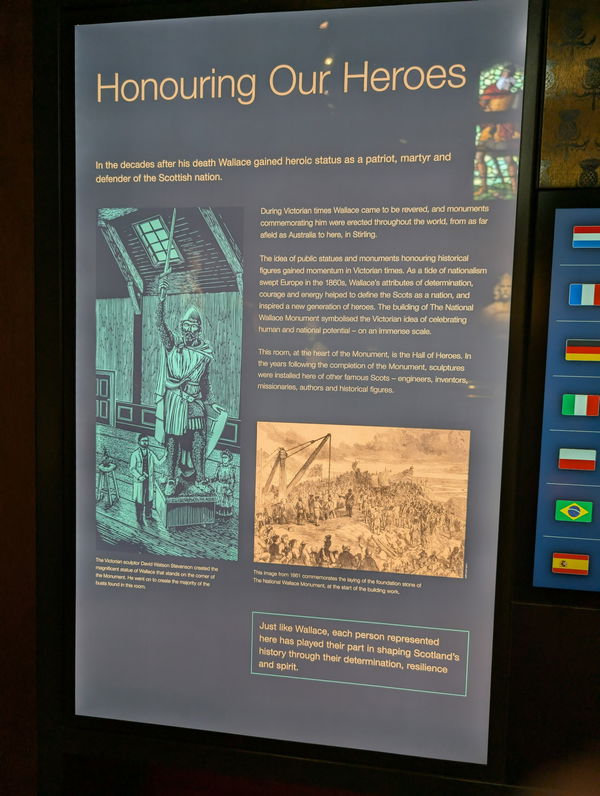
There are a total of 18 busts in the Hall of Heroes, however, there could be more added after I have written this...
The first busts were installed in 1886, and they have continues coming through to the latest in 2019. The busts in the Hall of Heroes are:
Robert the Bruce (King of Scots), George Buchanan (Scholar/Philosopher), John Knox (Reformer), Allan Ramsay (Poet), Robert Burns (Poet), Robert Tannahill (Poet), Adam Smith (Economist), James Watt (Engineer/Inventor), Sir Walter Scott (Author), William Murdoch (Engineer/Inventor), Sir David Brewster (Physicist), Thomas Carlyle (Philosopher/Writer), Hugh Miller (Geologist/Writer), Thomas Chalmers (Minister), David Livingstone (Explorer/Missionary), William Ewart Gladstone (Prime Minister), Mary Slessor (Missionary), Maggie Keswick Jencks (Designer/Founder of Maggie's Centres).
Each of these Scottish individuals has made their own valuable contribution to history and culture.
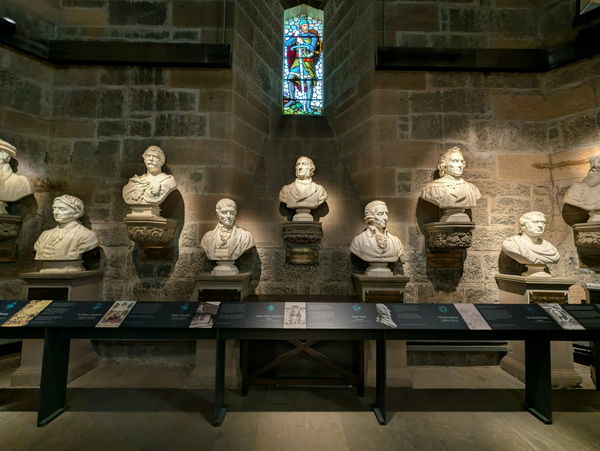
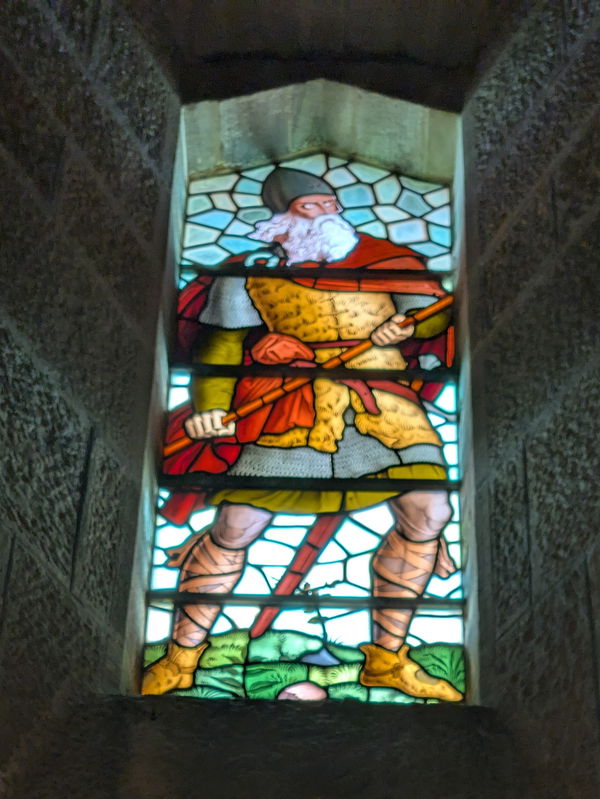
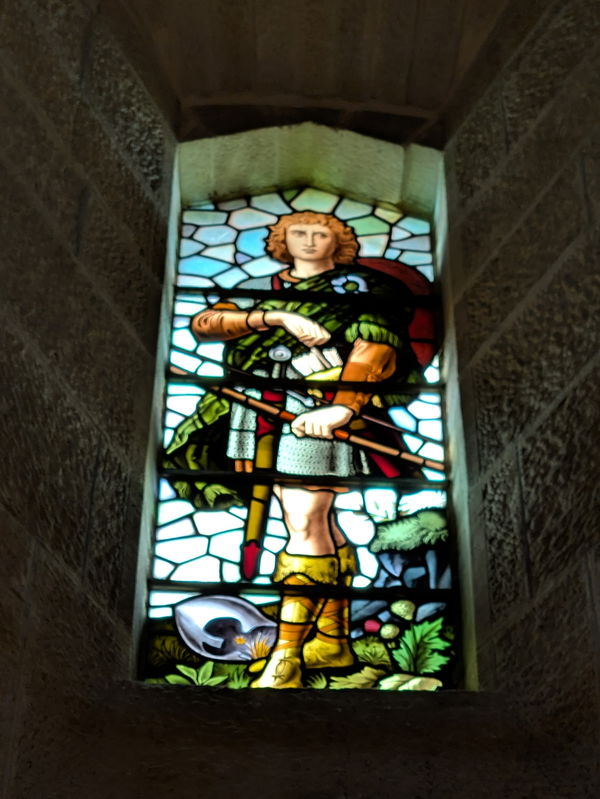
In 1886, eleven stained glass windows installed. They are the work of the James Ballantine & Son, a renowned Scottish stained glass window specialist.
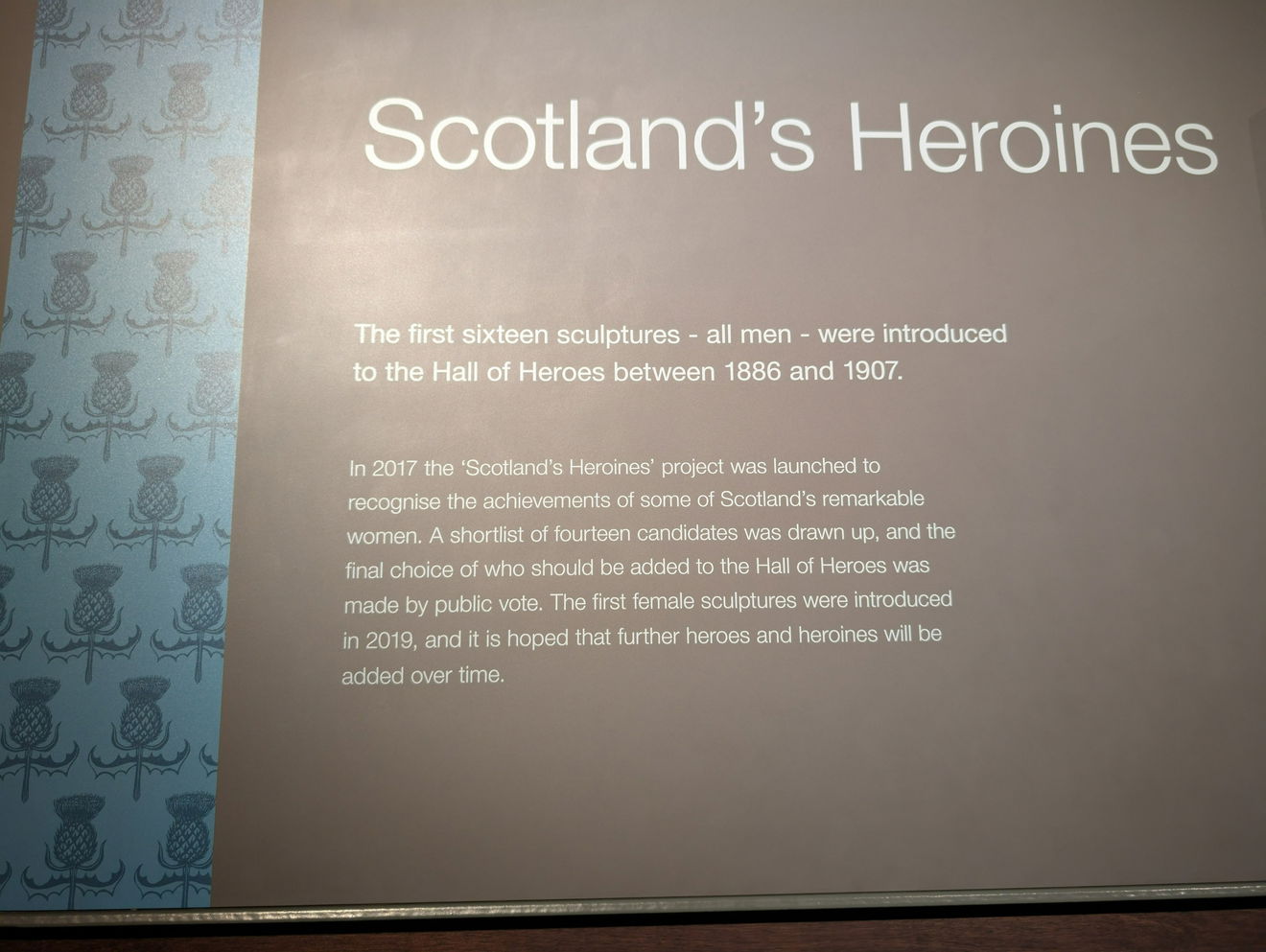
In 2017, the campaign 'Scotland's Heroines' was launched to recognise the achievements of Scottish women in the Hall of Heroes. Thousands of votes were cast by the public which resulted in Mary Slessor and Maggie Keswick Jencks, being selected to join the gallery. The ladies were added in April 2019.
If you are ready, it's time to take the 63 steps to the third and final exhibition floor.
Third Floor - Royal Chamber
The Royal Chamber is the third and final floor with a gallery. This is where you learn more about the Battle of Stirling Bridge in preparation of seeing the actual location from the Crown above.
A viewfinder shows how the landscape looked in Wallace's time and how it has changed.
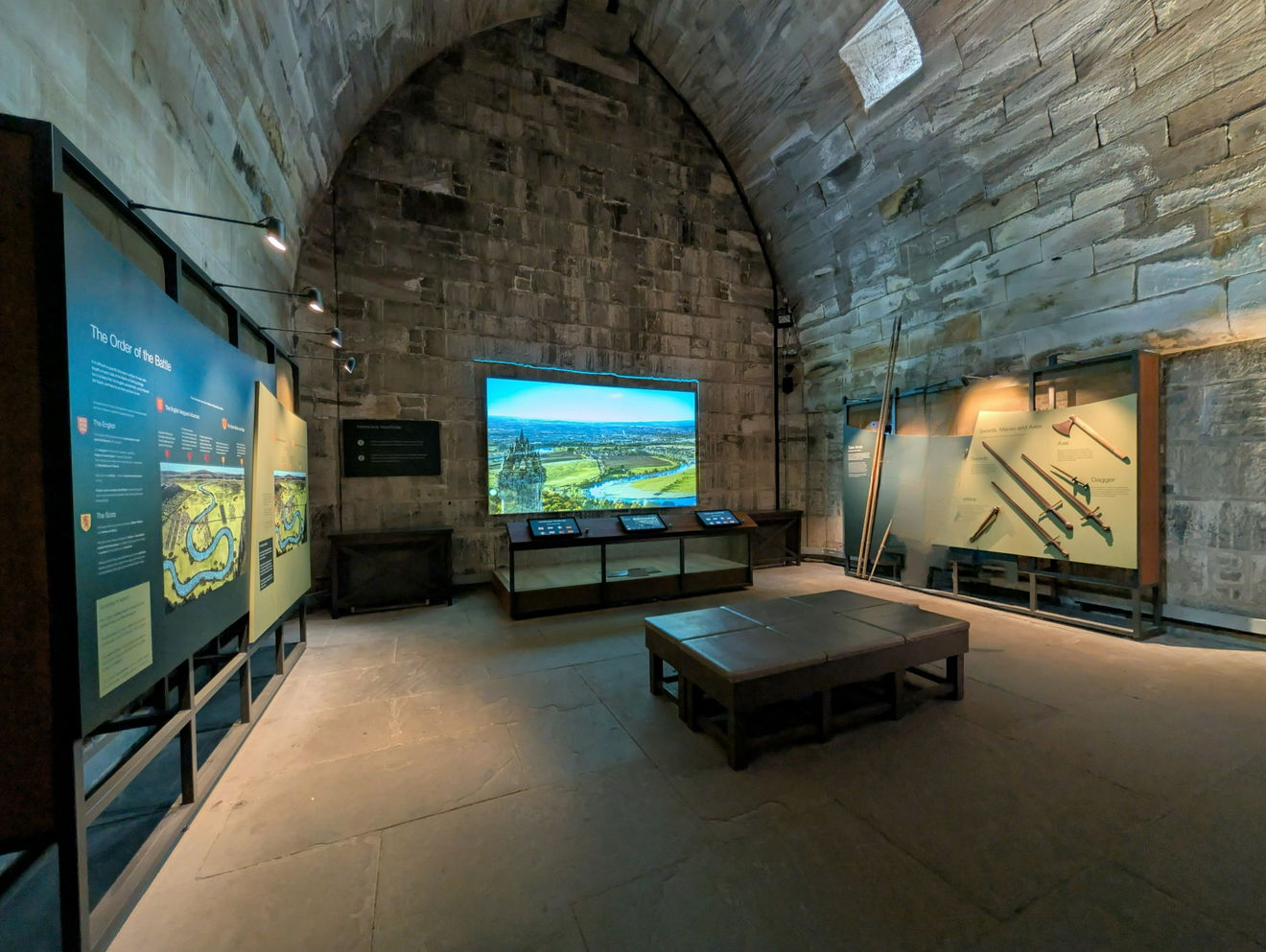
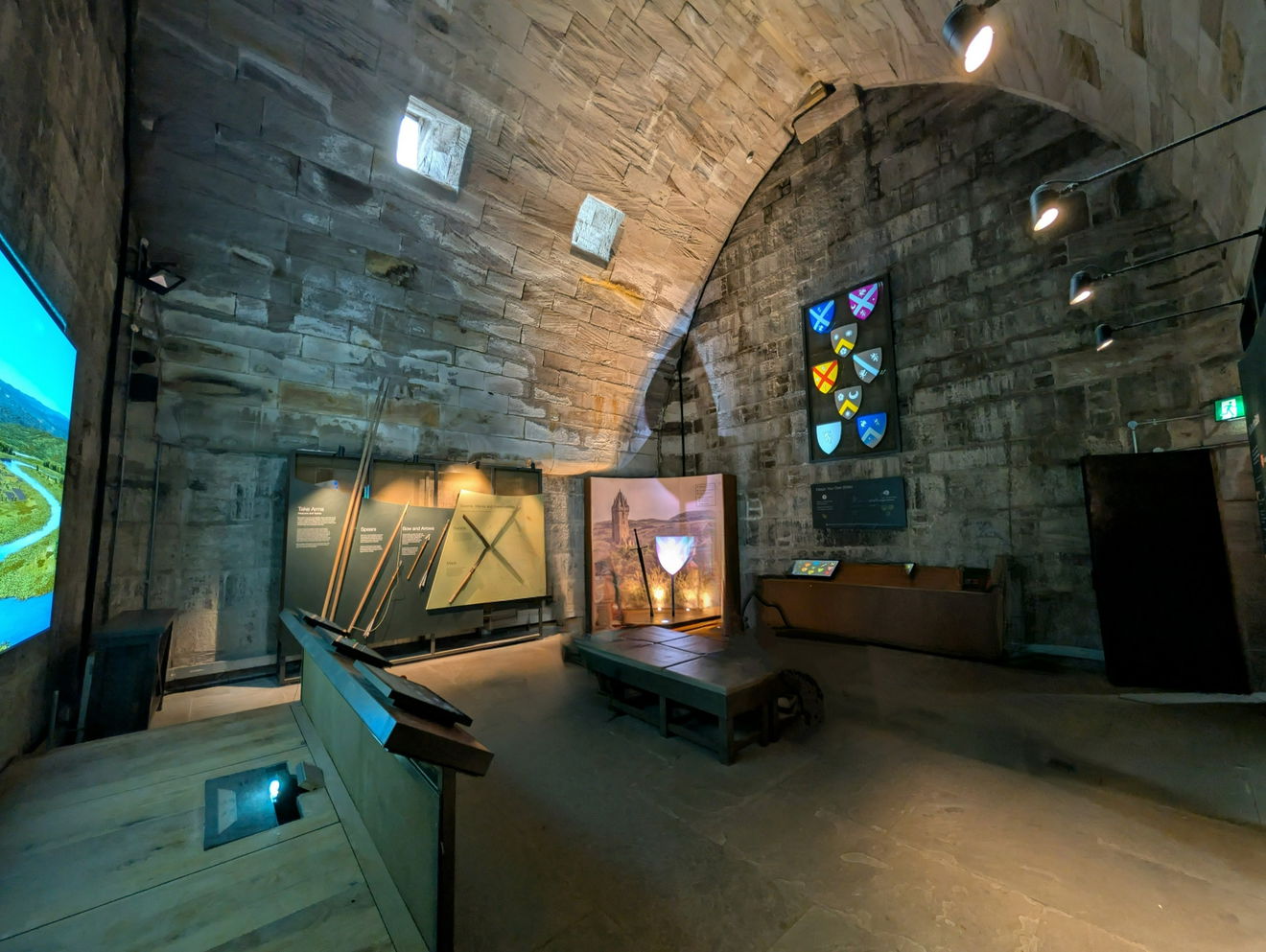
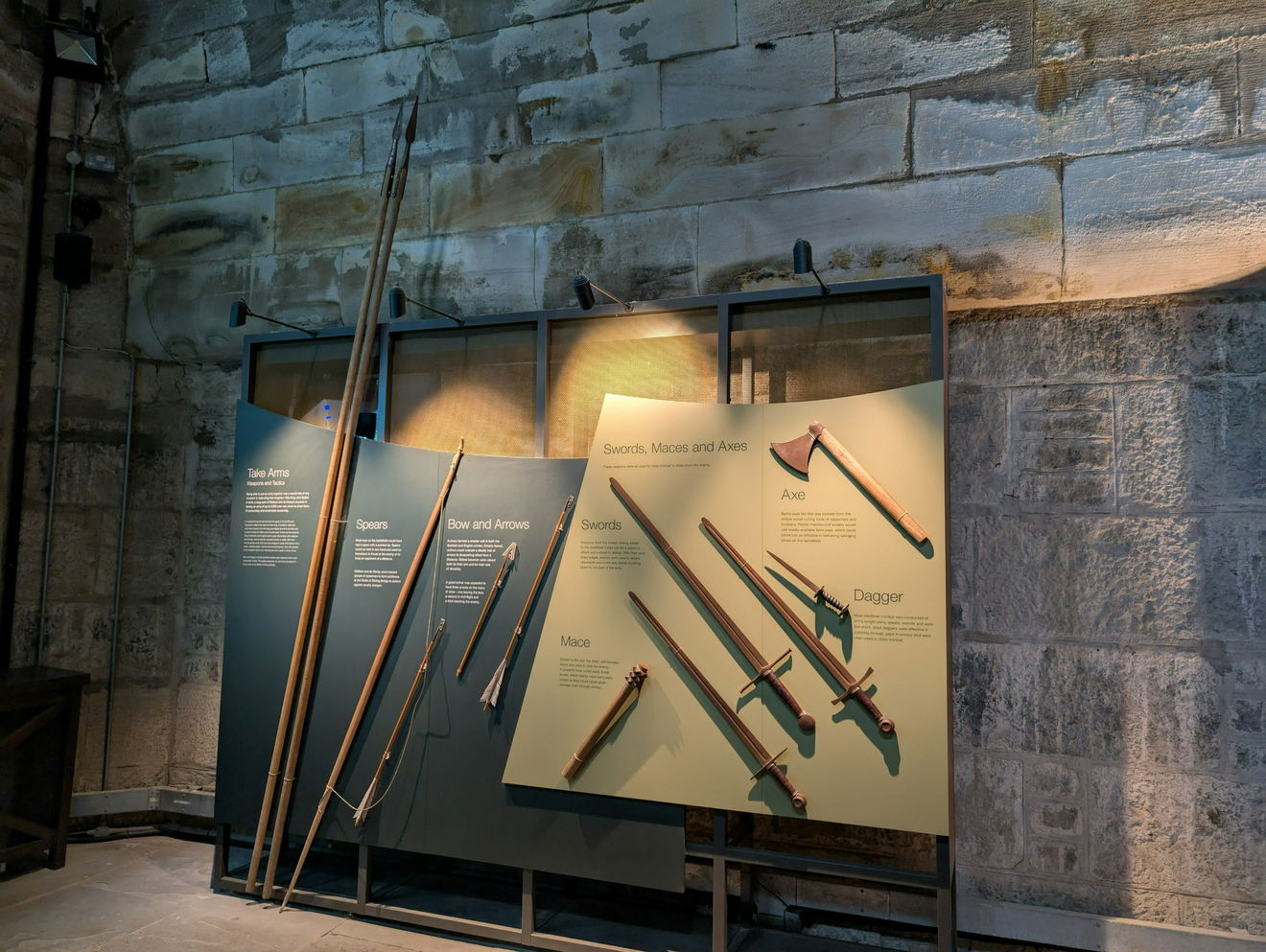
There is a display of the weapons that would have been used by both sides during the battle. They were very well secured, so Mr L couldn't get any ideas!
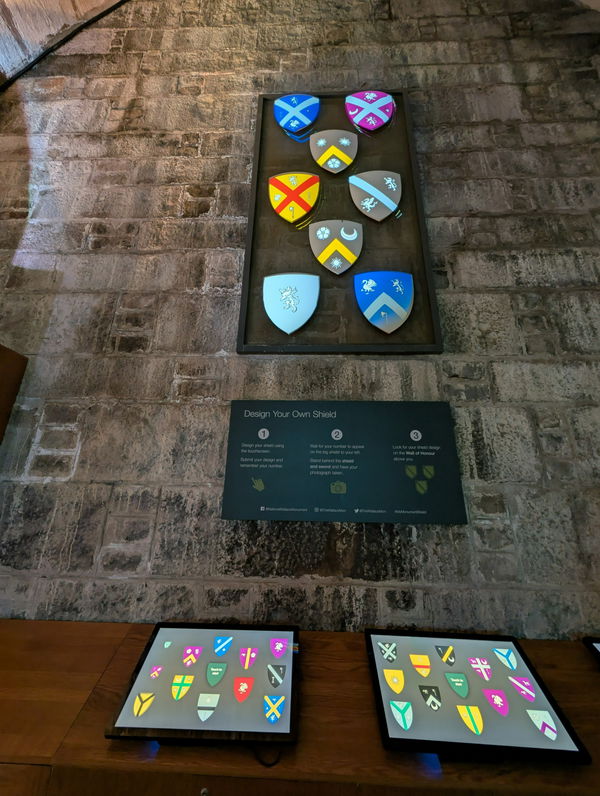
Heraldic designs are used on a Coat of Arms, which makes it easy to identify an enemy from a fellow compatriot.
In the Royal Chamber, you are able to design your own and have a picture taken of you holding a shield adorned with your artwork.
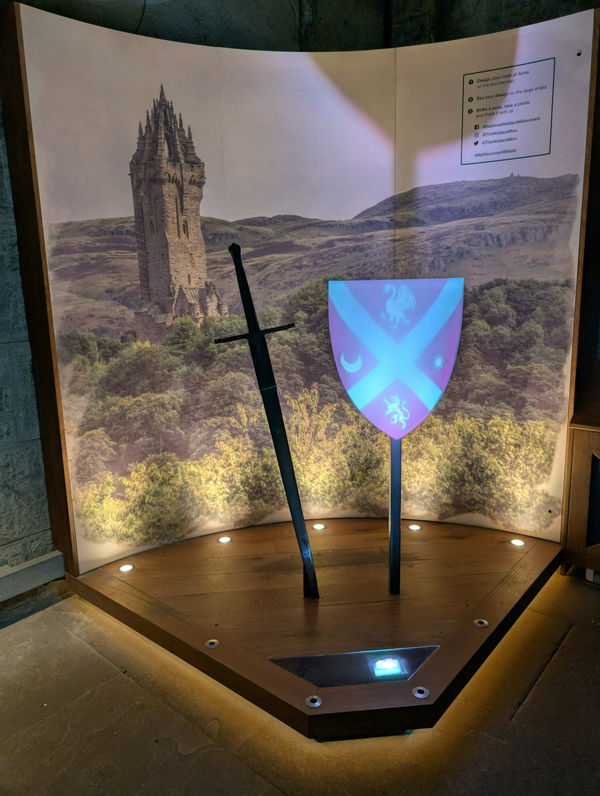
It's now time for the icing on the cake, or rather 'jewel in the crown'.
It's time to take the final 45 steps to reach the Crown. Come on, you can do it!
The Crown
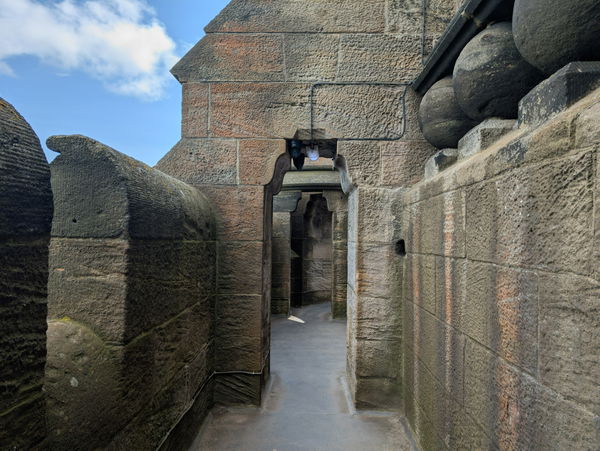
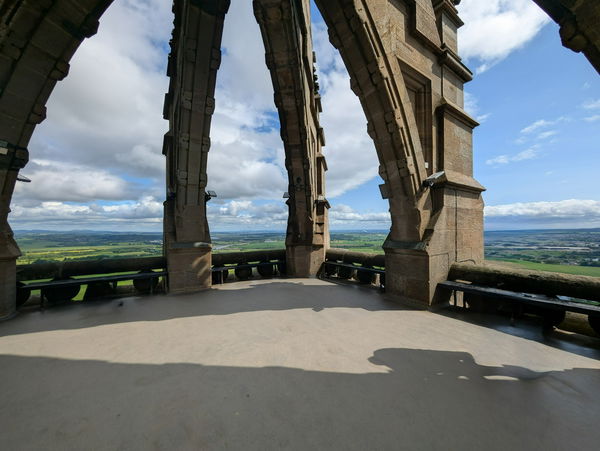
Once you reach to top of the spiral staircase, you reach the wall walk which guides you around the top of the tower. Finally you reach platform under the ornate crown and the breath taking views.
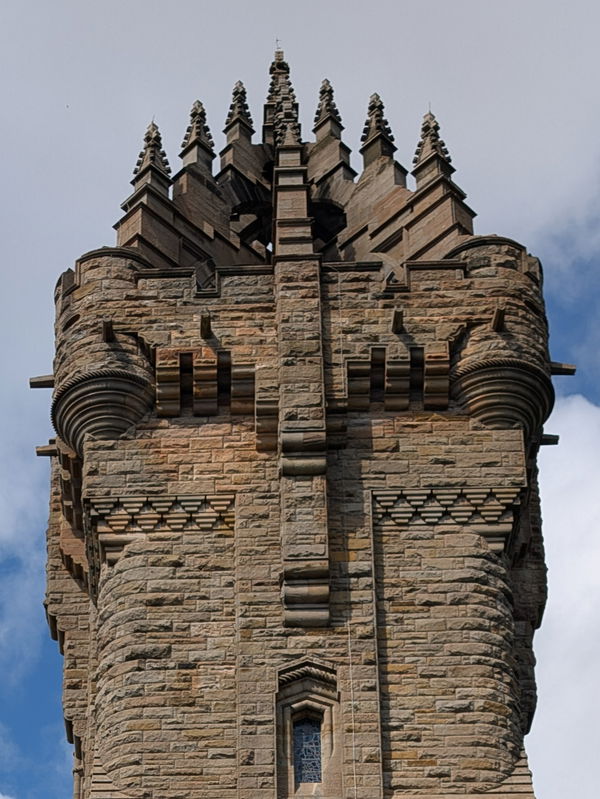
It is worth looking up to see the craftmanship that has gone into the construction of the crown.
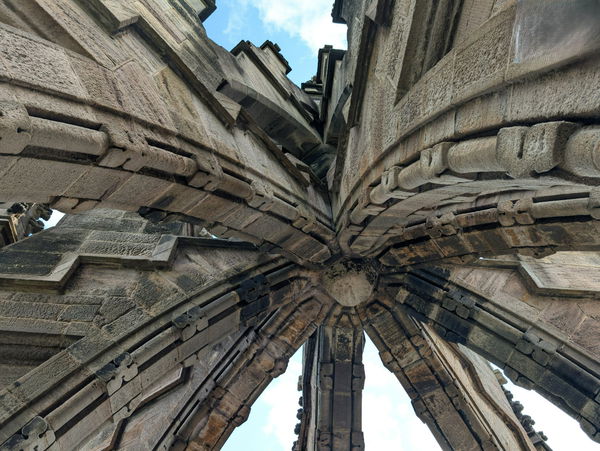
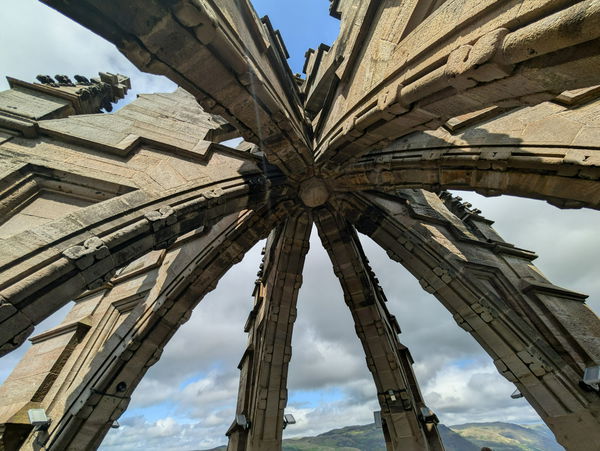
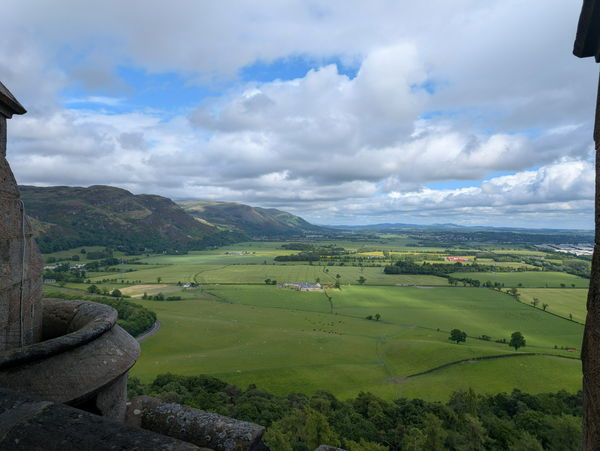
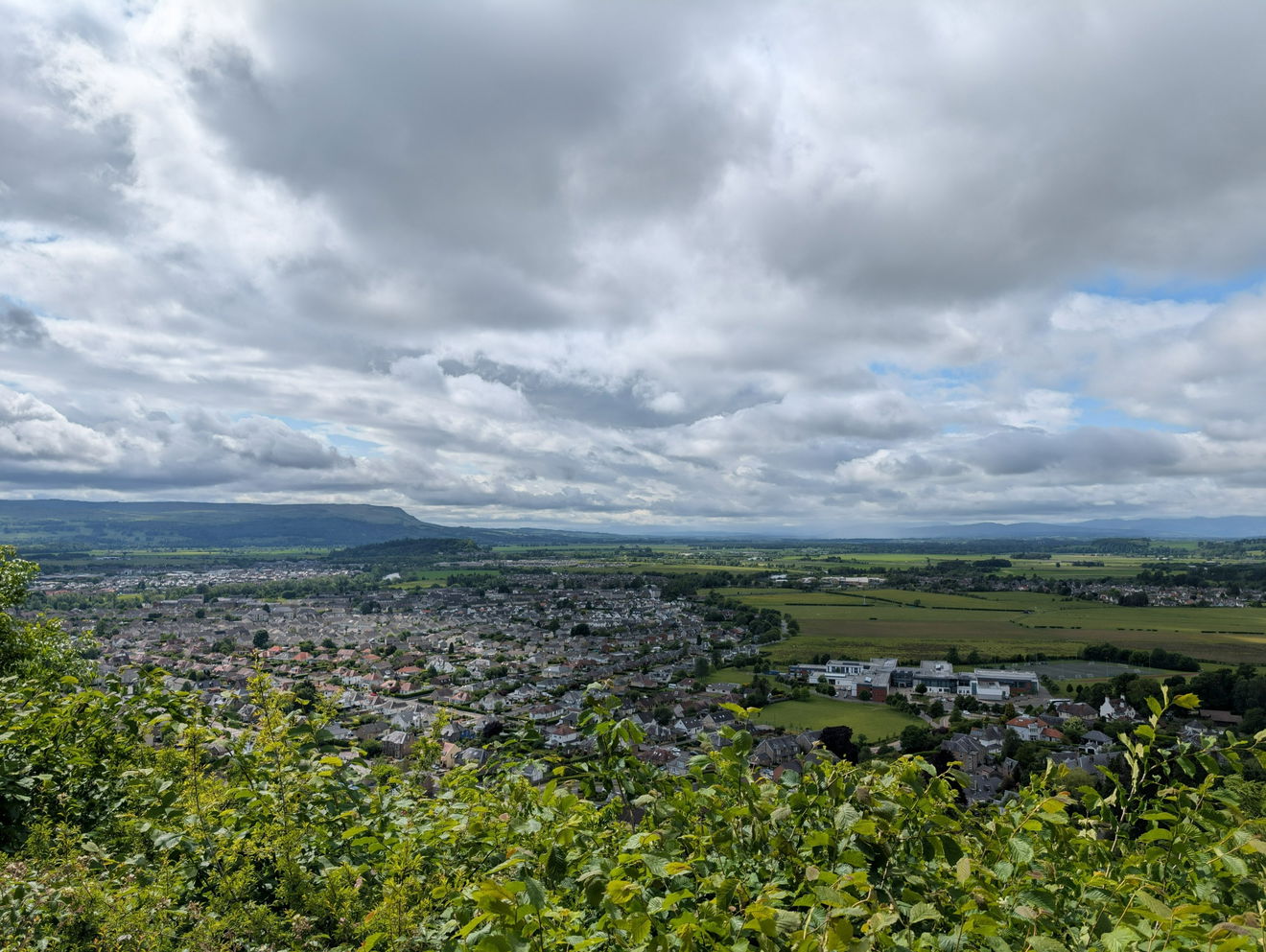
It's hard to know which view to take in first, but lets start with the south east and the views of the River Forth as it winds its way towards the Firth of Forth.
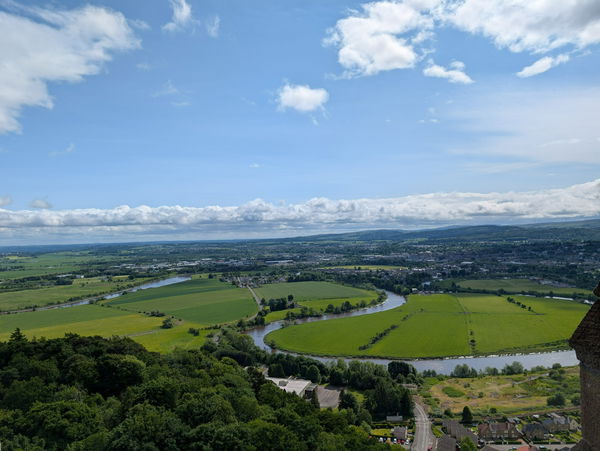
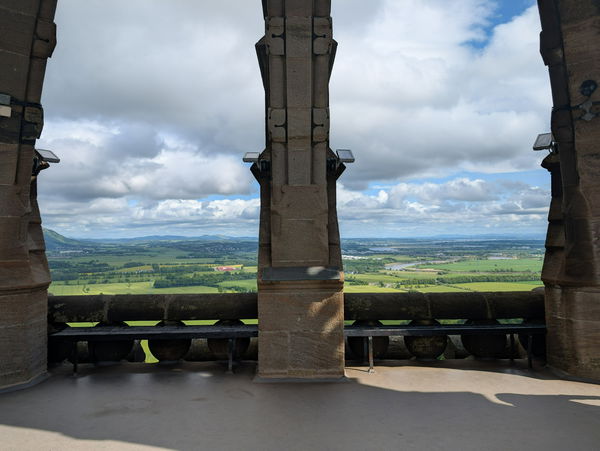
To the south west, you can see the Stirling Castle, the River Forth and the location of the Battle of Stirling Bridge.
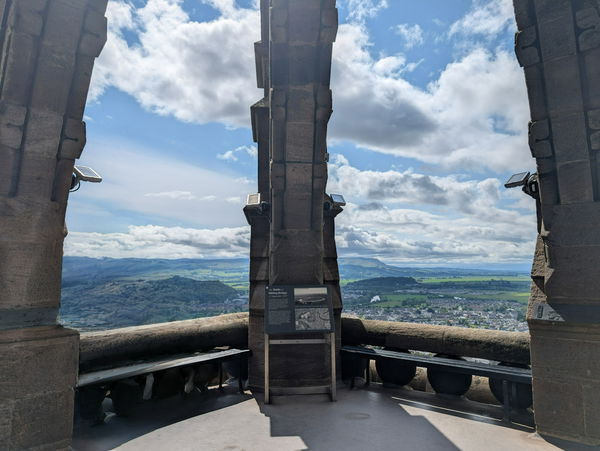
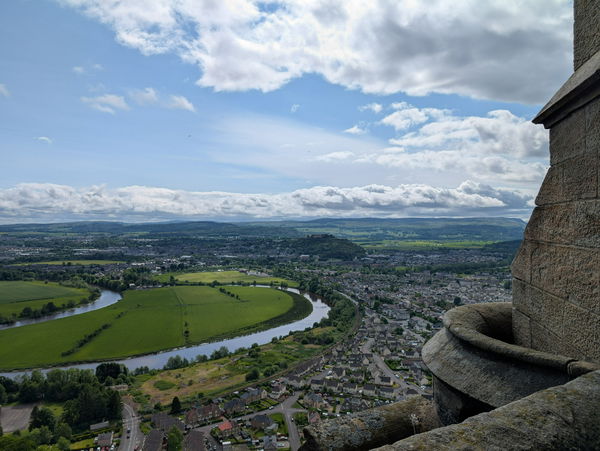
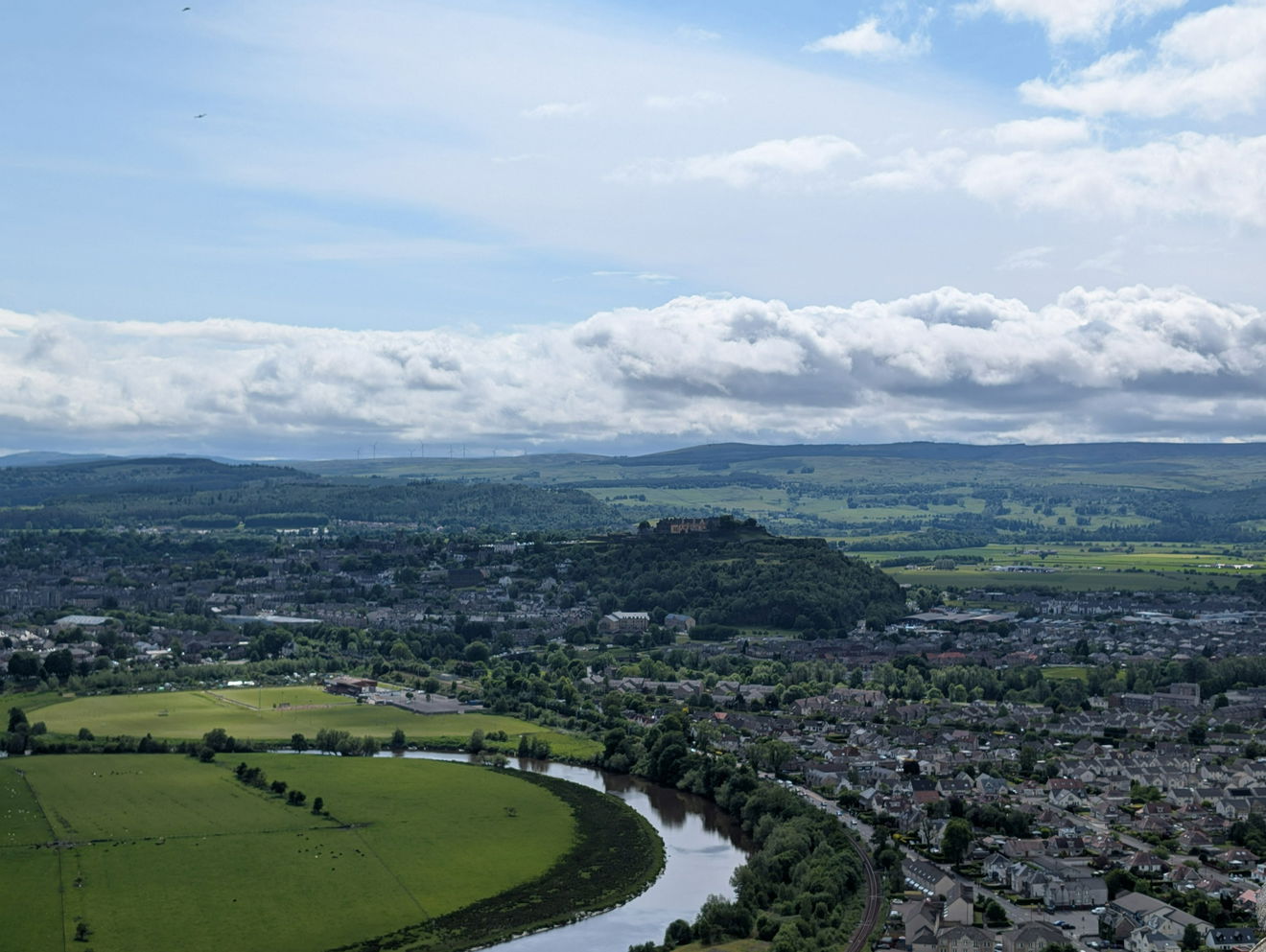
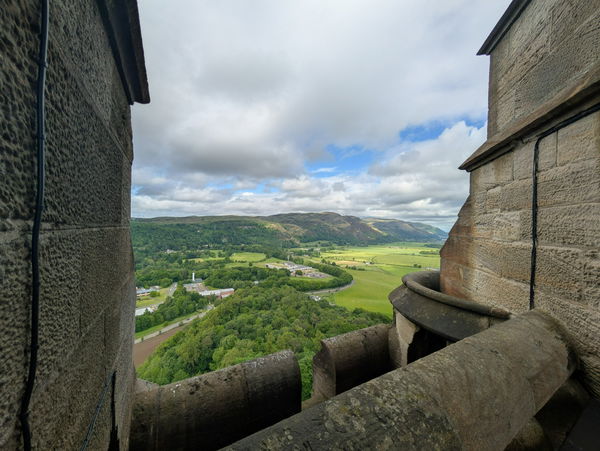
To the west and north west are views over to Ben Lomond and the Trossachs.
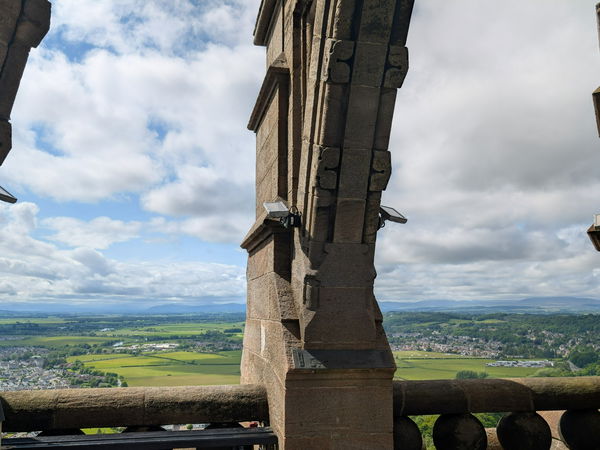
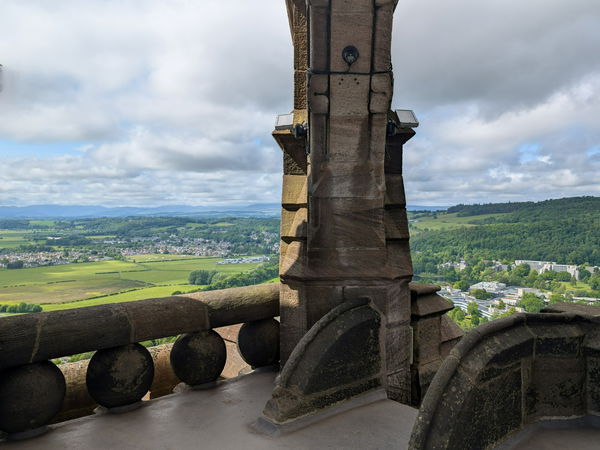
The views to the north east are of the rolling Ochil Hills.
The Walk Up
Part of the fun of visiting the Wallace Monument is the walk up. From the bottom car park, where there is a cafe, shop and toilets, take path that runs parallel to the road that runs behind the building.
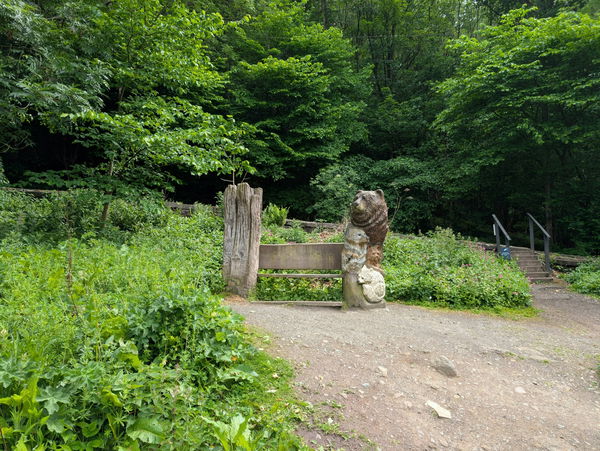
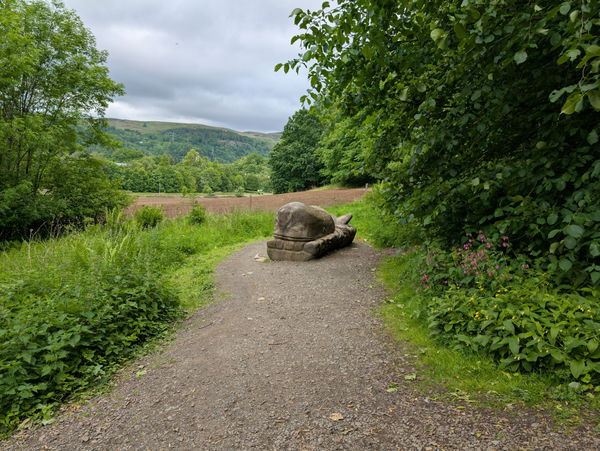
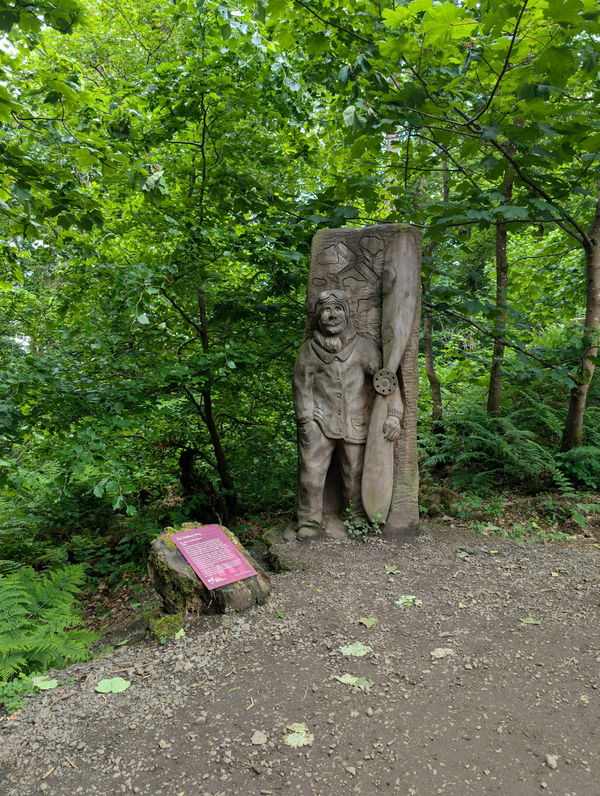
There are some interesting sculptures to enjoy all the way up.
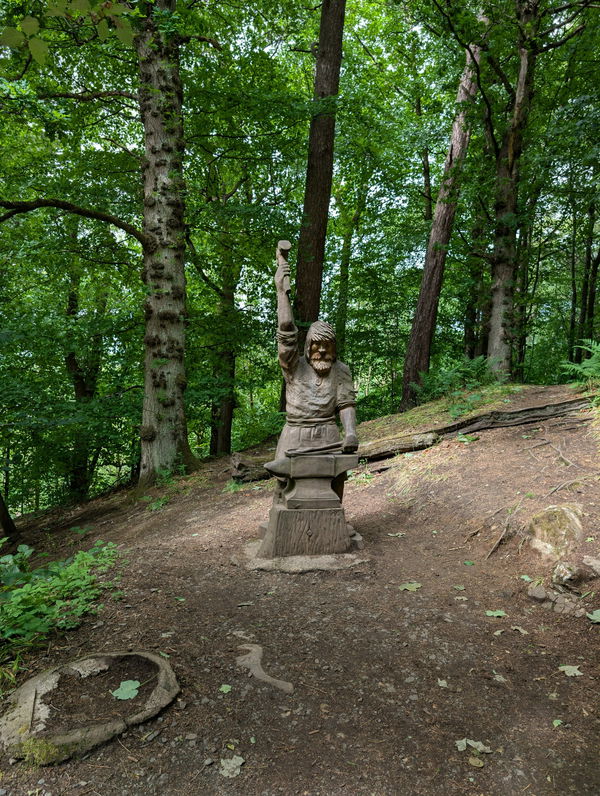
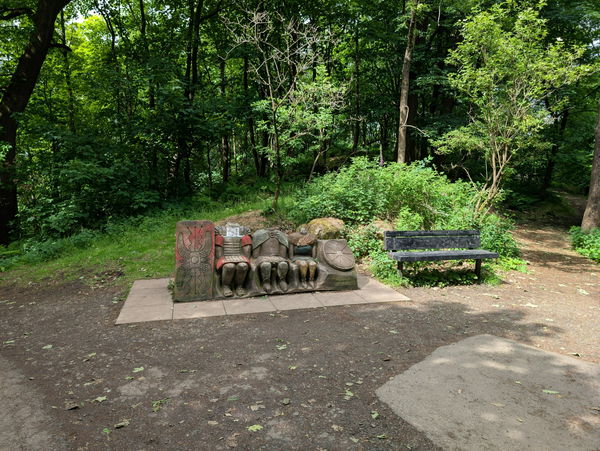
When you come to the headless bench of characters, maybe place your head in there and get someone to take a photo.
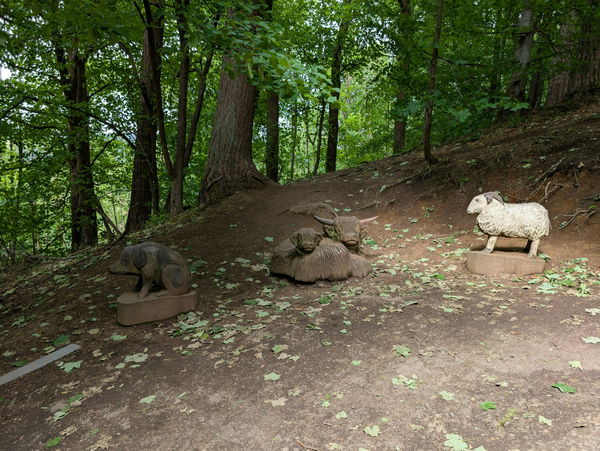
Be careful as you cross the road and the path continues to zig zag up the hill.
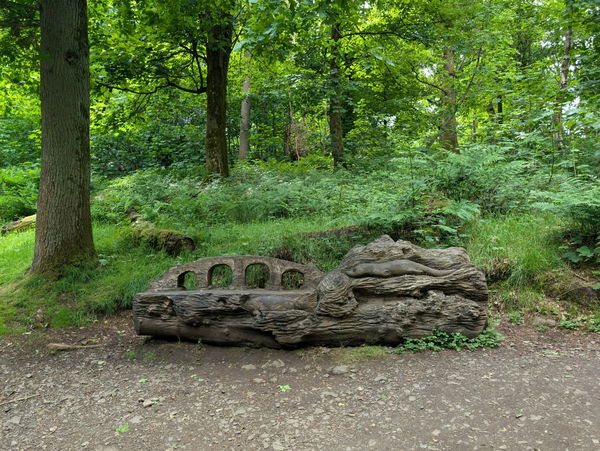
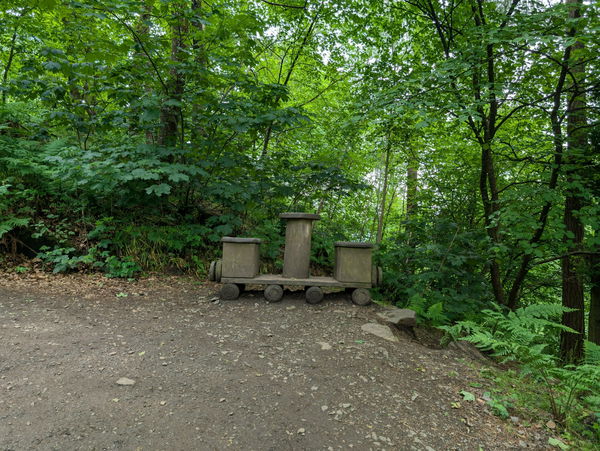
The carvings just keep on coming.
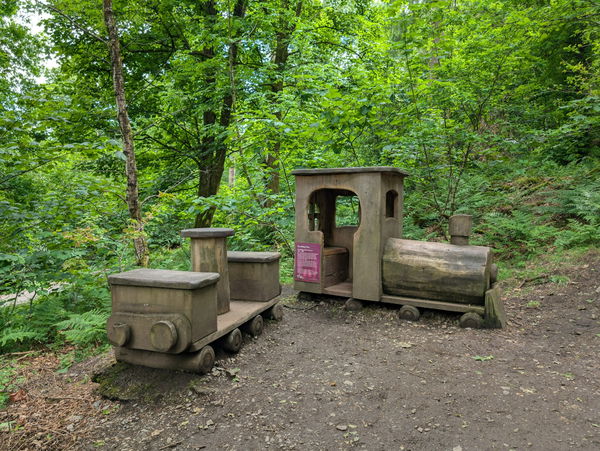
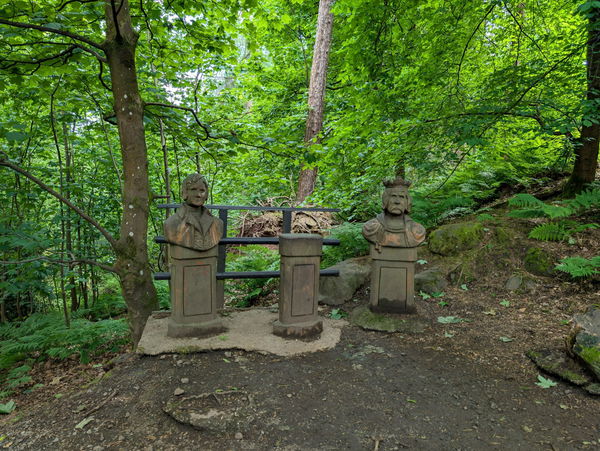
I bet you wish the train was real, so you could hitch a ride to the top. Not long to go now.
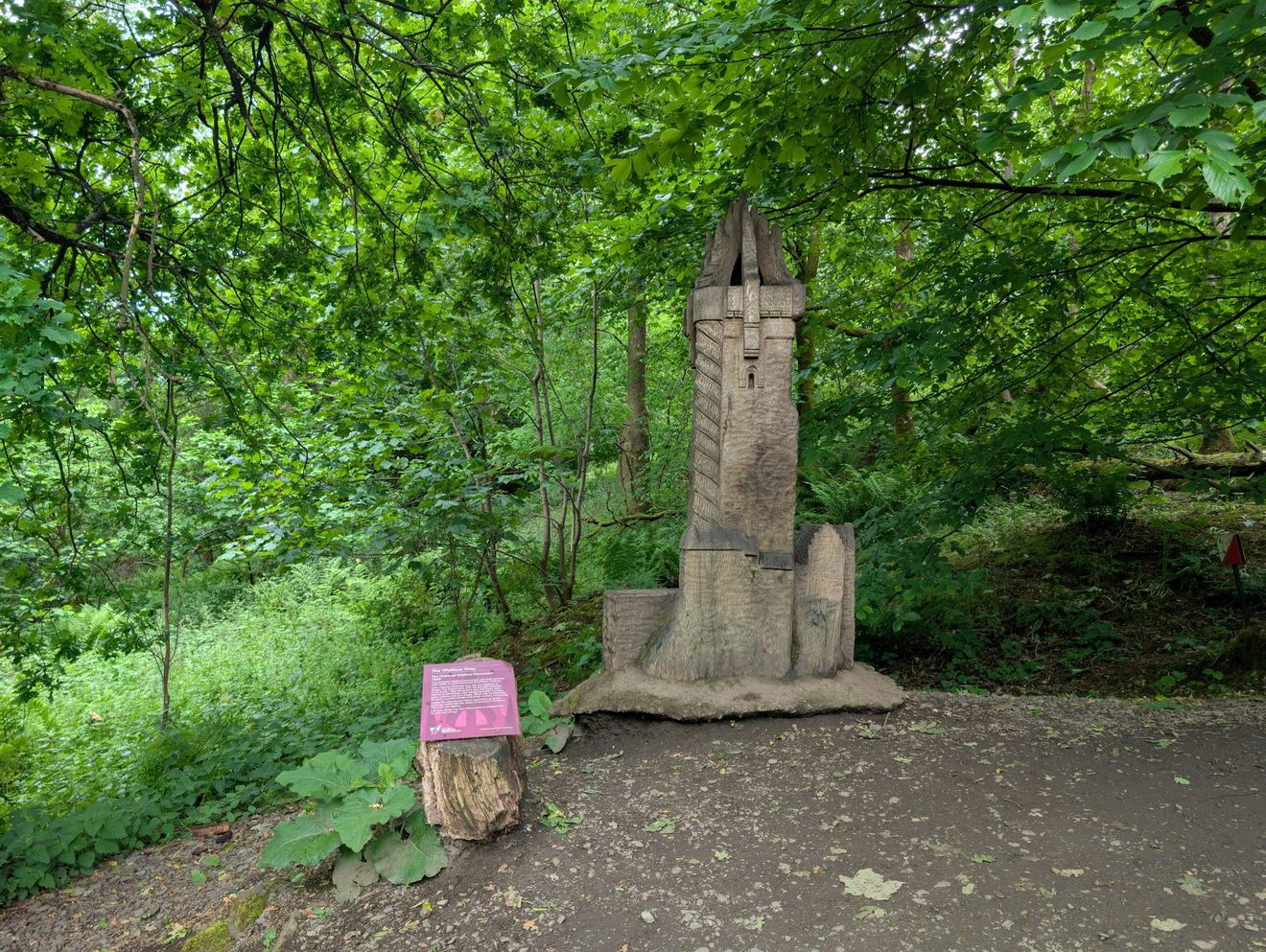
My favourite is the carving of the Wallace Monument, absolutely brilliant.
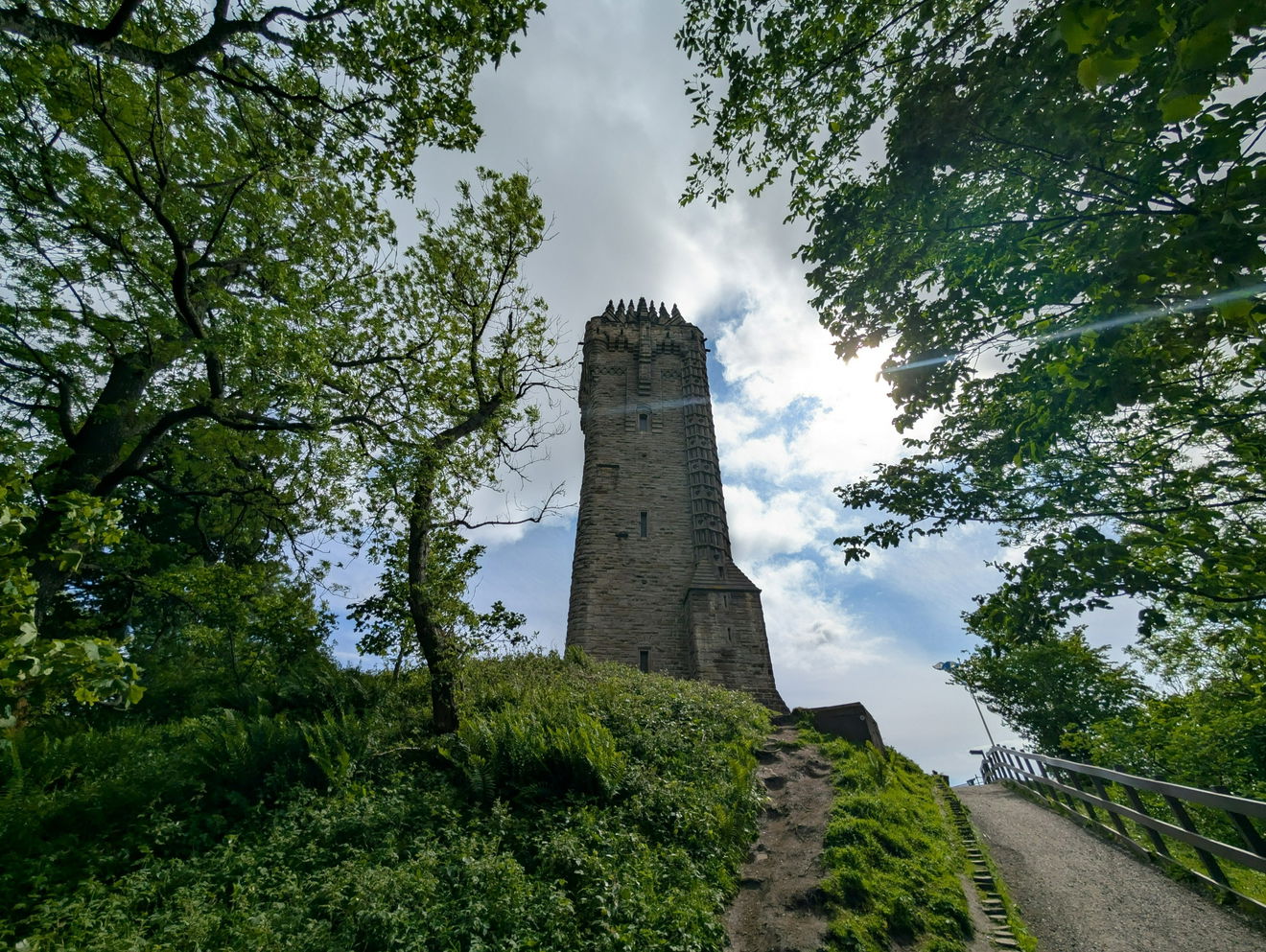
Before you know it the tower itself comes into view. What a beautiful and majestic building.
Make sure you enjoy the views from the ground before you head up to the dizzy heights of the crown.
I hope you enjoyed this quick tour, now it's time for you to plan your visit, if you haven't already!
To help you out, here is a link to the National Wallace Monument Website where you can find opening times and buy tickets.
It is just over 0.5km with 80m of ascent from the car park to the Wallace Monument.
Follow the above route, or find on OS Maps.
Get 3 points if you have visited this place. Already visited by 39 VIPs.
Login to the VIP area to add places to your bucket list, mark them as visited and more importantly see where you rank on the league table.
How To Find Wallace Monument
Where Is Wallace Monument?
Lat / Long
56.13873618646418, -3.9176754098149162
What three words
Where To Park For Wallace Monument?
Lat / Long
56.14037120624262, -3.9192356018003784
What three words
There is a large car park for the Wallace Monument at the bottom of the hill.
Contributed by Lorraine London
I have been a keen hill walker for many years and more recently enjoy trig bagging. When I'm not exploring Northumberland, County Durham and Yorkshire, I spend most of my holidays in bonny Scotland. Other than hills, I love investigating ruinous buildings and waterfalls. I have been a member of NT and EH for years, which also gives me access to Historic Environment Scotland places.
More Places from Lorraine
More Places In Stirling
Find more fabulous places in Stirling, Scotland and if you know of a place we haven't listed, then let us know.
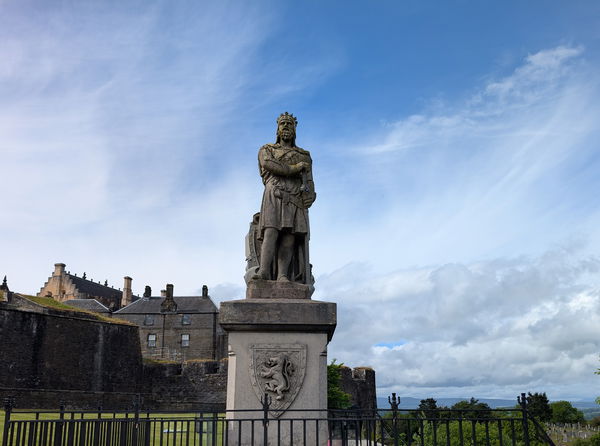
Robert The Bruce Statue Stirling Castle
Statue Stirling ScotlandA statue of Robert the Bruce that sits in front of Stirling Castle with views of the Wallace Monument and Ochil Hills.
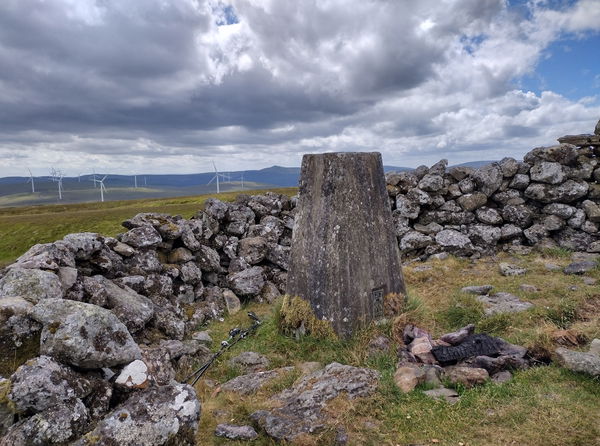
Carleatheran Trig Point
Trig Point Stirling ScotlandThe Carleatheran trig point is sits on the Gargunnock Hills (485m) near Kippen.
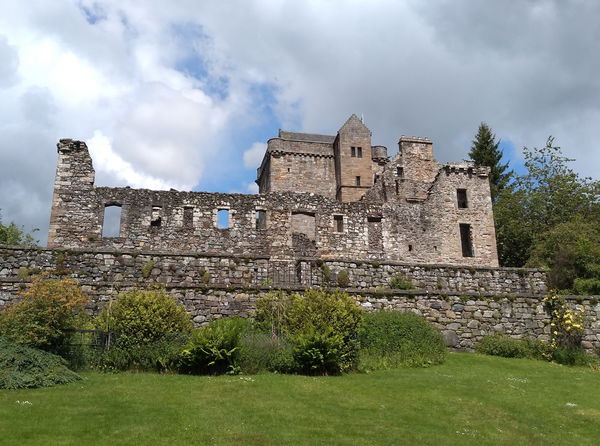
Castle Campbell
Castle Stirling ScotlandAn impressive 15th century ruinous castle, located in a fantastic position on the foothills of the Ochils near Dollar.
More Towers
So this tower wasn't enough and you want more? Don't worry we have you covered.
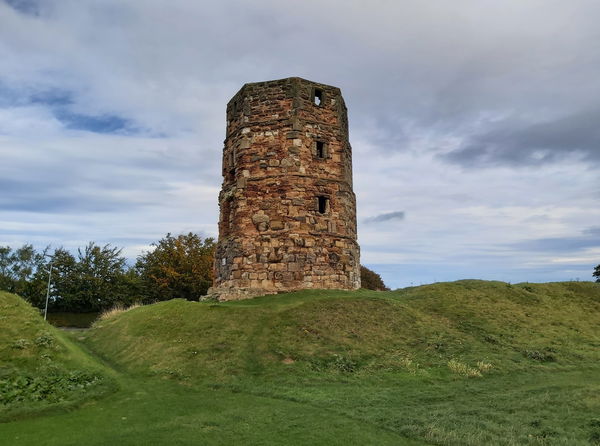
Berwick Bell Tower
Tower Berwick Upon Tweed NorthumberlandAn octagonal bell tower in Berwick which was built in 1577 as a medieval lookout post and alarm system.
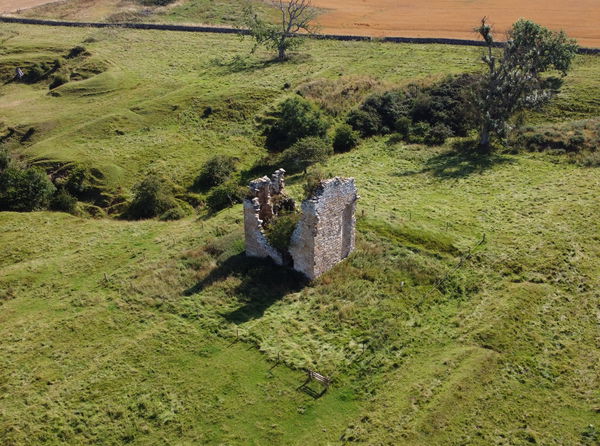
Timpendean Tower
Tower Jedburgh BordersA ruined 15th century tower house near Jedburgh in the Scottish Borders.
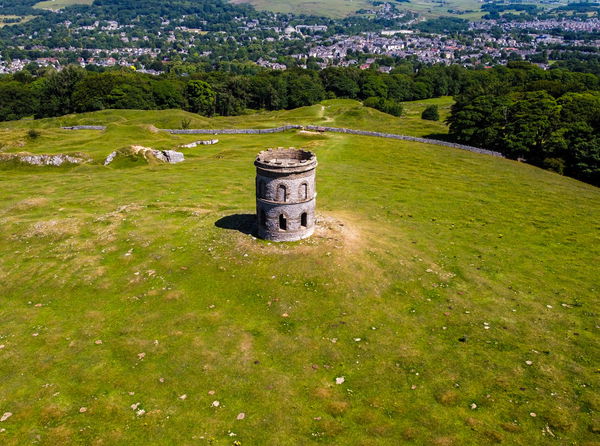
Solomon's Temple
Tower Buxton DerbyshireA 6 metre Victorian folly built in 1896 on a Bronze Age barrow, replacing an earlier tower by Solomon Mycock and offering panoramic views of Buxton and the Peak District.
Never Miss A Fabulous Place
If you are afraid of missing out on all the fabulous places we post, or just want to be the first to know, then sign up to the Fabulous North.
Each week we will email you all the brand new places that we visit.
Sign Up To Alerts

Find Us On Facebook
We post all our new places daily on our Facebook Groups page, so join the group today and be notified when we add a new place.
Join Our Facebook Group