
Whitby High Lighthouse And Fog Horn
Lighthouse In Whitby, North Yorkshire
Whitby High Lighthouse and its historic fog horn stand on the cliffs at Ling Hill, where they helped guide ships safely along the Yorkshire coast.
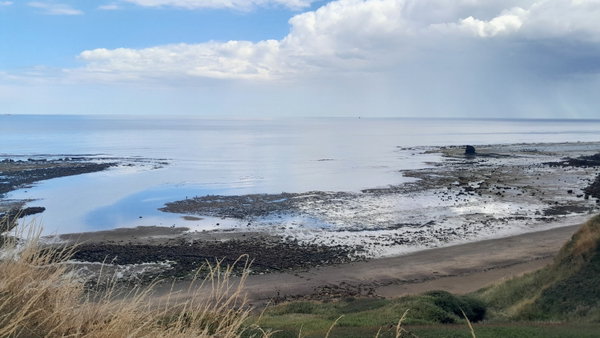
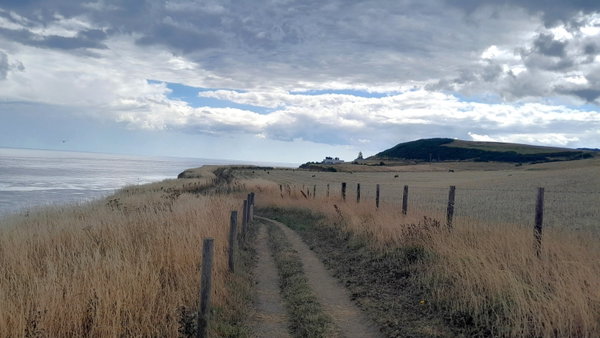
Having visited Whitby many times, on this visit I ventured far from the madding crowd and took off along the coast for a 3 mile jolly to explore the High Lighthouse and fog horn at Ling Hill.
This coastline is part of the Cleveland Way, which is now part of The King Charles III Coastal Path. It was the Goldilocks of weather for walking, but not for photographing.
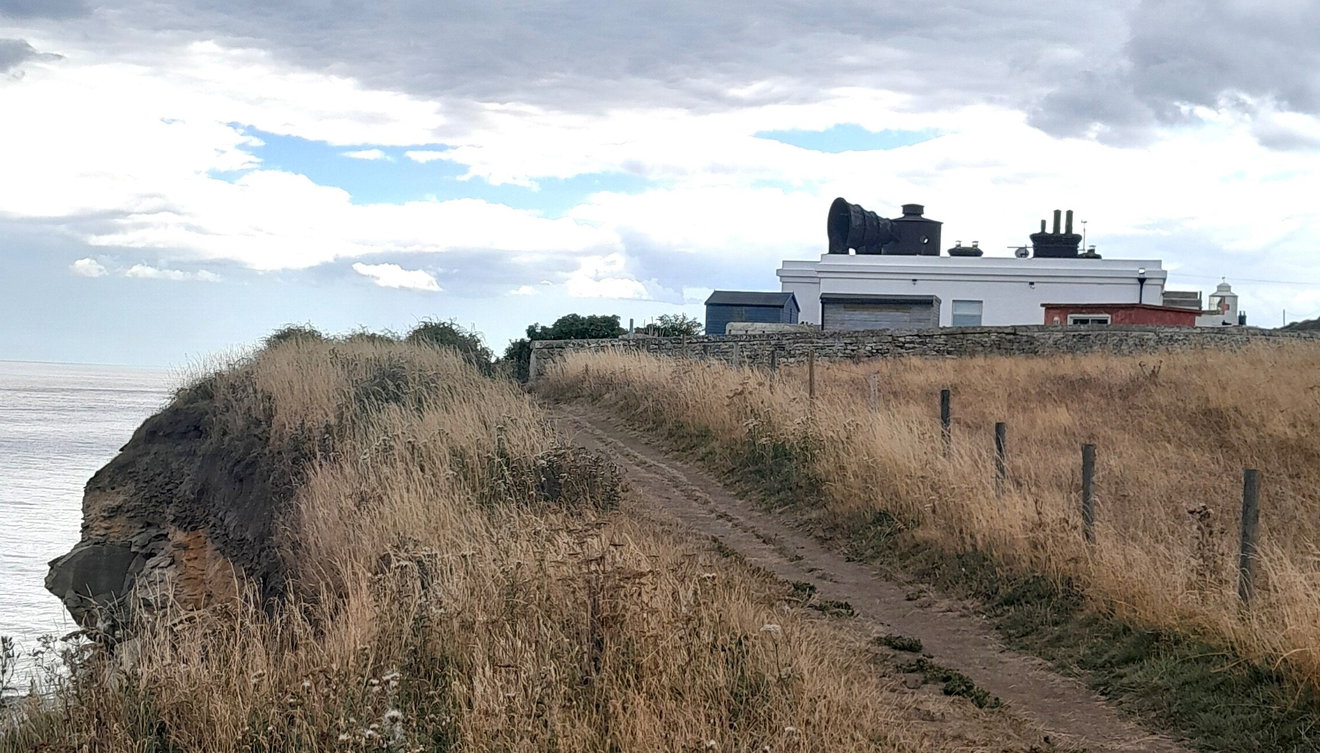
The lighthouse and fog horn are easy to spot, and as you get closer, you can see the whitewashed buildings are quite close to the eroding coastline.
Fog horns were essential to navigate ships away from the dangerous coast. Like the flashing light of a lighthouse, the blast from a fog horn was such a sound that mariners can tell where the noise was coming from and act accordingly.
For those that may be unaware of how a foghorn sounds:
One reporter, after hearing a siren for the first time, described it as having “a screech like an army of panthers, weird and prolonged, gradually lowering in note until after half a minute it becomes the roar of a thousand mad bulls, with intermediate voices suggestive of the wail of a lost soul, the moan of a bottomless pit and the groan of a disabled elevator.
The propagation of sound is not a constant, especially during periods of fog. Cold and warm layers of air cause sound to deflect, skip, bounce, echo and sometimes stop cold. The sound from a fog signal might be heard at one mile, not at two miles and again at three. A mariner thinks he hears a fog signal from one direction, when in fact it originated some 45 degrees to the right...or 30 degrees to the left. And distances cannot be determined with any accuracy. Not only is it hard to tell the distance one hears a signal, it is impossible to predict that a signal can be heard at a certain range. A signal “rated” for four miles might be heard at only two miles or, given the right atmospherics, 8 miles.
The History of Fog Signals by Wayne Wheeler
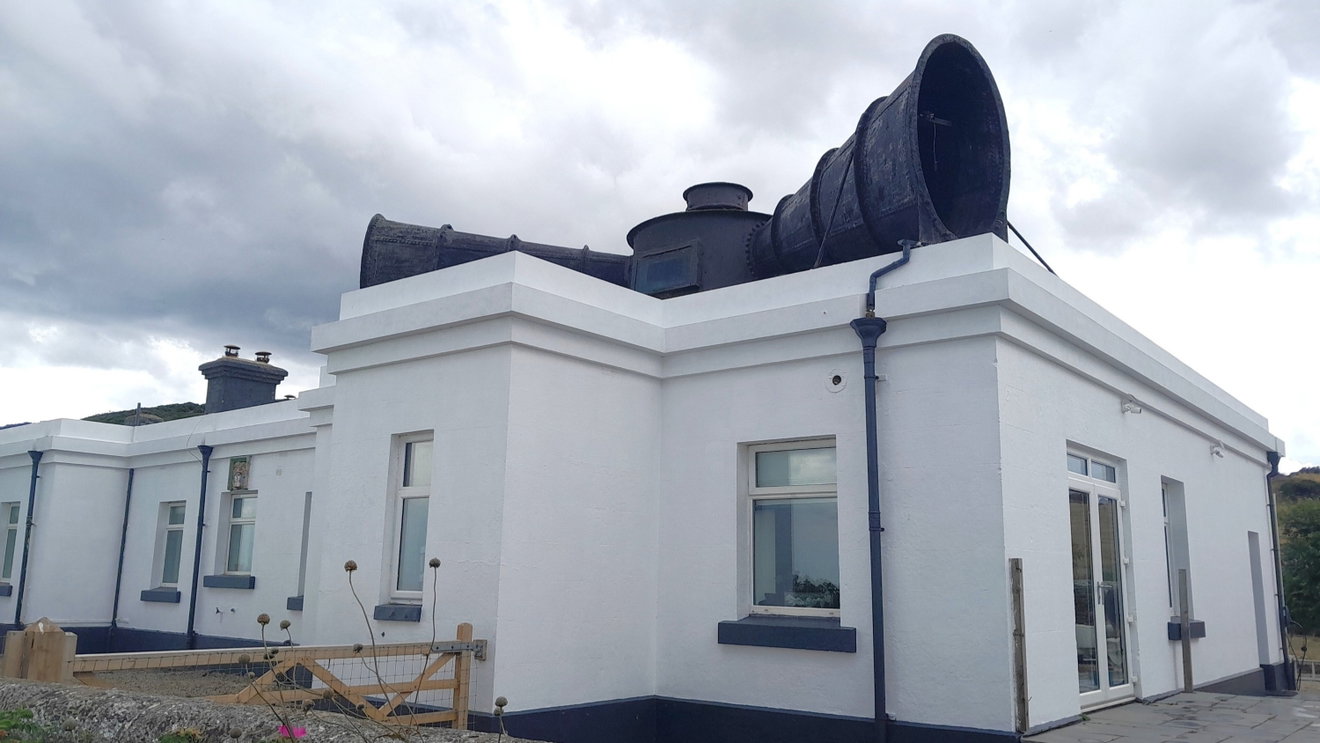
Fog horns were built using technology and the audible tone was created by a vibrating column of air. The structures resemble large ear trumpets, and this one is constructed from wood, copper, brass and iron, making it hard-wearing, especially against the cruel, salty North Sea and regular use. The resonating sound was low as it was more audible in fog. It was installed in 1903 and decommissioned in 1987.
Lord Rayleigh (1842 to1919) oversaw the design of these 'Rayleigh Trumpets'. He also received the Nobel Prize in Physics in 1904 for the discovery of Argon. There is a very long list of his achievements on Wikipedia and fog horns are not even mentioned!
This fog horn is colloquially known as The Hawsker Bull, due to the area and s
Before this, previous methods to aid navigation included ringing a bell and firing a cannon. Imagine if that hit the vessel it was supposed to be warning.
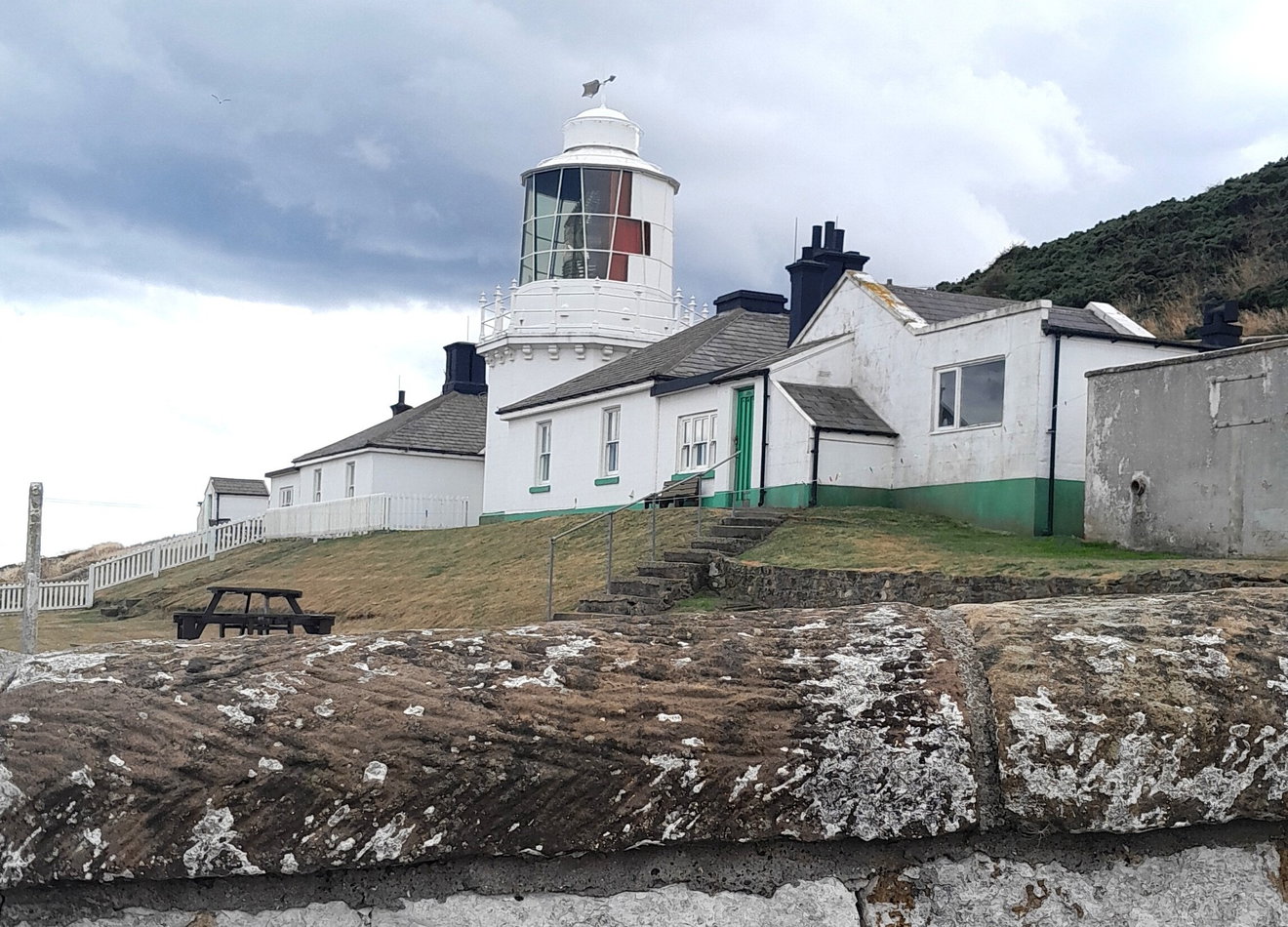
The Lighthouse was built by Trinity House in 1858 and is constructed of painted stone. Trinity House is the general lighthouse authority and was chartered by Henry VIII in 1514. It is now a charity and still safeguard our seafarers.
Originally, it was one of a pair of towers aligned north-south and known as the twin lights of Whitby South the present lighthouse) and Whitby North (since demolished);] together they were sometimes referred to as the High Whitby lights. The North Light was of a similar octagonal design to the surviving South Light, but taller at 20.5 m (67 ft) (so that, although the North tower was on lower ground, the two lights were on the same focal plane).Their purpose was to show a fixed pair of lights which, when in transit, lined up with Whitby Rock (an offshore hazard to shipping). Each was equipped with a paraffin lamp and a large (first-order) fixed optic designed by Chance Brothers.
A pair of single-storey keepers' cottages was attached to each tower. In 1890, a more efficient lamp (a powerful eight-wick mineral-oil burner) was installed in the South Light, allowing the North Light to be deactivated: an occulting mechanism was also installed, which eclipsed the light once every thirty seconds, and a red sector was added marking Whitby Rock. The North Lighthouse was then demolished (but its lantern and optic both went on to be re-used at a new lighthouse then being built at Withernsea).
Whitby High lighthouse was electrified in 1976 (after which the 'Hood' paraffin vapour burner, which had been the active light source up until that point, was donated to the Whitby Museum)
Wikipedia
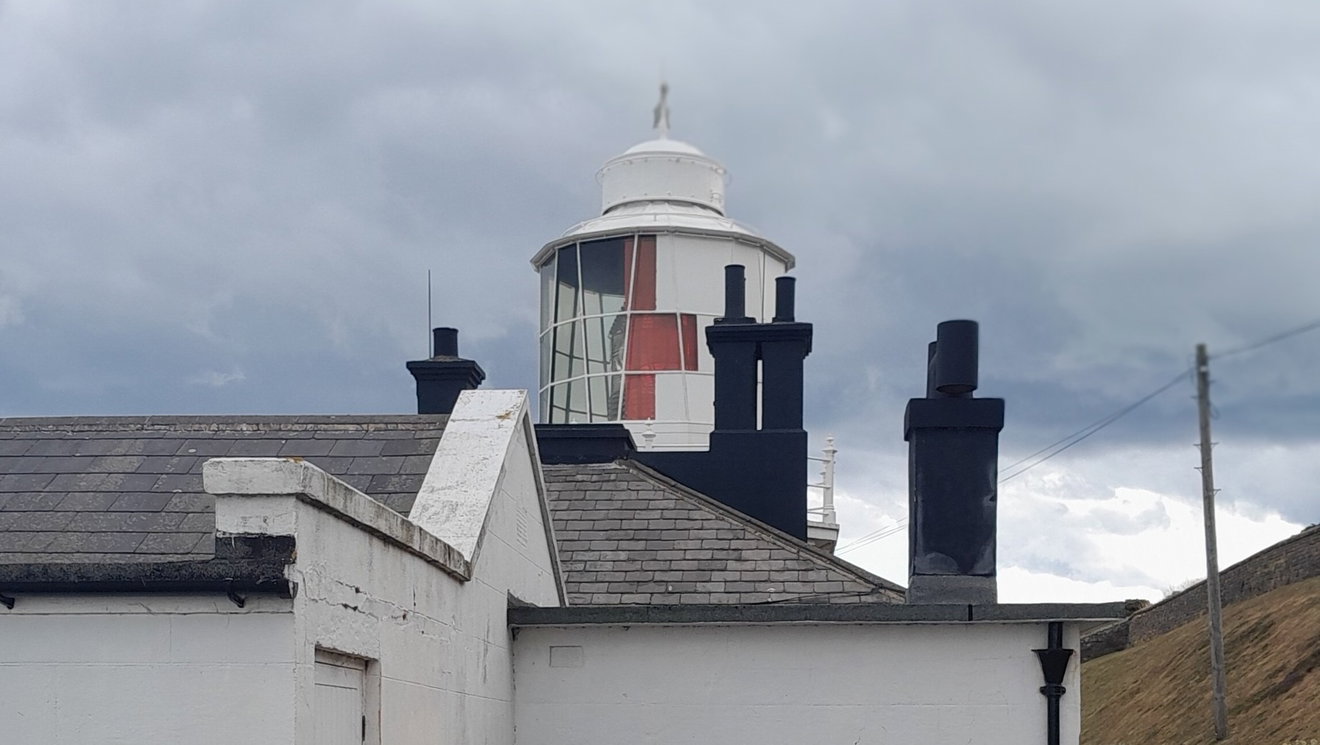
Whitby Lighthouse was automated in 1992 and is monitored and controlled via telemetry link from the Trinity House Central Planning Unit at Harwich.
Character - White and red isophase every 5 seconds
Range of Light - White Light 18 nautical miles; red light 16 nautical miles
Trinity House
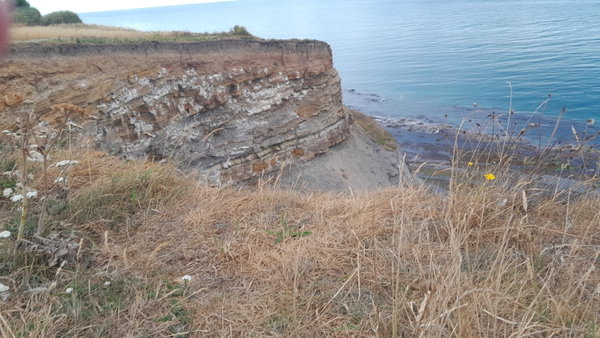
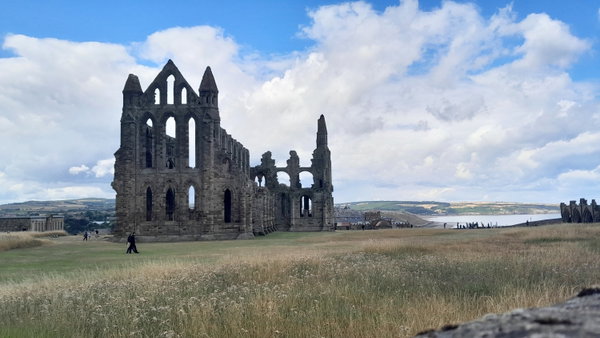
Between the two buildings there was a cacophony from a kittiwake colony on the cliffside which added to my day along with a spectacular view of Whitby Abbey and the surrounding area as I walked back.
Get 2 points if you have visited this place. Already visited by 8 VIPs.
Login to bag this placeHelp fuel the next adventure
Fabulous North is free, with no annoying adverts and fuelled by an unhealthy desire to poke around castles, hills, churches and suspicious-looking bits of stone.
If you enjoy what we do, you can help keep us exploring.
Champion This Place
Got a special memory of Whitby High Lighthouse And Fog Horn, a story to tell or simply a soft spot for it? Champion Whitby High Lighthouse And Fog Horn and we'll add your name, photo and a short message to this page, while your support helps us keep Fabulous North exploring.
How To Find Whitby High Lighthouse And Fog Horn
Where Is Whitby High Lighthouse And Fog Horn?
Show Place On Google MapsLat / Long
54.479342, -0.570921
What three words
Where To Park For Whitby High Lighthouse And Fog Horn?
You can park nearby, but the walk from Whitby and back is more satisfying.
Contributed by Rosalind Parker
Thank you for reading. I hope it sparks your interest. It’s always a pleasure to get out and explore, whatever the weather. I enjoy uncovering little snippets of information, especially when they’re obscure, amusing, or meaningful. All photos were taken on a mobile phone.
More Places from Rosalind
More Places In Whitby
Find more fabulous places in Whitby, North Yorkshire and if you know of a place we haven't listed, then let us know.

St. Marys Church Whitby
Religious Place Whitby North YorkshireA Norman Church with a quirky interior, sitting high and proud above Whitby with a paradigmatic gothic graveyard.

Crows Nest Whitby
Art Whitby North YorkshireNo murder of Corvids, but a navigational aid for ships.

Captain Cook Memorial
Statue Whitby North YorkshireA statue to commemorate the 18th-century explorer and navigator who changed the western perceptions of world geography.
More Lighthouses
So this lighthouse wasn't enough and you want more? Don't worry we have you covered.

New Flamborough Lighthouse
Lighthouse Flamborough East Riding Of YorkshireThe new Flamborough Head Lighthouse built in 1806.

Old Law Beacons On Guile Point
Lighthouse Holy Island NorthumberlandTwo obelisk navigation beacons that when lined up would direct you into Holy Island harbour.

Bamburgh Lighthouse
Lighthouse Bamburgh NorthumberlandThe original 1910 building with the new lantern on its roof.
Never Miss A Fabulous Place
If you are afraid of missing out on all the fabulous places we post, or just want to be the first to know, then sign up to the Fabulous North.
Each week we will email you all the brand new places that we visit.
Sign Up To Alerts

Find Us On Facebook
We post all our new places daily on our Facebook Groups page, so join the group today and be notified when we add a new place.
Join Our Facebook GroupWhitby High Lighthouse And Fog Horn was listed in Lighthouse // North Yorkshire // Whitby