
Royal Victoria Infirmary
Building In Newcastle City Centre, Tyne And Wear
Built in 1906, the Royal Victoria Infirmary is a university-linked teaching hospital, treating over 400,000 patients each year, fronted with some beautiful architecture and offering specialised care and maternity services.

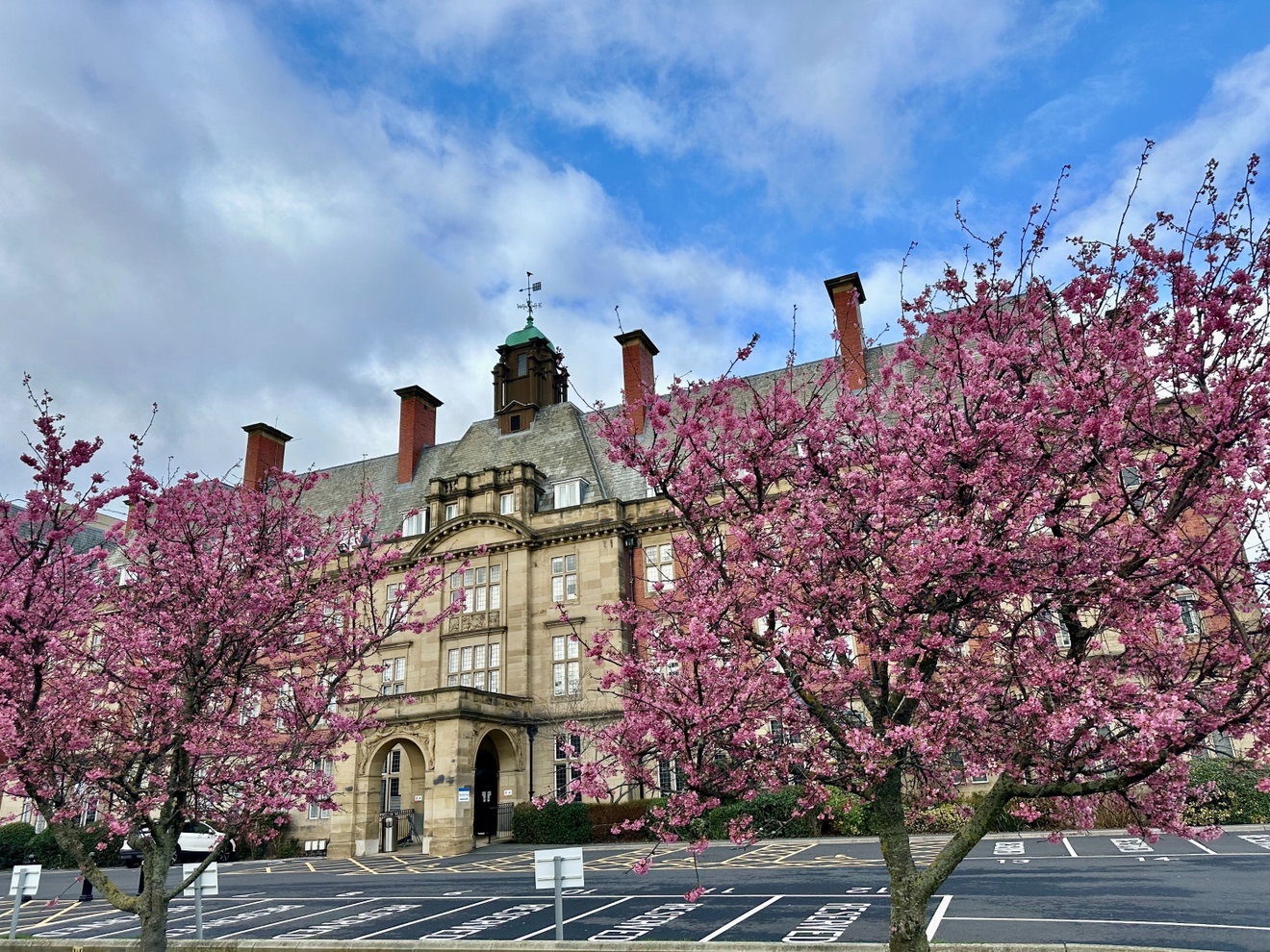
Known for its pioneering care in the fields of children's health, neuroscience, infectious diseases, and childbirth, and for being an outstanding teaching and research hospital, the Royal Victoria Infirmary in Newcastle is a beautiful architectural landmark.
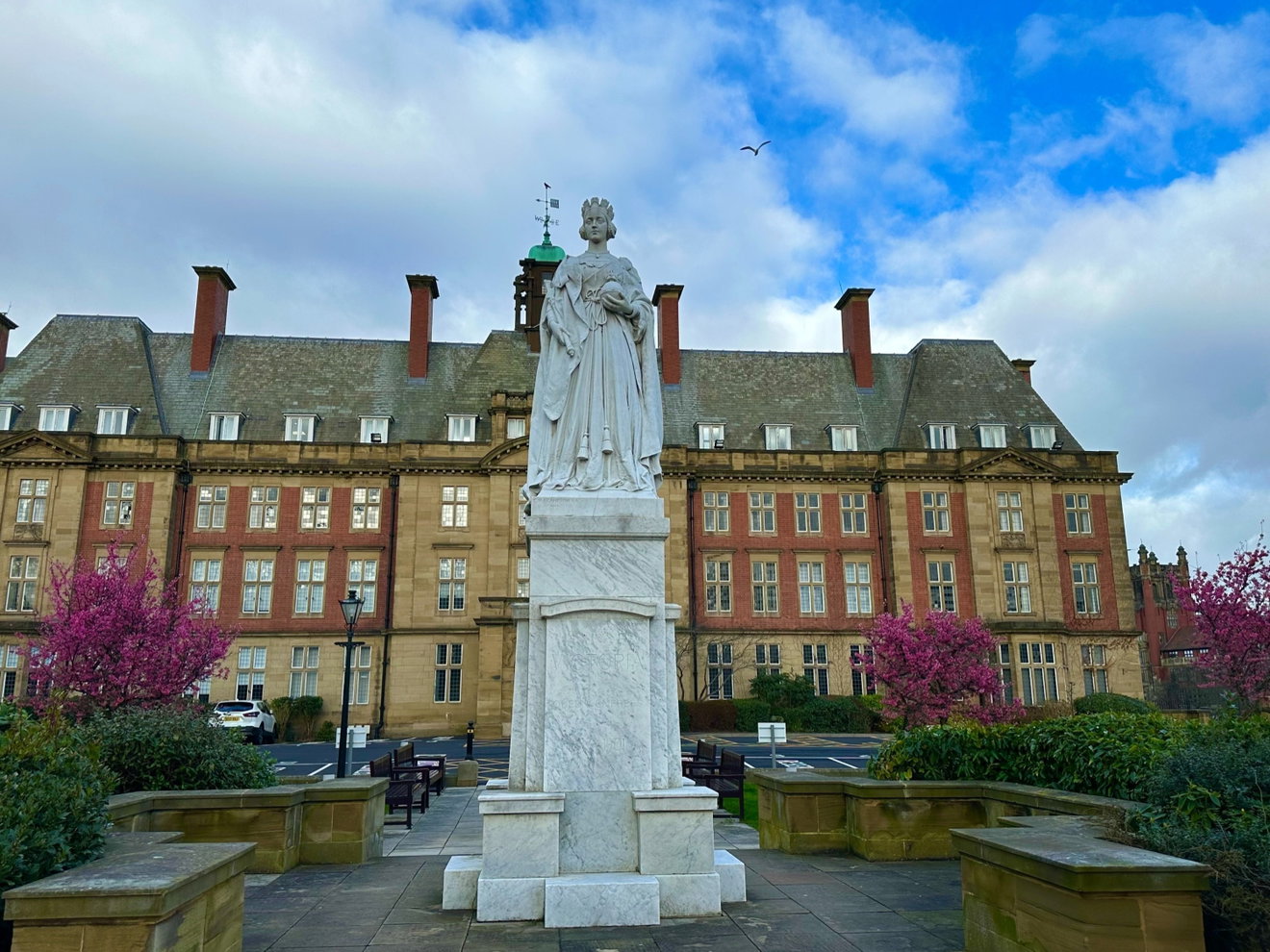
In 1896, Newcastle's Mayor John Goolden suggested a suitably ceremonious way to celebrate the forthcoming Diamond Jubilee of Queen Victoria. A hefty sum of £100,000 was gifted by a wealthy merchant and shipping owner, John Hall, with a second financial gift from the nephew of William Armstrong, to commemorate the memory of his uncle.
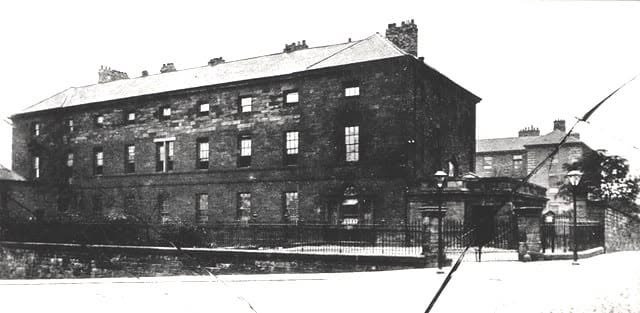
Upon the condition of Mr Hall, the hospital was to be built on a new site away from the original Newcastle Infirmary in Forth Banks. This is an image of the old hospital, courtesy of Newcastle City Libraries. The building stood roughly where the Centre For Life stands now.
In addition, £20,000 was raised by 'working men of the district'. The land was bequeathed by the Freeman of Newcastle, and work began on the Leazes, on the north-west edge of the Town Moor, with the initial foundation stone laid by The Prince of Wales in 1900.
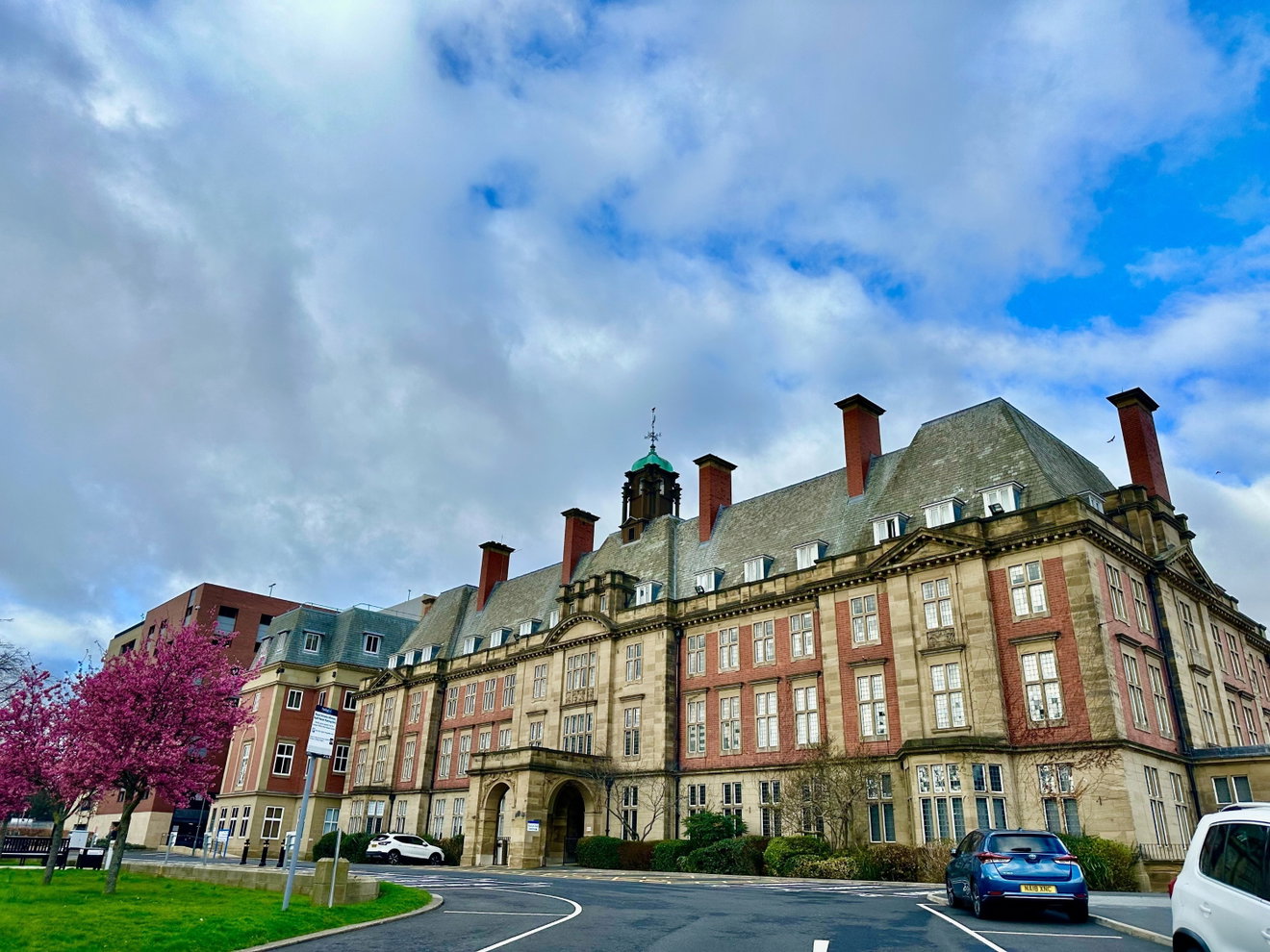
Designed and built by Gateshead-born architect W. Lister Newcombe and hospital design specialist Percy Adams, the Peacock Hall was and still is the administrative hub of the RVI.
The original pavilion plan housed Nightingale wards, which were famed for their large windows, giving good light and cross ventilation, which was thought to aid speedy recovery.
Renaissance-Baroque in style, it is designed to look like an affluent country house and the sweeping drive up to the front door, the mix of bold red brick and ashlar stone topped off with grey-green roof slate from Borrowdale, all add to the impression that this is a grand old building.
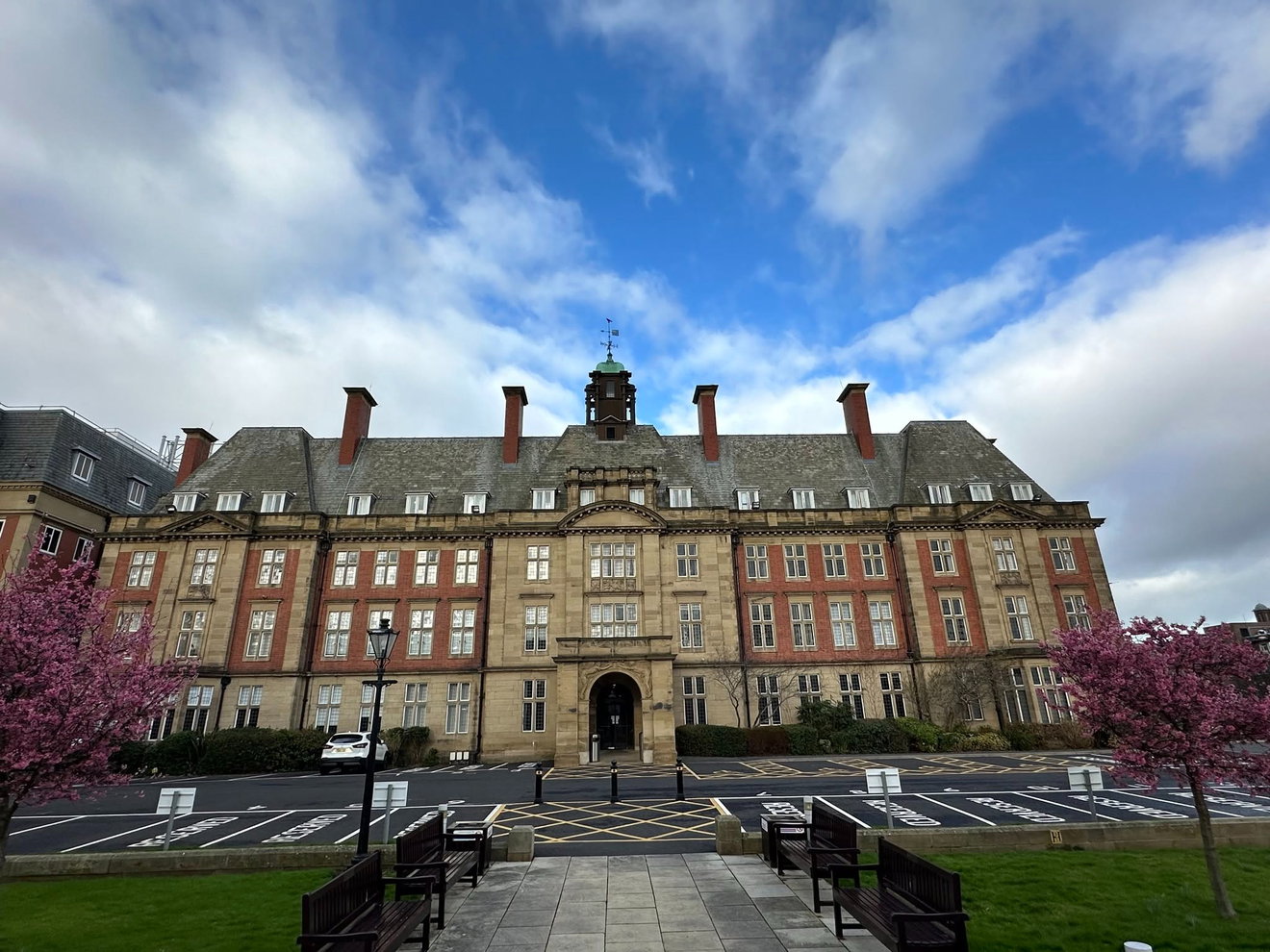
At a cost of over £325,000, the hospital comprised two children's wards, eight adult wards, a nurses' home, five operating theatres, an accident room, an outpatient department, and a small chapel. With 425 beds, it was one of the last major hospitals built in the country to adopt the Nightingale ward system. There were verandas on each pavilion, and wards had their own coal fires...count the big chimneys if you can!
All of the walls were tiled on the lower parts with rounded corners to prevent dust from settling!
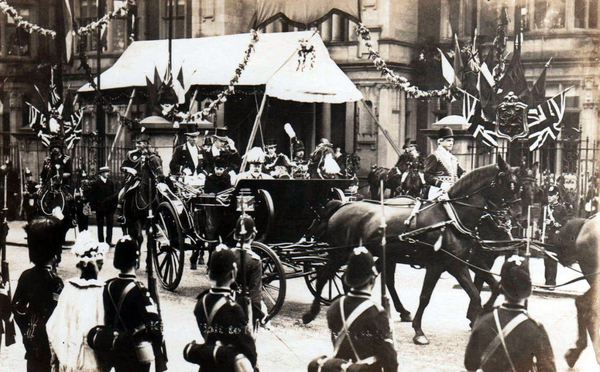
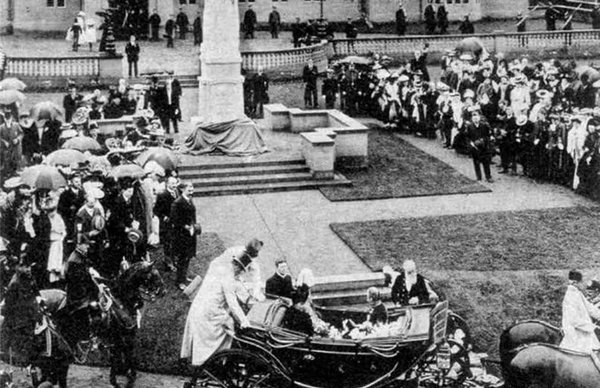
These images from Newcastle City Libraries show the opening of the RVI and unveiling of the statue six years later by Edward VII and Queen Alexandra. The palace had wards named after them. The King declared it was...
A satisfaction for us to know that the workers have contributed so generously towards the fund.
King Edward VII
He then unveiled the statue of his mother as a young woman, and in September 1906, the patients from the old infirmary were transferred.
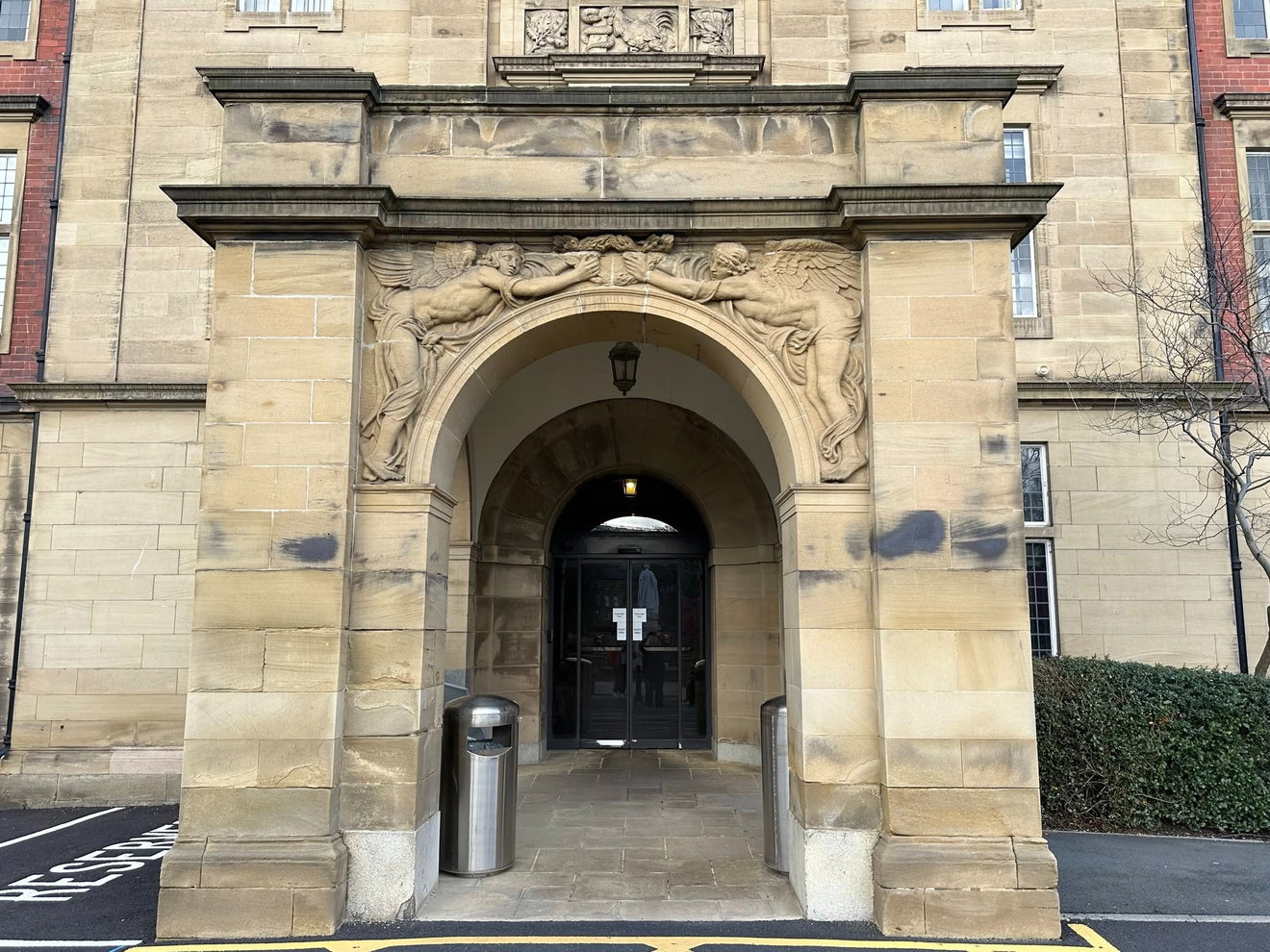
It's a perfectly proportioned building with no less than seventeen bays and is entered through a beautifully arched (good word alert...) porte-cochère, which is an entrance under cover through which carriages could drive through to drop off guests...where just getting one built at ours!
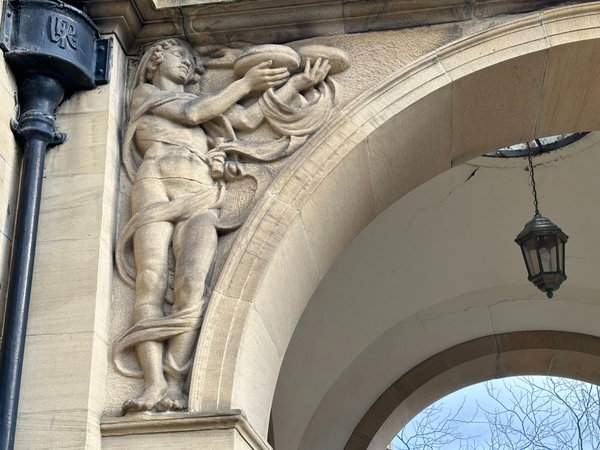
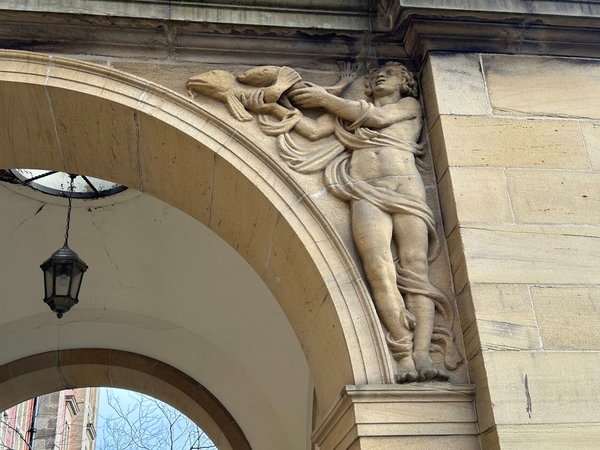
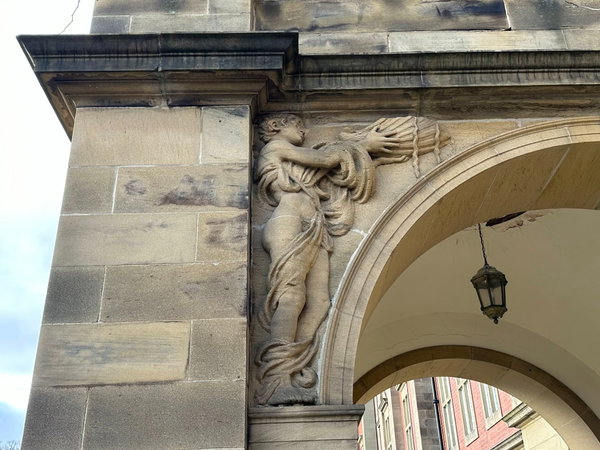
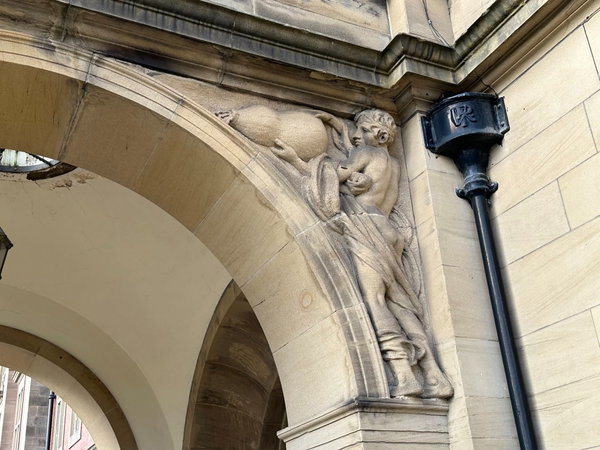
The porch has intricately carved stone tablets by Conrad Dressler, and the detail is beautiful, showing scenes of men holding loaves and fishes, a large shell and a man pouring wine from an urn...perhaps an early 1900s medical remedy!
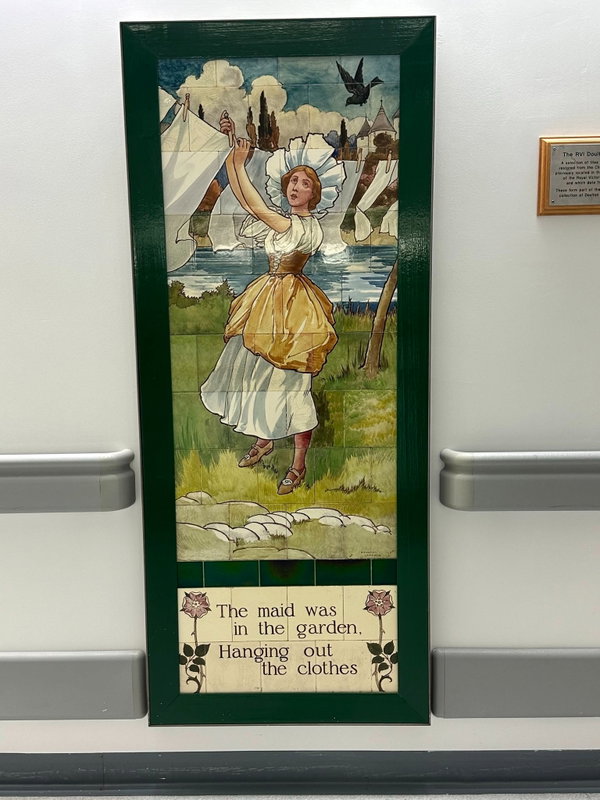
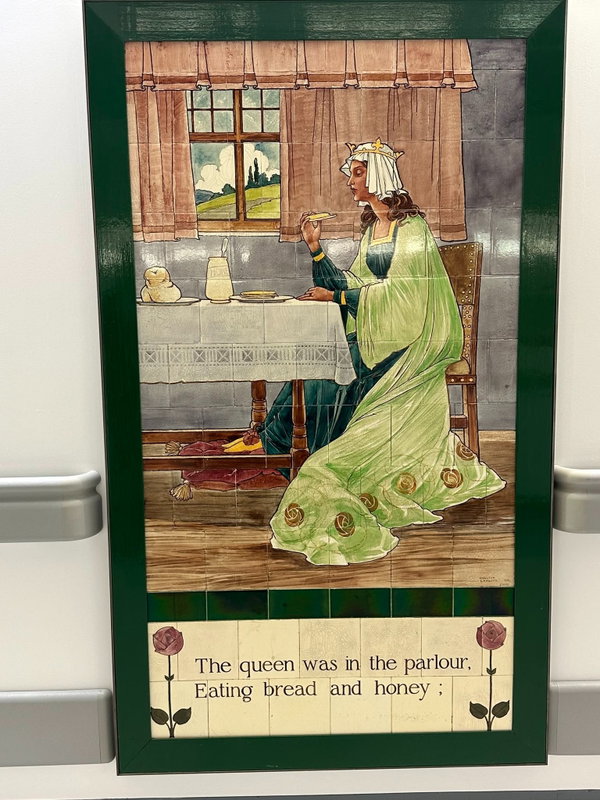
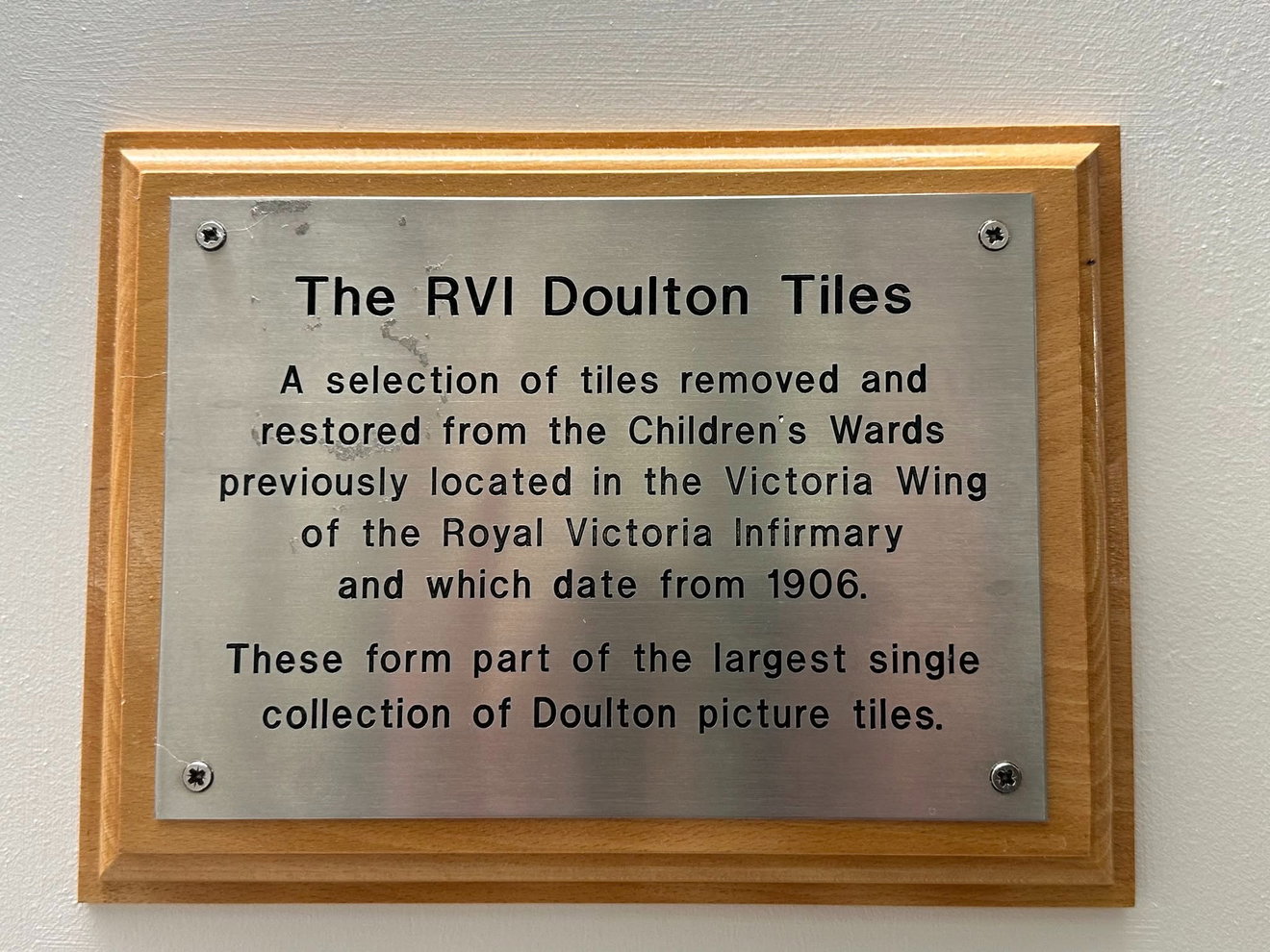
The hall was named after the eponymous leather-moulded peacock-feather wallpaper, and the old children's ward held colourful ceramic Royal Doulton panels, which retold familiar children's nursery rhymes and fairy tales, and which have all been remounted and are exhibited throughout the current hospital.
The tiles, which were used as a hygienic manner of decoration and were painted to lift the spirits of poorly little people are thought to be probably the most complete set of glazed panels of this nature still in existence.
Made at Lambeth in London and signed by artists John McLennan, Margaret Thompson and William Rowe, the Edwardian panels were saved from demolition by Stanley-based company D-Drill and are worth well in excess of a million pounds.
With waiting lists of over 5,000 in the 1930s, overcrowding became an issue, and until the advent of the NHS, funding was constantly being raised to improve the building, and buy new equipment.
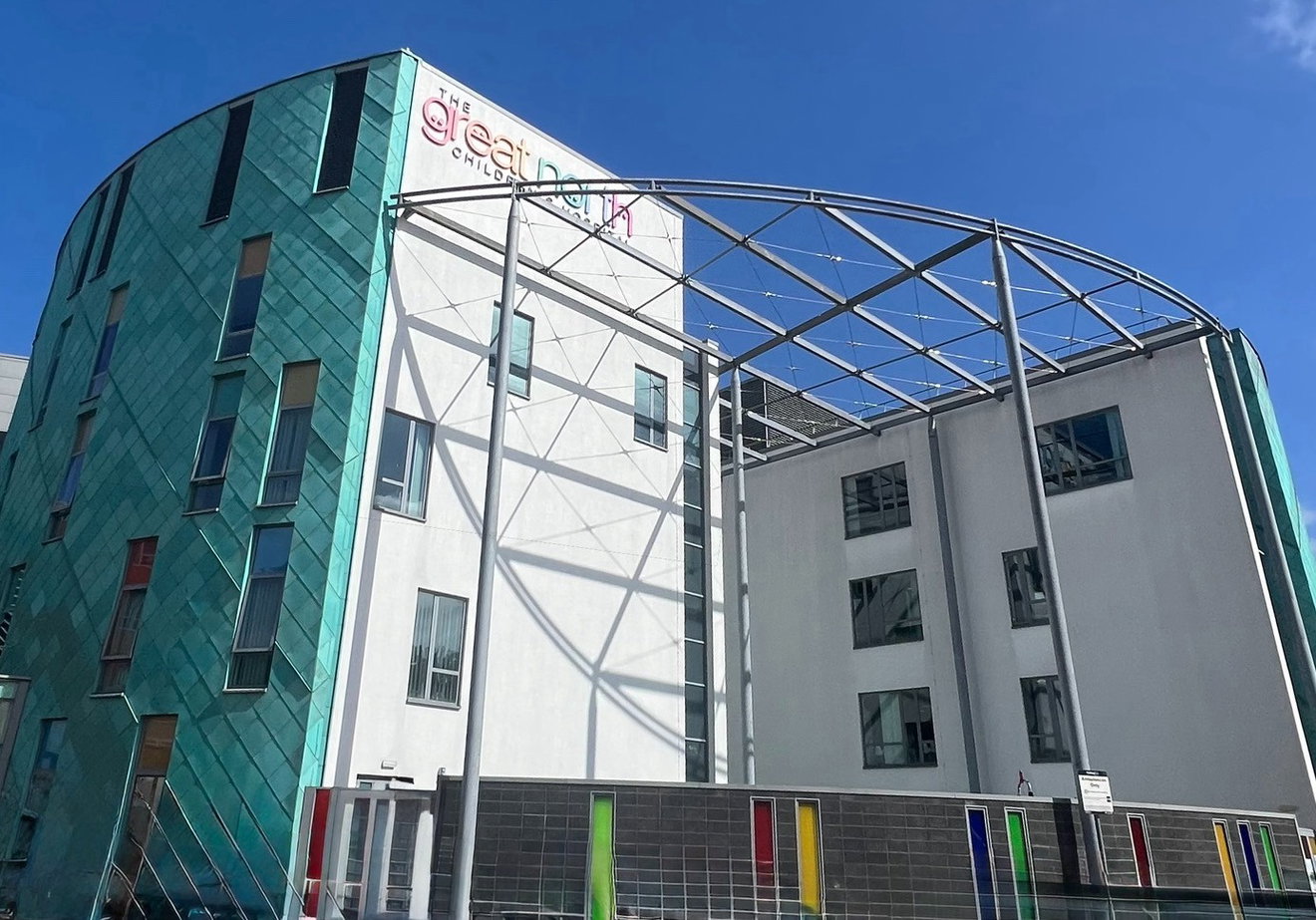
In the early 2000s, most of the old building was demolished to make way for newer and more updated wards. Children's services were transferred in 2010 from The Freeman to the RVI and the Great North Children's Hospital.
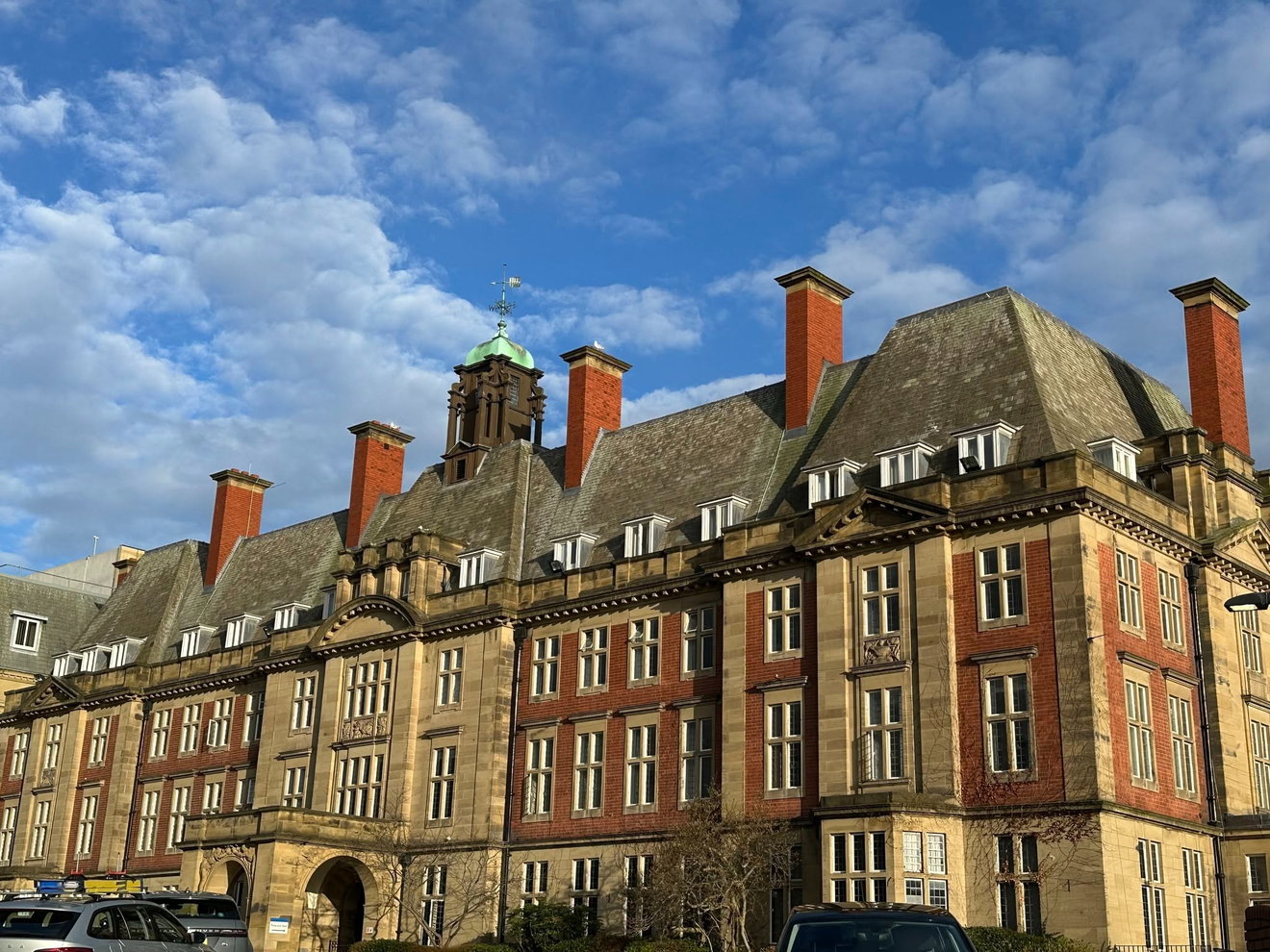
And so it is, this big old red brick building has stood the test of time with bits knocked down and added on.
It's the city centre's go-to place to get mended and is filled with the most astounding staff with more kindness and patience than every brick in the building put together.
It's well worth a wander round the grounds to compare and contrast architectural styles both old and new. Each has its merits, but for me, that porte cochère is a corker!
Get 1 point if you have visited this place. Already visited by 46 VIPs.
Login to bag this placeHelp fuel the next adventure
Fabulous North is free, with no annoying adverts and fuelled by an unhealthy desire to poke around castles, hills, churches and suspicious-looking bits of stone.
If you enjoy what we do, you can help keep us exploring.
Is there somewhere special to you?
Royal Victoria Infirmary has already been championed, but maybe there's another place that means something to you. Somewhere you walk every week, a favourite view, a childhood memory or simply somewhere you've always had a soft spot for.
Champion your favourite place for only £10.
How To Find Royal Victoria Infirmary
Where Is Royal Victoria Infirmary?
Show Place On Google MapsLat / Long
54.981554, -1.6217494
What three words
Where To Park For Royal Victoria Infirmary?
In any of the hospital's paid car parks on site. Or park in the city centre car parks and walk.
Contributed by Jos Forester-Melville
Highland loving human. Thalassophile. I love a good smile. Happiest heading for the hills with my pickup filled with kids and dogs! Working four days, we enjoy a Fridate, and usually spend it scouting out new scenery. I love a gated track, a bit of off roading and if it involves a full ford, well, that gets extra points! I go nowhere without a flask and binoculars, and love the small things in life that make it big…Goldcrests, dry stone walls, Deadman’s fingers, blackberries and quality clouds.
More Places from Jos
More Places In Newcastle City Centre
Find more fabulous places in Newcastle City Centre, Tyne And Wear and if you know of a place we haven't listed, then let us know.
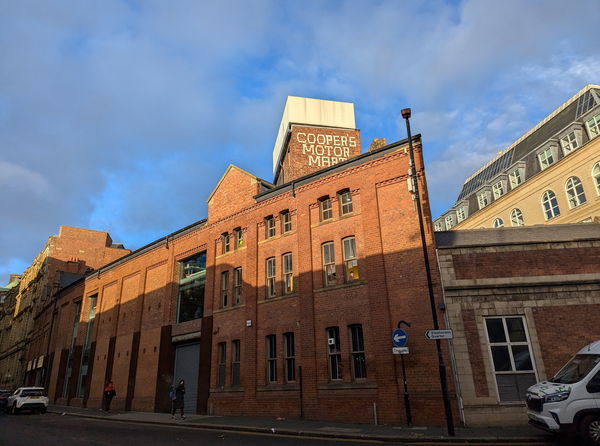
Cooper's Motor Mart (Cooper's Studios)
Building Newcastle City Centre Tyne And WearA former showroom for horses, carriages and bicycles, later a car showroom and now an office space which retains many original features including the old wooden horse ramp.
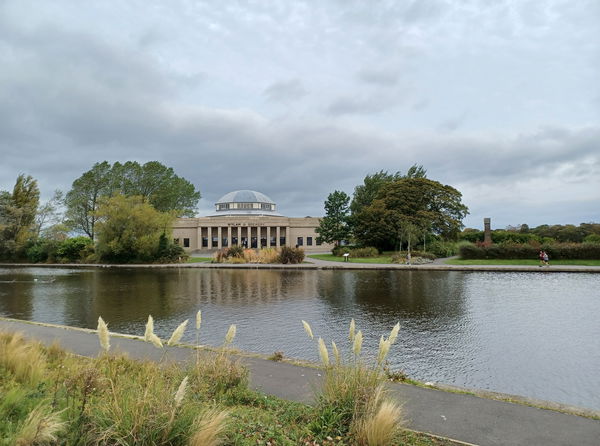
Exhibition Park
Landscape Newcastle City Centre Tyne And WearA 15 hectare public park, right in the centre of Newcastle, dating from the 1880s and associated with, and named after two major exhibitions, the Royal Jubilee Exhibition of 1887 and the 1929 North East Coast Exhibition.
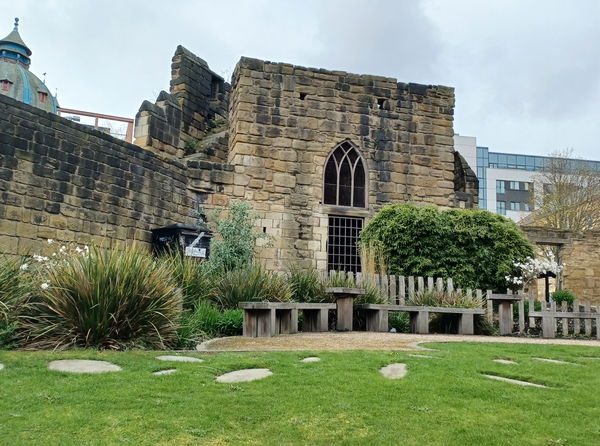
Newcastle City Walls
Building Newcastle City Centre Tyne And WearRemains of the 14th century walls that were built around Newcastle Upon Tyne.
More Buildings
So this building wasn't enough and you want more? Don't worry we have you covered.
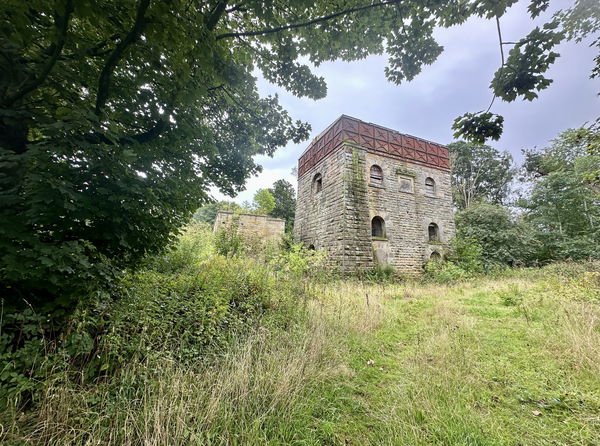
Scremerston Pump Engine House
Building Berwick Upon Tweed NorthumberlandA relic of our industrial past which housed a huge pump engine that sucked water from the Jack Tar Pit, in Scremerston, near Berwick.
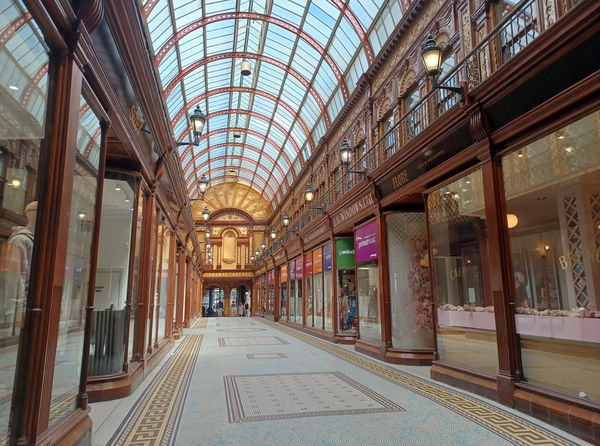
Central Arcade
Building Newcastle City Centre Tyne And WearAn ornate, Edwardian Shopping Arcade, in the centre of Newcastle built in 1906. The arcade is set within Richard Grainger's Central Exchange Building.
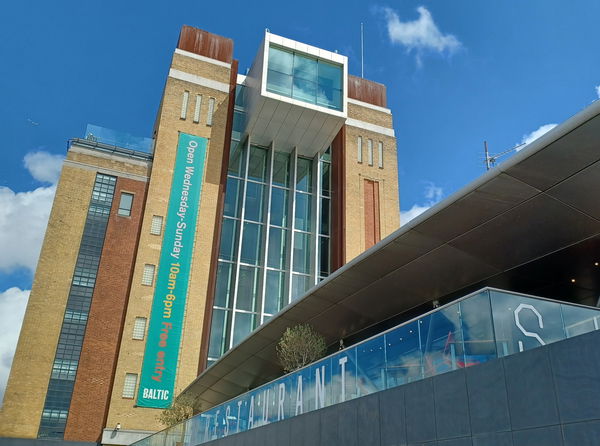
Baltic Centre for Contemporary Art
Building Gateshead Tyne And WearOld flour mill converted into a contemporary art gallery in 2002.
Never Miss A Fabulous Place
If you are afraid of missing out on all the fabulous places we post, or just want to be the first to know, then sign up to the Fabulous North.
Each week we will email you all the brand new places that we visit.
Sign Up To Alerts

Find Us On Facebook
We post all our new places daily on our Facebook Groups page, so join the group today and be notified when we add a new place.
Join Our Facebook GroupRoyal Victoria Infirmary was listed in Building // Tyne And Wear // Newcastle City Centre