
Binchester Roman Fort "Vinovia"
Museum In Bishop Auckland, County Durham
The largest Roman Castrum in North East England with two bath houses.
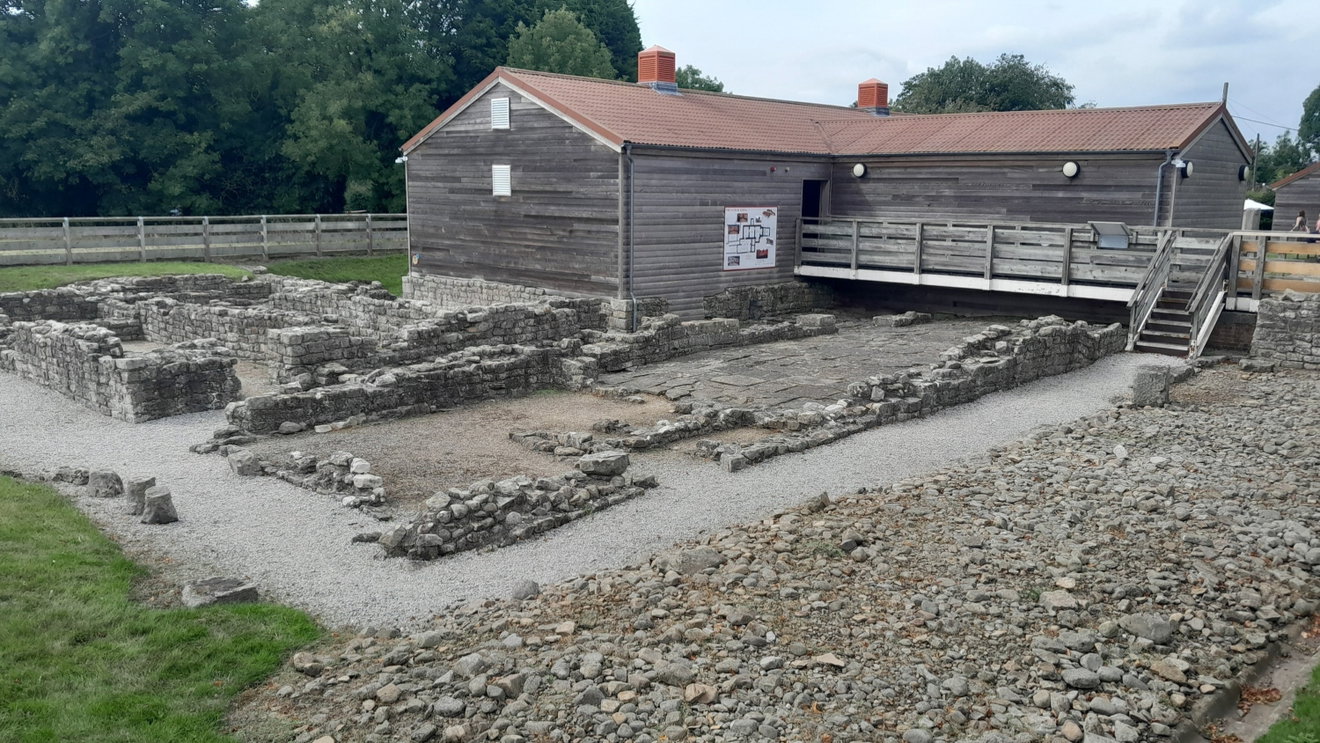
Can you imagine in 1815 strolling across a field with your horse and cart and then disappearing into a crater that had just appeared and landing in a Roman bath house! This is how Binchester Roman Fort was discovered.
The ruins did not fare well under the early 19th-century occupants of Binchester Hall. In 1828:
"altars, urns, and other relics" were robbed out and taken away to be used as props inside coal pits in the area. Binchester Hall, the fort and surrounding land were subsequently bought by the Bishop of Durham.
Wikipedia
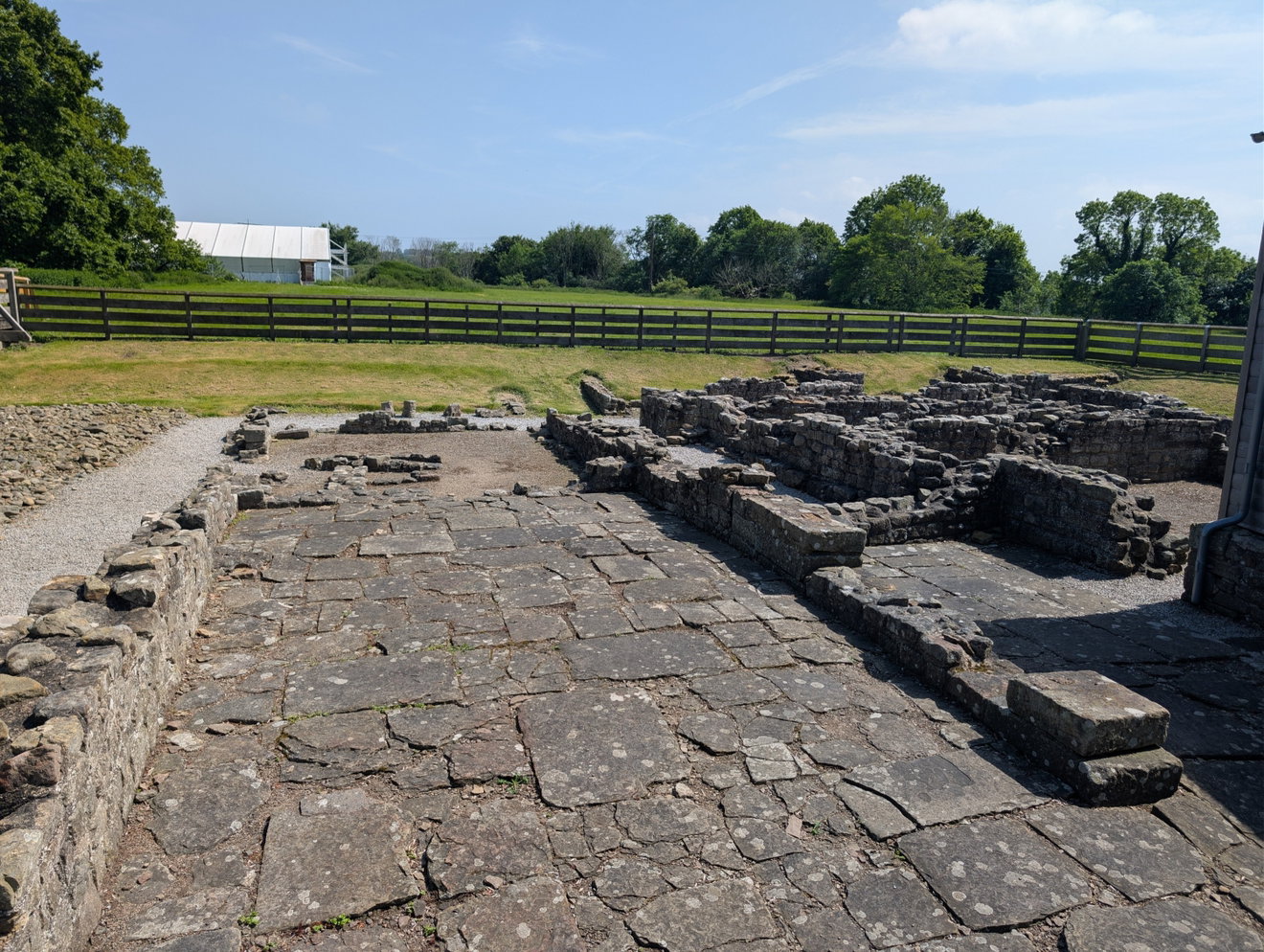
The site has been explored, and excavations have unearthed military buildings and 2 bath houses.
The fort was originally called Vinovia and constructed from wood in AD 70-80. The purpose was to curb the local Brigantes rebels shenanigans.
The Romans built here because it was on high land adjacent the famous Dere Street that traversed northwards from York and the site was in the snug of the curvaceous River Wear. You can still see parts of Dere Street around this fort.
The Romans had to excavate the top of this land to produce a flat 21 acre site. It housed 2,000 fine soldiers and their horses. Two of the auxiliary units had originally come from Spain, and The Netherlands.
Circa AD 158 they built it again, in stone this time, it was smaller, and housed 1,000 cavalry soldiers and their horses. In the 5th century the Romans had gone.
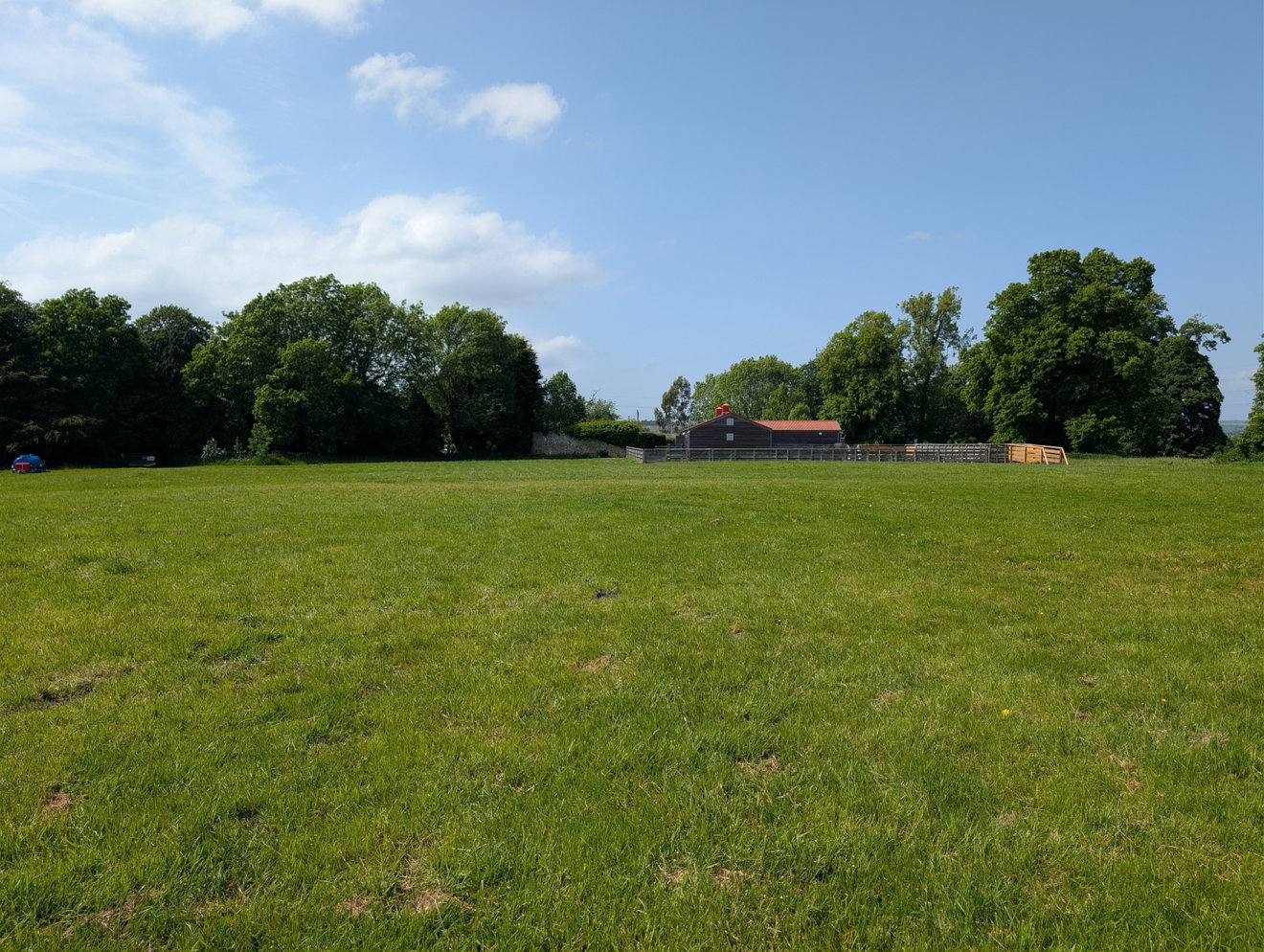
My one word to explain the Romans would be order. The castrums (forts) would be built throughout the Roman Empire to the same stamp. So when the military arrived they knew exactly where to go even in the dark of night.
The first part of Binchester Fort had Dere Street running through it, and access would have been restricted.
You can see the commander's quarters (praetorium), it was a large concern as befitting the boss, it had private quarters, kitchen and of course a communal bath (themae) house.
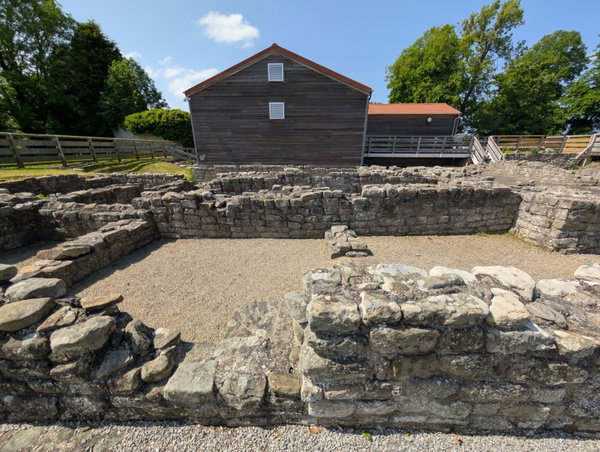
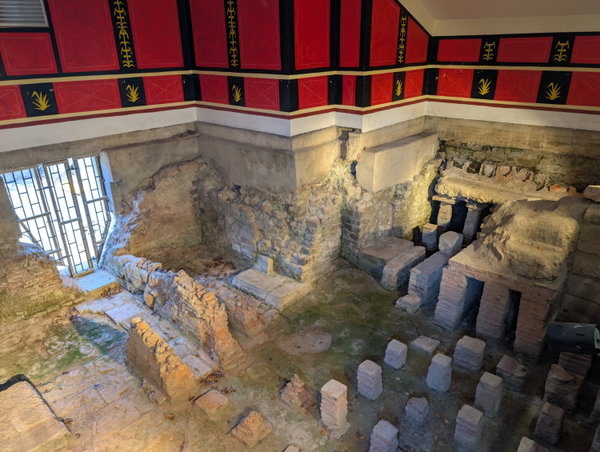
This bath house was heated by fires as there were no hot springs here. The heat was generated below the floor and was called a hypocaust. You can see the pillars of the underfloor system.
Much went on here, especially indulgence, which was synonymous with the Romans. They would exercise, eat, drink and play games in the company of friends, and family. Business, politics, and philosophy, could be discussed and plots schemed.
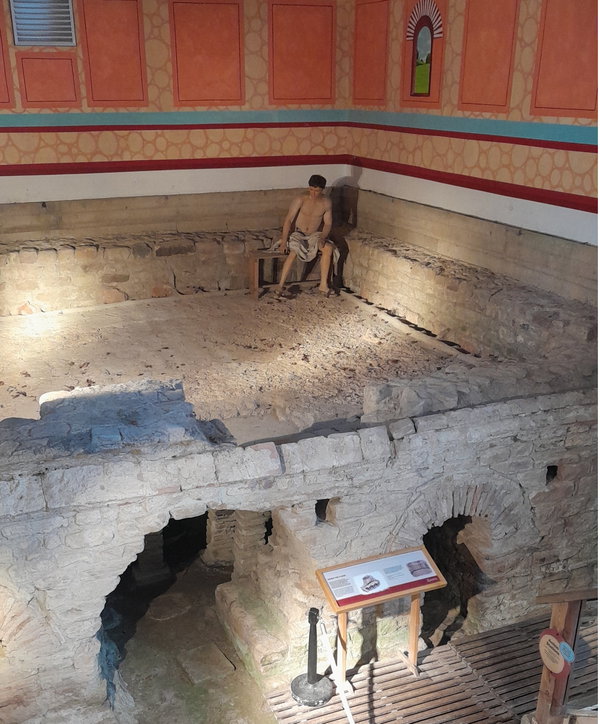
“Most of the business of bathing was for pleasure and recreation, rather than for keeping clean. To clean off the dirt they went through a hot room in the baths, like a sauna or a Turkish bath, and then rubbed oil on their skin, and scraped off the mucky mixture of oil, sweat, and dirt, using a curved metal scraper called a strigil. I tried this out and found it remarkably effective, although I don't quite know how they managed to clean their backs - I think I would rather have a slave do it. Apparently Roman ladies used to collect the sweaty gloop from athletes and gladiators and use it in a face pack - but no one offered to try mine!
Adam Hart-Davis, BBC, February 17, 2011
Somewhere on this site lies the Principia, the administrative centre. Typically, it would have offices for clerks, a large hall (basilica) and a shrine known as sacellum, and beneath it there could be an underground room where the legions' pay-chest was stored. Maybe they didn't take it with them when they left...
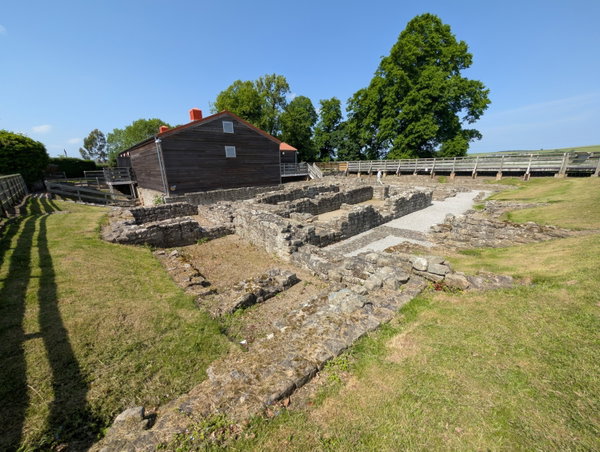
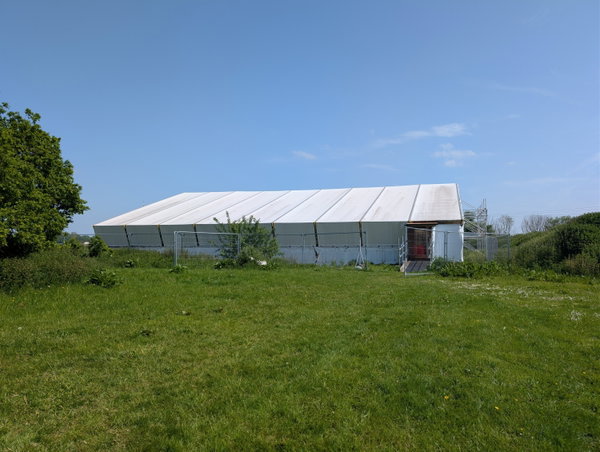
The big white tent at the far end has uncovered a huge public bath house right on the side of Dere Street. We had an archaeologist give an insightful talk about it.
A Huge excavation project had found this public bath house that had been buried. and it predates the other bath house. It was purposely built next to Dere Street. The walls were thick enough that it has stood ever since,
Alongside the bath house, the area became busy. These buildings lasted about 40 years. Dere Street needed resurfacing, and the stone from failed buildings was ideal to replenish the highway. However, the bath house stood strong due to its walls. As the level of Dere Street rose, the bath house became lower than the ground level. At first it meant a few steps down. Then it was decided to use a window for entrance.
When the bath house was no longer used after the 5th century, it was filled with rubbish, such as pottery and bones. This was a happy accident as it has preserved the walls.
Flooding may have become a problem later.
Many objects were found and require cataloguing before they can excavate more. I believe the cataloguing could take another 10 years!
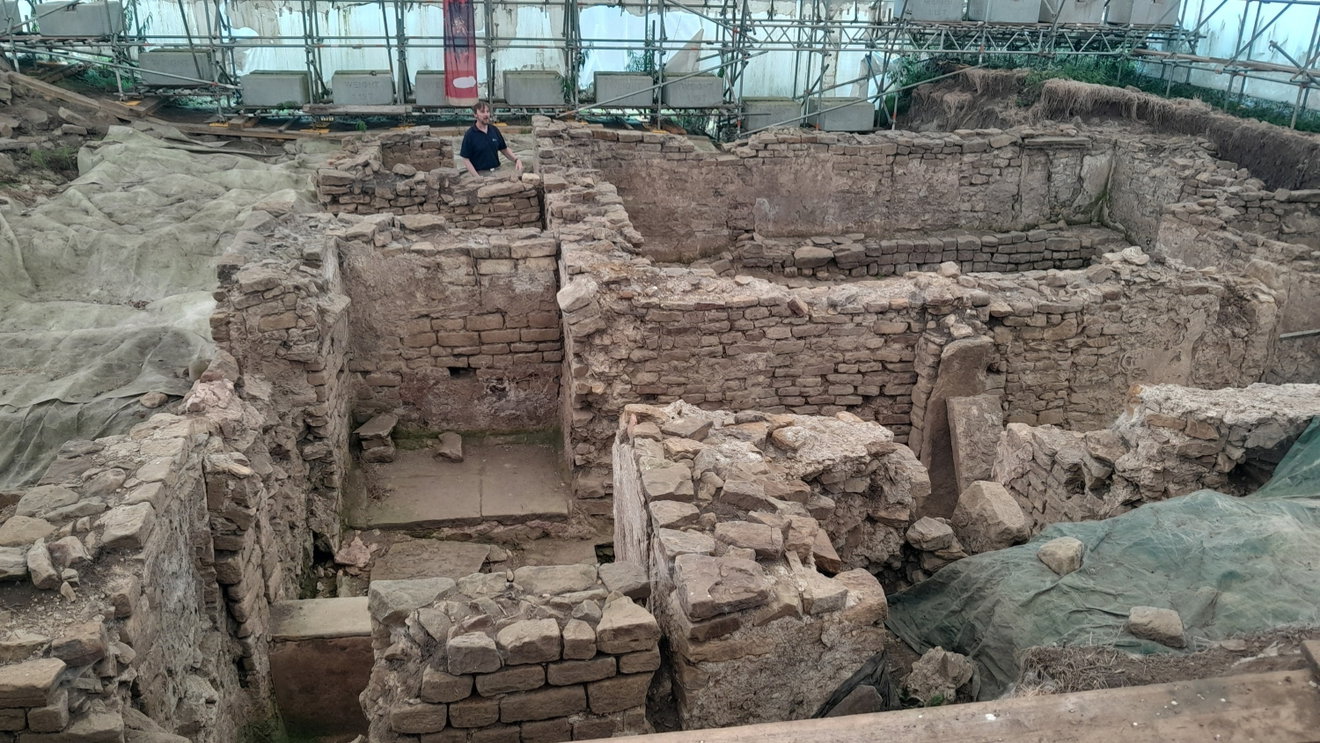
The site is a Scheduled Monument and is now part of the Auckland Project who have made some welcome changes, like adding loos!
My thanks to Lorraine another Fabulous North poster girl for her additional photographs.
The area is very close to the Bishop Auckland attraction 'Kynren' and you can peek at the 11 arches.
A Roman walks into a bar and sticks up two fingers and asks for 5 beers!
Get 3 points if you have visited this place. Already visited by 6 VIPs.
Login to bag this placeHelp fuel the next adventure
Fabulous North is free, with no annoying adverts and fuelled by an unhealthy desire to poke around castles, hills, churches and suspicious-looking bits of stone.
If you enjoy what we do, you can help keep us exploring.
Champion This Place
Got a special memory of Binchester Roman Fort "Vinovia", a story to tell or simply a soft spot for it? Champion Binchester Roman Fort "Vinovia" and we'll add your name, photo and a short message to this page, while your support helps us keep Fabulous North exploring.
How To Find Binchester Roman Fort "Vinovia"
Where Is Binchester Roman Fort "Vinovia"?
Show Place On Google MapsLat / Long
54.6764038, -1.6763809
Where To Park For Binchester Roman Fort "Vinovia"?
On site parking.
Contributed by Rosalind Parker
Thank you for reading. I hope it sparks your interest. It’s always a pleasure to get out and explore, whatever the weather. I enjoy uncovering little snippets of information, especially when they’re obscure, amusing, or meaningful. All photos were taken on a mobile phone.
More Places from Rosalind
More Places In Bishop Auckland
Find more fabulous places in Bishop Auckland, County Durham and if you know of a place we haven't listed, then let us know.

Auckland Castle Deer House
Building Bishop Auckland County DurhamThe deer house is a rare and well preserved example of Gothic Revival architecture built in 1760.

Locomotion
Museum Bishop Auckland County DurhamLocomotion in Shildon is a captivating railway museum that showcases the history of locomotives and their impact on transportation.
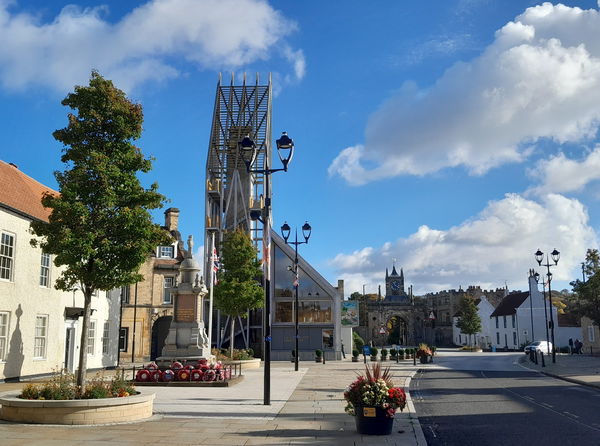
Auckland Tower
Building Bishop Auckland County DurhamA tower based on a siege engine amongst eclectic buildings
More Museums
So this museum wasn't enough and you want more? Don't worry we have you covered.

Newton Stewart Museum
Museum Newton Stewart ScotlandA museum of the culture and artifacts of the town and surrounds.

Bowes Museum
Museum Barnard Castle County DurhamDesigned and built as a museum in the style of a French Chateau and housing 22 galleries. Famous for the amazing kinetic art of the Silver Swan.

National Glass Centre
Museum Sunderland Tyne And WearA modernist building, especially built for the study, teaching, demonstrating and display of all things glass.
Never Miss A Fabulous Place
If you are afraid of missing out on all the fabulous places we post, or just want to be the first to know, then sign up to the Fabulous North.
Each week we will email you all the brand new places that we visit.
Sign Up To Alerts

Find Us On Facebook
We post all our new places daily on our Facebook Groups page, so join the group today and be notified when we add a new place.
Join Our Facebook GroupBinchester Roman Fort "Vinovia" was listed in Museum // County Durham // Bishop Auckland