
Chapel of Our Lady of the Crag
Religious Place In Knaresborough, North Yorkshire
A tiny place of worship carved into the face of a rock overlooking the River Nidd in Knaresborough.
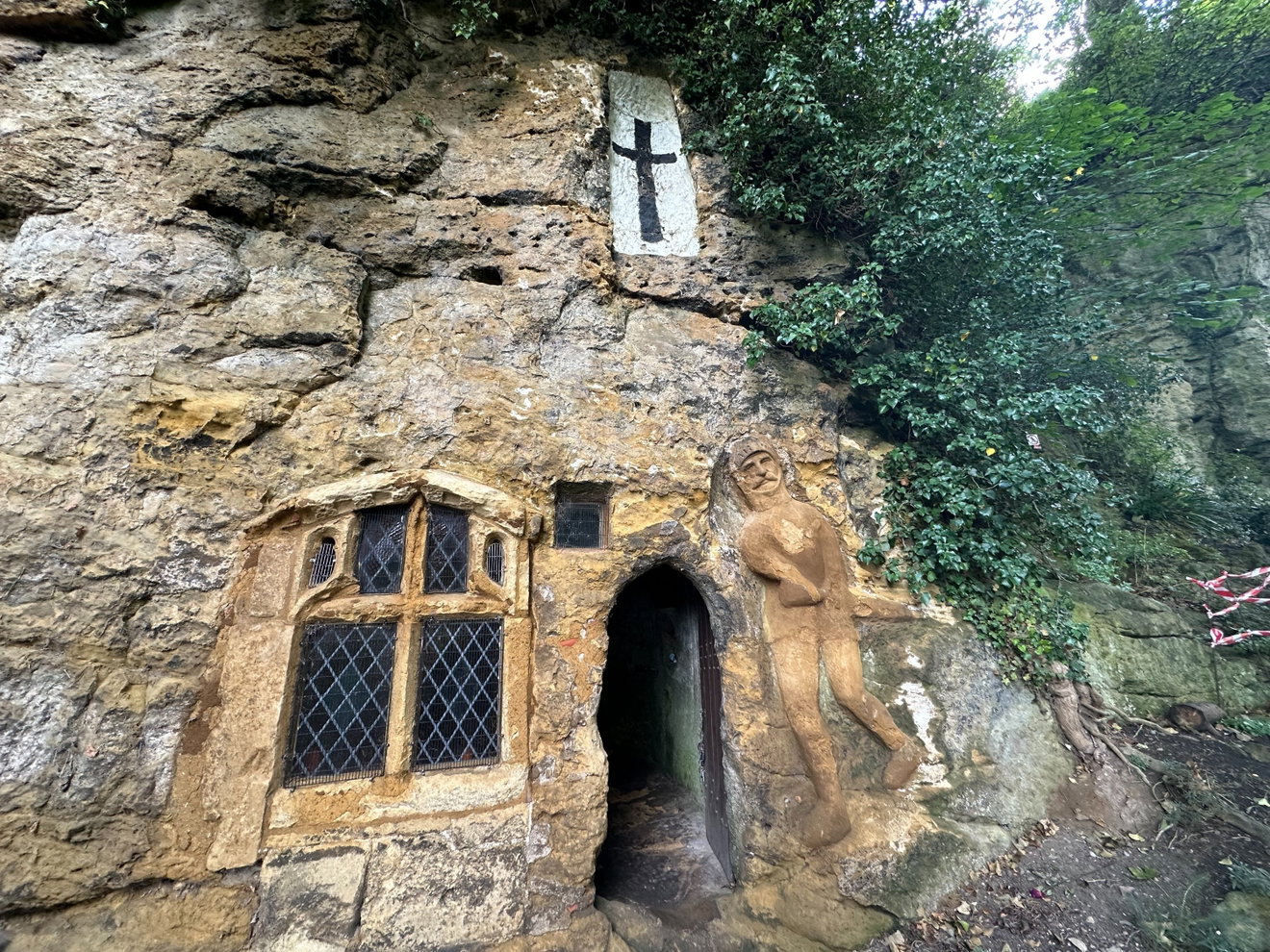
I love a church and can't deny being a fan of little over large, humble over ostentation, but they don't come much smaller than the Chapel of Our Lady of the Crag in Knaresborough.
'You couldn't swing a cat in it' is an understatement. Your elbows and knuckles would get grazed, never mind the outcomes for the poor cat!
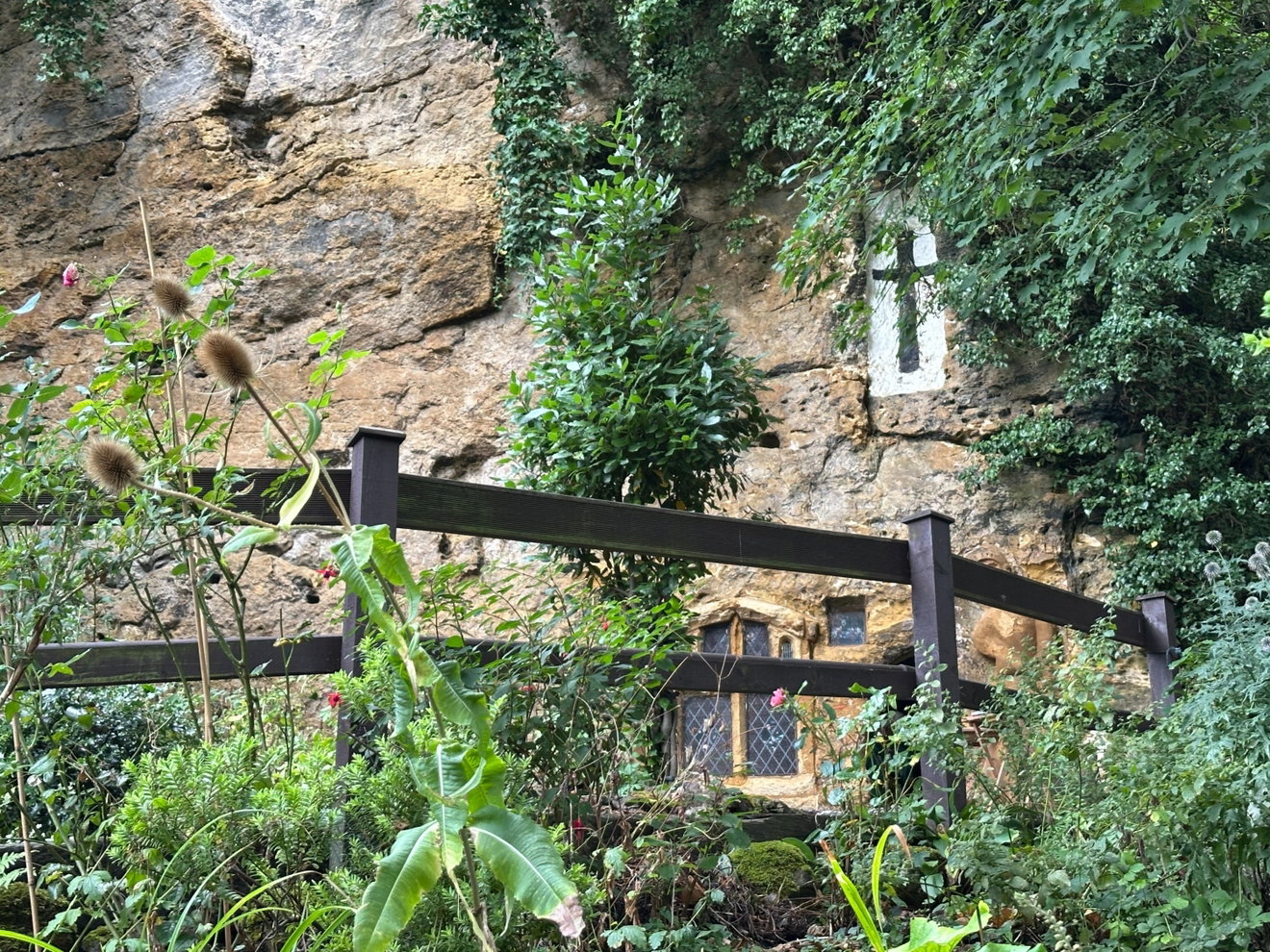
This chapel, despite its ceiling bosses, pillars and stained glass window, is housed in the face of a cliff, in an old quarry, high up, peeking over the River Nidd.
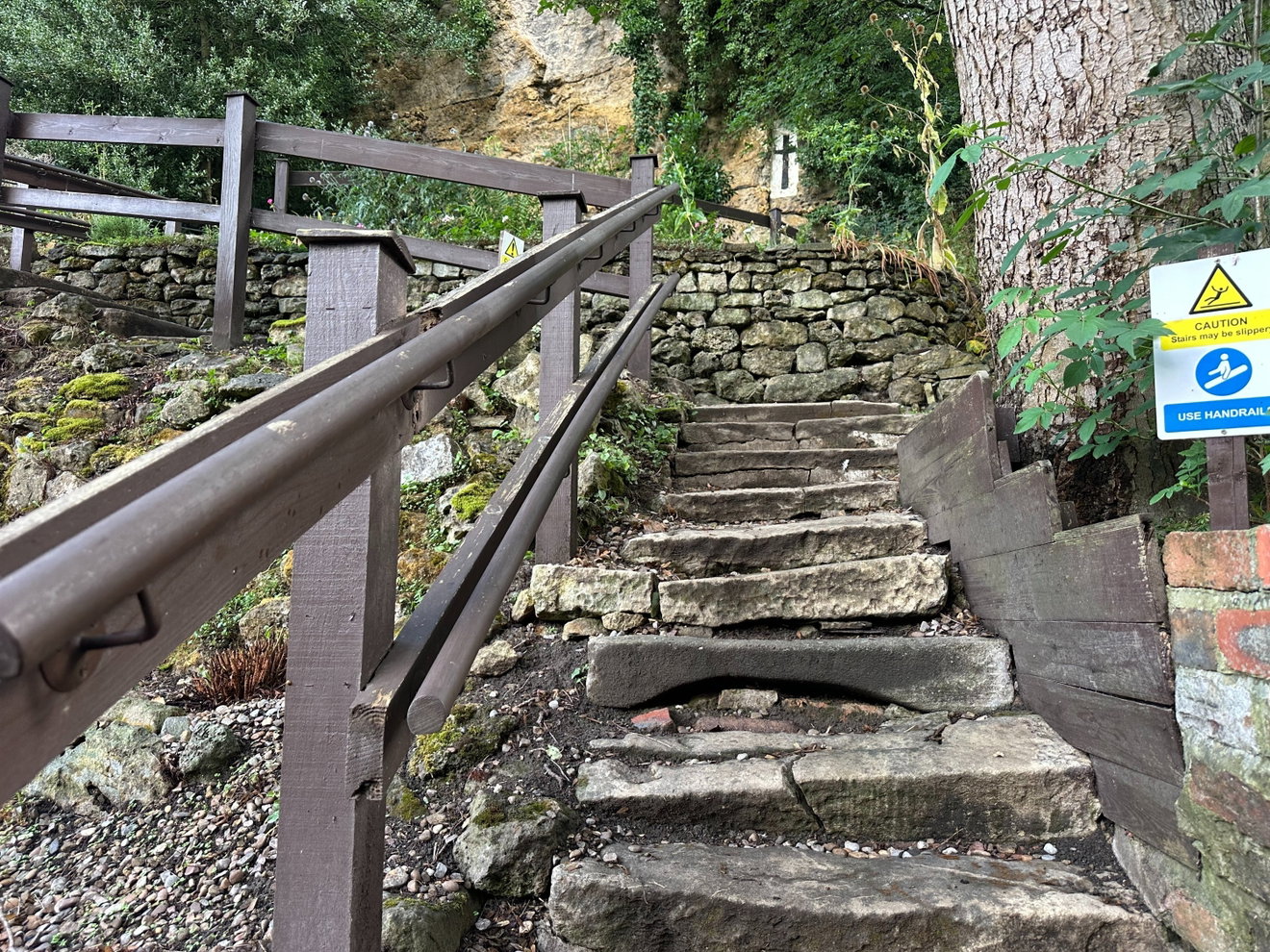
Not for the faint-hearted, the incremental climb from the river road to the mouth of the cave and entrance to the chapel is a steep one; zigzagging too and fro through the well kept gardens.
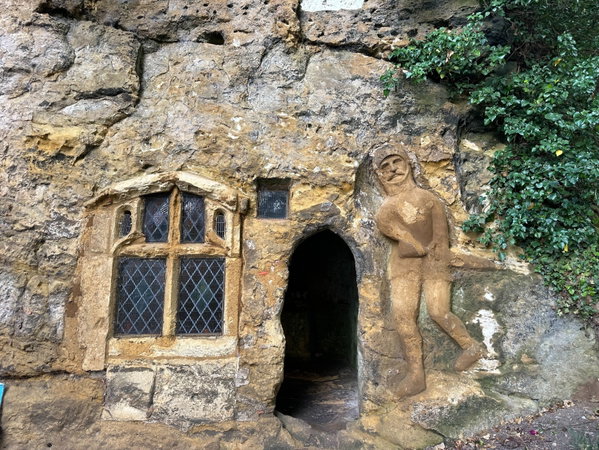
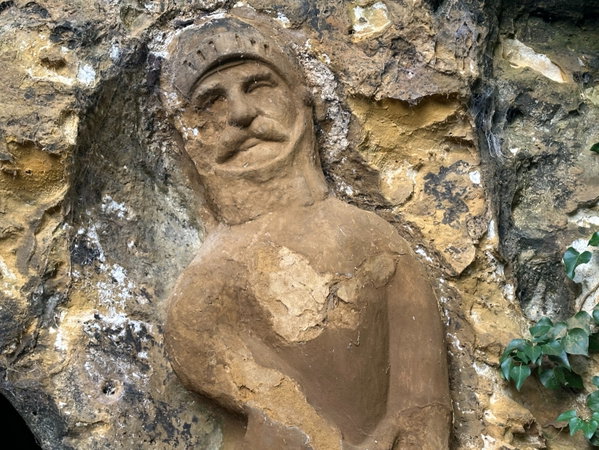
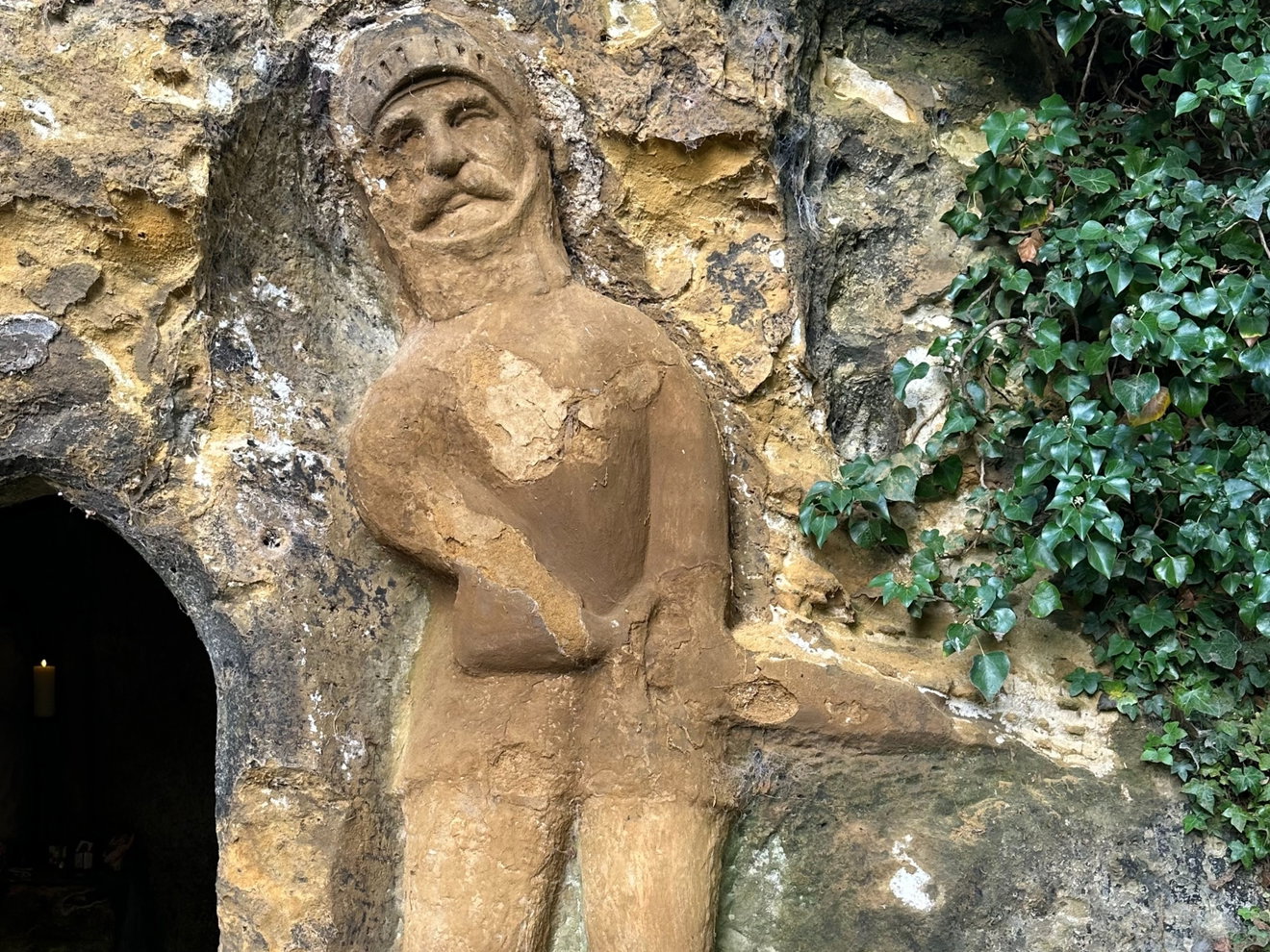
Once at the top, you're welcomed to enter through a small arched wooden door guarded by a Knight Templar who just happens to be twinned with Windsor Davies! Or maybe not...
This chapel has been in use since 1408!
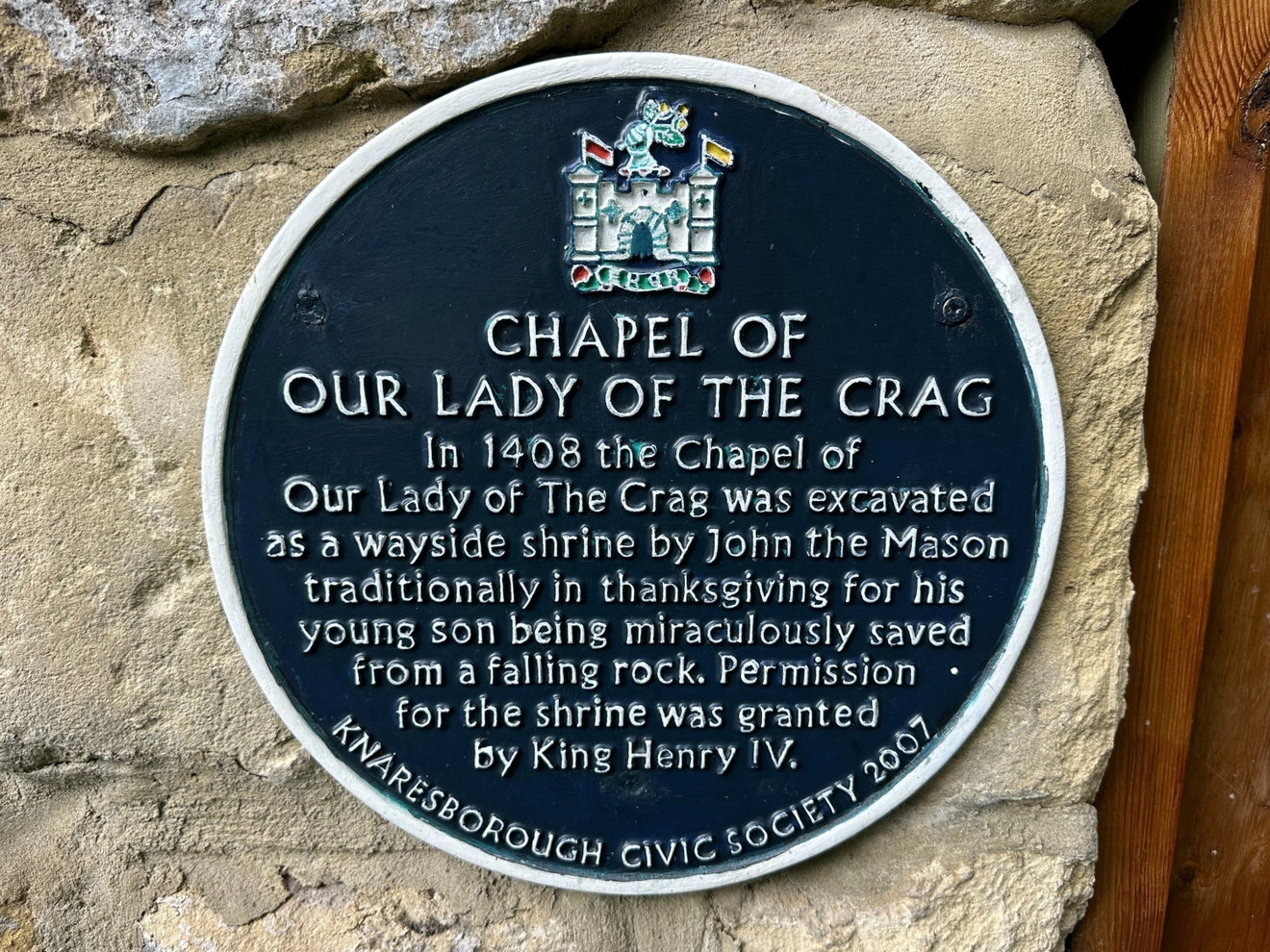
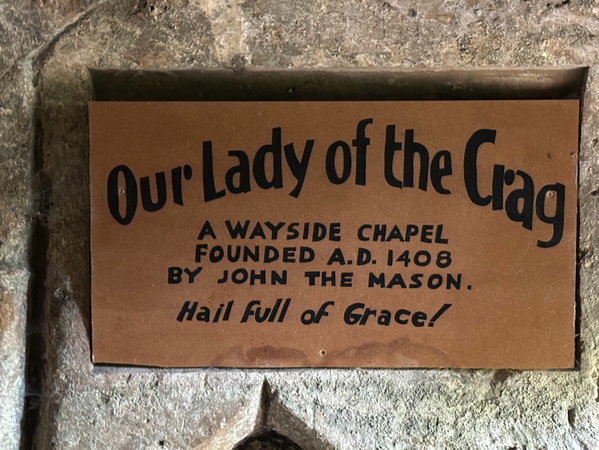
Over six hundred years old, it was carved by John the Mason, stonemason to King Henry IV, who, after a minor miracle, chiselled the chapel from the sandstone rock face.
It is said that John had taken his young son to work, and as he played in the quarry, some loose rock tumbled. John's son was directly in the path of the falling stone. Too far to intervene, but hasty to pray, John clasped his hands in prayer to Saint Mary. And in front of his eyes, the course of the falling rock changed direction, saving his son, unscathed and safe.
John felt indebted to Saint Mary, and as a mark of gratitude, he wanted to build a chapel to mark his thanks.
He was granted a license from the King to excavate below the quarry with the intention of building a chapel which he was to hold for the term of his life for a small annual rent. In recognition of his reaching out to Saint Mary, the chapel thenceforth became known as 'The Chapel of Our Lady of The Crag', 'Our Lady of the Quarrell' or 'Quarrell Chapel'.
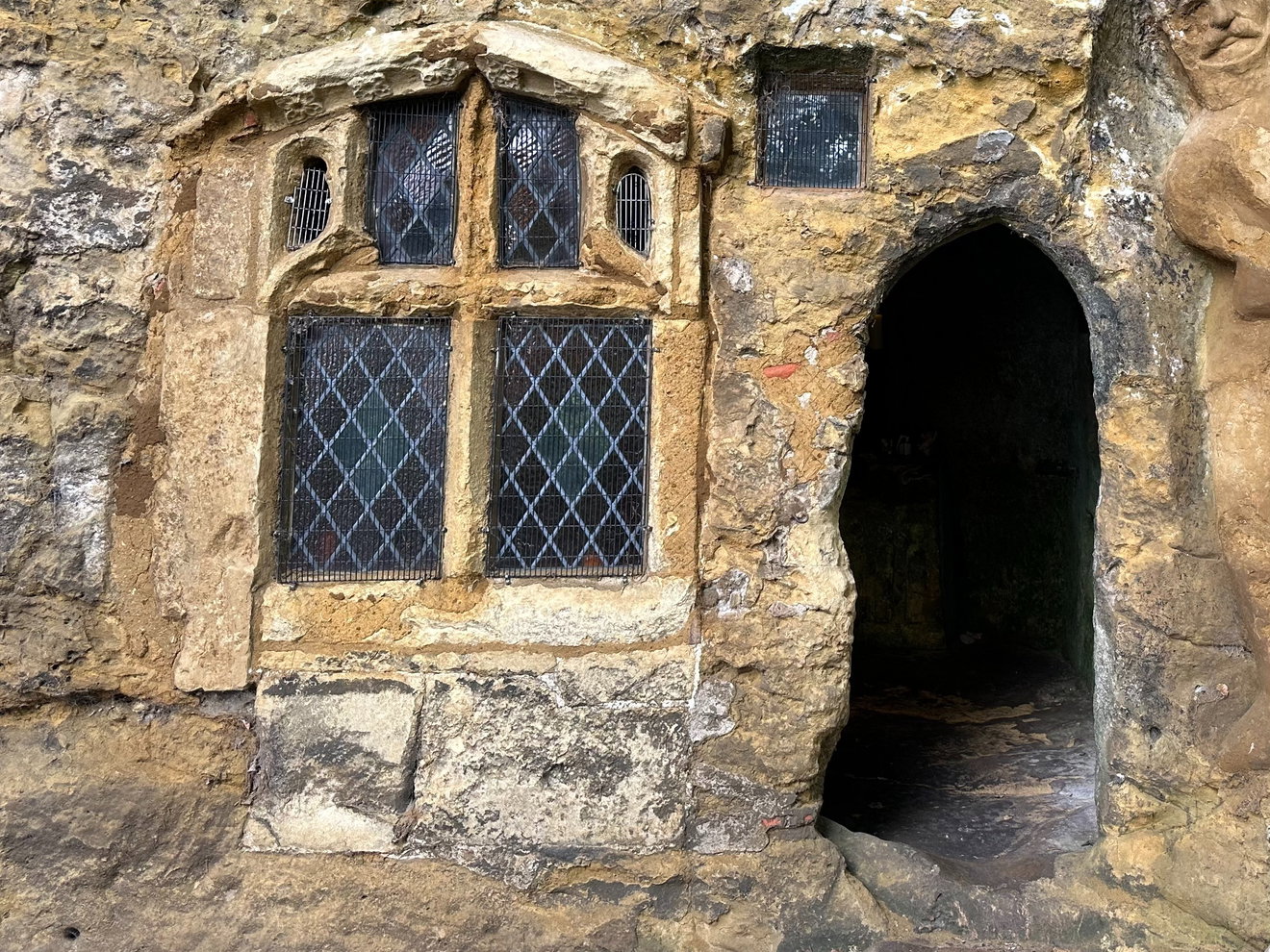
There is something hideaway, hobbity and fairytale about this miniature place of worship. The cliff face just melts into a cut away for a wooden door. You're beckoned in to enter under the guard of the knight and you've no idea of the depth or size of the cavity you're embarking on!
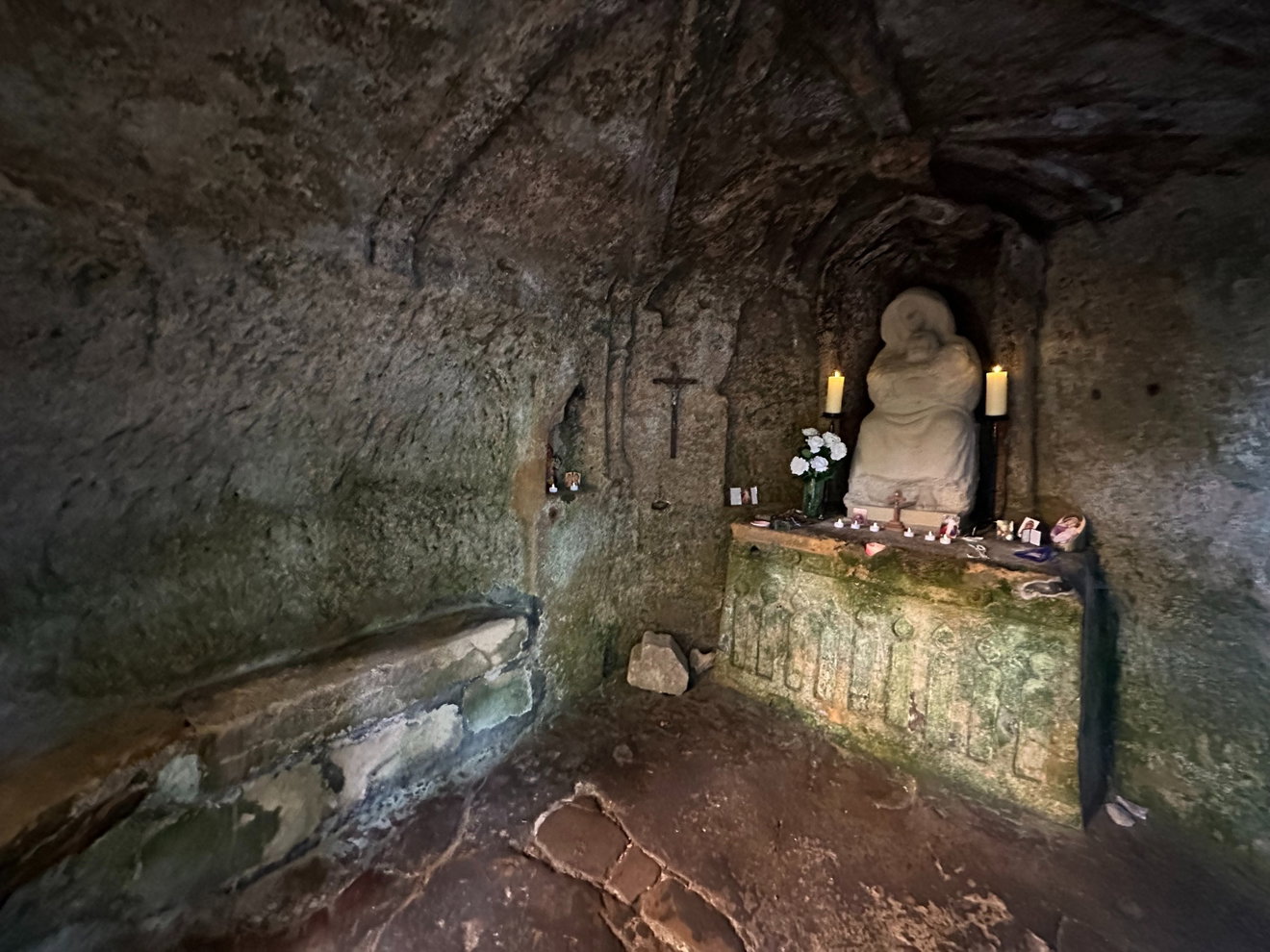
Come with me, through the door and you'll see that there's barely space for a couple, never mind a congregation! It's cramped but classy!
Look at the altar. It's the main feature of any size. It's carved elaborately from sandstone, and holds five holes in the altar top, which are said to represent the five wounds of Christ.
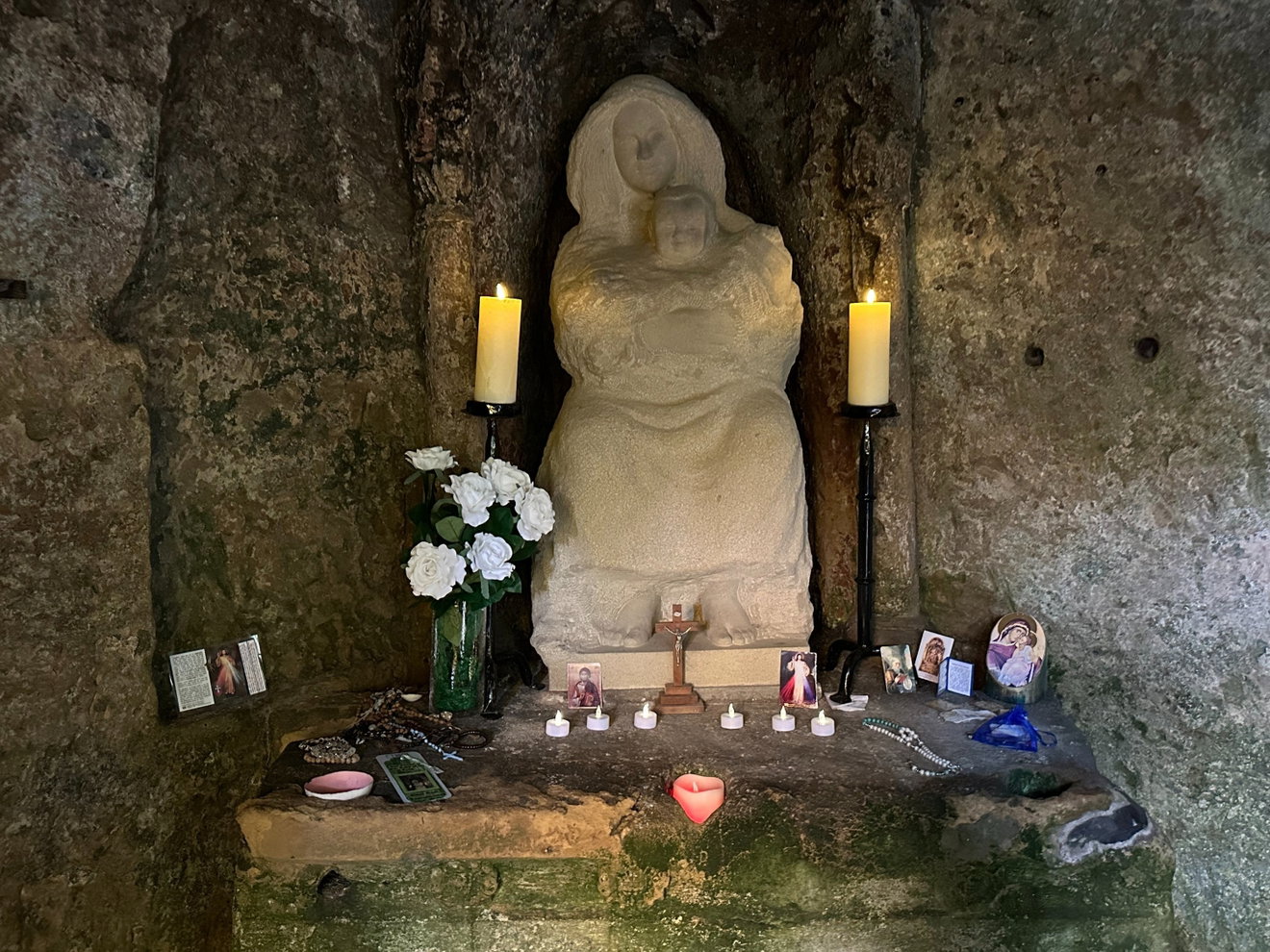
These days, it's adorned with more modern religious effigies, and a recent Derbyshire Gritstone sculpture of the Madonna and Child carved by Ian Judd in 2000.
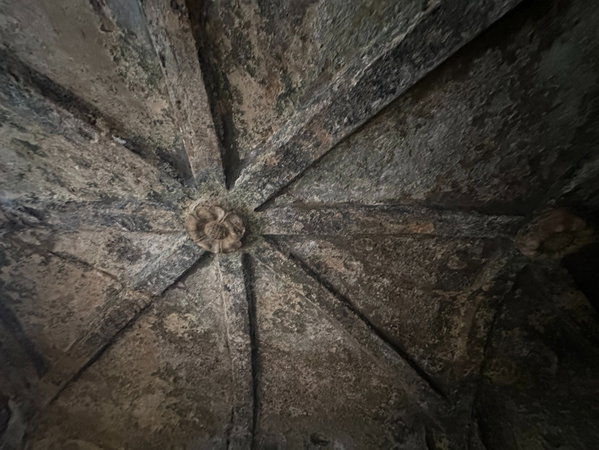
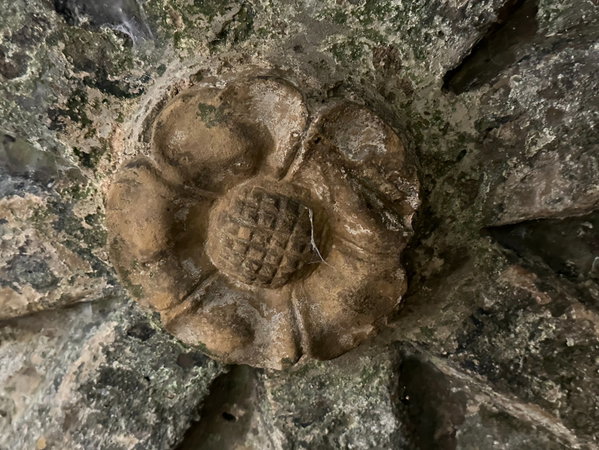
Looking up, every effort has been made to emulate a traditional place of worship with a carved vaulted ceiling and intricate ceiling bosses. The five-petalled roses are symbolic of the House of York, are Templar emblems, but also represent the Virgin Mary. It's amazing the attention to detail in a place so minute.
It's thought that the chapel was possibly an example of the mason's extraordinary skills, and that the small details might sell to some passing prayer makers who'd kill to have a quarry-carved chapel of their own, like a modern-day B&Q showroom!
Other, less capitalist views were that John simply wanted a peaceful place of prayer for his men who worked in the quarry.
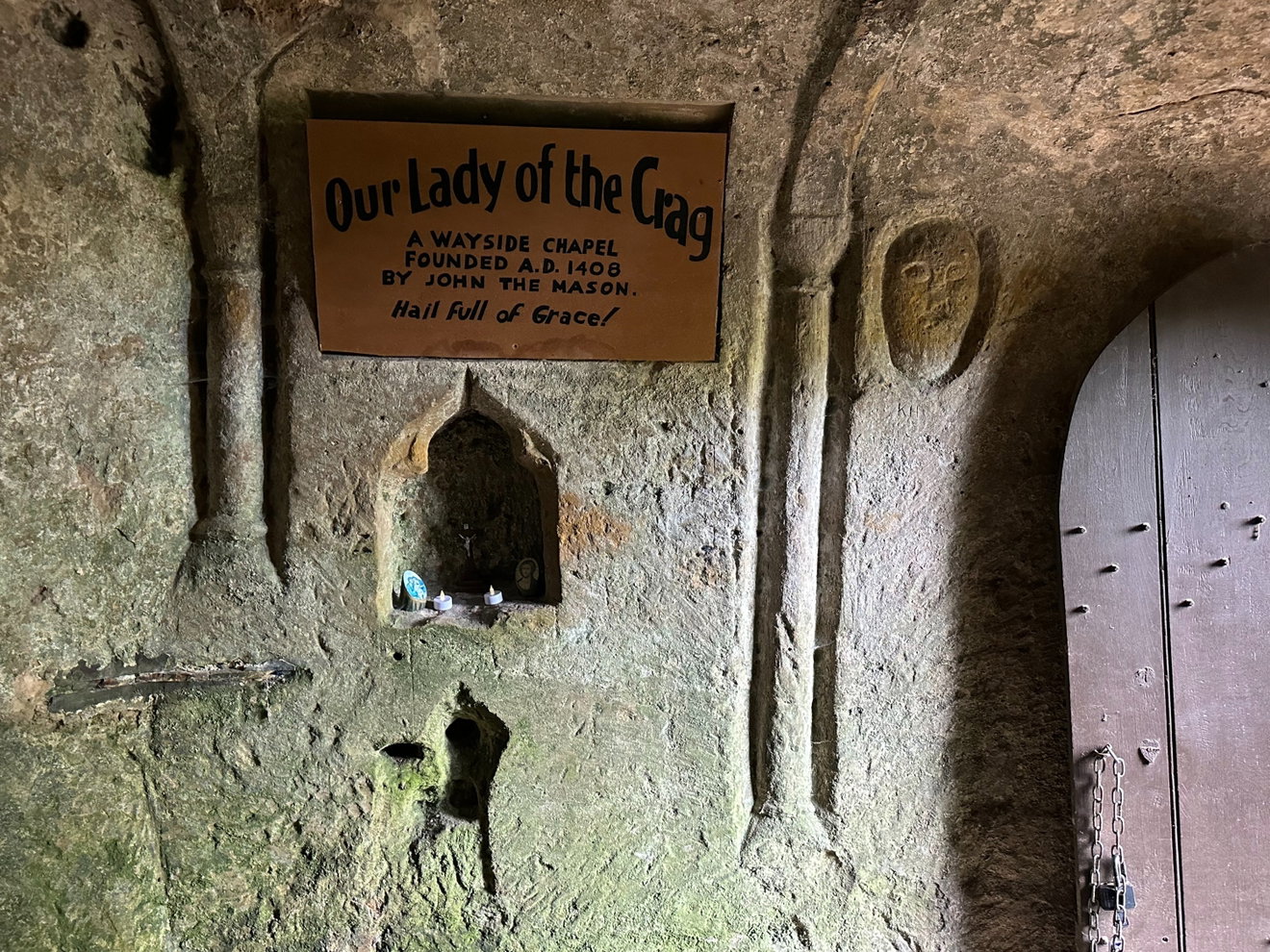
With no place in the nave (it's all nave) for pillars, they are expertly cut into the stone to give the suggestion of grandeur and depth.
The chapel is run by a group of trusty volunteers who all contribute to keep the chapel chipper, the gardens growing, and the story alive, and make visits possible as and when. It's open Summer Sundays between 2:00 and 4:00pm or by special arrangement only.
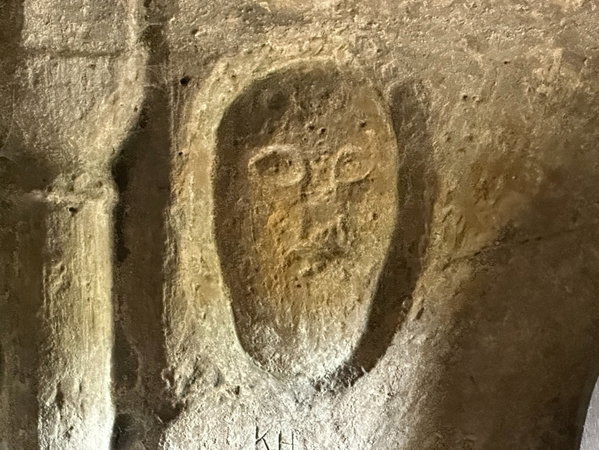
We were hosted by a lovely lady called Margy who was very informative and knew all the nooks and crannies like the back of her hand. She pointed out the carved face next to the door and told us it was possibly to represent Jesus and that previously there had been three heads, possibly known as Celtic Heads on the wall, but they were removed in the Victorian era by some keen fixer upper not too knowledgeable about his heritage eh?
It's possible they represented the Father, The Son and the Holy Spirit, or it could have been an early 'Buy one get one free' offer from John the Mason, to depict his specific masonry skills and aptitude, alongside the other clever carving work.
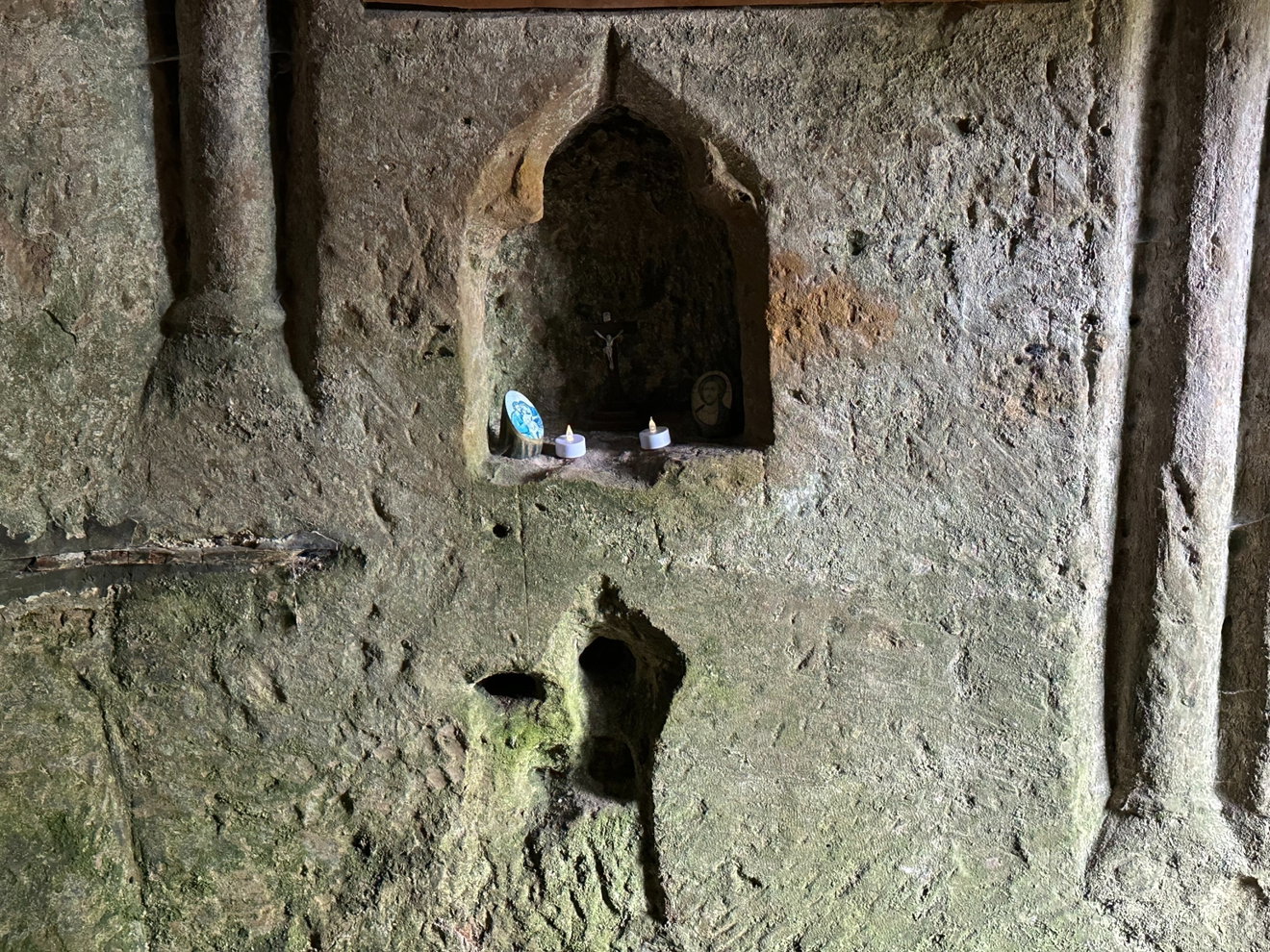
The small aumbry below the Victorian clagged-on sign would have been used to hold holy vessels. There's a place for everything in this well-thought-out tiny religious rock shelter.
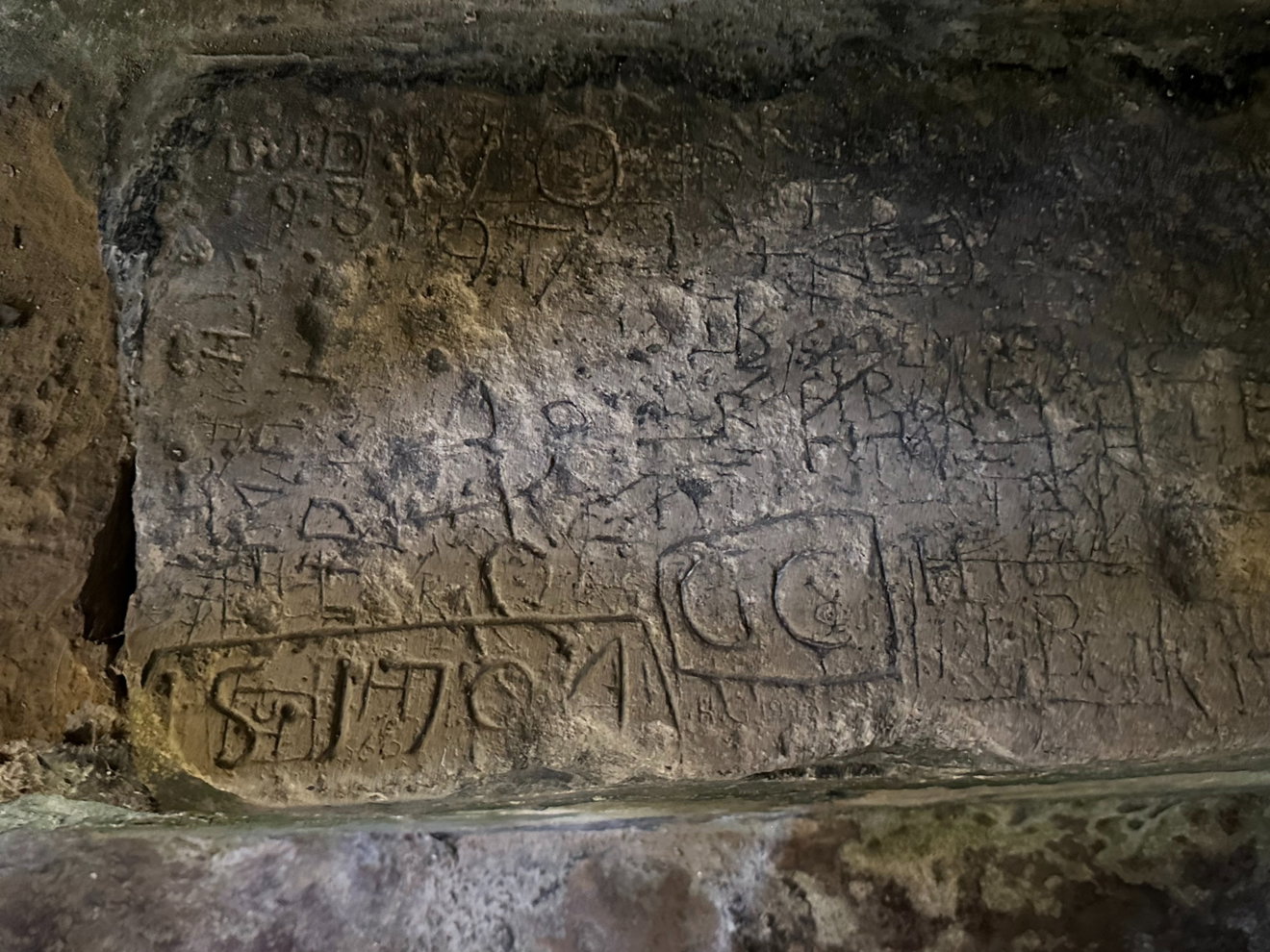
Opposite is a small stone pew covered in ingrained graffiti. Sit still long enough, and you'd not fare well on the damp, cold stone!
Also known as a Marian Shrine, the chapel was forced out of existence during the Reformation, and it's unknown what happened to its contents. It's likely that any religious relics were burnt; however, there are snippets of evidence that suggest that secret services still took place over the centuries.
In 1700, the female explorer, travel writer and diarist, Celia Fiennes (relative of Ranulph and Ralph), commented on her observations of visiting Knaresborough and seeing...
“ a chapel with altar decked with flowers and the ground with rushes for ye devout which did frequent it."
Celia Fiennes, 1700 Diary insert
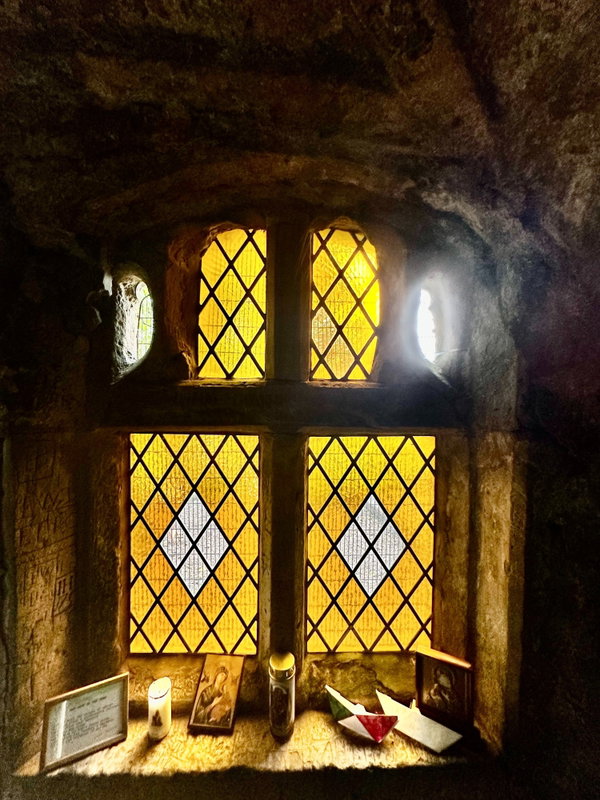
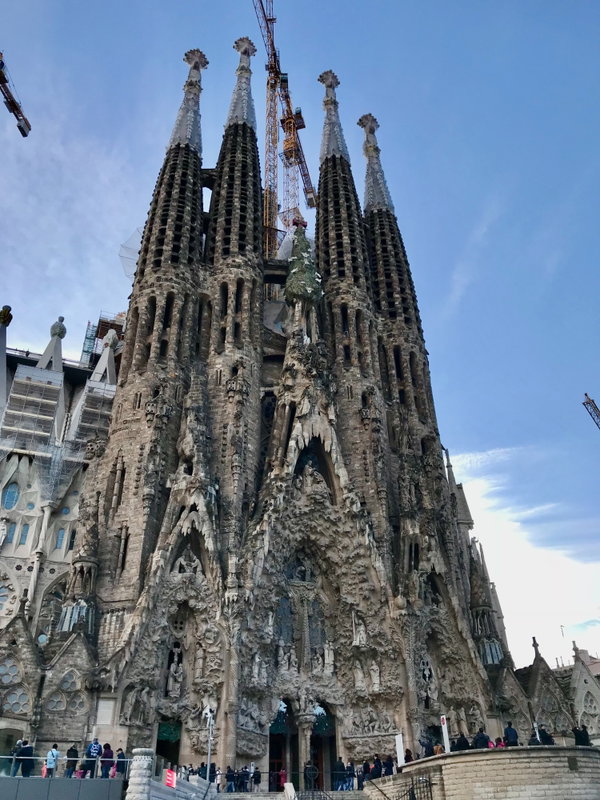
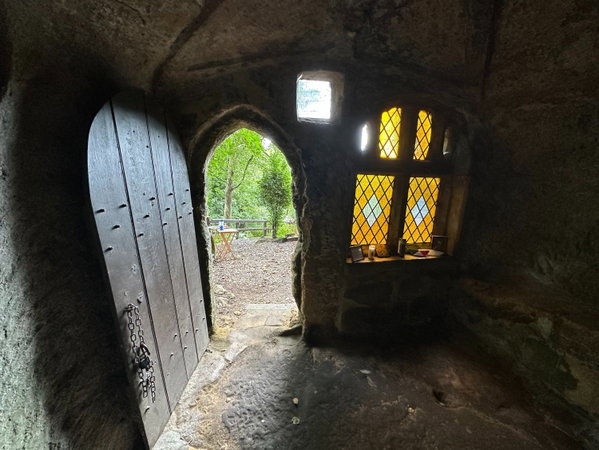
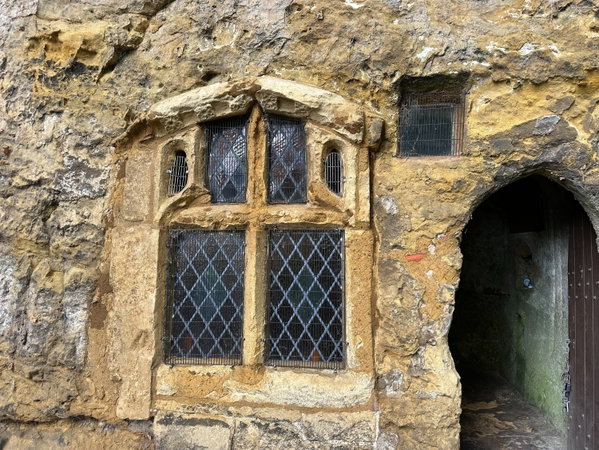
Spinning a full 360, we return to the door and the magical, miniature stained glass window, sadly vandalised in 2019 but repaired and recovered with care by the trust who manage the chapel. It has overtones of Gaudi's Spanish architecture; a Sagrada Familia crumb, though it would be he who emulated John! I'm not sure he ever made it to Knaresborough, but the butter-melting sandstone seems just cut out of the cliff face with detail and ease.
And then back out, into the plain old real world after a slither of Sunday service in this slight sandstone chapel. No shying away from the Sunday collection here...you'd be in plain sight of the four other people who were able to cram into this cramped chapel and notice your button in the box!
Out into the open, your eyes adjust to the bright daylight from the dim of the cave and highlight the mismatched body parts of the Templar Knight. Standing beside the door guarding knight, you get a better view of his laterally stuck-on pate! His body is all of a piece, and his head, strangely animate for his detail-free body, appears to have been another Victorian add-on. Give him a 'tash, give him a helmet and a worldly-wise glint and Bob's yer uncle, Windsor's your man! It stands out egregiously that the knight is two separate masons' work! It almost looks as if his head is on back to front!
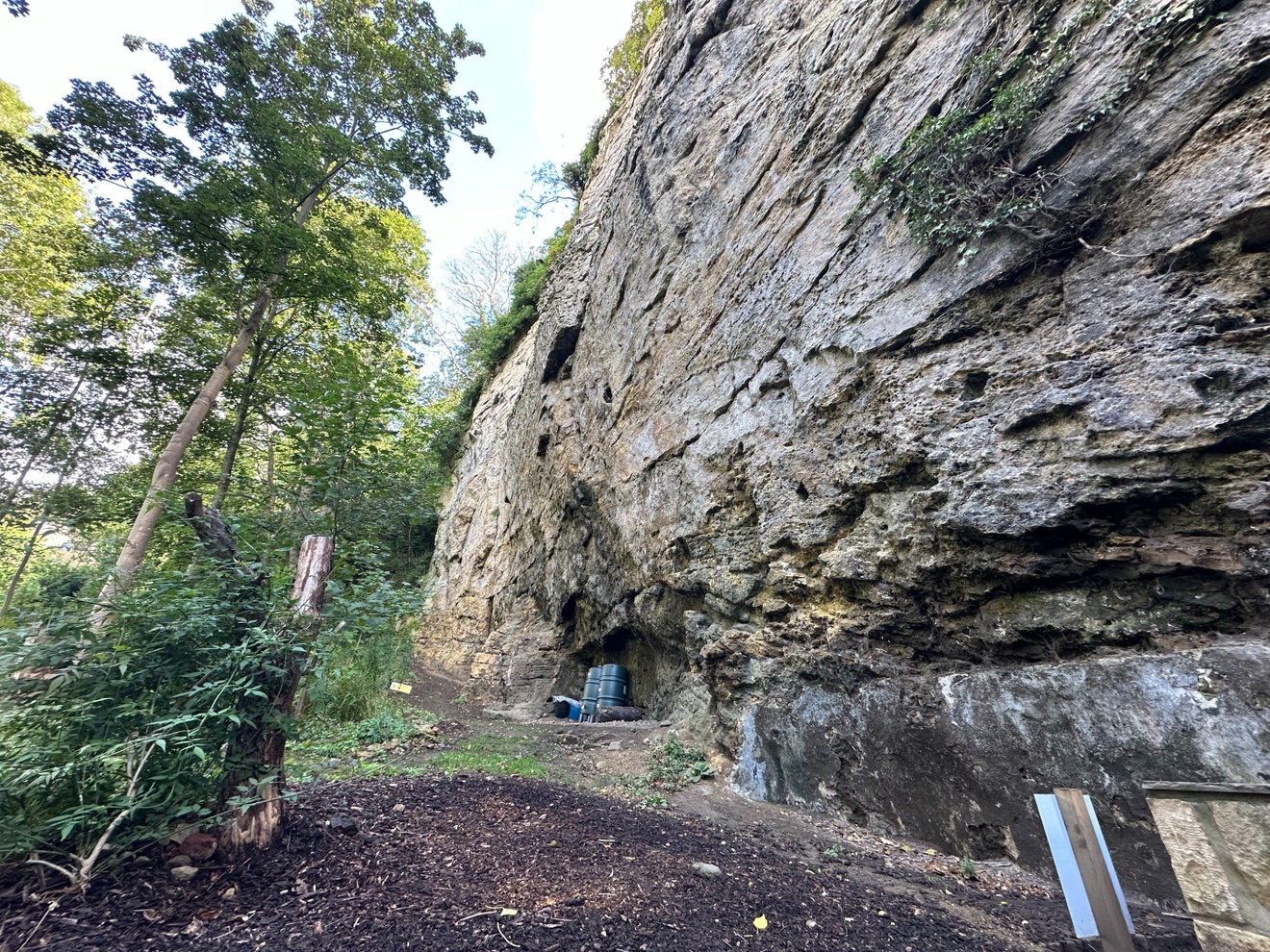
Looking closely at the cliff face, there are post holes at intervals, and archaeological surveys have suggested that many rough shanty dwellings were present at points along the back wall. It is not known if this community worshipped at the chapel.
In the early 1900s, the chapel was bequeathed to Ampleforth Abbey and in 1952 it was designated as a site of special historic interest and gained Grade 1 Listed Building status.
In 2016 Ampleforth Abbey decided it could no longer maintain the land or building and it was sold to the group of trustees and volunteers, known as 'The Chapel of our Lady of the Crag Trust' who now do such a perfect job of caring for this unique and precious little place.
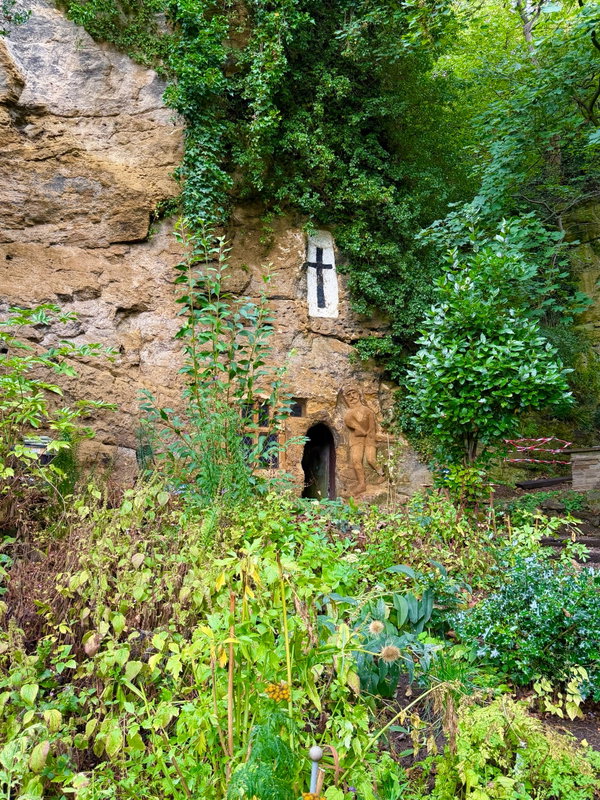
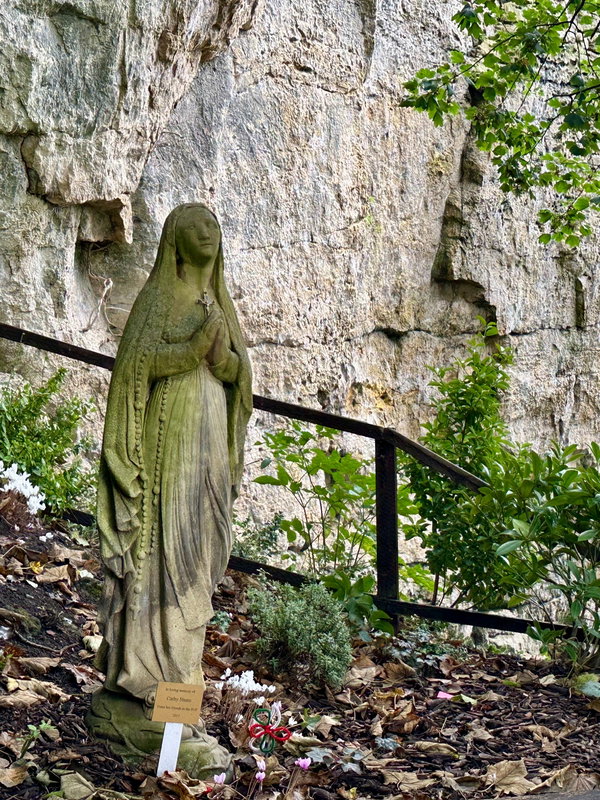
Margy, who showed us around, was brimming with enthusiasm and knew all of the tales and tidings about the chapel. Very impressive too that it's just a small band of keen contributors who keep the legacy of the chapel alive.
Surrounded by a tidy terraced garden, housing plants renowned for their medicinal healing properties, we wended our way down the steep steps, peeping at the River Nidd below, and thought of all of the pilgrims who would have trodden this path over 600 hundred years. Our feet were just two pairs to add to the list!
Get 5 points if you have visited this place. Already visited by 1 VIP.
Login to bag this placeHelp fuel the next adventure
Fabulous North is free, with no annoying adverts and fuelled by an unhealthy desire to poke around castles, hills, churches and suspicious-looking bits of stone.
If you enjoy what we do, you can help keep us exploring.
Champion This Place
Got a special memory of Chapel Of Our Lady Of The Crag, a story to tell or simply a soft spot for it? Champion Chapel Of Our Lady Of The Crag and we'll add your name, photo and a short message to this page, while your support helps us keep Fabulous North exploring.
How To Find Chapel Of Our Lady Of The Crag
Where Is Chapel Of Our Lady Of The Crag?
Show Place On Google MapsLat / Long
54.002817, -1.4655366
What three words
Where To Park For Chapel Of Our Lady Of The Crag?
There are a few very small pull-in spaces directly on Abbey Road near the site, but availability is extremely scarce and not recommended during busy periods, but we managed to get into a space fine.
Contributed by Jos Forester-Melville
Highland loving human. Thalassophile. I love a good smile. Happiest heading for the hills with my pickup filled with kids and dogs! Working four days, we enjoy a Fridate, and usually spend it scouting out new scenery. I love a gated track, a bit of off roading and if it involves a full ford, well, that gets extra points! I go nowhere without a flask and binoculars, and love the small things in life that make it big…Goldcrests, dry stone walls, Deadman’s fingers, blackberries and quality clouds.
More Places from Jos
More Places In Knaresborough
Find more fabulous places in Knaresborough, North Yorkshire and if you know of a place we haven't listed, then let us know.
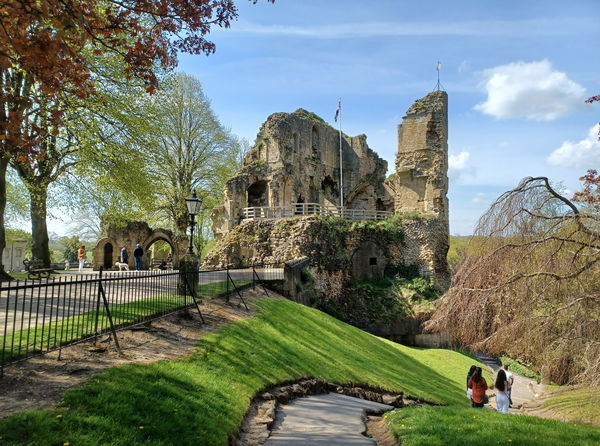
Knaresborough Castle
Castle Knaresborough North YorkshireA ruined fortress in the town of Knaresborough, North Yorkshire, first built by a Norman baron in c. 1100 on a cliff above the River Nidd.
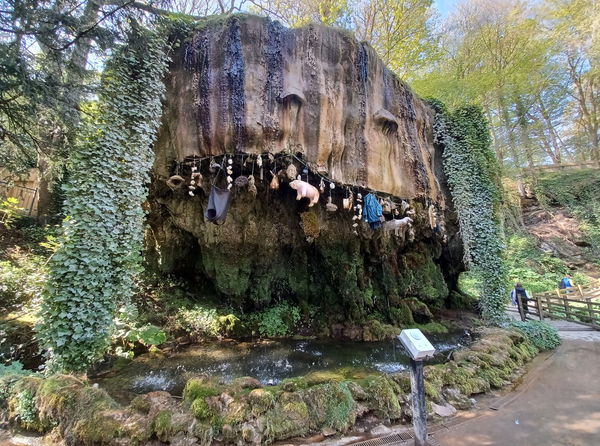
Mother Shipton's Cave
Cave Knaresborough North YorkshireA limestone cave in Knaresborough where local legend has it that Mother Shipton was born and lived.
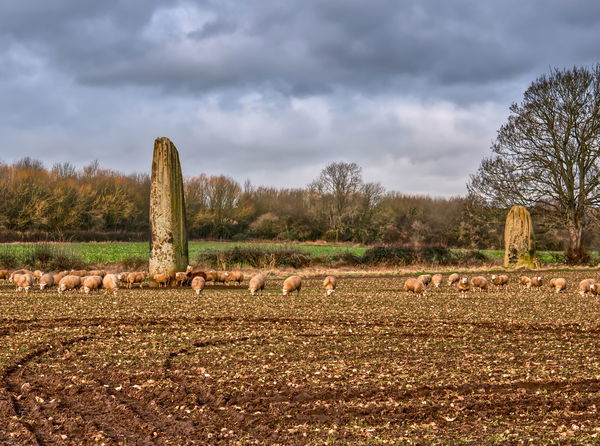
Devil's Arrows
Standing Stone Knaresborough North YorkshireThree tall Neolithic standing stones sitting in a line in Boroughbridge near Knaresborough.
More Religious Places
So this religious place wasn't enough and you want more? Don't worry we have you covered.
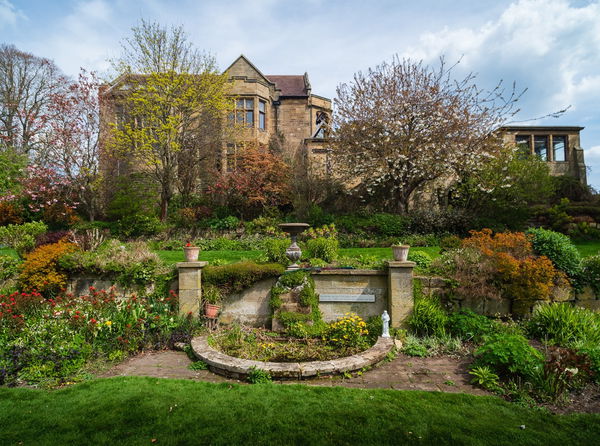
Alnmouth Friary
Religious Place Alnmouth NorthumberlandA beautiful house and gardens for the friars of The Society of St Francis in the North East.
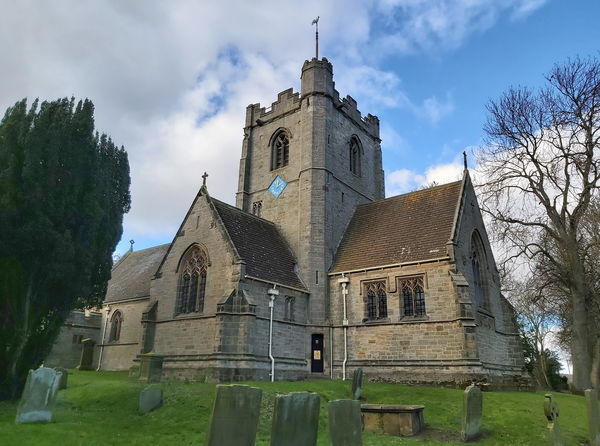
St James Church Shilbottle
Religious Place Alnwick NorthumberlandThe Parish Church of St James in Shilbottle
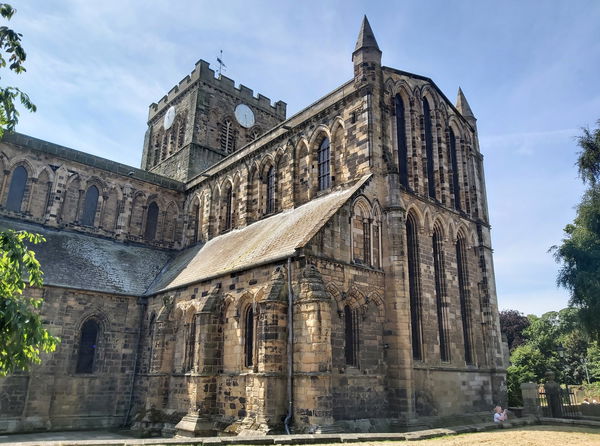
Hexham Abbey
Religious Place Hexham Northumberland12th century abbey dedicated to St Andrew, in the heart of Hexham.
Never Miss A Fabulous Place
If you are afraid of missing out on all the fabulous places we post, or just want to be the first to know, then sign up to the Fabulous North.
Each week we will email you all the brand new places that we visit.
Sign Up To Alerts

Find Us On Facebook
We post all our new places daily on our Facebook Groups page, so join the group today and be notified when we add a new place.
Join Our Facebook GroupChapel Of Our Lady Of The Crag was listed in Religious Place // North Yorkshire // Knaresborough