
Humanity Remained
Art In South Shields, Tyne And Wear
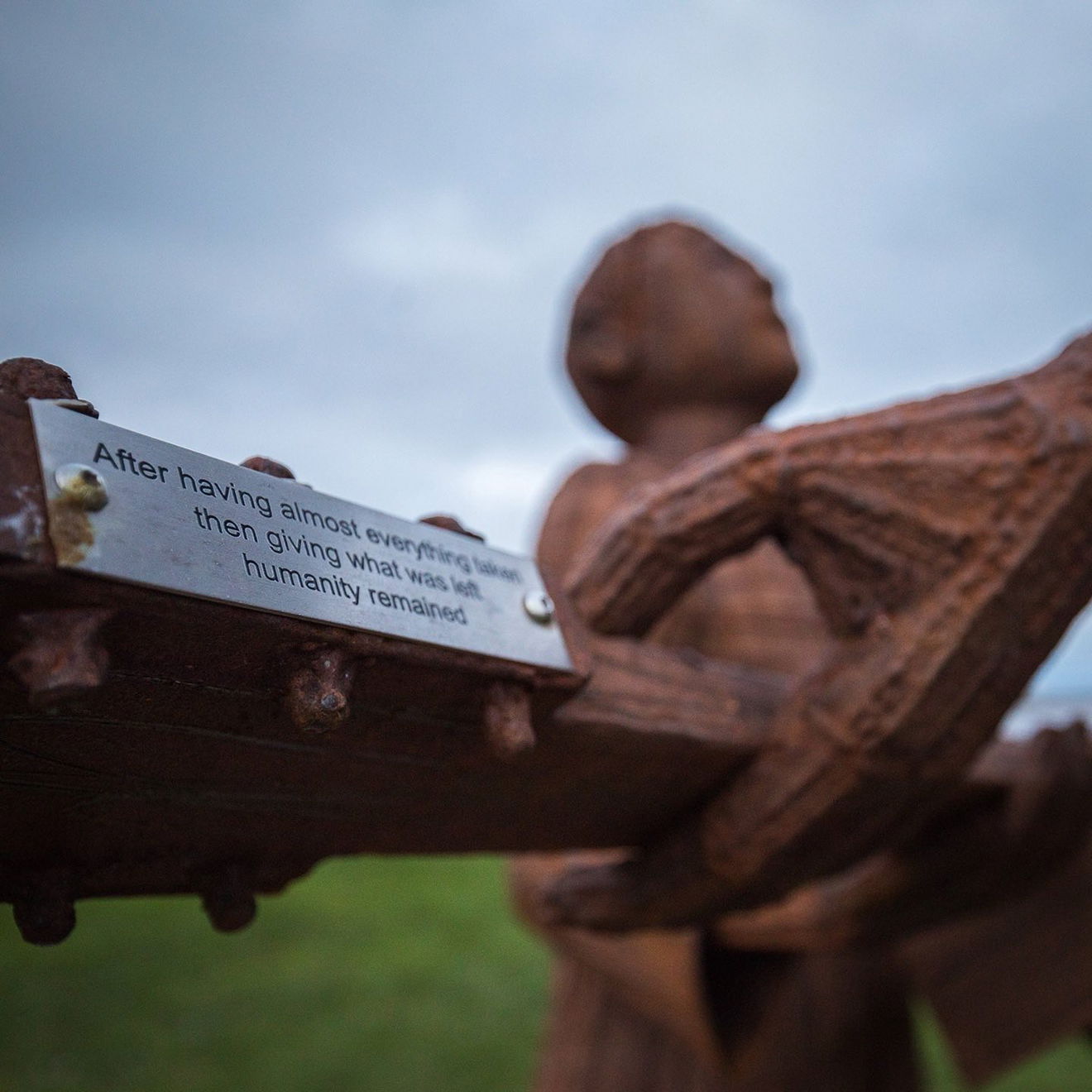
A poignant statue of WWII POW Len ‘Guitar’ Gibson by Ray Lonsdale.
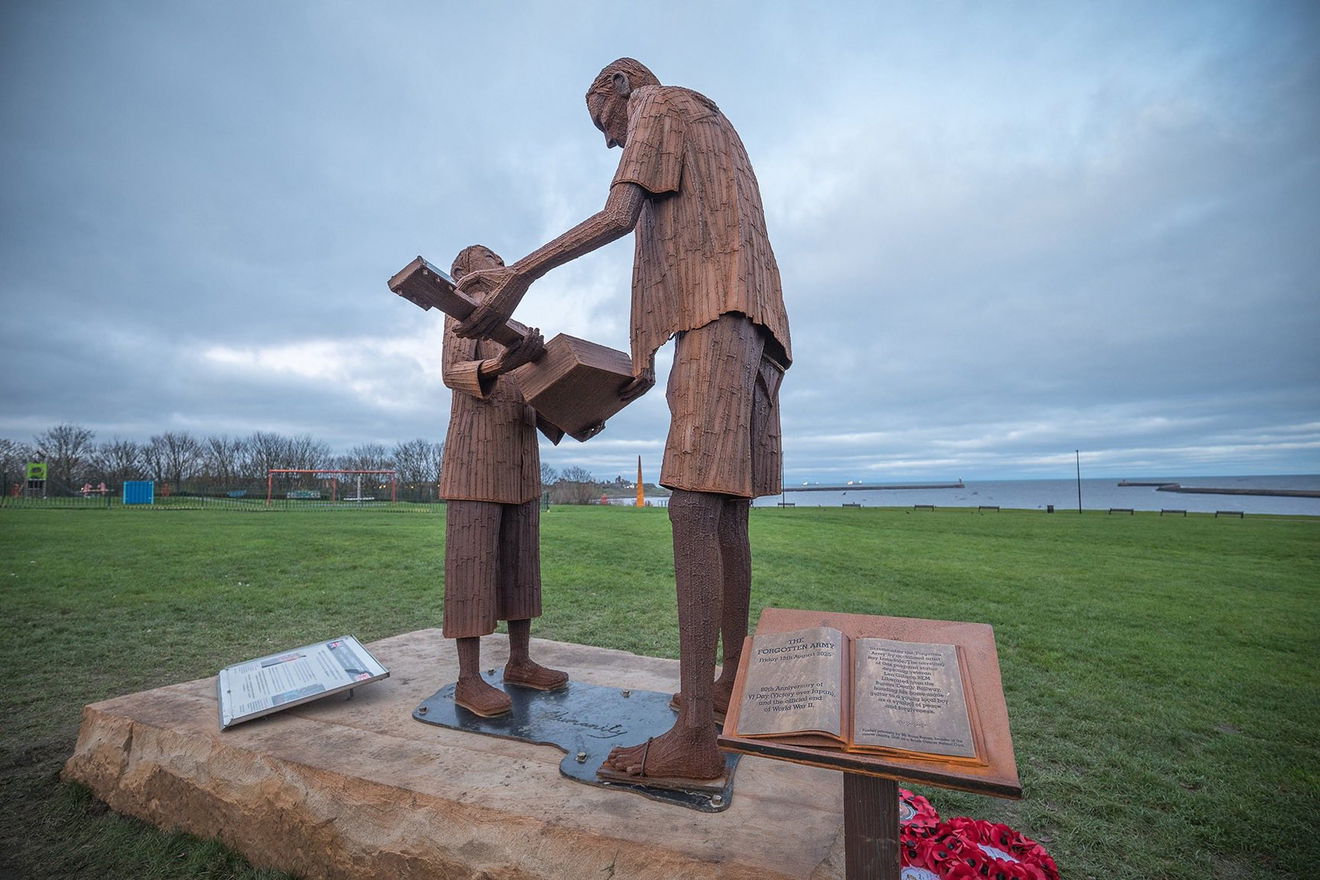
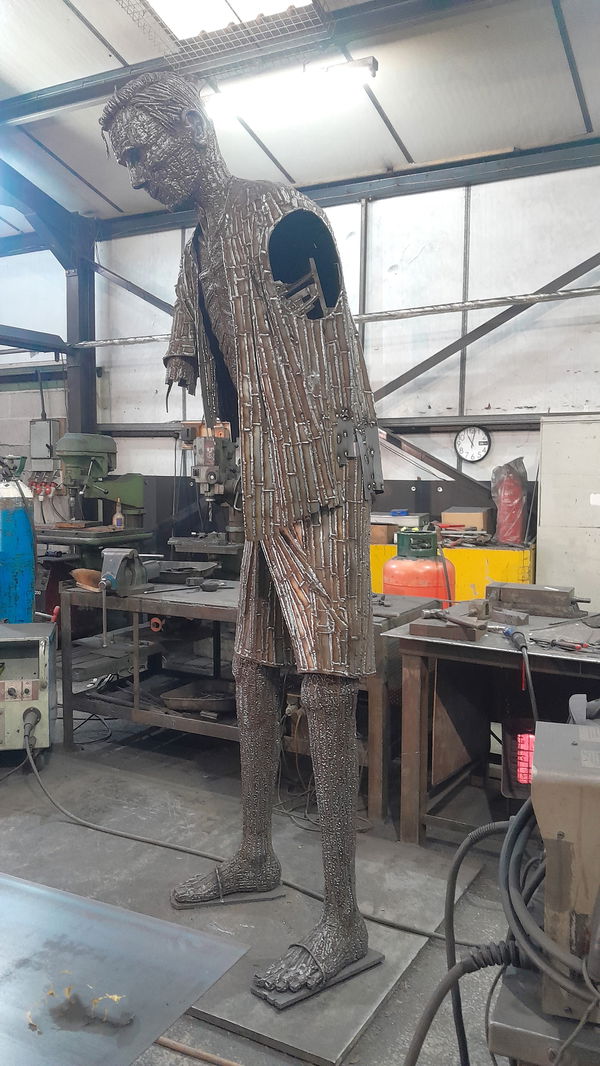
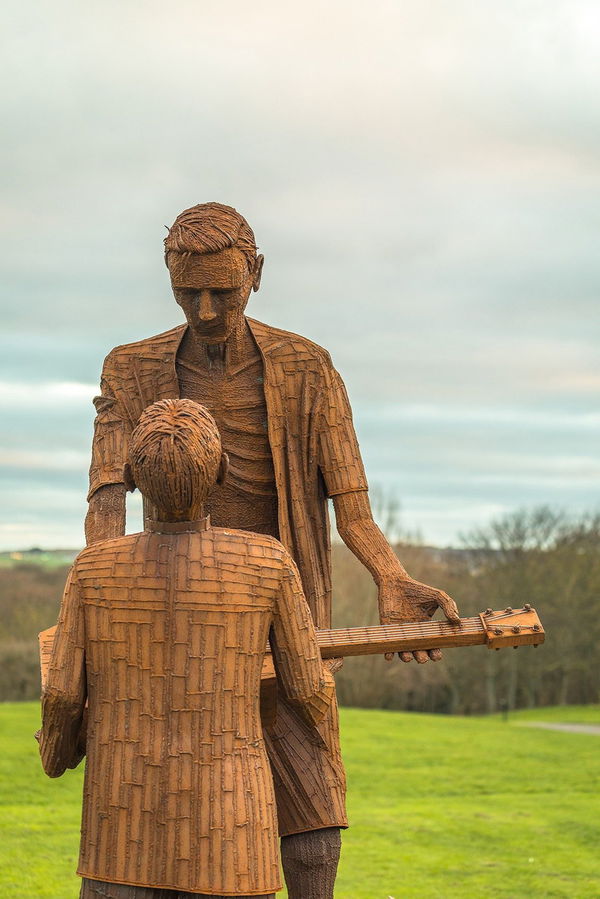
At the start of 2024, I visited my favourite Corten Steel artist, Two red rubber things/Ray Lonsdale, at his workshop. There was a beguiling figure that stood twice life-size. This is a statue of Len Gibson (1920 to 2021) titled Humanity Remained. He was an extraordinary, humble man who made and learnt how to play a guitar whilst a Prisoner of War during World War II in the Far East for 3½ years and survived.
Nick Mansfield captured the cover photo, the above capture is by Alan Reay, and Paul Levitt, who visited Ray's workshop. They have kindly permitted their photos to be shown
The statue was commissioned by Brian Burnie, founder of the 'Daft as a Brush' Charity. Len, in his later years, was a volunteer driver for this charity, which transports cancer sufferers to and from hospital in swish vehicles. One vehicle was named Len Guitar Gibson. Brian got to know Len and his wife well, and when asked, Len started to tell Brian about his upbringing and the war years. There is a well-written autobiography, 'A Wearside Lad in World War II', which is moving, informative, and amusing.
The photo below is courtesy of Alan Reay.
I asked Ray Lonsdale's wife, Bev, what the process was for creating Humanity Remains and capturing the likeness.
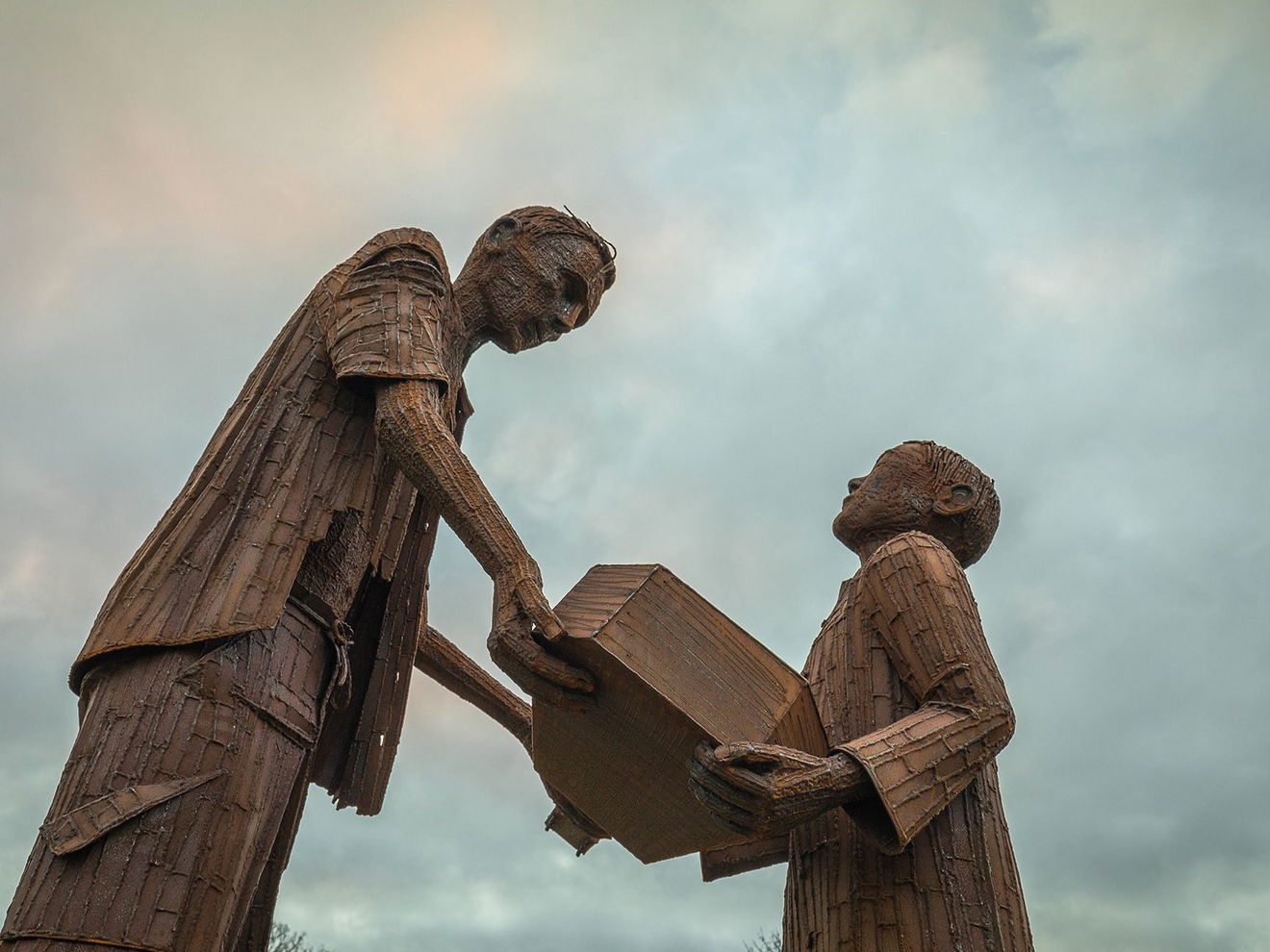
It was a story that Ray picked up on from Lens' biography. There were limited options with this one [For capturing likeness] so looking at photos and hoping for the best. It took 4 months to make. The handing of the guitar to a young Thai lad was a gesture that Len made as he was released and about to leave the country to return home. In the guitar, there was a little bit of money that Len had managed to save and hide.
Bev Lonsdale
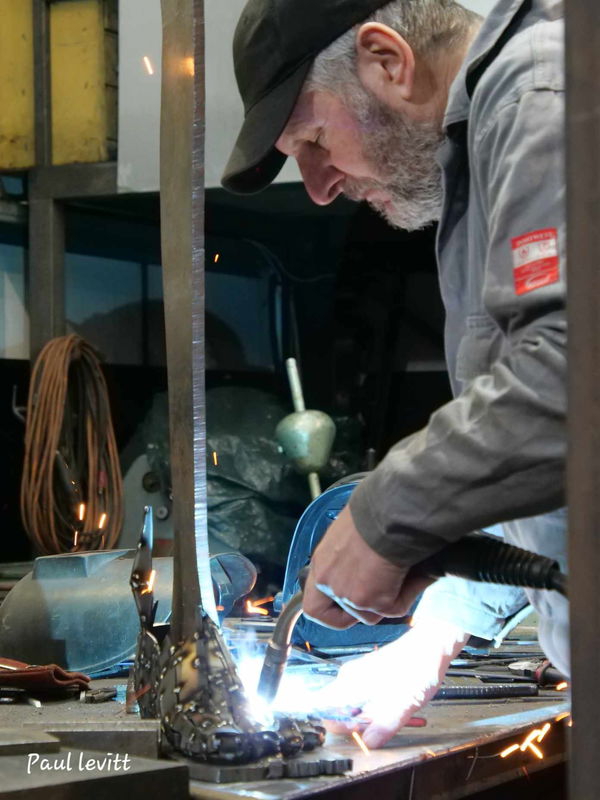
Here are some great action photos that Paul Levitt took in Ray's workshop.
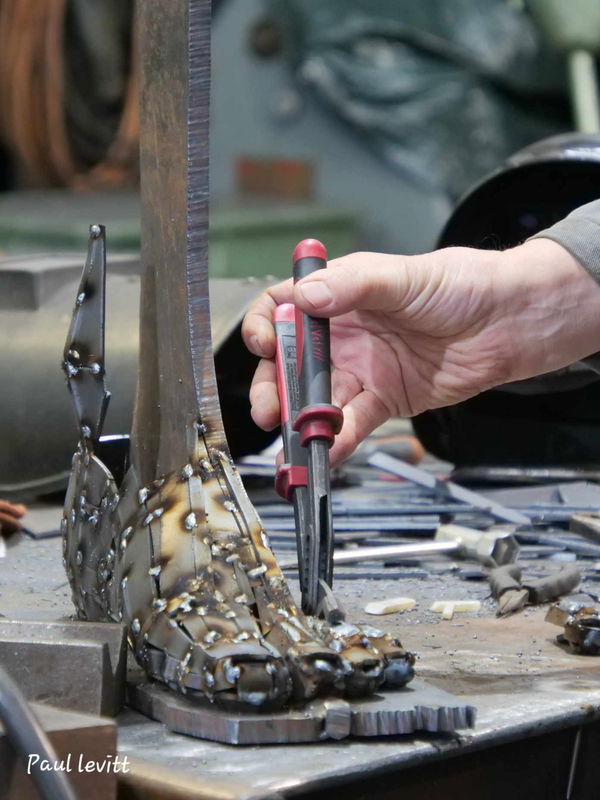
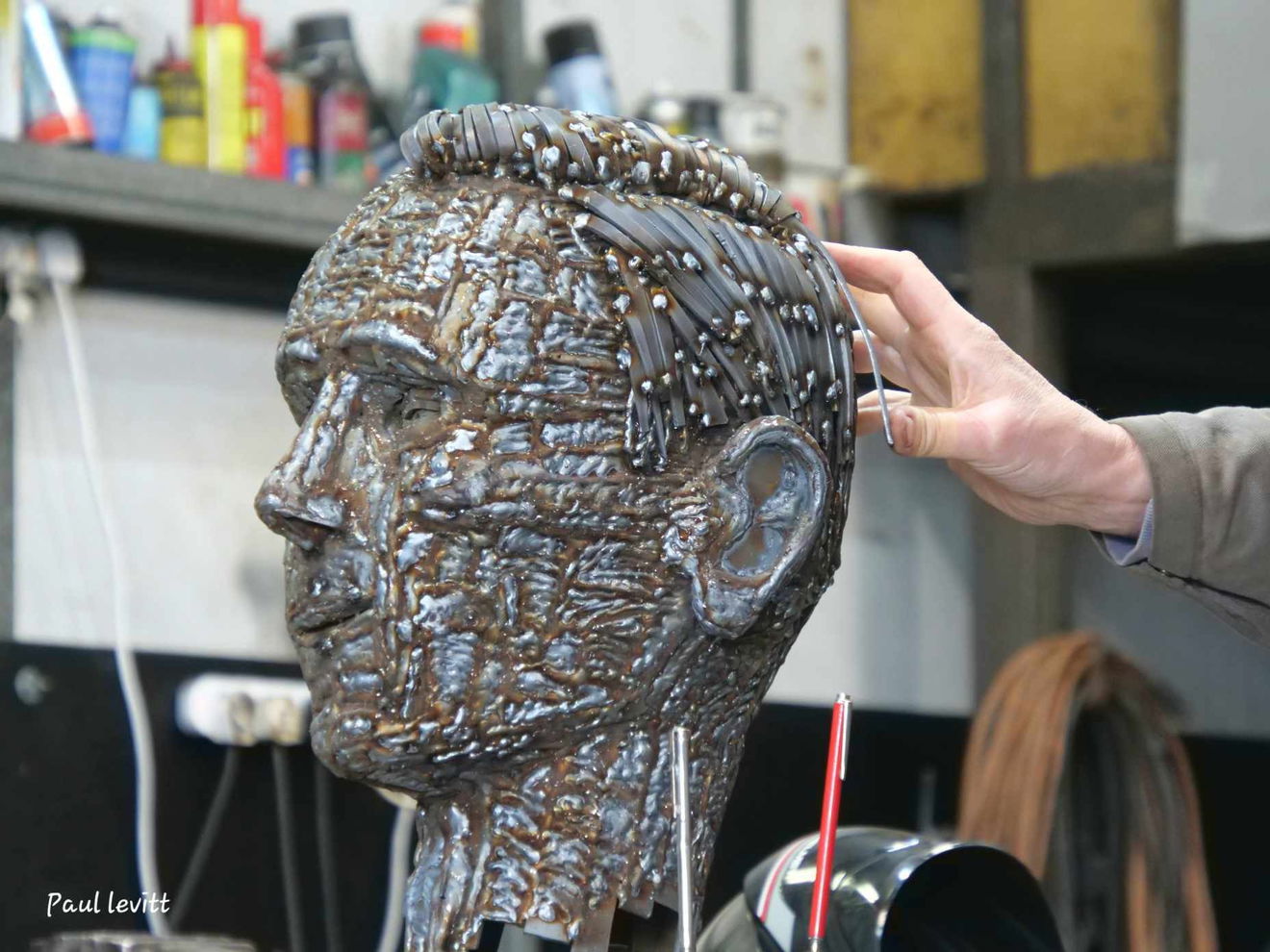
Len was from Sunderland. From the National Newspaper 'The Times', here is a part of his obituary.
Gibson became a chorister at Holy Trinity Church (now Sunderland Minster), where he developed his natural talent for music. He left school in 1935, the year before the Jarrow March, at the onset of the Depression. Determined, he went to work for a builder's firm. His ambition remained to train as a teacher, and as soon as he could he enrolled at Bede Teachers' Training College. He studied for 4 hours a week for the London matriculation, paid for the lessons himself, sang in the church choir and studied at night. At the cinema in early 1939 he saw the propaganda film The Gun, with its scene of a lone British artilleryman making a last stand.
He was inspired to enlist because of a shortage of volunteer signallers for the defenders. Shortly afterward he joined a new Territorial Army artillery regiment that was being formed locally. On the outbreak of war in September, Gibson was incorporated into the 125th. The following years included intensive bombardment training in the deserts of North Africa, exercises in India and jungle survival techniques in Ceylon.
He applied for pilot training and passed initial tests, but a letter from the Air Ministry stated that he had failed to meet the required standard of vision for a navigator. Having taken Singapore, the Japanese started the forced march of the men en route to India. They were eventually moved by lorry and cattle truck to Thailand. It was here Gibson's true ordeal began: as a PoW and Burmese-Malay slave labourer building the infamous Siam-Burma railway.
Gibson, who had survived against all odds, suffered with diseases like malaria, dysentery and tropical ulcers. He underwent an appendicectomy with minimal painkillers, was forced to work barefoot in unbearable heat, often beaten by their captors, sometimes with pick handles. That the Japanese had not signed the Geneva Convention made little difference to the regime, which had no interest in humanitarian support.
Gibson helped form a prisoners' choir, which he later described in his book A Wearside Lad in World War II: A Gibson Memoir as his lifeline, especially the singing. Eventually he came home, in September 1945, and resumed his teaching career.
The Times
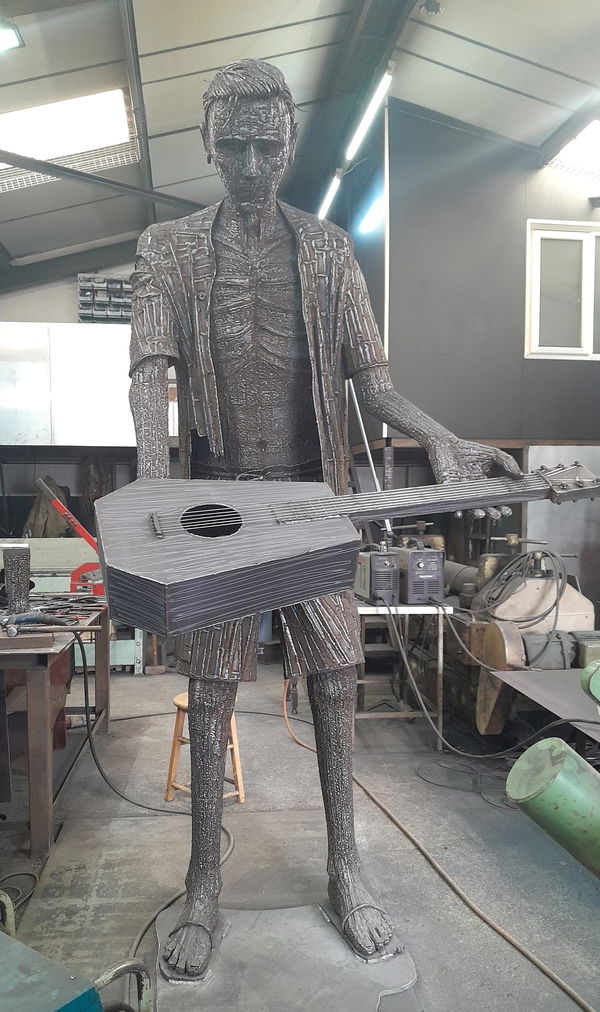
A lot of people will come and visit this emotive piece.
Nick Mansfield from Facebook has kindly agreed to share this image below (and our cover) and explains:
My great grandfather was in Burma, it's great to have such a statue in our town. I didn't plan the image but did plan the trip to see it as it was important to me to see as soon as possible given the family connection (fortunately my great grandfather wasn't captured out there!)
Nick Mansfield
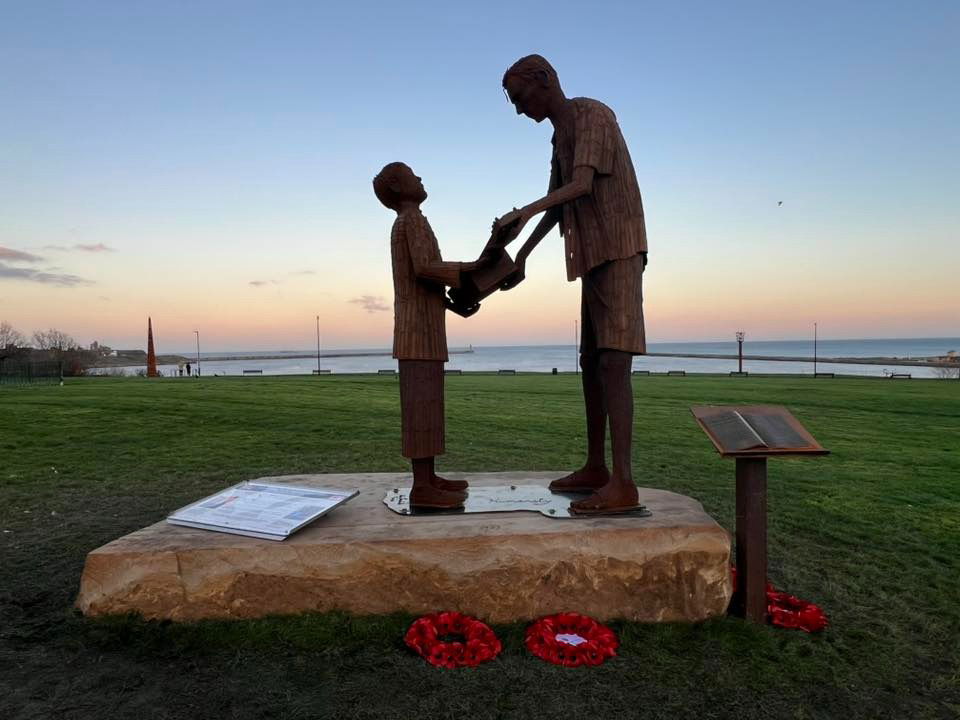
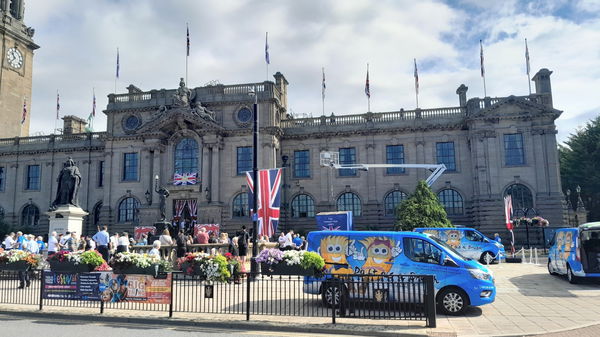
Humanity Remained was first unveiled outside South Shields Town Hall on the 15th August 2025. This was 80 years since the war ended in the Far East, known as Victory in Japan. The Town Hall looked resplendent with flags and flowers. You can see the Burma Star above the entrance.
Len Gibson was one of the prisoners of this war, along with Southeast Asian civilians (who were forced recruits, abducted from their homes), who were involved in building 258 miles of the Thai-Burma Railway. There were 190,000 men, and 90,000 died from building it. The railway line was constructed between 1942 and 1943, and subsequently maintained by the prisoners. This is the railway line that features the River Kwai and the infamous Hellfire Pass.
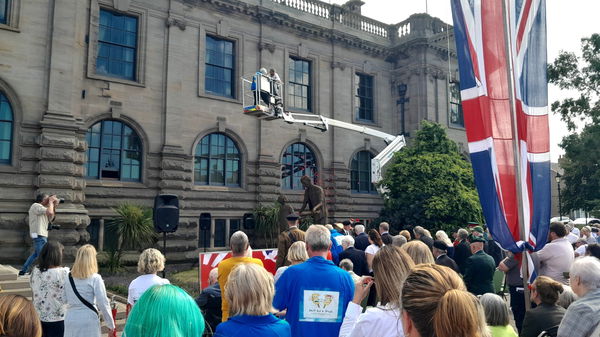
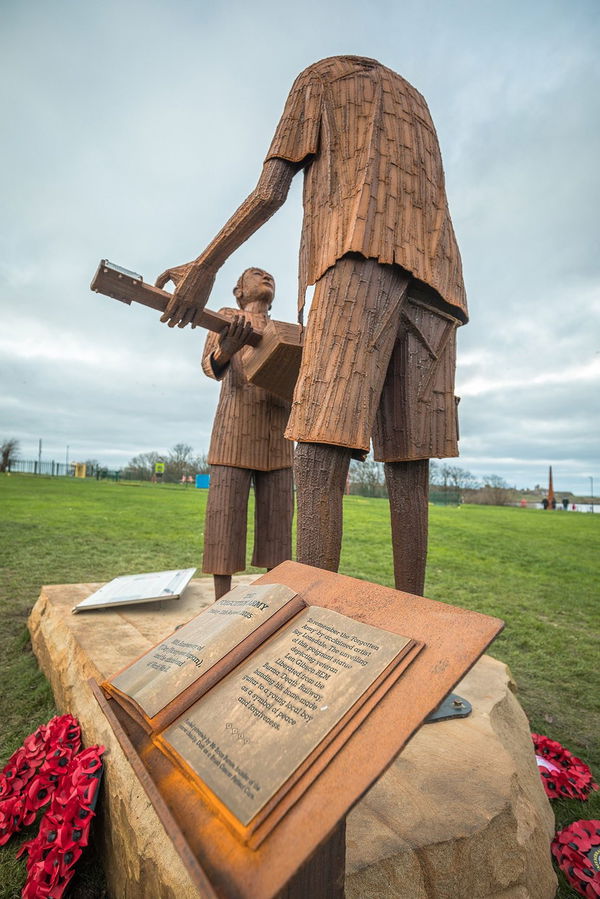
Finally, Humanity Remained is now on permanent display in North Marine Park, South Shields and has a marvellous backdrop overlooking South and North Shields with many other features nearby. It was unveiled here in December 2025 with a fine pipe band and ceremony.
Here are some great shots by Alan Reay. Look for the prose that Ray has written.
Get 2 points if you have visited this place. Already visited by 8 VIPs.
Login to the VIP area to add places to your bucket list, mark them as visited and more importantly see where you rank on the league table.
How To Find Humanity Remained
Where Is Humanity Remained?
Show Place On Google MapsLat / Long
55.003975, -1.426331
What three words
Where To Park For Humanity Remained?
Nearby on Street Parking on Lawe Road.
Contributed by Rosalind Parker
Thank you for reading. I hope it sparks your interest. It’s always a pleasure to get out and explore, whatever the weather. I enjoy uncovering little snippets of information, especially when they’re obscure, amusing, or meaningful. All photos were taken on a mobile phone.
More Places from Rosalind
More Places In South Shields
Find more fabulous places in South Shields, Tyne And Wear and if you know of a place we haven't listed, then let us know.
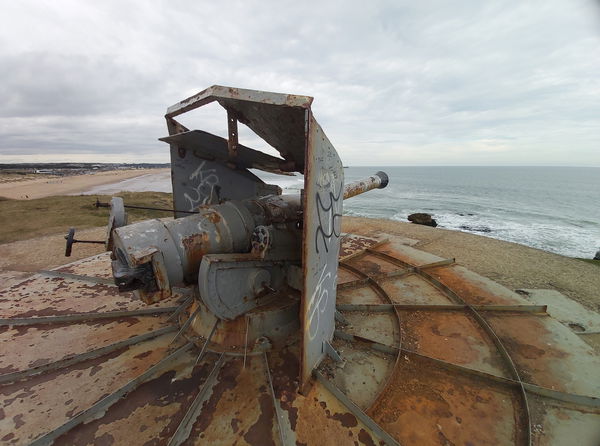
Trow Rock Disappearing Gun
Military South Shields Tyne And WearA unique gun that would disappear into its turret to reload, devised during the Crimean War.

Arbeia Roman Fort
Building South Shields Tyne And WearA reconstruction of a gatehouse and buildings on the original foundations of the Roman buildings.

Dolly Peel Statue
Statue South Shields Tyne And WearA statue to local heroine Dolly Peel, a smuggler, fighter against the pressgang and eventually nurse.
More Art
So this art wasn't enough and you want more? Don't worry we have you covered.
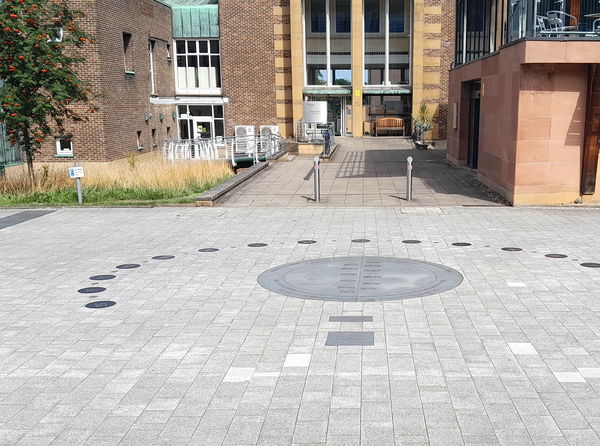
Analemmatic Sundial At Durham University
Art Durham County DurhamAn art/science installation involving audience participation and sunshine.
Never Miss A Fabulous Place
If you are afraid of missing out on all the fabulous places we post, or just want to be the first to know, then sign up to the Fabulous North.
Each week we will email you all the brand new places that we visit.
Sign Up To Alerts

Find Us On Facebook
We post all our new places daily on our Facebook Groups page, so join the group today and be notified when we add a new place.
Join Our Facebook GroupHumanity Remained was listed in Art // Tyne And Wear // South Shields