
Robert Burns House
Building In Dumfries And Galloway, Scotland
The house where the poet Robert Burns spent his final days and is now a museum.
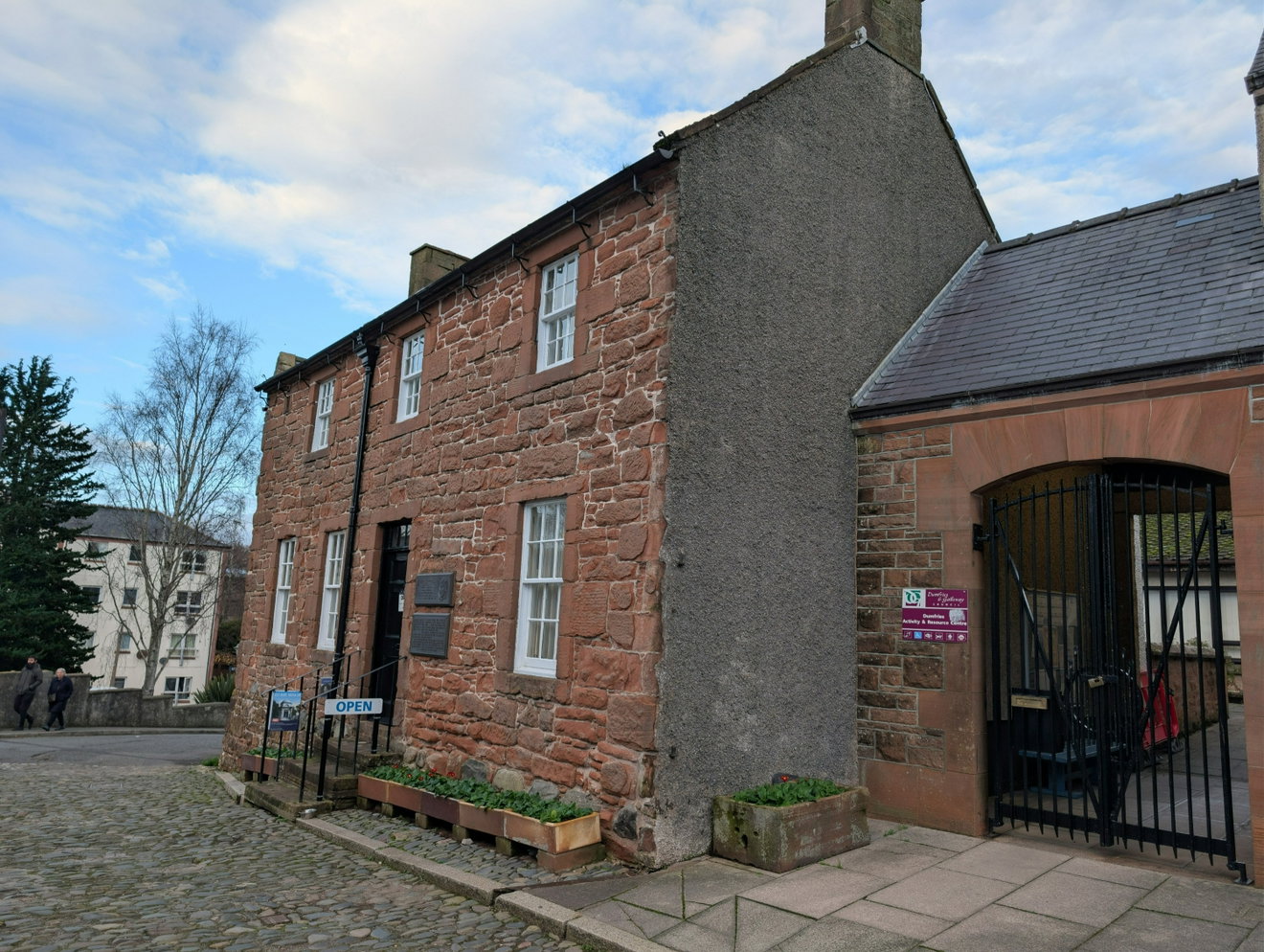
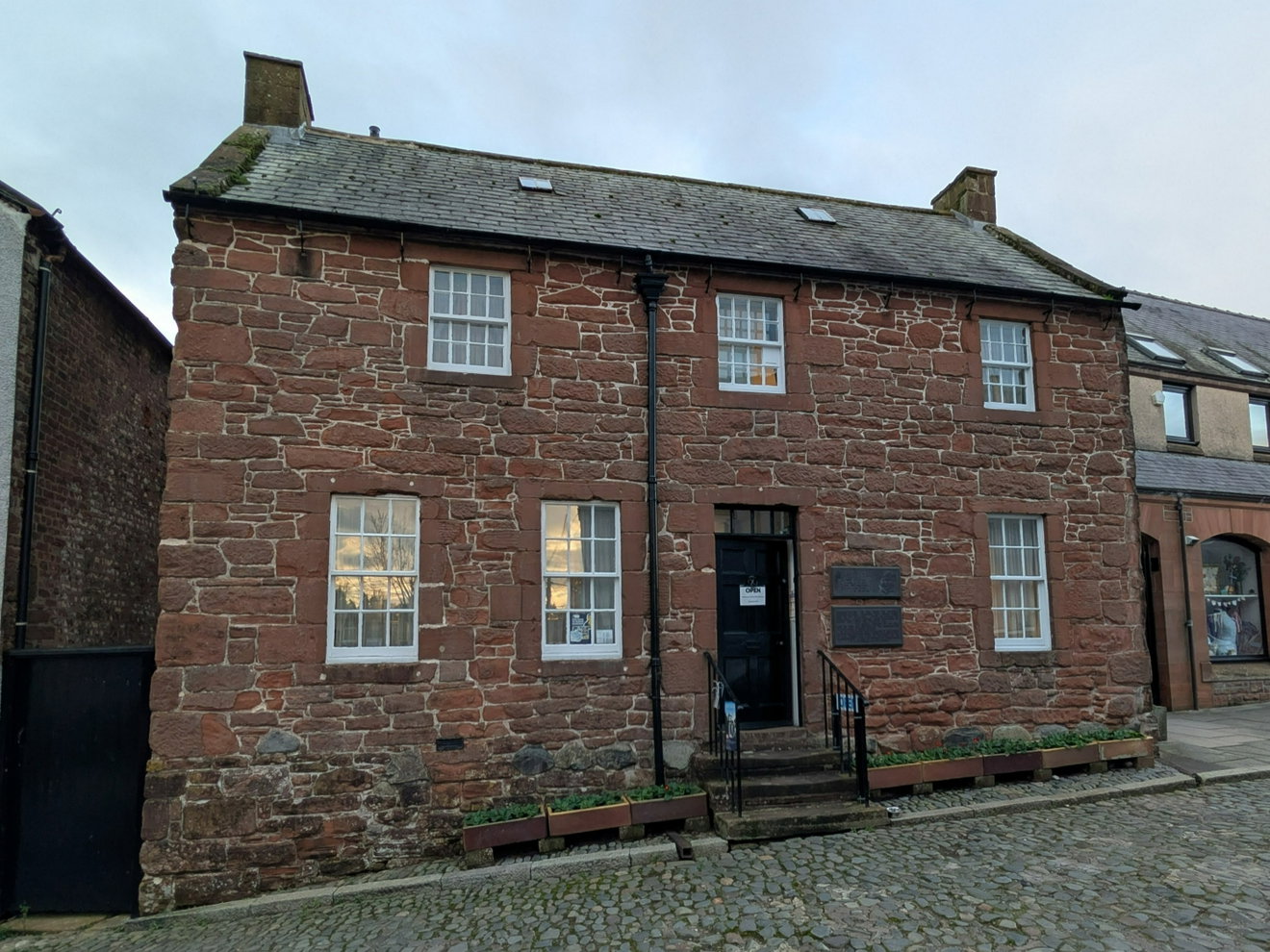
Believe it or not, this little red sandstone cottage was where Robert 'Rabbie' Burns spent the latter years of his life. It can be found on a quiet back street not far from the centre of Dumfries.
The two-up two-down house has been sympathetically furnished to look as it did when Rabbie, Jean and their bairns lived there.
Let's have a brief look at how Rabbie ended up in this humble abode. Robert Burns was born on 25 January 1759 in Alloway, Ayrshire, to farming parents. At the age of fifteen, while working as a labourer on his parent's farm, Rabbie had his first stab at poetry. In 1777, the family moved to a farm in Lochlea, where his writing continued. He briefly worked as a flax dresser in Irvine, but returned to the farm when the shop burnt down.
In 1785, following the death of his father and struggling to run the farm, the family moved to Mossgiel Farm in Mauchline. This is where he met Jean Armour, his future wife.
After almost emigrating to Jamaica, the successful 'Kilmarnock Edition' was released in 1786. He lived between Mauchline and Edinburgh while expanding the work into the 'Edinburgh Edition'. In 1788, he returned to Mauchline and settled down with Jean.
Although Rabbie had a number of affairs resulting in three illegitimate children, he always returned to his beloved Jean. Together the couple had nine children; twins Robert and Jean in 1786, twin daughters in 1788, Francis Wallace in 1789, William Nichol in 1791, Elizabeth Riddel in 1792, James Glencairn in 1794 and Maxwell in 1796. Sadly only Robert, William and James would survive childhood.
The couple eventually married on 5 August 1788 and moved to Ellisland Farm, just north of Dumfries. In 1791, Rabbie secured a job as an exciseman, and the family moved to a flat above the Tax Office on Bank Street in Dumfries town.
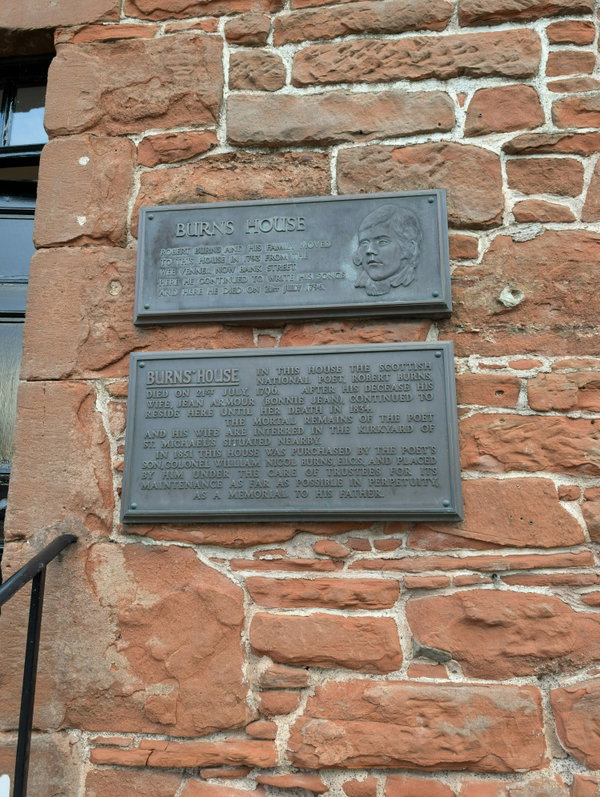
A couple of years later, in 1793, the family moved here to 24 Mill Hole Brae (now Burns Street), where both Rabbie and Jean would spend the rest of their lives. Although the exciseman role gave stability and a regular income, his creativity never waned and he continued producing classical work for the remainder of his life.
Once through the front door, you are immersed in the atmosphere of what life would have been like to live like the Burns family.
To the left is the parlour. Here you will be greeted by a friendly and knowledgeable member of staff.
This is the room where the family would have spent time together and entertained guests. I'm sure that Rabbie would have written some of his famous works in this room.
As a popular charismatic character with many local intellectual friends and colleagues, no doubt many of them were entertained in this room.
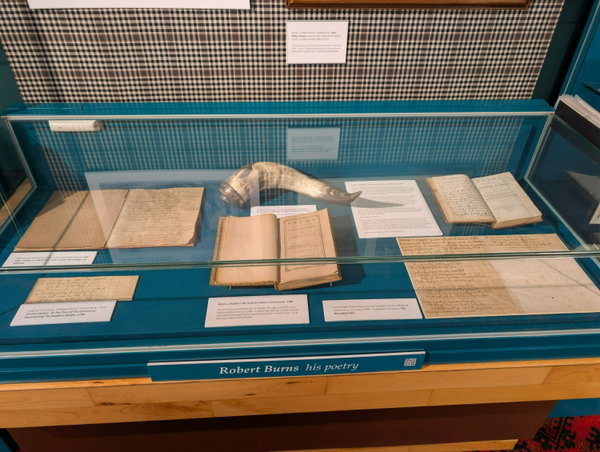
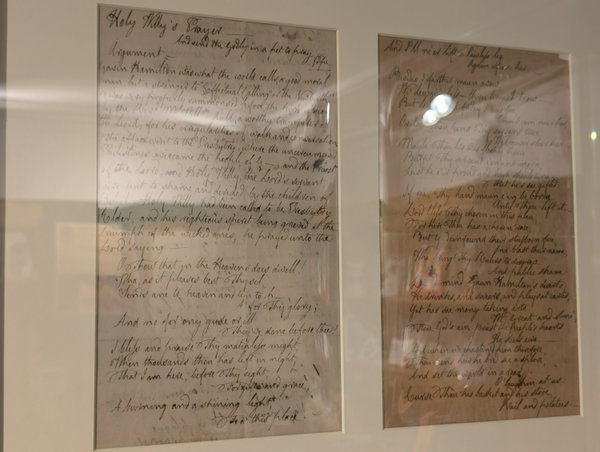
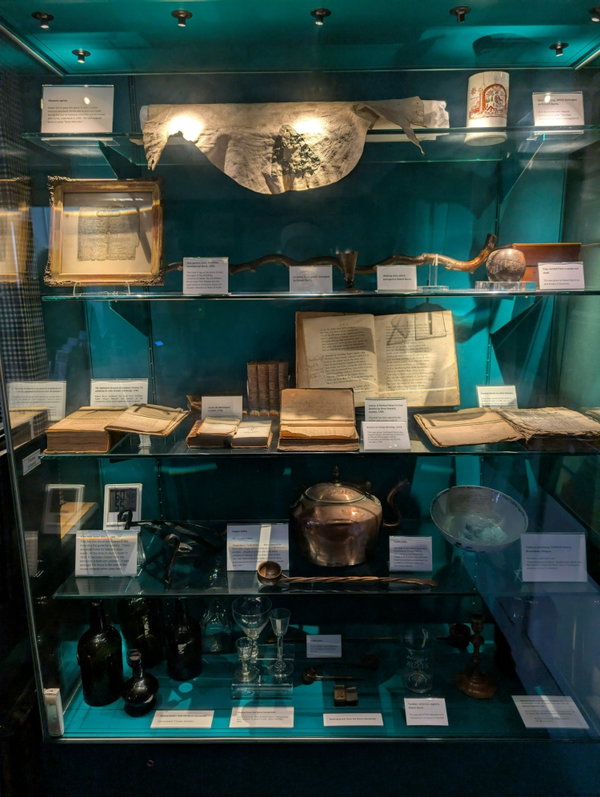
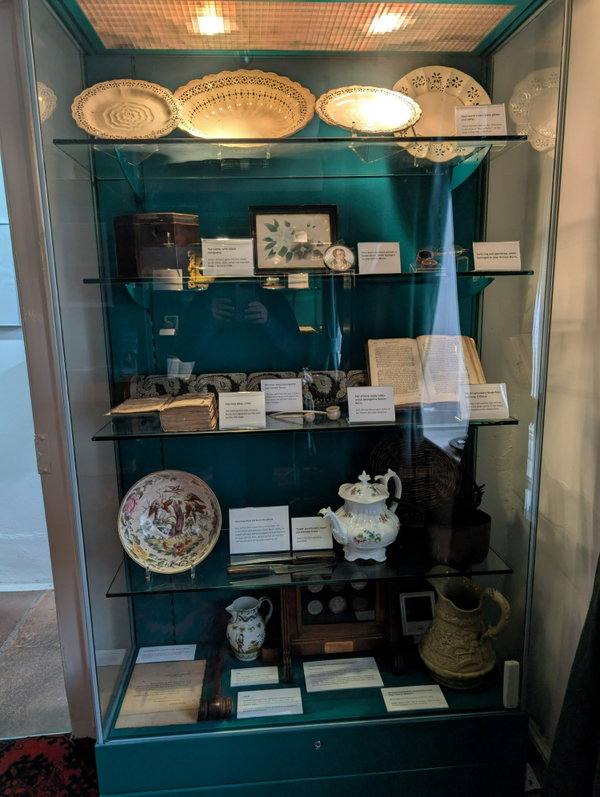
The parlour now houses an array of interesting memorabilia, including original items from the house and original letters and poems penned by Rabbie himself.
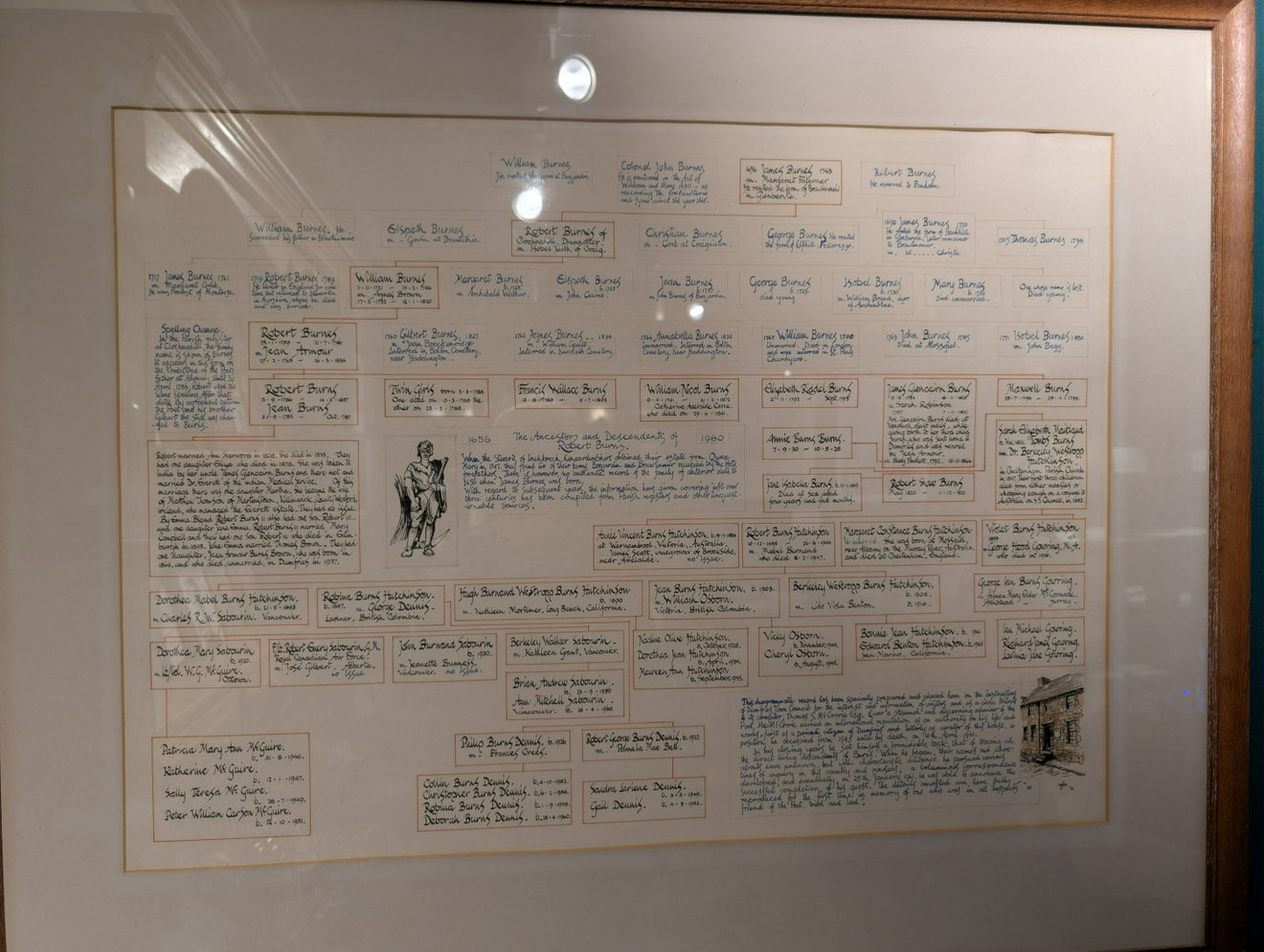
There is also an interesting family tree which follows the Burns family branch back to James Burnes, born 1656. It contains some interesting family details including the dates of birth and death of the children and their families.
However, Elizabeth 'Betty' Burns, the illegitimate daughter of Rabbie by Anna Park, a barmaid at The Globe, is not included here. It is not known for certain whether Anna died or gave Betty up, but Jean adopted her and raised her as her own. This must have offered some comfort to Jean, as she lost her own daughters.
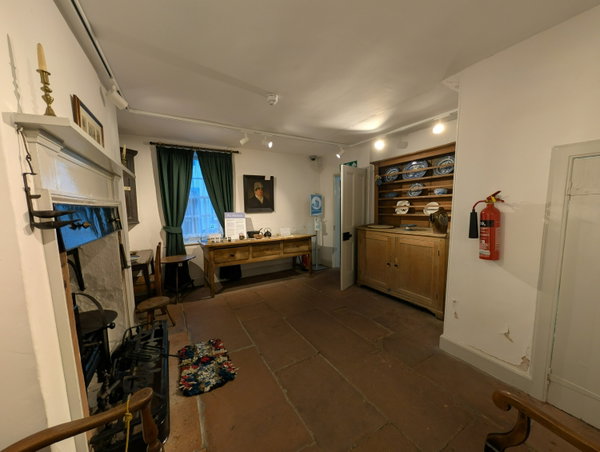
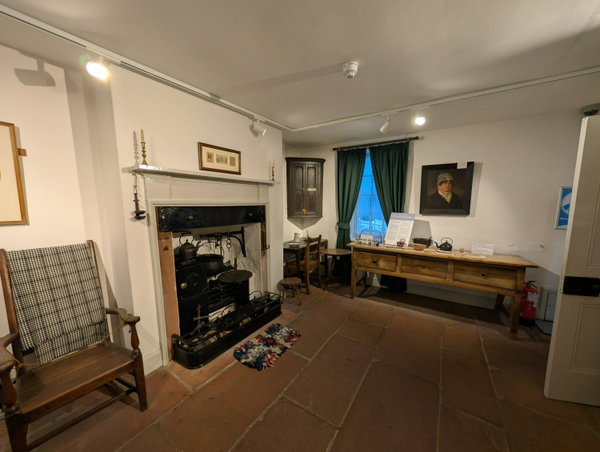
Opposite the parlour is the kitchen. This would have been Jean's domain. She would have prepared the family meals on the range in the fireplace.
Although the furniture is not original, it reflects how it would have looked during this period when freestanding furniture was commonplace. There was also likely to be a table where the family would gather to eat meals together.
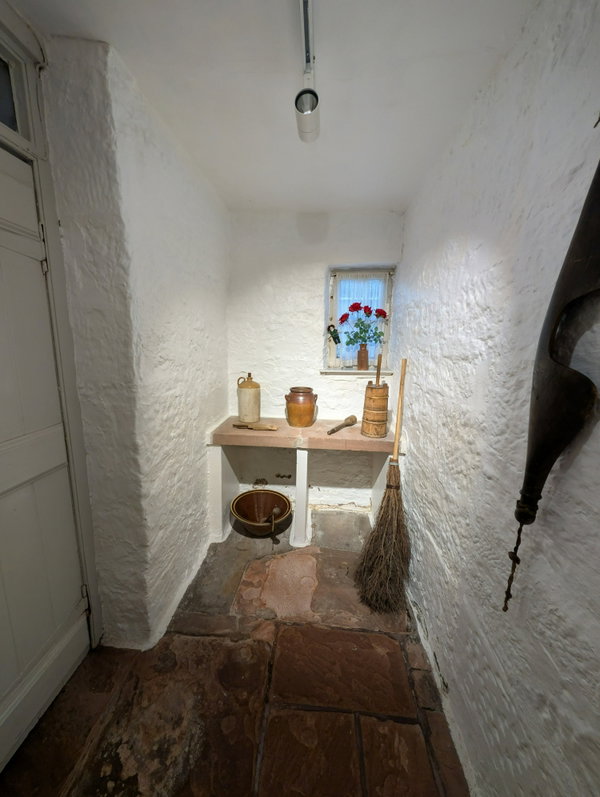
The door at the back of the kitchen leads to the scullery. This room would be where Jean would have stored food and perhaps washed dishes and clothes.
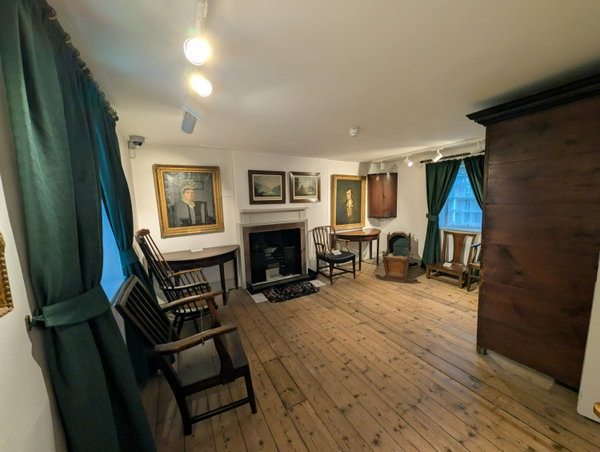
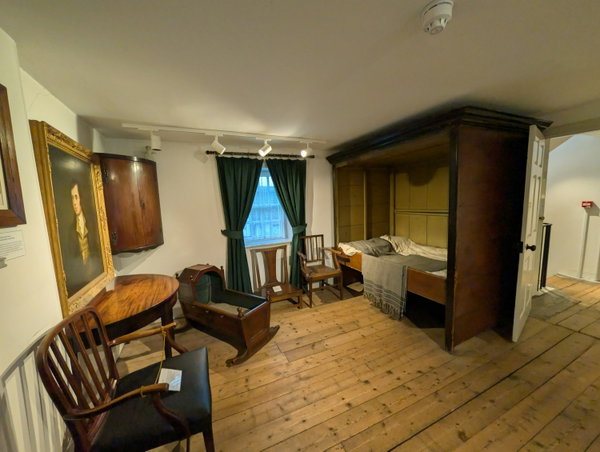
At the top of the stairs, the master bedroom can be found on the right. This is where Rabbie and Jean would have slept.
It is also where he probably died at the young age of 37 of a rheumatic fever.
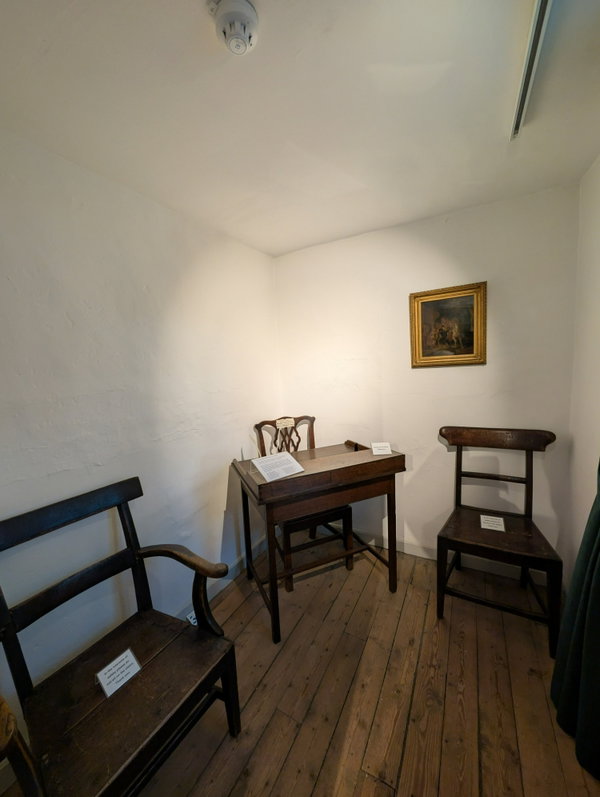
In the corner of the room is a door leading to the study. This small area provided Rabbie with a much-needed quiet area to which he could escape and concentrate.
Although the table was not originally from this room, it was used by Burns during visits to Rev. Andrew Jaffray, whose daughter was the subject of his poem 'Blue-Eyed Lassie'.
You can imagine Rabbie hard at work writing the likes of 'A Red, Red Rose', 'A Man's a Man for A' That' and 'The Dumfries Volunteers' in this room.
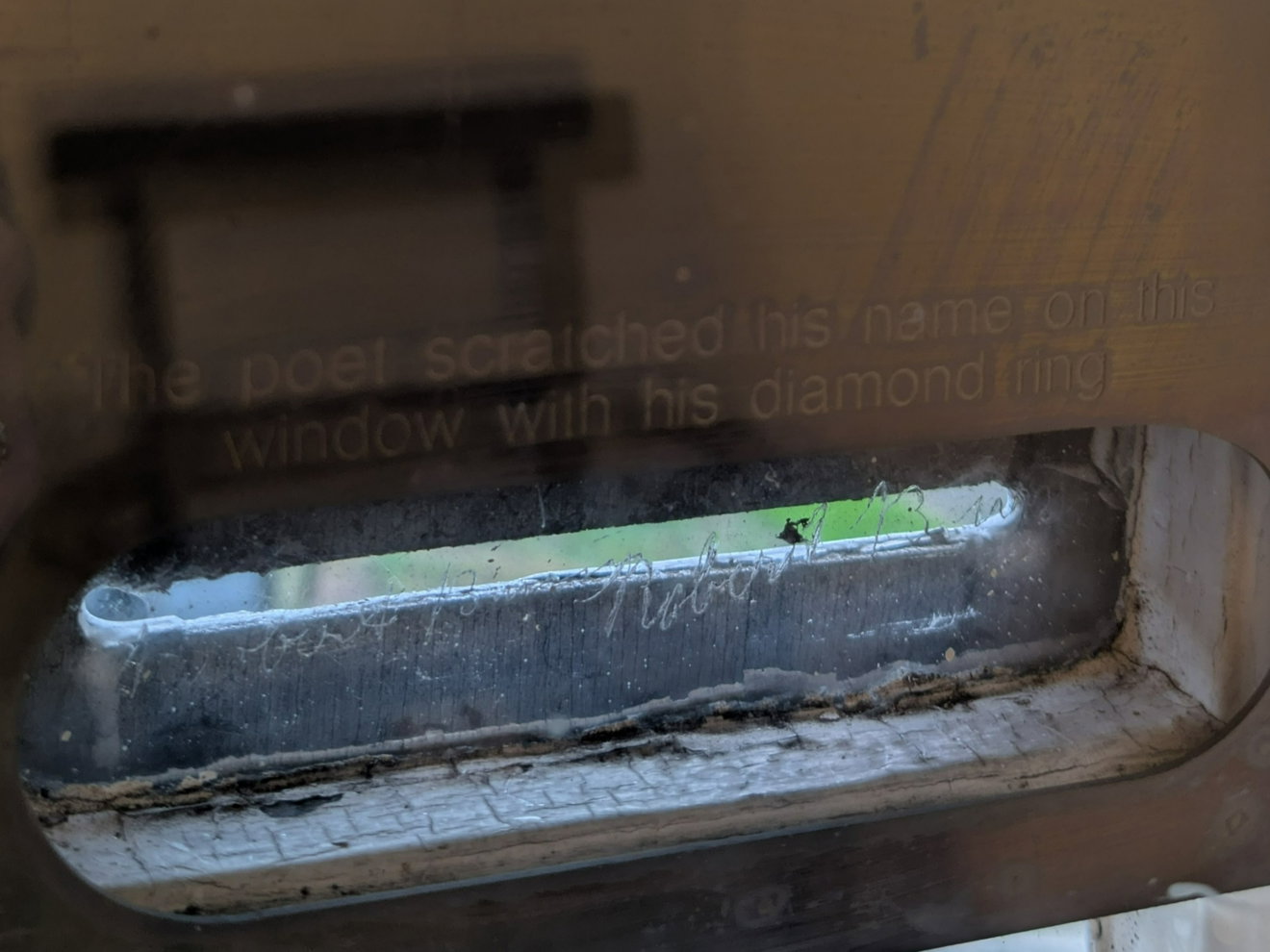
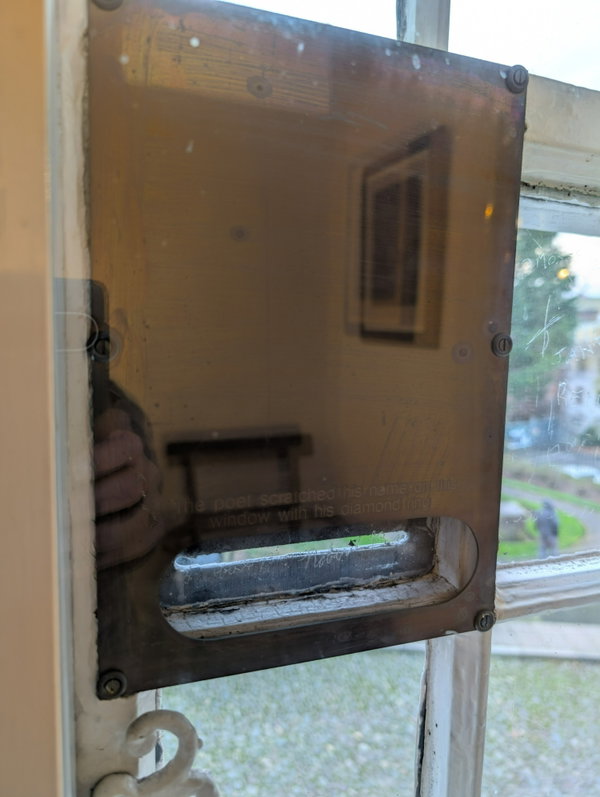
Before leaving the room, take a closer look at the window. There you will find his signature etched into the glass.
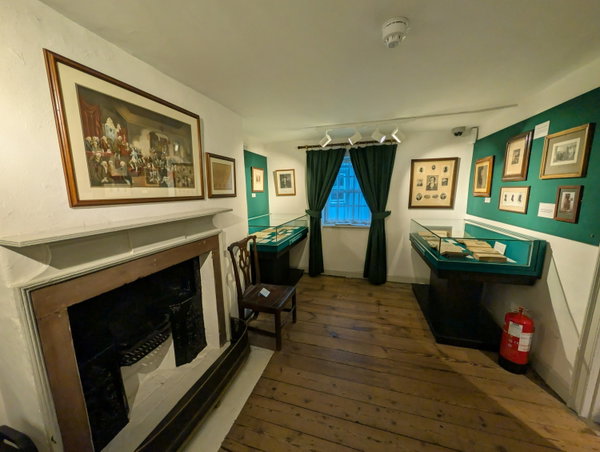
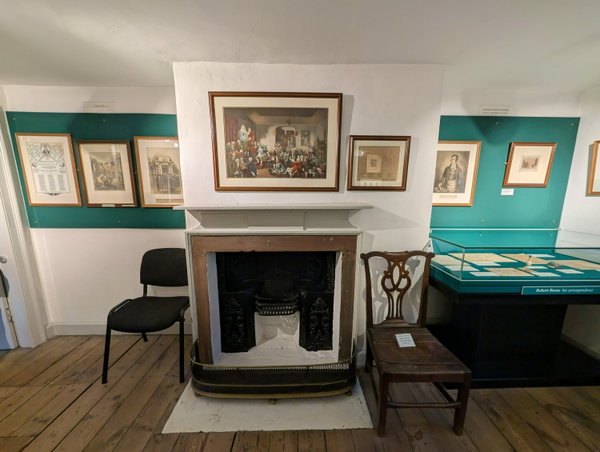
Across the landing is the second bedroom. This is where the children slept.
It now houses more pictures and memorabilia including some of Robert's works and correspondence.
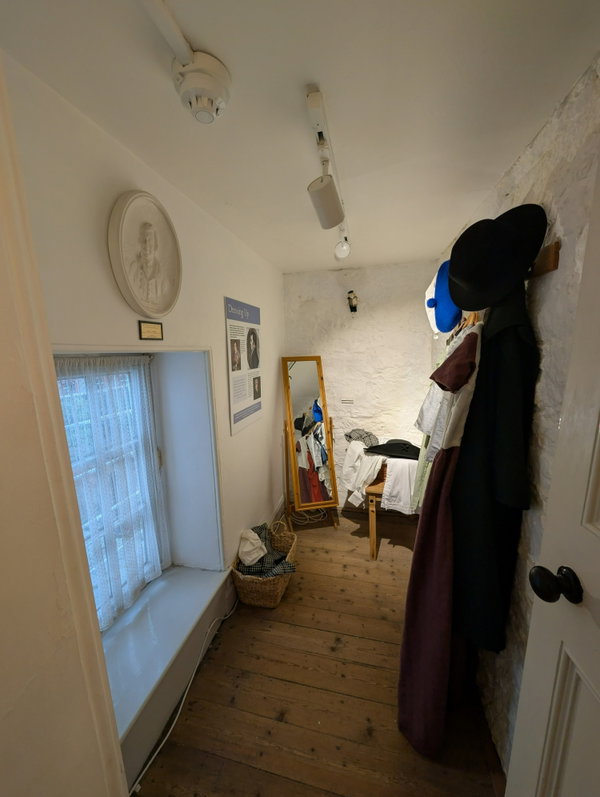
In the corner of the bedroom is a door leading to an anti-room. This would have had multiple uses such as a dressing room and extra bedroom space.
Importantly, this is where Jessie Lewars slept while caring for Rabbie in his final days. As Jean was heavily pregnant with Maxwell, she was unable to care for her husband herself. Their children were moved out temporarily to allow Rabbie and Jean to have separate spaces, and Jessie, the daughter of a fellow exciseman, was moved in to care for Rabbie.
Sadly, Rabbie would never meet his youngest son, as he died on 21 July 1796, just days before he was born.
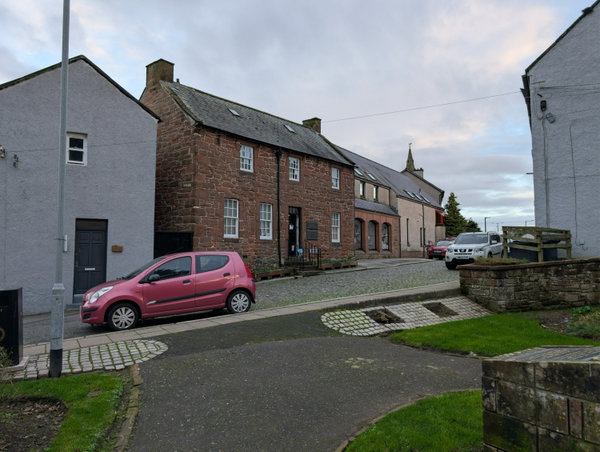
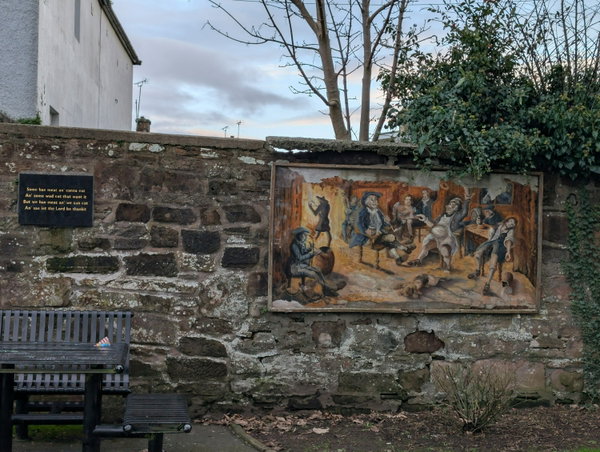
Just across the road from the house is a small seating area which allows you time to sit and reflect. Although Rabbie is now world famous, it is worth remembering that he came from humble beginnings working as a labourer on his family farm and was essentially a respected working-class man.
Today, we celebrate Burns Night on his birthday; the haggis is served with his 'Address to a Haggis' and at New Year we all sing 'Auld Lang Syne'. I wonder if he could even imagine the legacy he would leave behind?
The Robert Burns House is a Category A listed building with Historic Environment Scotland.
Once you have visited the house, be sure to take the short walk to see the Jean Armour Statue and Burns Mausoleum.
Get 2 points if you have visited this place. Already visited by 15 VIPs.
Login to bag this placeHelp fuel the next adventure
Fabulous North is free, with no annoying adverts and fuelled by an unhealthy desire to poke around castles, hills, churches and suspicious-looking bits of stone.
If you enjoy what we do, you can help keep us exploring.
Champion This Place
Got a special memory of Robert Burns House, a story to tell or simply a soft spot for it? Champion Robert Burns House and we'll add your name, photo and a short message to this page, while your support helps us keep Fabulous North exploring.
How To Find Robert Burns House
Where Is Robert Burns House?
Lat / Long
55.06612030749767, -3.6080262868881494
What three words
Where To Park For Robert Burns House?
Lat / Long
55.06676071639291, -3.6070601257341717
What three words
There is plenty of parking in Brooms Road car park.
Contributed by Lorraine London
I have been a keen hill walker for many years and more recently enjoy trig bagging. When I'm not exploring Northumberland, County Durham and Yorkshire, I spend most of my holidays in bonny Scotland. Other than hills, I love investigating ruinous buildings and waterfalls. I have been a member of NT and EH for years, which also gives me access to Historic Environment Scotland places.
More Places from Lorraine
More Places In Dumfries And Galloway
Find more fabulous places in Dumfries And Galloway, Scotland and if you know of a place we haven't listed, then let us know.
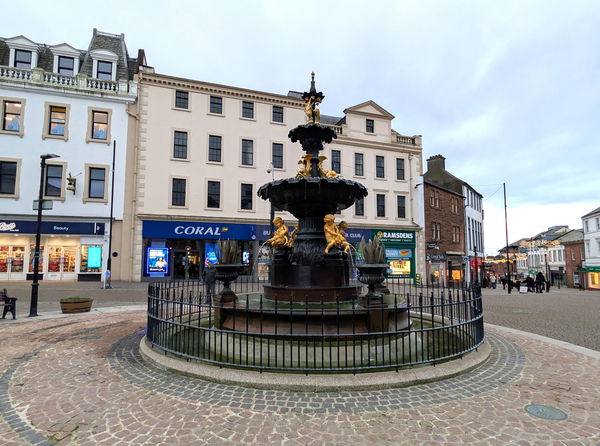
Dumfries Fountain
Fountain Dumfries And Galloway ScotlandA beautifully ornate cast iron fountain originally erected in 1882 on Dumfries High Street.
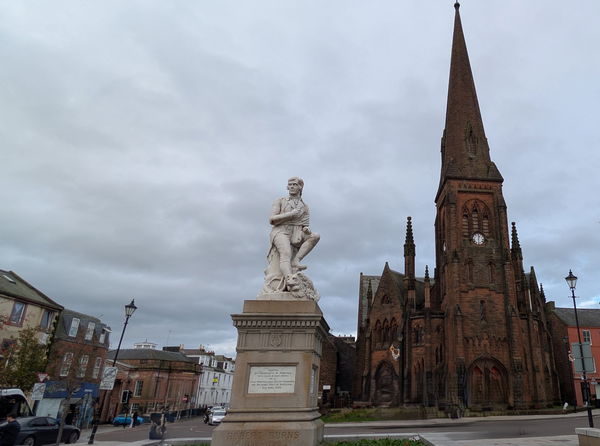
Robert Burns Statue Dumfries
Statue Dumfries And Galloway ScotlandA white marble statue of Robert Burns, that stands at the end of Dumfries High Street.
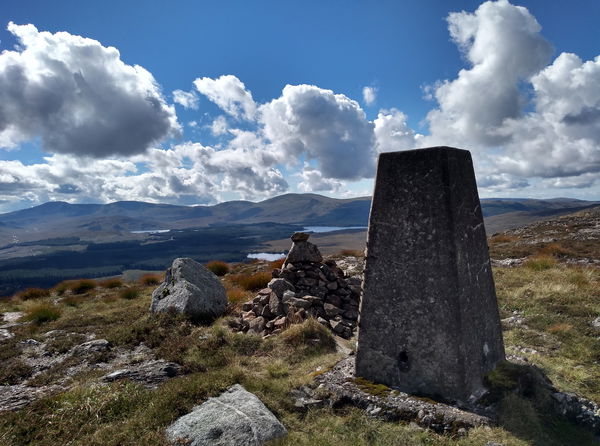
Craiglee Trig Point
Trig Point Dumfries And Galloway ScotlandThe Craiglee trig point sits above Loch Doon (523m) near Craigmalloch.
More Buildings
So this building wasn't enough and you want more? Don't worry we have you covered.
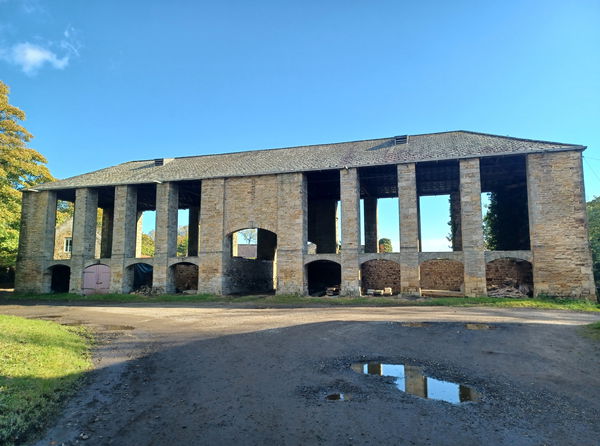
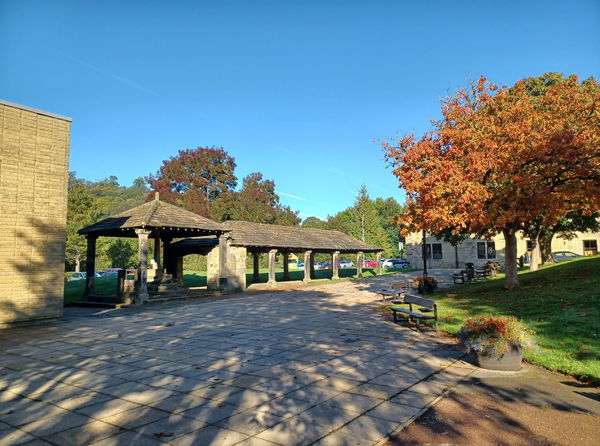
Bingley Market Hall And Butter Cross
Building Bingley West YorkshireA Market Hall, dating from the 17th century and Market Cross thought to date from the 13th century in the centre of Bingley.
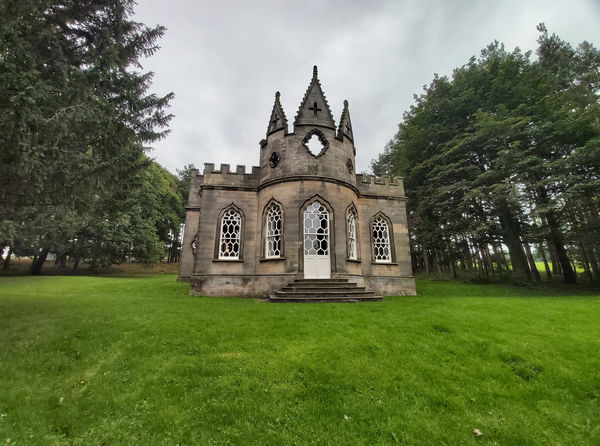
Gibside Banqueting House
Building Gateshead Tyne And WearA beautiful folly set in the grounds of the Gibside estate which is now a holiday home.
Never Miss A Fabulous Place
If you are afraid of missing out on all the fabulous places we post, or just want to be the first to know, then sign up to the Fabulous North.
Each week we will email you all the brand new places that we visit.
Sign Up To Alerts

Find Us On Facebook
We post all our new places daily on our Facebook Groups page, so join the group today and be notified when we add a new place.
Join Our Facebook GroupRobert Burns House was listed in Building // Scotland // Dumfries And Galloway