
Jarrow Hall
Museum In Jarrow, Tyne And Wear
An Anglo-Saxon farm, village and The Venerable Bede Museum.
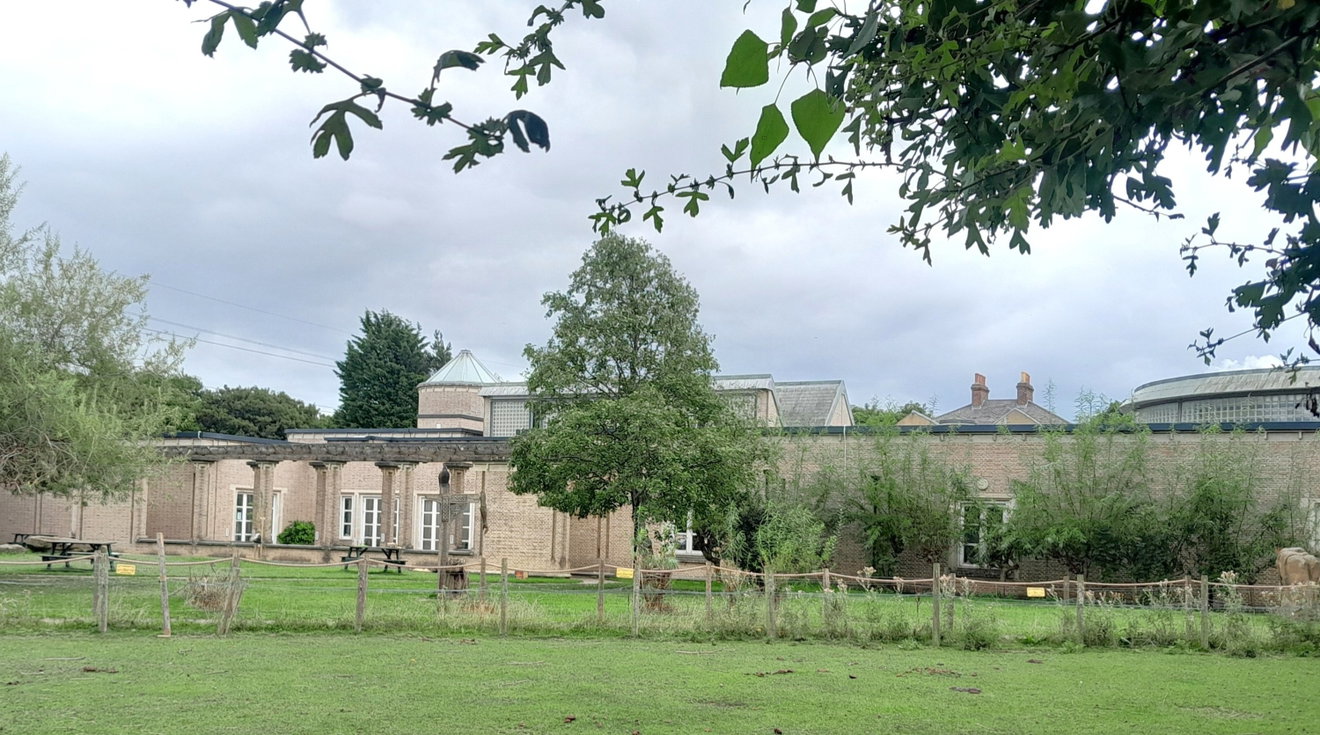
If you've visited many museums and want to learn about the northeast's Anglo-Saxon heritage and the origins of Christianity, Jarrow Hall can tick those boxes. You may get a sneaky view of the River Tyne too.
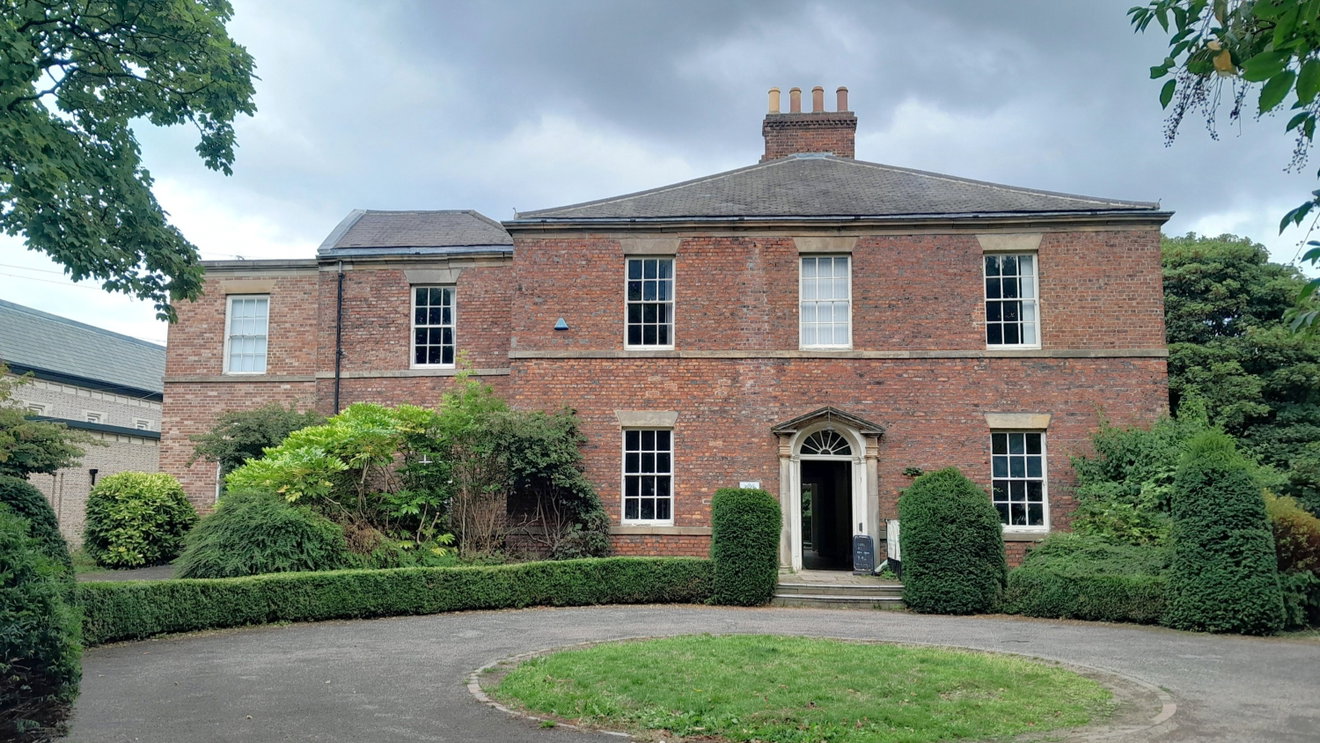
Formerly this site was known as Bede's World. When Groundworks, South and North Tyneside took over the site in 2016, they changed the name, involved lots of volunteers, and installed some livestock (which I did not take any photos of).
We first spotted the red-bricked Jarrow Hall. The Grade II-listed Georgian House dates to circa 1785. It was built for shipbuilder and coal-mine owner Simon Temple (1759-1815), who went bankrupt in 1812, possibly due to over-commitment to supplying ships for the Napoleonic Wars. He had to sell and move out of Jarrow Hall.
A later resident Isabella Chaytor (1810-1894) is said to haunt the Hall as 'The Grey Lady.' She may be a happy ghost, as she lived a long life. You may have a touch of pareidolia and think you can see her waving at you from the upstairs window!
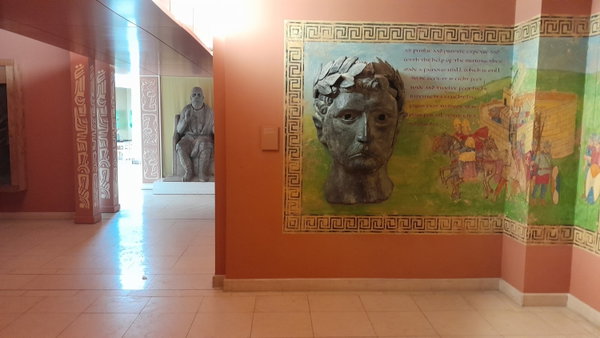
We spent a fair amount of time inside the museum and were first greeted by a grumpy-looking Caesar.
There was a depiction of a pic and an abbot.
The Venerable Bede is giving guidance and a blessing.
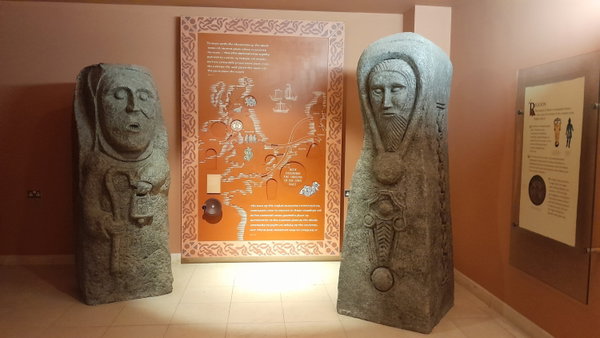
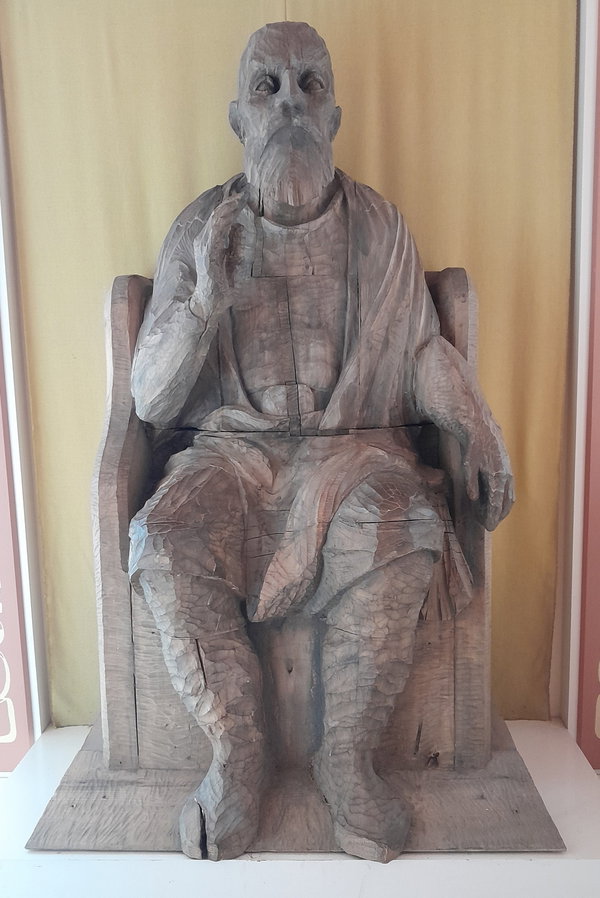
As the former name of the museum, 'Bede's World', gives a clue, a lot is about this remarkable priest Bede (c.672/3-735). He was born in the area and sent to Monkwearmouth aged seven; under his tutelage, he became a most revered monk and is considered the 'father of English history'.
Why is the Venerable Bede so important -.
The Ecclesiastical History of the English People (Latin: Historia ecclesiastica gentis Anglorum), written by Bede in about AD 731, is a history of the Christian churches in England, and of England generally; its main focus is on the growth of Christianity. It was composed in Latin, and is believed to have been completed in 731 when Bede was approximately 59 years old. It is considered one of the most important original references on Anglo-Saxon history, and according to some scholars has played a key role in the development of an English national identity.
Wikipedia
Bede wrote scientific, historical and theological works. He started writing manuscripts as a tricenarian. He also helped to popularise the practice of dating forward from the birth of Christ (Anno Domini—in the year of our Lord), a practice which eventually became commonplace in medieval Europe.
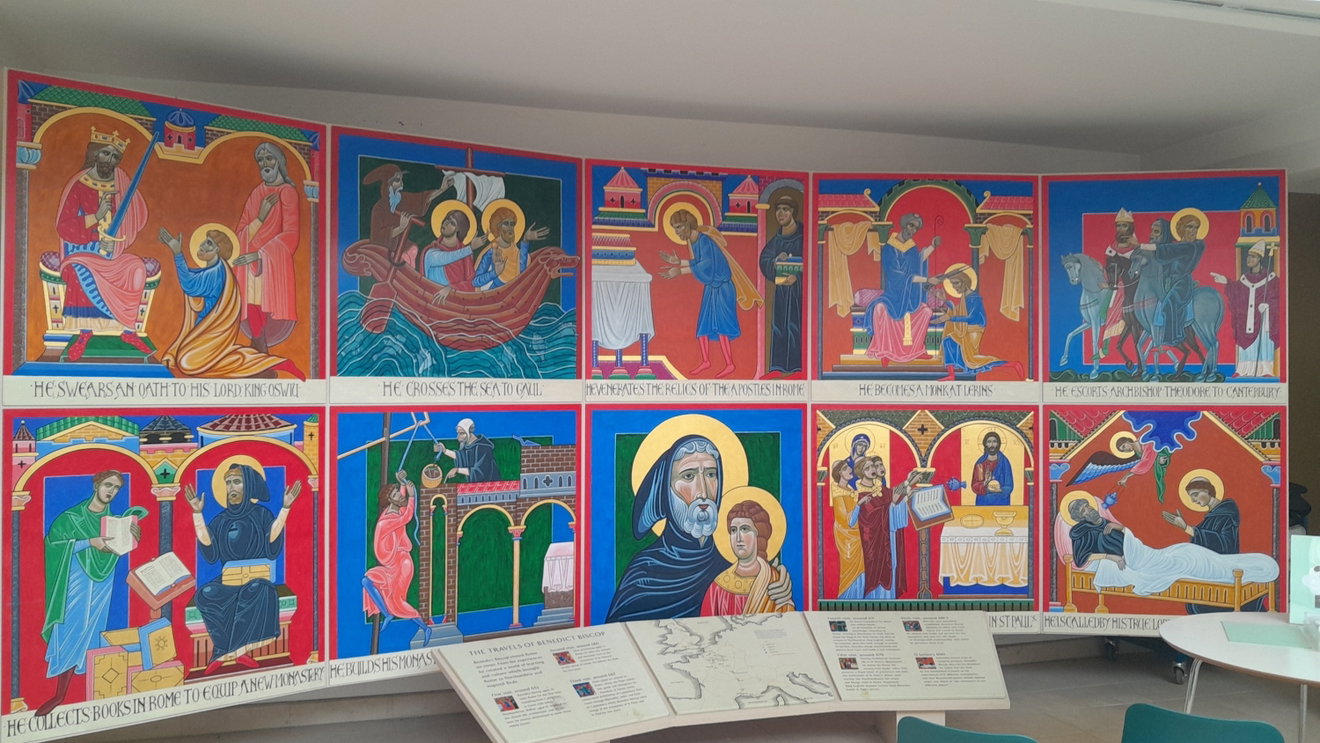
His mentor Benedict Biscop is depicted in a vivid codex-type illustration.
Here is Bede's Death Song translated into English
'Before the necessary journey, no-one will be wiser in thought than he needs to be, to think, before he goes from here, about what of his spirit, of good or of evil, will be judged after his death-day.'
There is an exhibition of what a monk's life was like, They had extremely long days and little food. Piety was very much L'Ordre du jour.
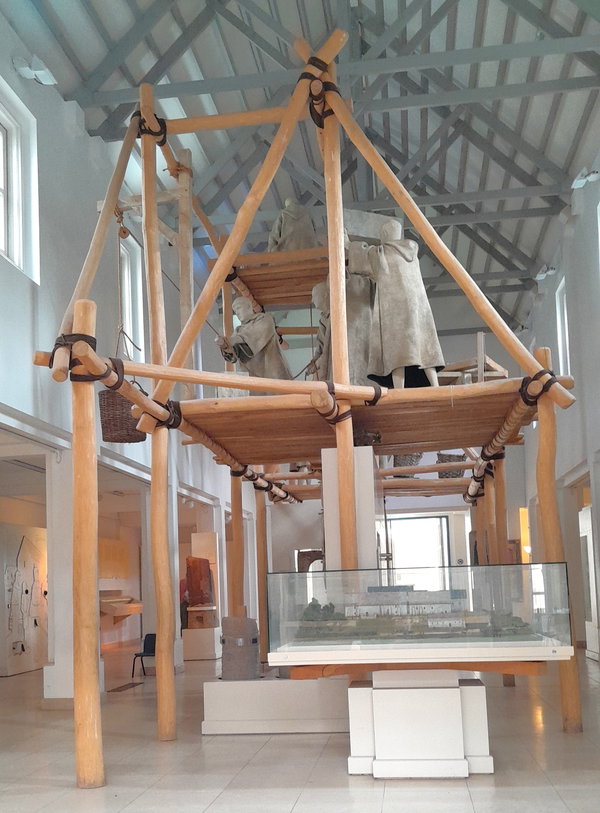
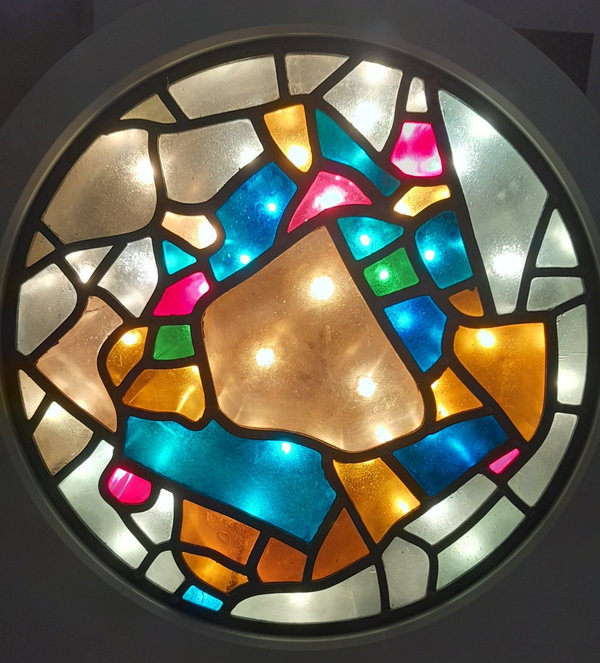
The monks were skilled, and one particular craft was the making of stained glass windows. Benedict Biscop had brought glaziers over from France. This site has some of the earliest examples of stained glass.
Another skill was writing and there is a copy of the Codex Amiatinus on show.
My main reason for visiting Jarrow Hall was its Analemmatic sundial. Alas, when we gazed at a broken brick, tiled and concrete mosaic, it was most disappointing. Further insult was that a picnic bench had been put over some of the Roman numerals.
This is an example of an analemmatic sundial. This is a horizontal sundial in which the shadow-casting object (in this case the observer) is vertical, and is moved depending on the date
You stand on the correct month inscribed along the line within the central circle and your shadow (if the sun is shining) tells the time from hour marks laid out as an outer ellipse. If the sun isn't shining, just look at your watch.
The Venerable Bede, as interested in science and art as he was in ecclesiastic history, wrote on the calendar, marine tides and the shape of the Earth. The length of a human shadow (or of any vertical object) can be used to measure the sun's elevation and, thence, the time. He gave a table for estimating the time from the length of one's shadow, on the assumption that a monk's height is six times the length of his foot
Andrew Curtis Geograph NZ3365
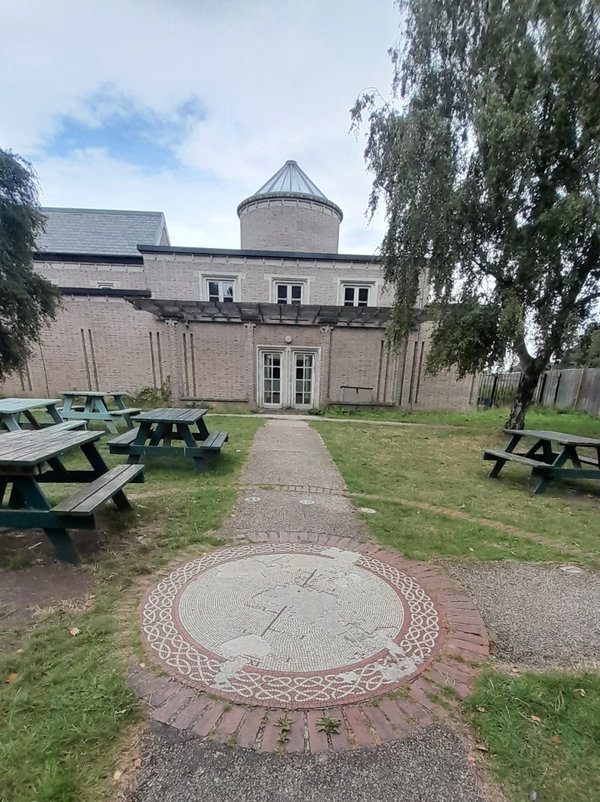
There are a few farmyard animals and some Anglo Saxon buildings to wander around.
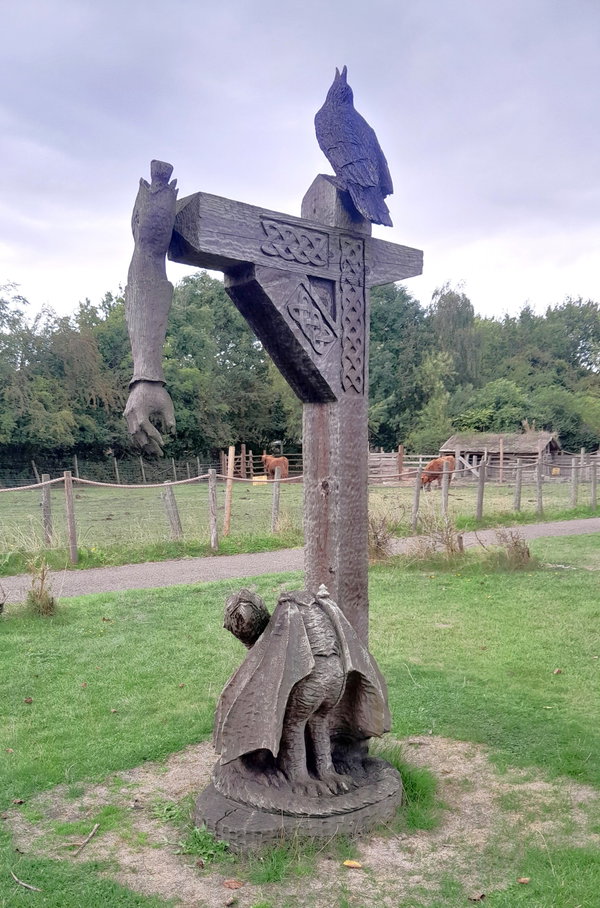
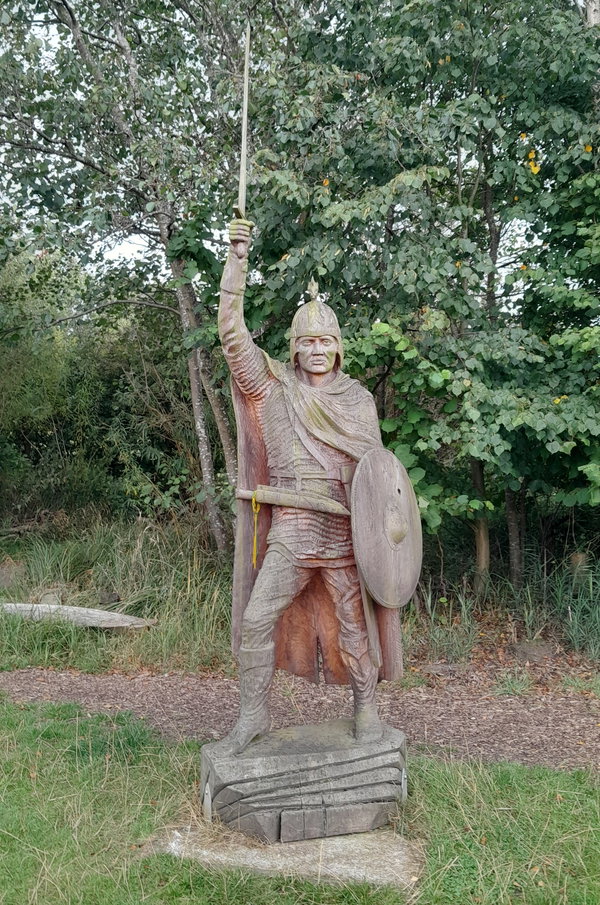
I was more interested in two wooden sculptures, if you know what you are looking at (I didn't). Have you heard of Beowulf? Beowulf is not a modern-day adventure series, but a poem that dates from around the 7th century; some say earlier, and some say later. It has over 688 translations as of 2020.
We have two new sculptures inspired by the Anglo-Saxon Beowulf poem carved by Tommy Craggs Tree Sculpting. The featured image is the carving of Grendel, one of Beowulf's enemies. In the poem, the hero Beowulf removes Grendel's arm and nails it to the Mead Hall rafters; this is depicted in the second sculpture, along with another of the poem's bad guys, the dragon.
Jarrow Hall
Guess what Grendel's favourite pastry is: Danish!
Get 2 points if you have visited this place. Already visited by 8 VIPs.
Login to bag this placeHelp fuel the next adventure
Fabulous North is free, with no annoying adverts and fuelled by an unhealthy desire to poke around castles, hills, churches and suspicious-looking bits of stone.
If you enjoy what we do, you can help keep us exploring.
Champion This Place
Got a special memory of Jarrow Hall, a story to tell or simply a soft spot for it? Champion Jarrow Hall and we'll add your name, photo and a short message to this page, while your support helps us keep Fabulous North exploring.
How To Find Jarrow Hall
Where To Park For Jarrow Hall?
There is parking available on site.
Contributed by Rosalind Parker
Thank you for reading. I hope it sparks your interest. It’s always a pleasure to get out and explore, whatever the weather. I enjoy uncovering little snippets of information, especially when they’re obscure, amusing, or meaningful. All photos were taken on a mobile phone.
More Places from Rosalind
More Places In Jarrow
Find more fabulous places in Jarrow, Tyne And Wear and if you know of a place we haven't listed, then let us know.
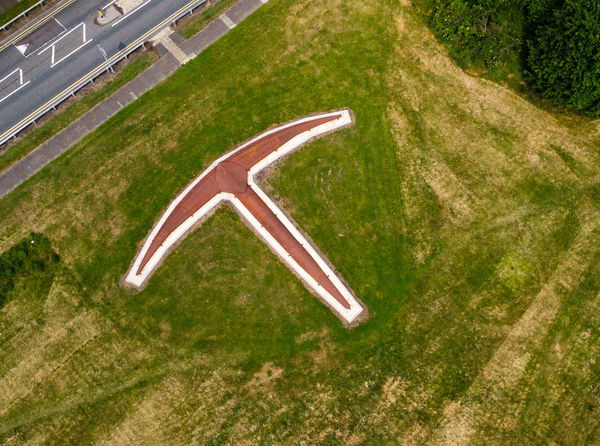
Alfred's Memorial Giant Pickaxe
Landmark Jarrow Tyne And WearA steel sculpture in the shape of a giant pickaxe in Jarrow, created as a memorial to the town’s mining heritage and the communities who worked in the pits.

St Paul's Monastery
Religious Place Jarrow Tyne And WearAnglo-Saxon Monastery where St Bede spent his life from the age of seven.

Vikings
Statue Jarrow Tyne And WearA pair of controversial horned, helmeted and shield wielding Vikings in Jarrow Town Centre.
More Museums
So this museum wasn't enough and you want more? Don't worry we have you covered.

The National Museum Of The Royal Navy Hartlepool
Museum Hartlepool County DurhamAll that would have been dock life around the 18th century and complete with one of The Admiralties Frigates, The HMS Trincomalee.

South Shields Museum And Art Gallery
Museum South Shields Tyne And WearA former Library building with an eclectic mix of art, maritime, social, and natural history elements.

Corbridge Roman Town
Museum Corbridge NorthumberlandRuins of a Roman garrison located on Hadrians Wall, with a museum of artifacts found on site.
Never Miss A Fabulous Place
If you are afraid of missing out on all the fabulous places we post, or just want to be the first to know, then sign up to the Fabulous North.
Each week we will email you all the brand new places that we visit.
Sign Up To Alerts

Find Us On Facebook
We post all our new places daily on our Facebook Groups page, so join the group today and be notified when we add a new place.
Join Our Facebook GroupJarrow Hall was listed in Museum // Tyne And Wear // Jarrow