
St Margaret Of Antioch Church, Crossgate
Religious Place In Durham, County Durham
Discover the legend of St Margaret and explore a noble Norman church, with fine vistas, located above the banks of the River Wear.
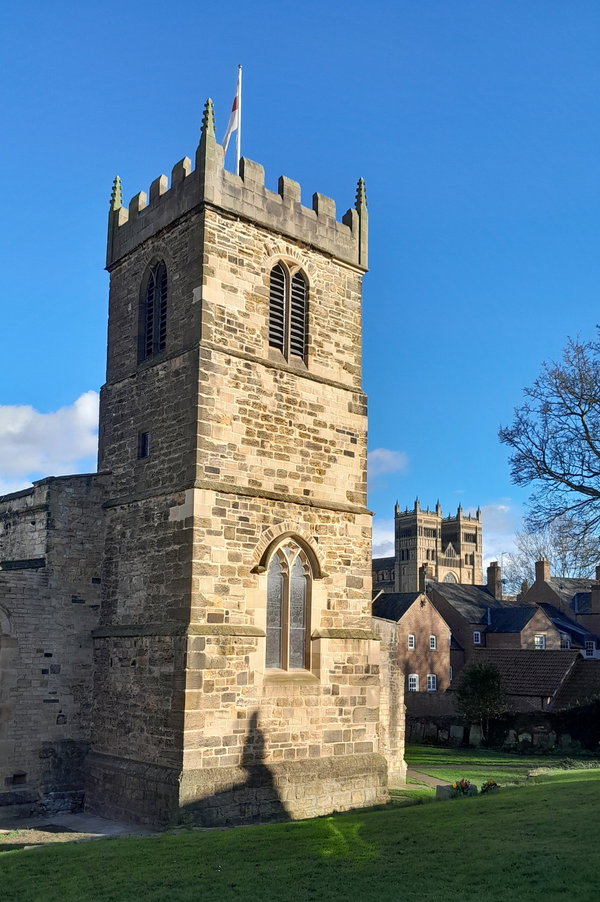
I had such a pleasant surprise on visiting St Margaret of Antioch, as the area has much charm to take in. The mainly Norman Church stands proudly on the higher ground in the Crossgate area of Durham city.
My thanks go to my guide, Peter and to Stephen, who arranged this visit.
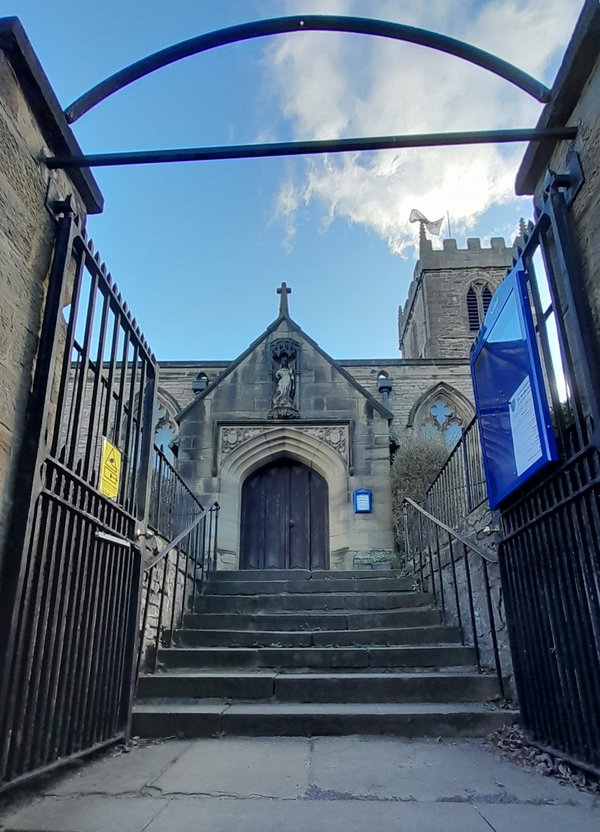
Firstly, you may be curious about who St Margaret of Antioch was. She will greet you as she looks down at you from above the North door entrance. Antioch is in Syria near the Turkish border and is where Christianity spread from. Born in the 3rd or 4th century AD, Margaret was the daughter of a pagan priest; like many, she became Christian. You may see icons of her holding her attribute of a shepherd's crook.
Margaret was said to have been desired by the Roman prefect Olybrius, who spotted her tending sheep in the fields. Rejected by her and infuriated by her nobility and Christian faith, he had her tortured and thrown in jail, where the dragon consumed her. Although she burst unharmed from its belly, she was later beheaded. Her story led to her becoming the patron saint of pregnant women, as well as farmers, teachers and soldiers.
Guide to Christian Iconography
Another legend suggests
She converted to Christianity (which was a forbidden faith according to the laws of the Roman Empire). For this, she was arrested, imprisoned, and eventually put to death. At her execution, Margaret was said to have preached so powerfully that many of those watching became Christians themselves, moved by her words, by her bravery, and by her faith.
St Margaret of Antioch, Crossgate, Durham
That 'the dedication to St Margaret of Antioch is medieval and original, almost certainly dating from the 12th-century foundation. Medieval churches were typically dedicated at or very near the time of construction, and there is no evidence of a later rededication.'
Co Pilot
St Margaret's had a mother church, St Oswald's, which parishioners had to pay towards its upkeep. St Margaret's became an independent parochial chapel in 1431, meaning it could hold weddings and funerals.
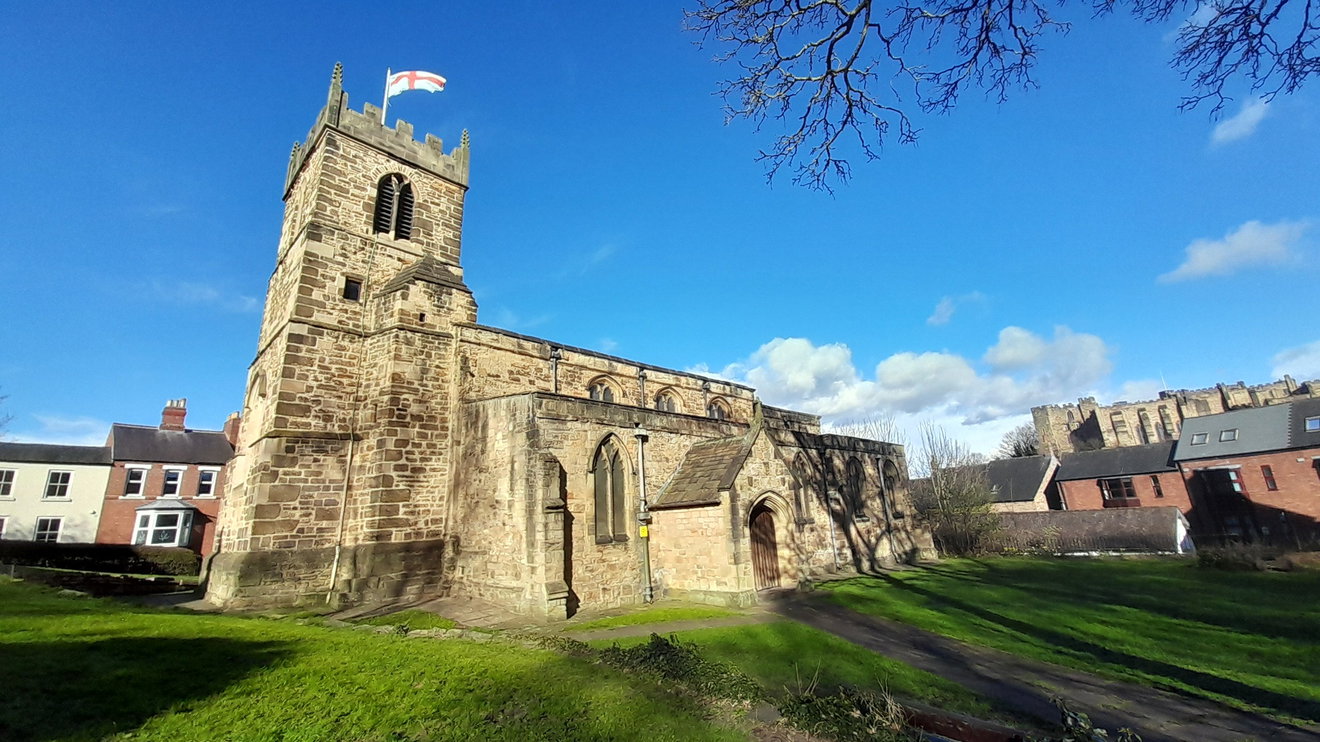
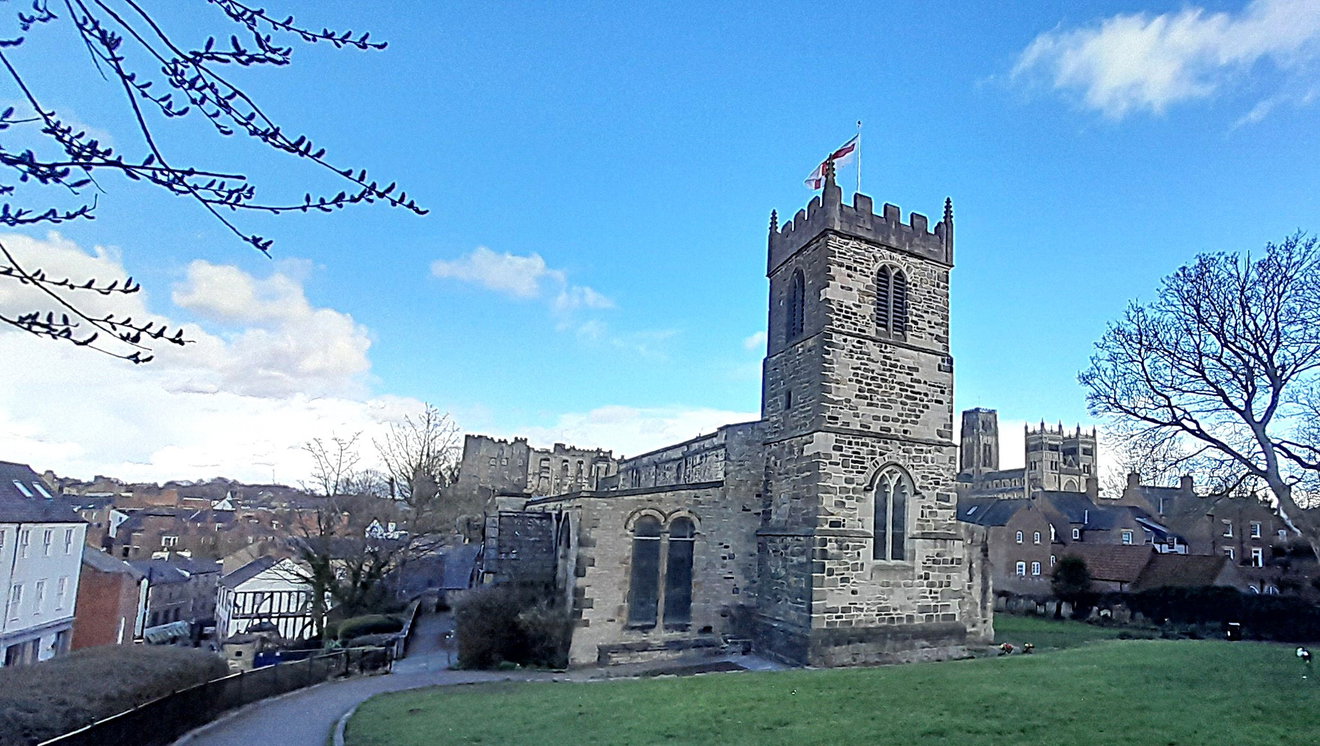
Let's have a quick look at the outside. St Margaret of Antioch has exceptional qualities that give it a Grade I listing. It is one of two churches in Durham city to be given this proud badge. The other being St Giles. St Margaret's church dates back to the mid-12th century. The south wall dates to the 14th century, during this period, the south aisle was built. The north side wall (where you enter) is 19th-century, and most of the church is built of square coursed sandstone. I would not have known the South and North walls (not the porch) were built over 500 years apart. They look similar to my untrained eye.
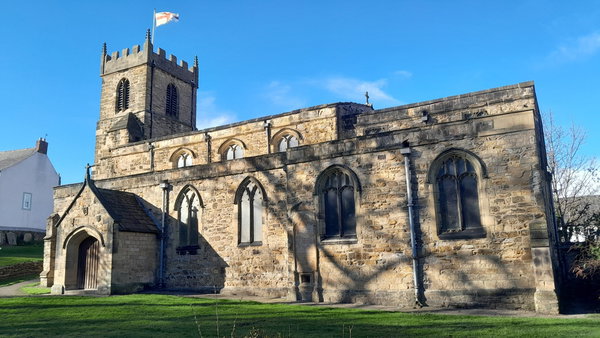
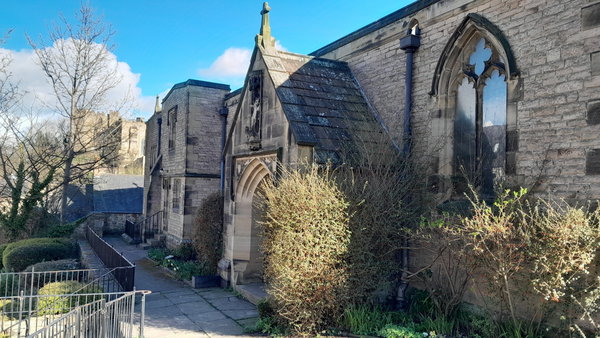
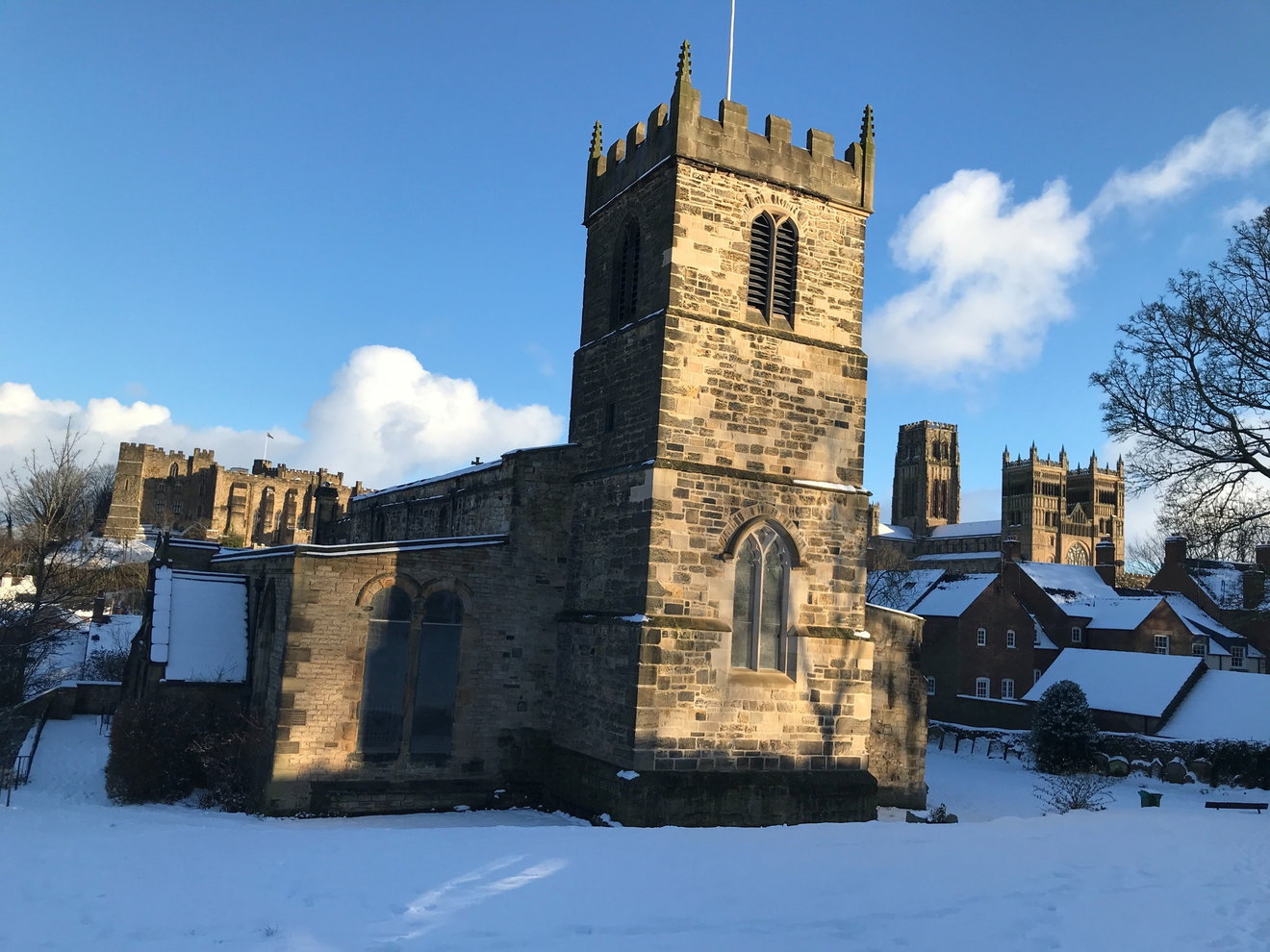
The tower was built in the 15th century and has recently had a bit of TLC, adding to its pleasing patchwork. There are wonderful photographic opportunities to capture St Margaret with Durham Cathedral and Castle. Here is a pleasant snowscape taken by the church warden Posy O' Neil, who kindly submitted this.
Now let's go inside.
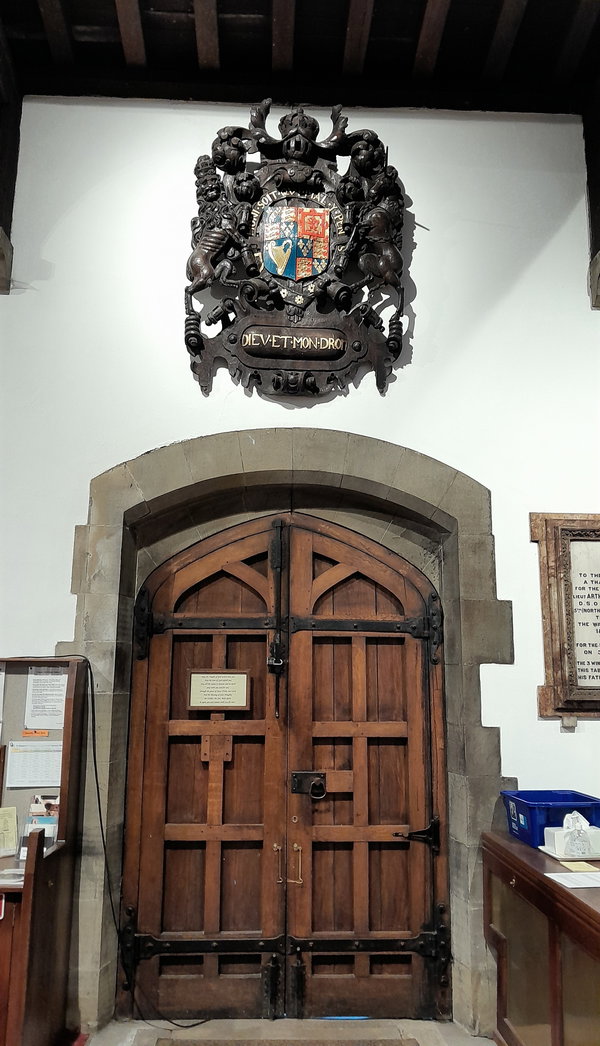
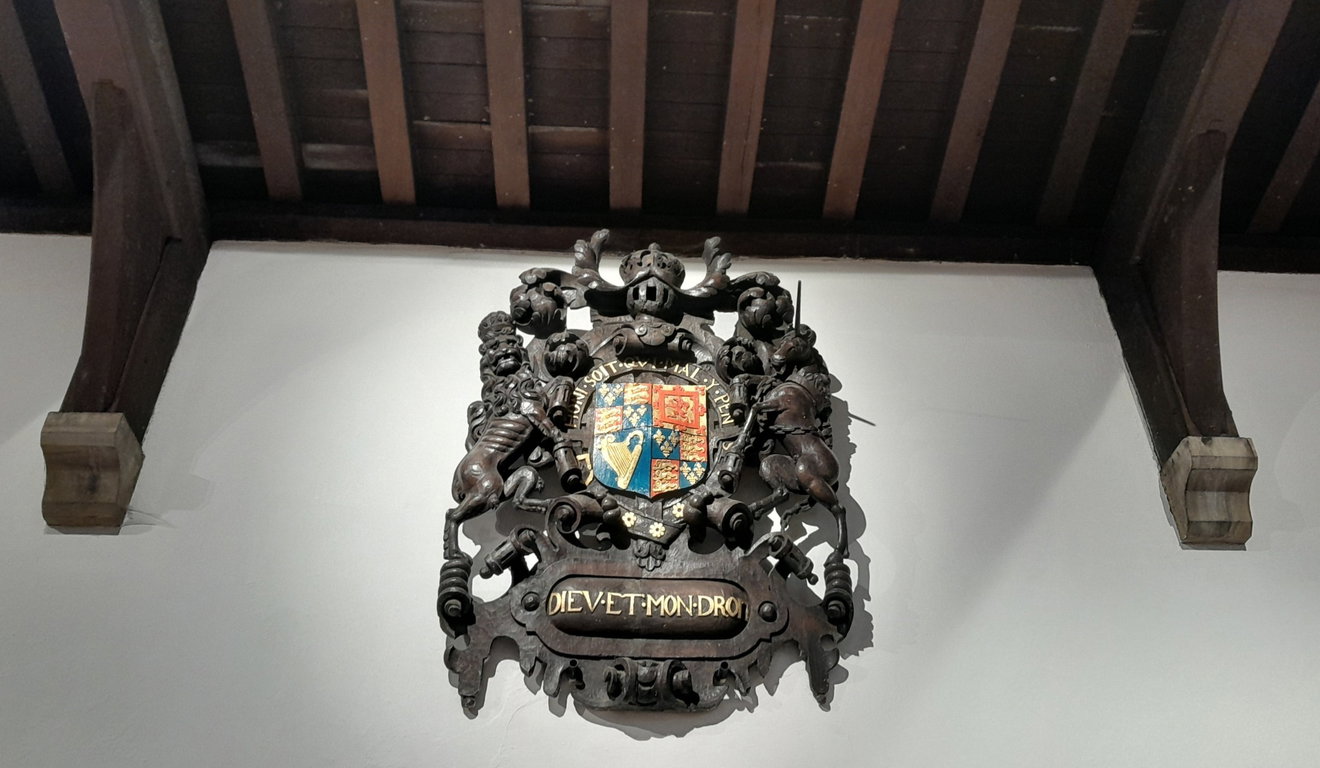
Above the door (Tudor maybe?), there are the Royal Arms of Queen Ann, who reigned from 1702 to 1707. It is said it may date earlier. The emaciated lion gives a grotesque look to this splendid wood carving.
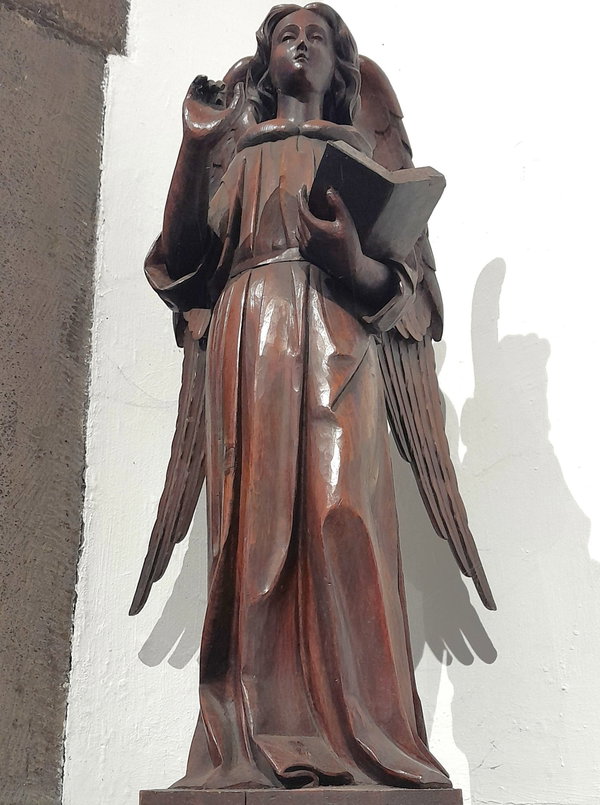
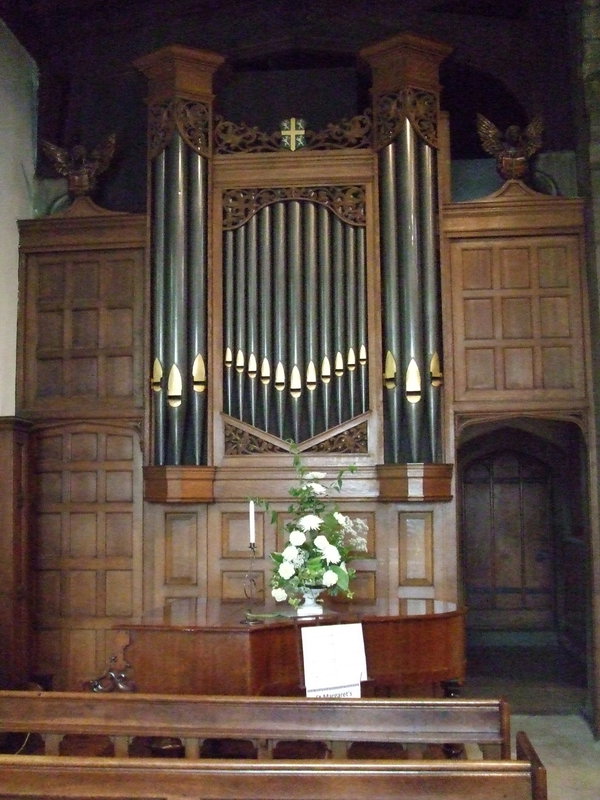
The wooden angel in the corner near the door was possibly from Gloucester and part of an organ ornamentation. The warden at St Margaret's at the time was Mr. Arthur Harrison, who donated it to the church. He was part of the Harrison and Harrison organ builders company, and the organ here is a splendid example of their work. It has 1276 pipes! The carved casing highlights the woodworking skills of Arthur Yockney, who was the headmaster of St Margaret's School. Here is a photo from Peter, who has given permission for its use.
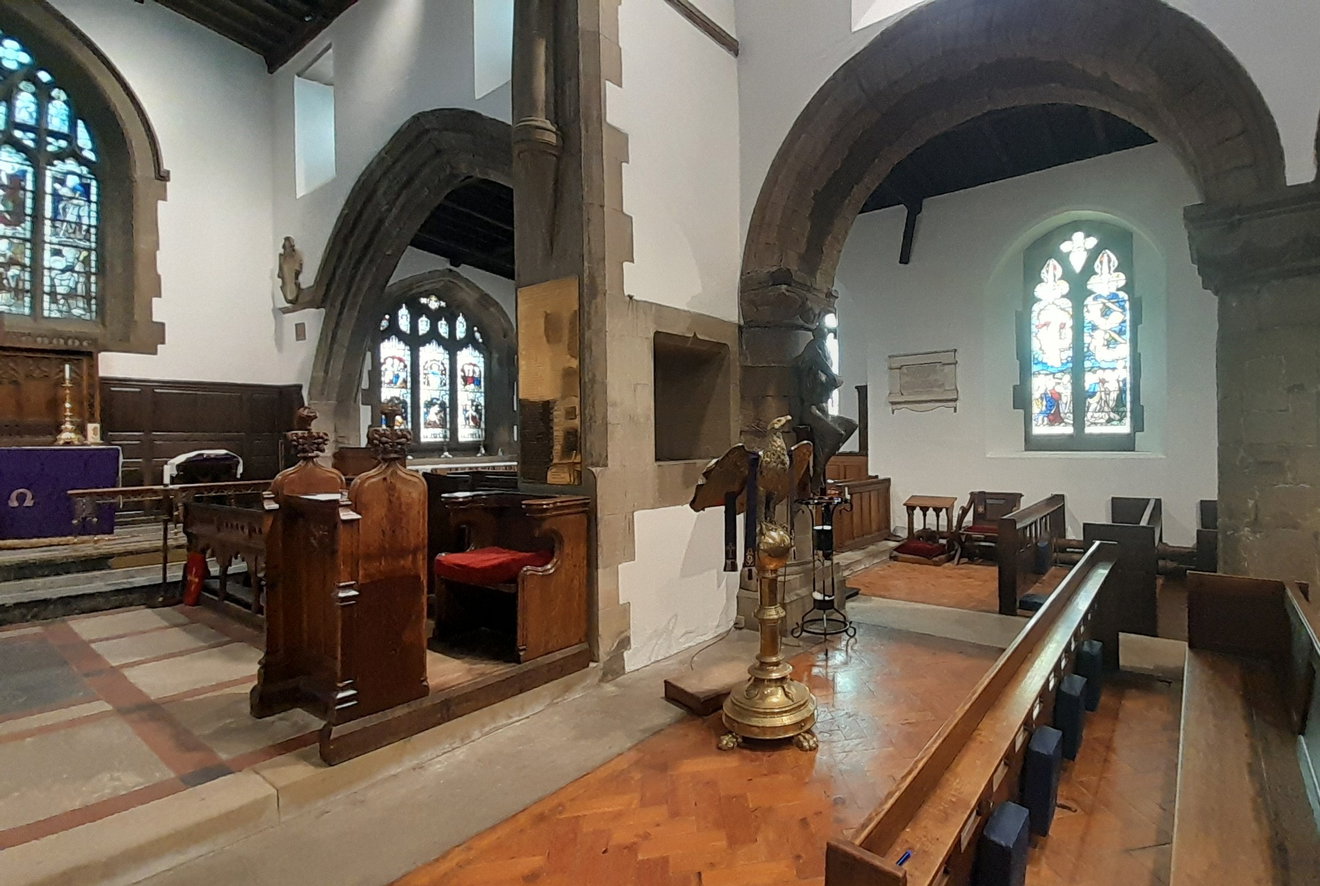
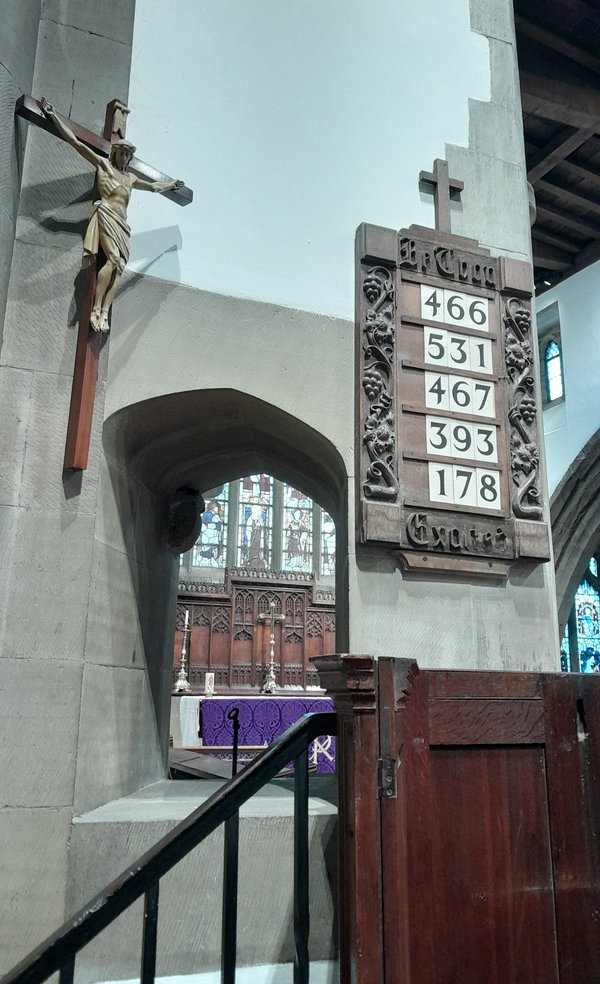
The hymn board is a nice bit of 19th-century work. For the riff raff, there were squints (technically called a Hagioscope), which were created so that some of the congregation could see the high altar. There could have been a rood obscuring the view to the altar.
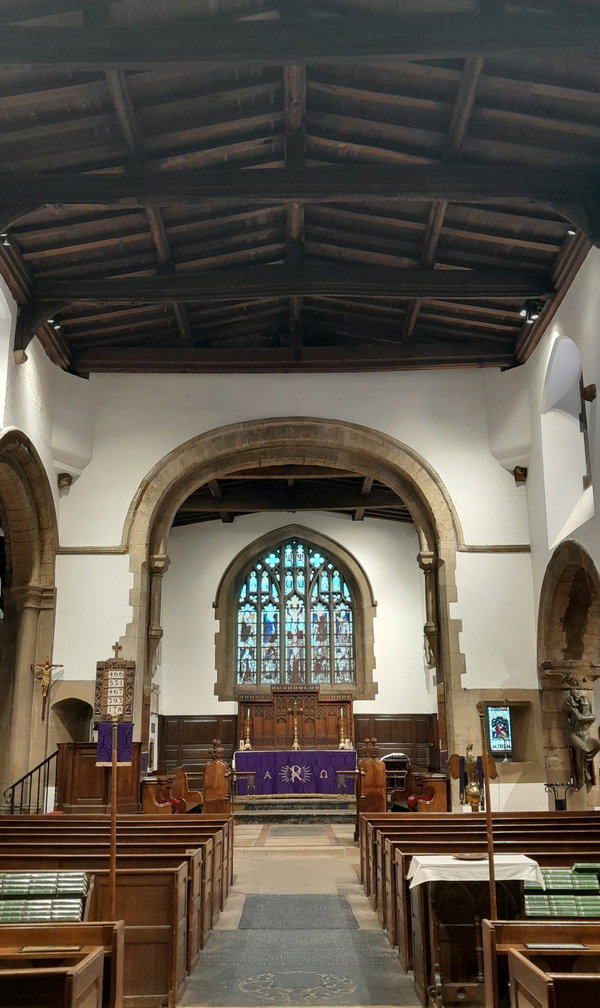
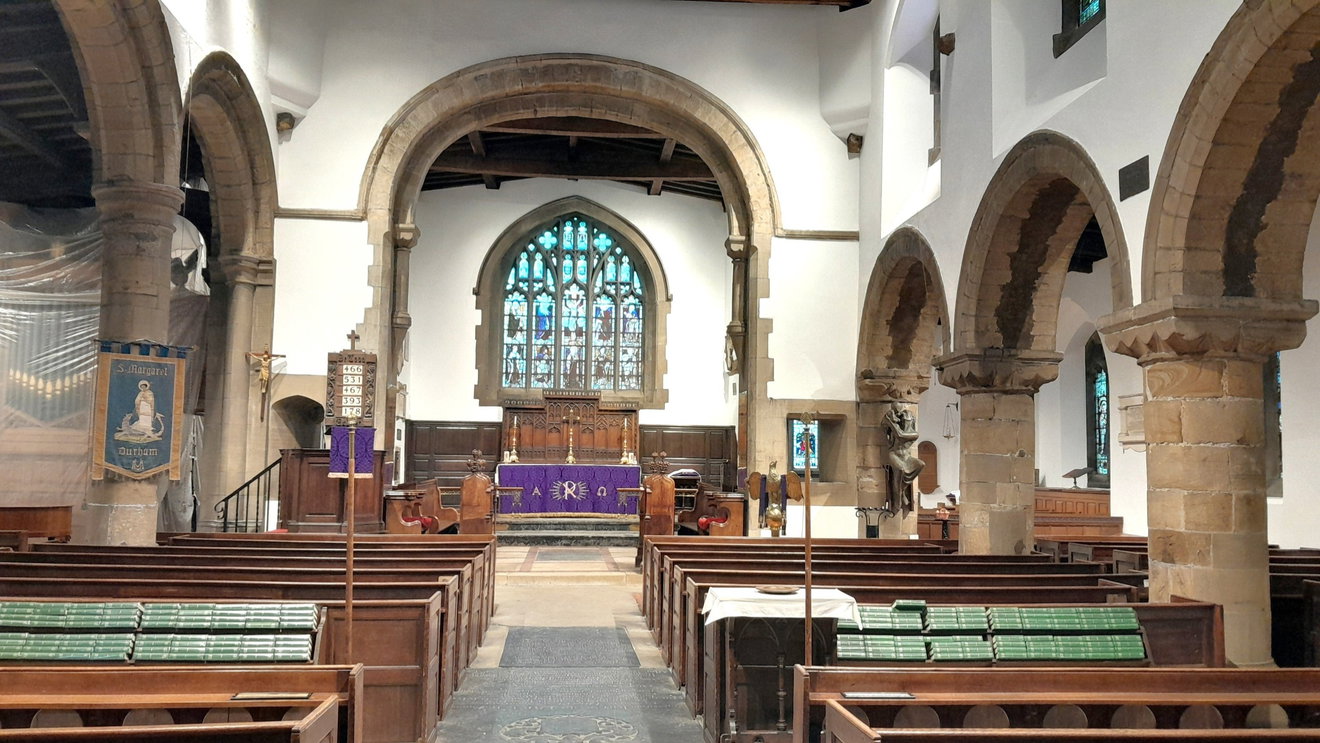
Look up, and you will see the roof trusses, which are short king posts (moulded tie beams on brackets). Notice the north aisle arches and roof is higher than the south aisle.
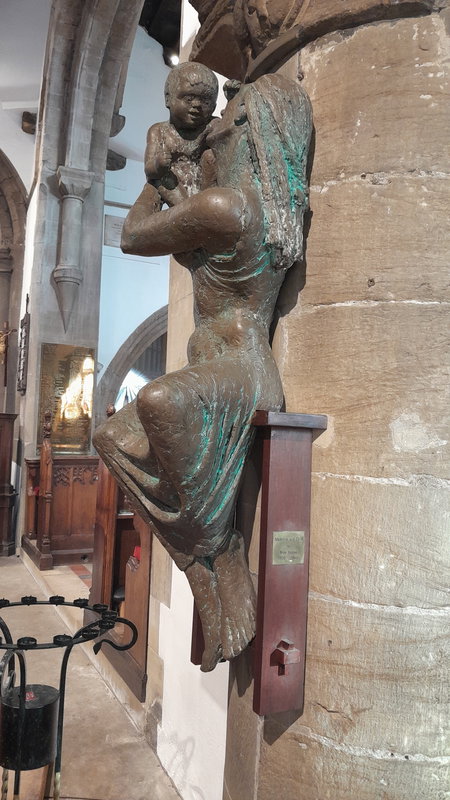
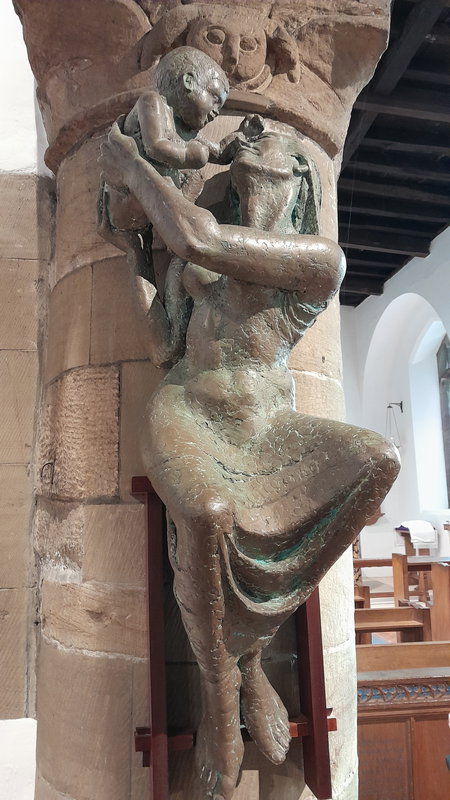
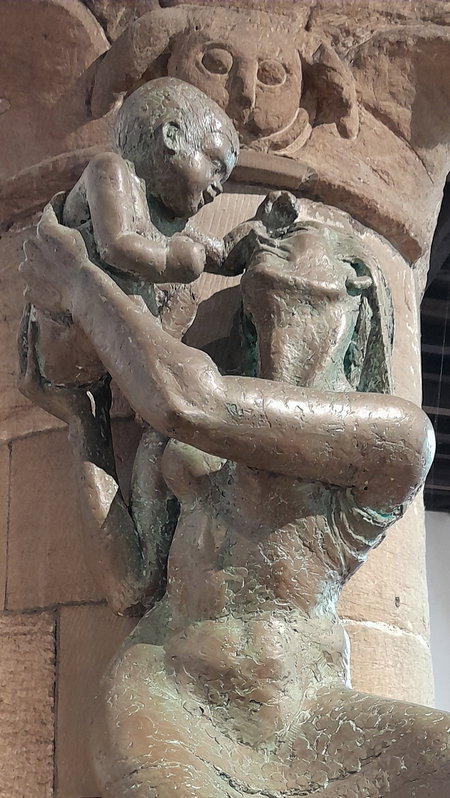
There is a bronze-looking Madonna and Child sculpture, 1993, by local artist Brian Scraton (now deceased). The depiction is removed from the usual Madonna and child looking forward into the room. Instead, you have mother and baby reciprocating love. Peter tells me the Madonna was modelled on the artist's stepdaughter. She once came into the church where the vicar said, 'You look familiar, have you been here before?' She responded that she had not, but the mystery was solved when she was shown the sculpture.
Notice the gargoyle above.
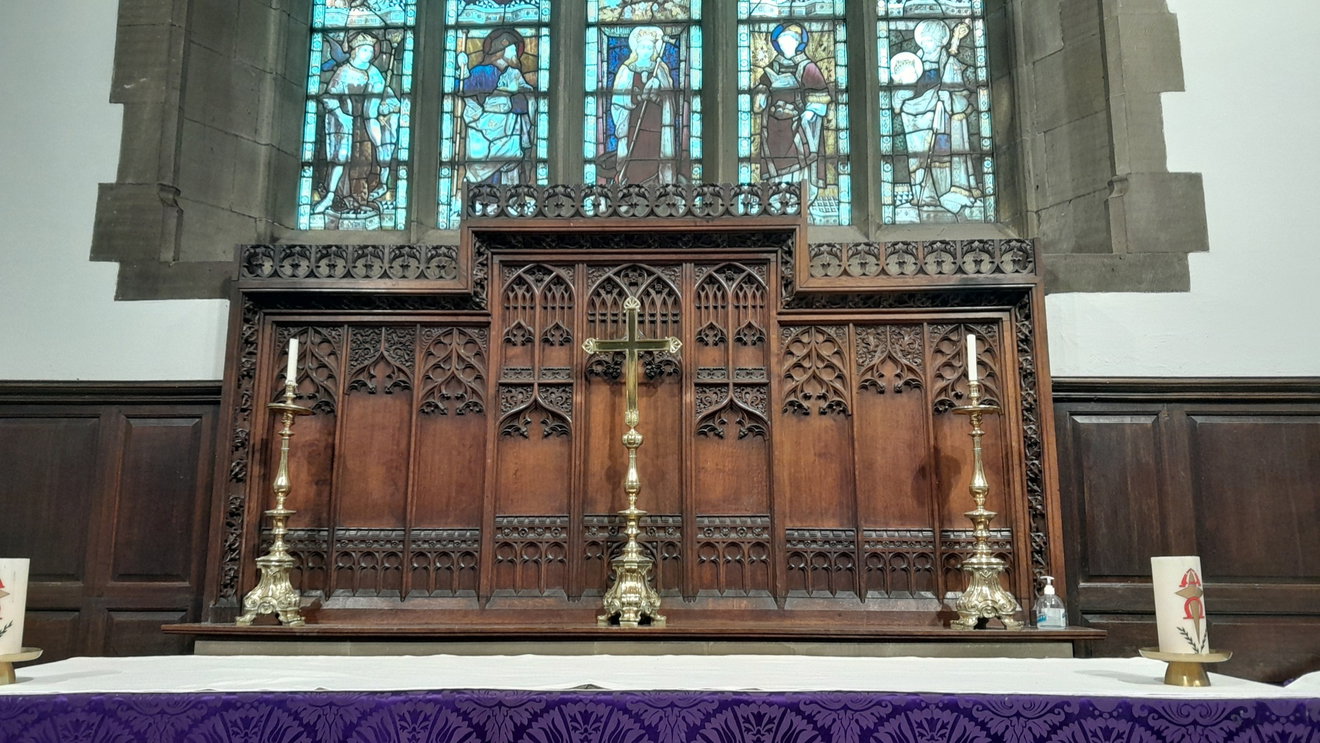
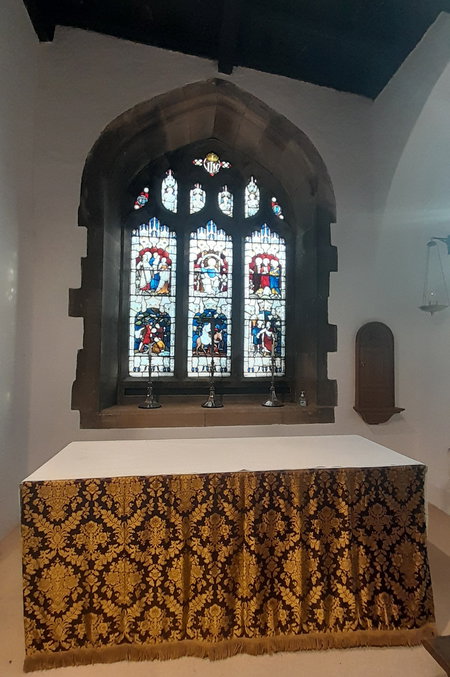
Peter gave a wonderful anecdote regarding the candles in front of the reredos. If they were placed too far back, at some point during a service, the smell of charred wood would permeate the air, and hastily the candle holders would be moved away from the reredos. You can see the scorch marks!
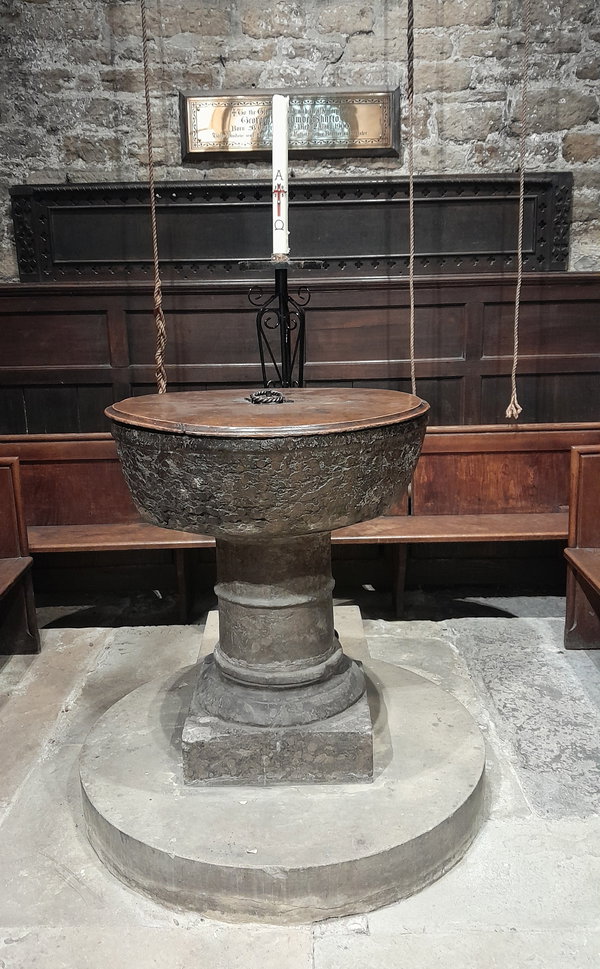
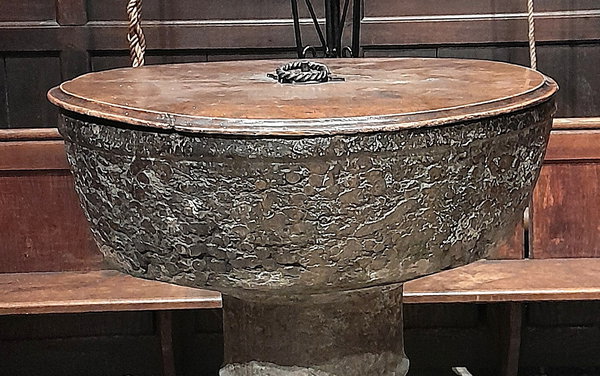
The font is sculpted from Frosterley marble and is purported to date to when the church was first built circa 1150. Frosterley is revered in this area as it is local, and you can see fossils in it.
Frosterley Marble is a black, bituminous coraliferous limestone containing fossil crinoids of the Lower Carboniferous (Mississippian), some 325 million years ago. It outcrops in Weardale, County Durham, England, including near the village of Frosterley whence it is named.
Wikipedia
This church has many memorials, including the Shafto brothers, Charles and Arthur, Stephen mentions '[..] one who died in the Boer War and the other who survived. The survivor was later promoted and died early in the Great War.'
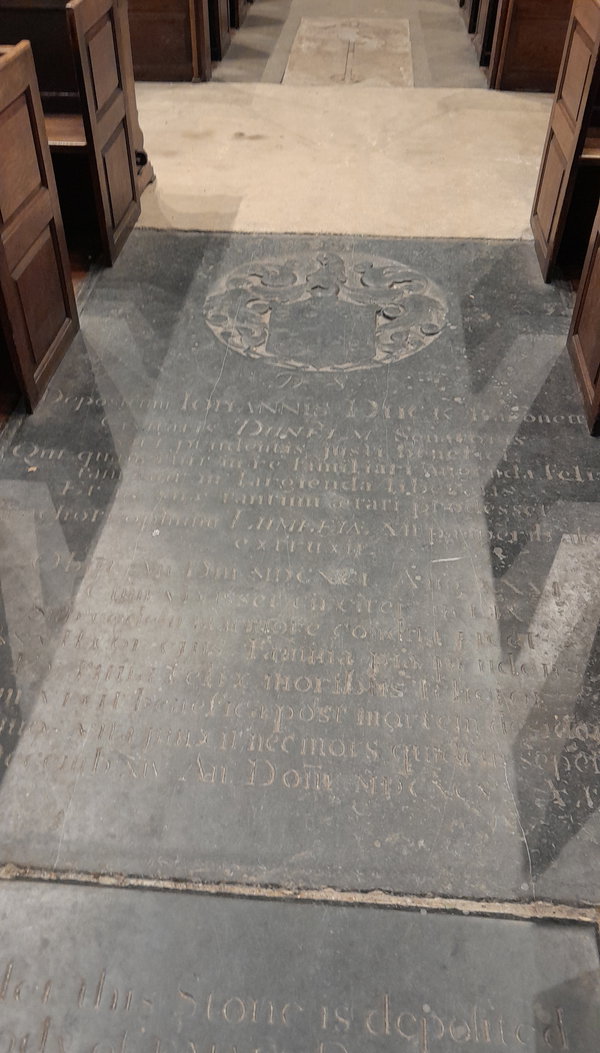
Another noteworthy person who has a gravestone in the church is Sir John Duck, whom Peter amusingly explains that he was taking a couple on a tour of the church, and when he started to talk about Sir Duck, they laughed, and he said, 'Oh no! I didn't say Donald, did I?' and they replied 'Yes, you did.'
Sir John Duck (c1632-1691), known as Durham's 'Dick Whittington', is buried here. According to local legend John Duck's bleak future took a turn for the better when a raven dropped a gold coin at his feet as he walked by the River Wear. The former butcher's apprentice progressed to become a coal entrepreneur, Mayor of Durham (in 1690) and was knighted eventually by King Charles II.
Wikipedia
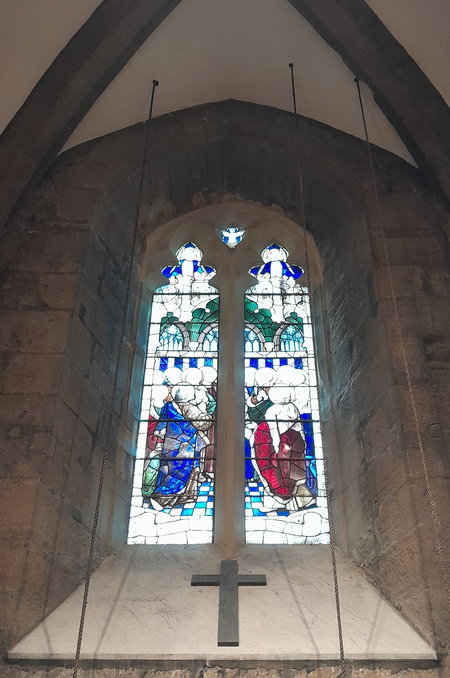
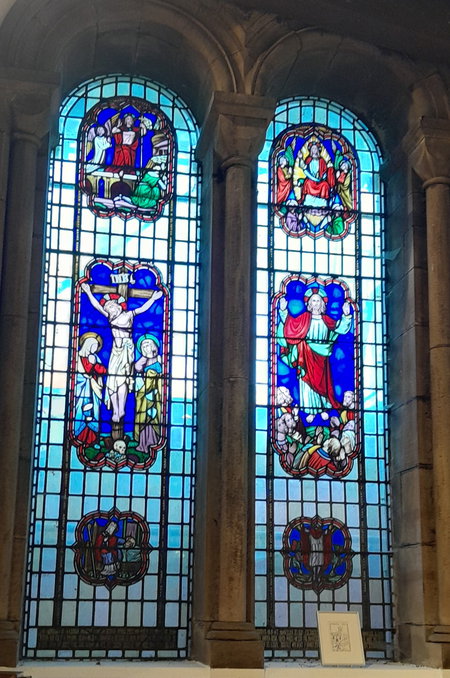
If you are interested in the stained glass windows and the history of St Margarets, there is plenty of information in the guidebook. Donations are also welcome.
I would suggest a lovely loop around this area on a sunny Sunday. Peter has suggested the church may be open after service and close at about 13:00 during the summer months. Take your time to soak up the charming cobbled lanes with views of the Cathedral and Castle, hear the weir in the Wear, and admire the many vistas. My go to parking would be Prince Bishops multi-storey, as you pay on exit and therefore not on a time limit.
Stephen who approached the Fabulous North regarding this church, is also a historian and can be contacted for tours at www.historictoursuk.co.uk.
Get 2 points if you have visited this place. Already visited by 15 VIPs.
Login to bag this placeHelp fuel the next adventure
Fabulous North is free, with no annoying adverts and fuelled by an unhealthy desire to poke around castles, hills, churches and suspicious-looking bits of stone.
If you enjoy what we do, you can help keep us exploring.
Champion This Place
Got a special memory of St Margaret Of Antioch Church Crossgate, a story to tell or simply a soft spot for it? Champion St Margaret Of Antioch Church Crossgate and we'll add your name, photo and a short message to this page, while your support helps us keep Fabulous North exploring.
How To Find St Margaret Of Antioch Church Crossgate
Where Is St Margaret Of Antioch Church Crossgate?
Show Place On Google MapsLat / Long
54.775887, -1.579943
What three words
Where To Park For St Margaret Of Antioch Church Crossgate?
Nearby on street parking available at 90p per half hour.
Contributed by Rosalind Parker
Thank you for reading. I hope it sparks your interest. It’s always a pleasure to get out and explore, whatever the weather. I enjoy uncovering little snippets of information, especially when they’re obscure, amusing, or meaningful. All photos were taken on a mobile phone.
More Places from Rosalind
More Places In Durham
Find more fabulous places in Durham, County Durham and if you know of a place we haven't listed, then let us know.
The Story At Mount Oswald
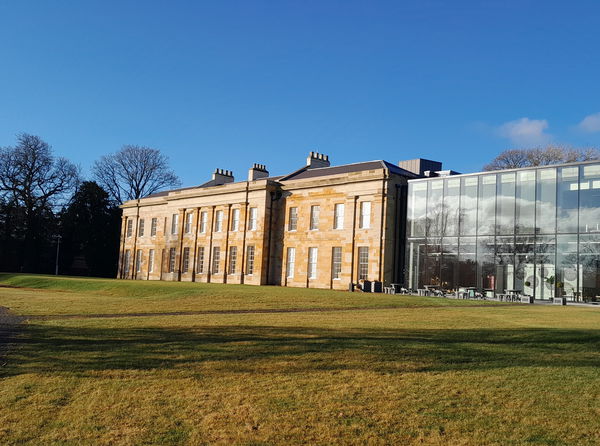
Museum Durham County DurhamA new social history museum adjacent to a grand Georgian manor house telling the history of the area.
The Light
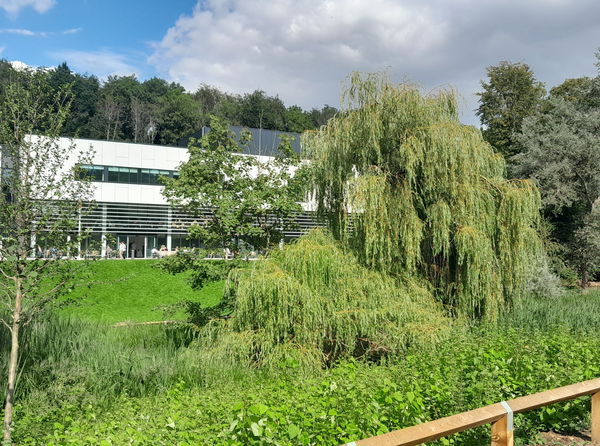
Museum Durham County DurhamThe Light is a museum in Durham sharing the history of the Durham Light Infantry through soldiers’ personal stories, historic objects and interactive displays.
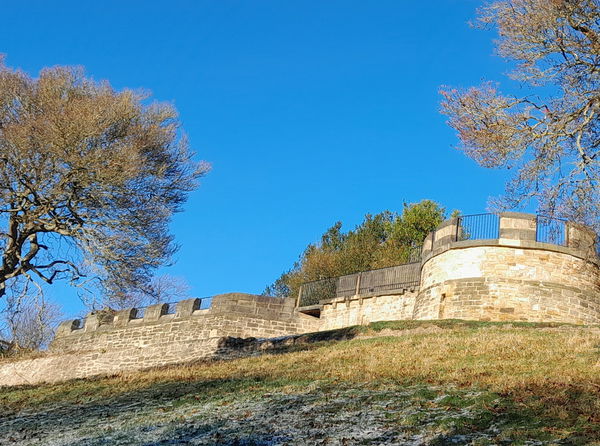
Wharton Park
Landscape Durham County DurhamA feast for photographers, natural history enthusiasts, structure admirers, sculpture lovers and children
More Religious Places
So this religious place wasn't enough and you want more? Don't worry we have you covered.
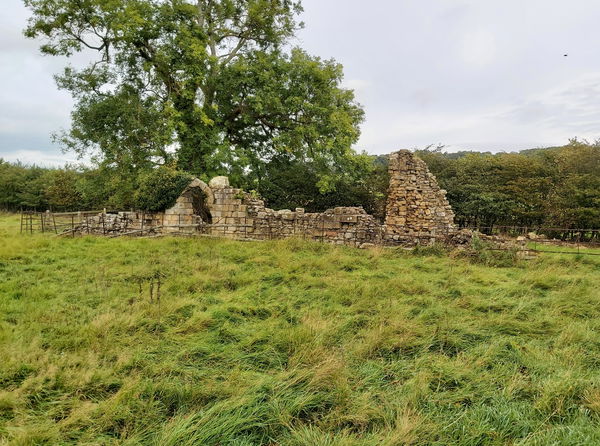
St Leonard's Hospital Chapel
Religious Place Alnwick NorthumberlandThe ruined chapel of an old hospital located in Denwick near to Alnwick Castle.
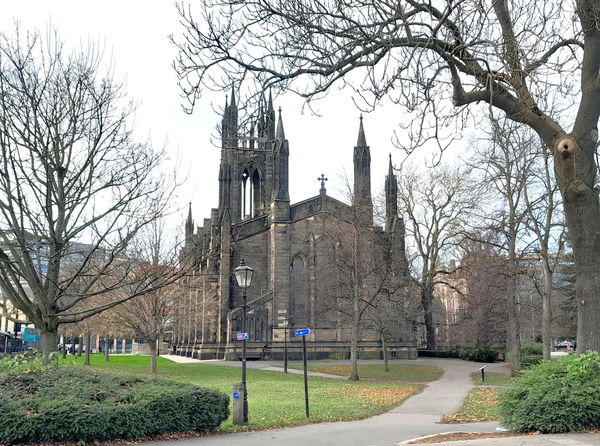
Church of St Thomas The Martyr
Religious Place Newcastle City Centre Tyne And WearA Church without parish dedicated to the murdered Archbishop of Canterbury, Thomas Becket
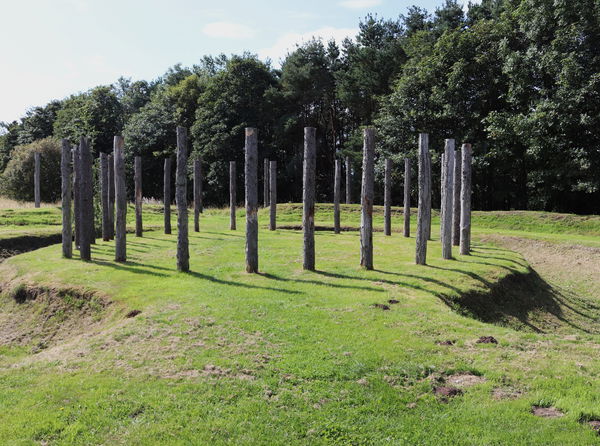
Maelmin Henge
Religious Place Ford And Etal NorthumberlandA replica of a nearby Anglo-Saxon henge and part of the part of the Maelmin Heritage Trail.
Never Miss A Fabulous Place
If you are afraid of missing out on all the fabulous places we post, or just want to be the first to know, then sign up to the Fabulous North.
Each week we will email you all the brand new places that we visit.
Sign Up To Alerts

Find Us On Facebook
We post all our new places daily on our Facebook Groups page, so join the group today and be notified when we add a new place.
Join Our Facebook GroupSt Margaret Of Antioch Church Crossgate was listed in Religious Place // County Durham // Durham