
Hexham Riot Plaque
Landmark In Hexham, Northumberland
A plaque in the Market Place commemorating The Hexham Riot of March 1761 where over 50 protesters died in unrest towards government plans to force working men into the militia by ballot.
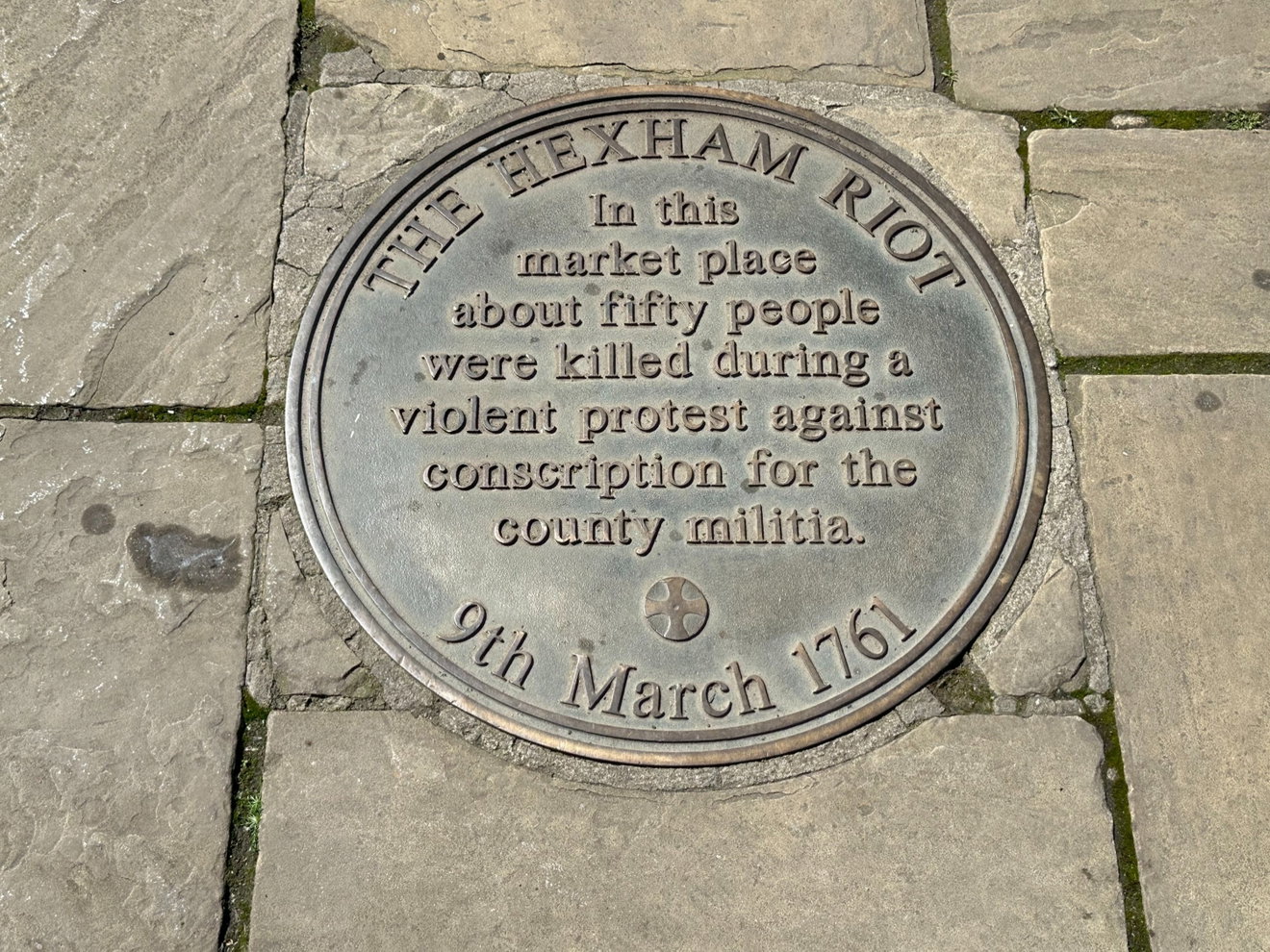
You never know what's under your feet or the stories the streets have to tell.
I'm usually looking up for chimneys, windows and fancy pants architecture, but here, paddling beneath the pavements of Hexham's Old Market Square, there's a story of slain bodies and proper bashings which I went in search of. On March 9th 1761, right here, was Bloody Monday, otherwise known as the Hexham Riot, and this plaque in the pavement marks the memory!
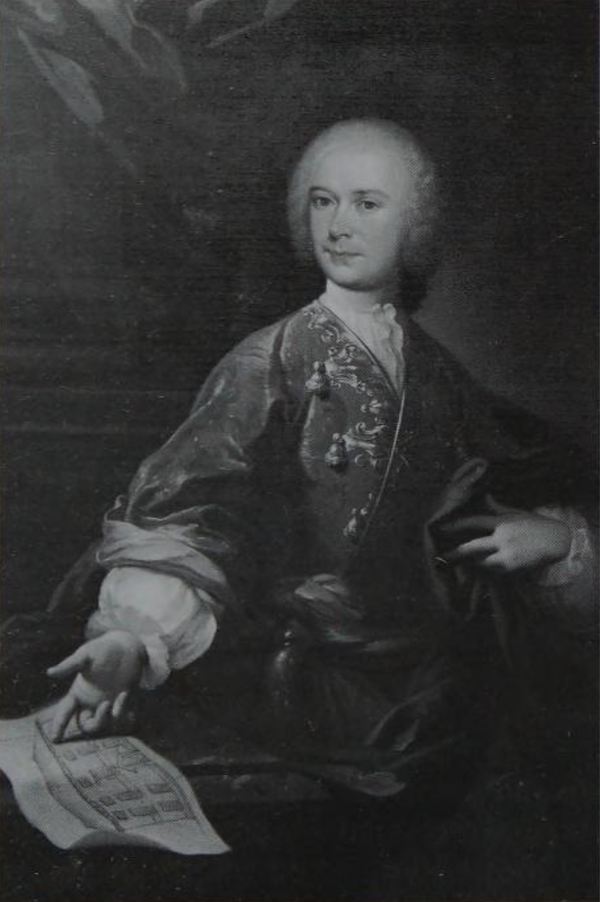
The surly, sinister standoff was led by Sir Lancelot Allgood, Sheriff of Northumberland and all-round fat cat plutocrat, who didn't like the hoi polloi!
He was adamant that the proletarian toilers from Prudhoe to Tynedale, Harlow Hill to Haydon Bridge, would embrace the Militia Act. This was an act of 1757 which proposed a brutal system of conscription, forcing men from rural communities to sign up to create a domestic defence force, removing them from their families and livelihoods to serve the ruling gentry and enabling the British military to fight overseas in the Seven Years' War.
Come on...no one's going to take this sitting down!
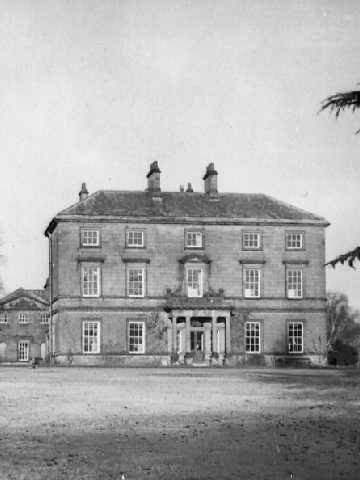
Allgood can be seen in this portrait by George Knapton pointing to a plan of Nunwick Hall near Simonburn where he lived a landed life with his wife Jane. Nunwick Hall is pictured to the right in the image from Northumberland County Council Archive.
It was a fight between the squirearchy and the poor, many of whom harboured an entrenched disdain for the Allgoods...Clearly seen as the All-Bads! They were yellowbellied in the regional Jacobite rebellion, and few had respect for Sir Lancelot.
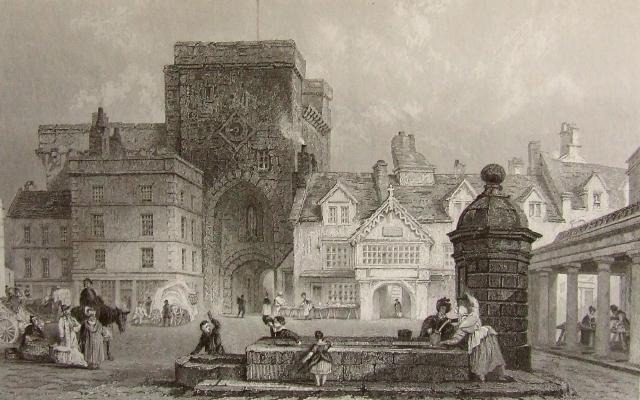
By 9:00am, many men, many poor, gathered in the Market Square. This print by J. Sands, published in 1835, shows what the square would have looked like before the crowds assembled. It shows the Moot Hall and the Shambles.
On the day, men walked for miles to show their resistance, most of them farm labourers, pitmen, craftsmen, and farmers.
Allgood was concerned about unrest, so he had enlisted the services of the North Yorkshire Militia. As he and his magistrates tried to enforce the Militia Act, the crowd, now swelled to 5,000, surged forward with clubs and staves and started to revolt. 200 soldiers were deployed to regain order, but they were outnumbered and fumbled against the furious, feisty men.
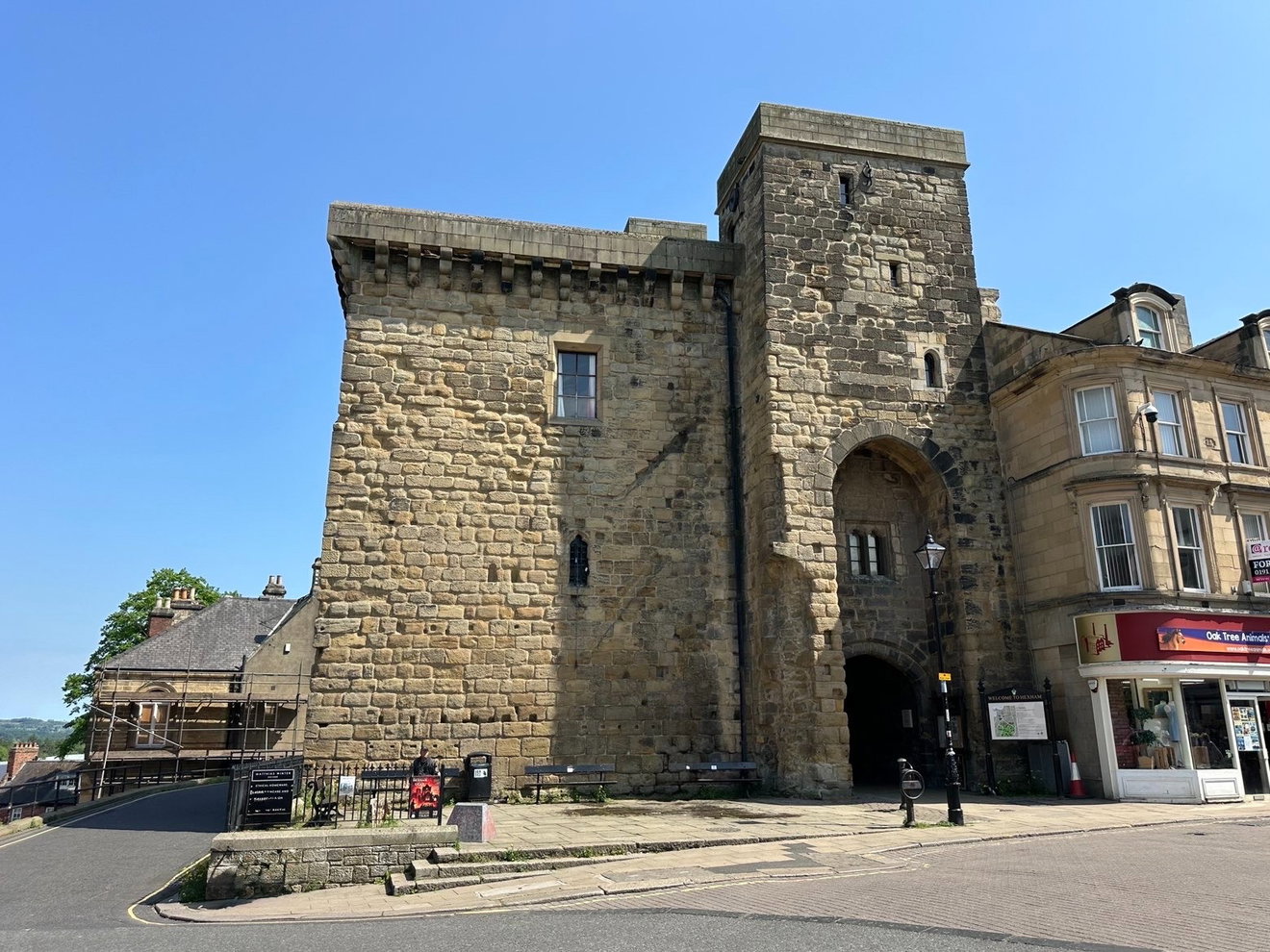
Ringleaders led the calls to drop the demands as they met with magistrates inside the Moot Hall. And after four hours of discussions, tensions were at a high. Refusing to disperse or obey commands to comply with the act, the men grew fractious, and the magistrates read them the Riot Act at 2:50pm. This gave an hour's grace for the crowds to disperse, but with tempers raging, the angry crowds broke loose and surged.
Ensign Joseph Hart, an officer with the militia, and Private David Greenock were overthrown by members of the crowd. They were struck by their own firearms, which had been seized, with Greenock dying immediately and Hart the next day.
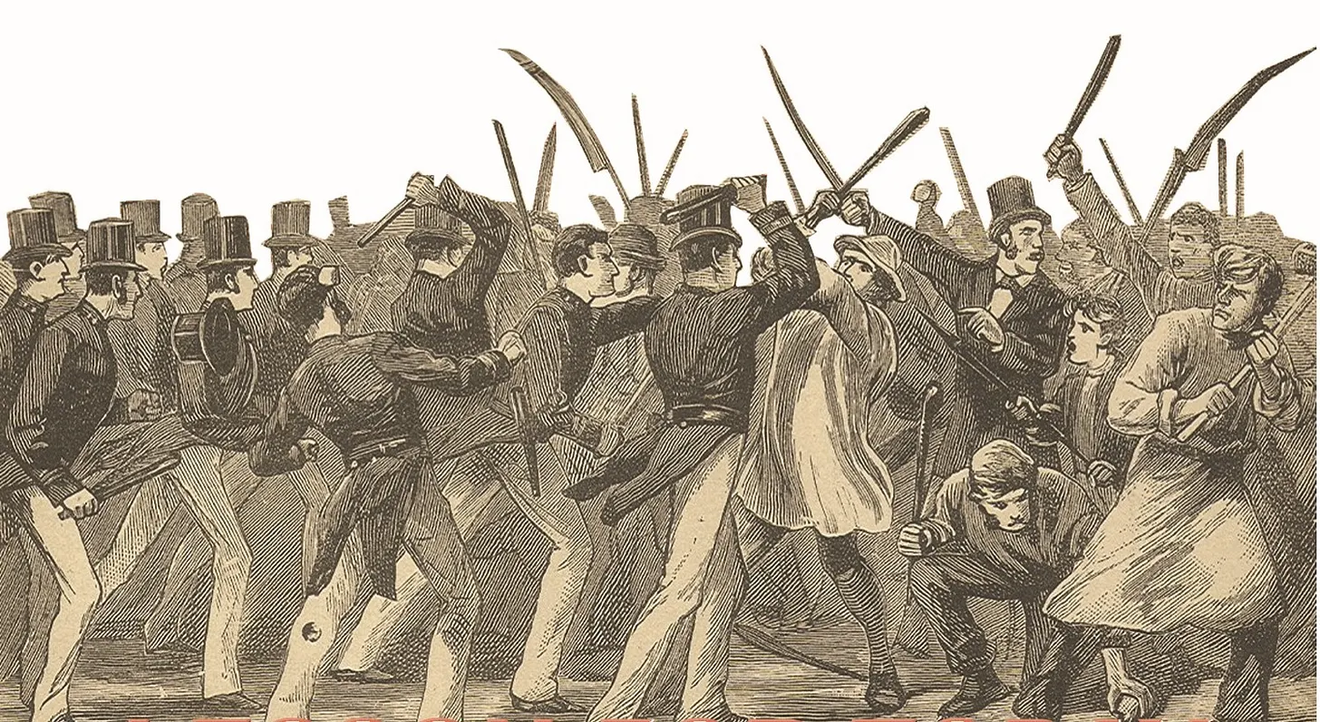
The militia, later dubbed the Hexham Butchers, opened fire on the crowds and forced them to retreat. In ten minutes, the bullets and blood spilt were immense, leaving many men, women and children with amputations or dead and dying on the cold cobbles.
Thanks to Hexham Local History Society for sharing these images, which give a flavour of the chaos and unrest.
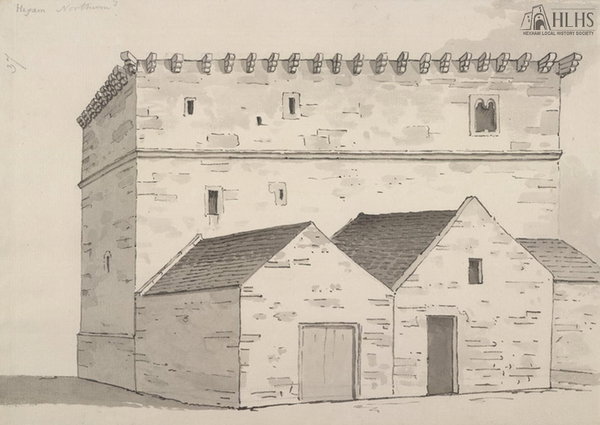
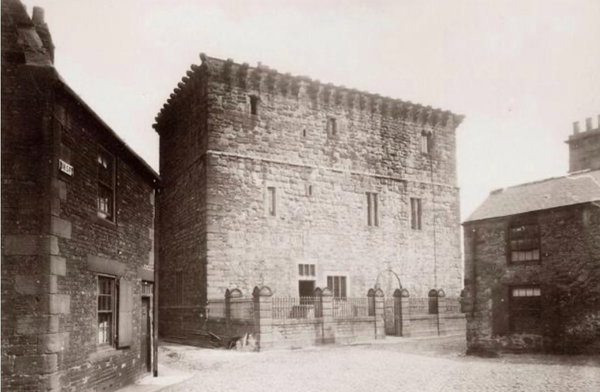
Many of the crowds fled, but were hotfooted by the militia, who made multiple arrests and threw the rioters into Hexham gaol, the earliest recorded purpose-built prison in England.
This early sketch from Hexham Local History Society by S. H. Grimm, 1788, gives an indication of how the prison looked, and how it looked later in 1900.
In the weeks and months that ensued, the attorney general forcibly and aggressively hunted down those who'd been a part of the siege. Arresting men from as far as Morpeth, Throckley and Newburn, to Blanchland and Haydon Bridge, many of those on the front lines faced severe treason charges, with men like 74-year-old Morpeth man Peter Patterson, who'd marched from Shilvington, facing the gallows.
He was hanged, drawn and quartered on Monday 5th October 1761 at Morpeth; the only man to have been put to death for his role in the Hexham Riot.
Allegedly, upon the first attempt, as the cart was wheeled away, the rope snapped, and Patterson fell to the floor, apparently alighting to his feet, declaring to the assembled crowd -
"Innocent blood is ill to shed!"
Peter Patterson Morpeth 5th October 1761
He was hanged on the second attempt, but died a martyr, as local records imply he wasn't even present at the Hexham Riot and had instead been at a splinter faction in Morpeth.
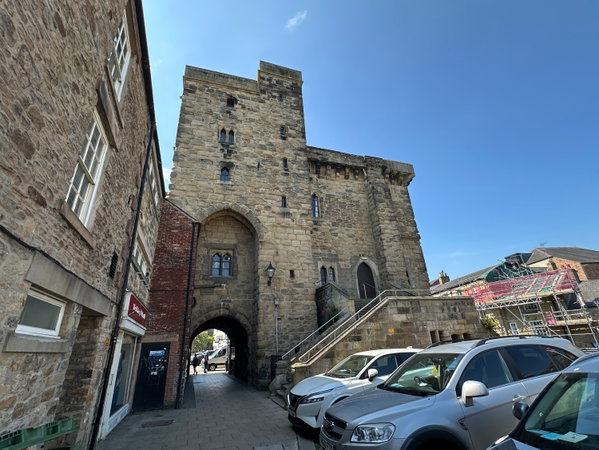
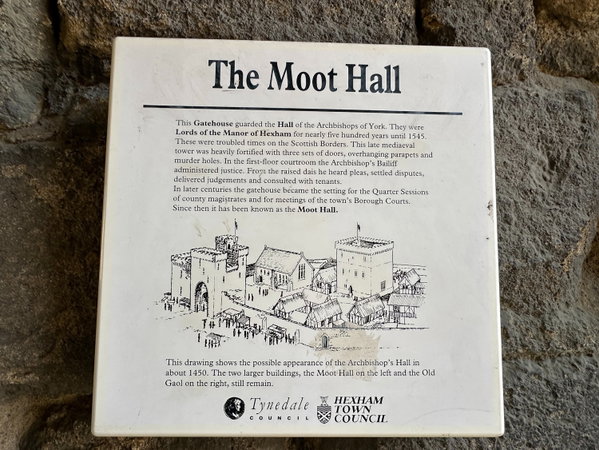
On a hot and sunny day in Hexham, I was hard pushed to find the plaque and hunted around the Moot Hall and Gaol in search of where the event had taken place. I asked for help from a fishmonger packing up his scales and wares for the day.
“Yer looking for where the Riot Act was read pet? The spot of Bloody Monday?
Reet beneath me feet”.
And sure enough, lying unfussedly in the stone street slabs, the simple words recorded the event.
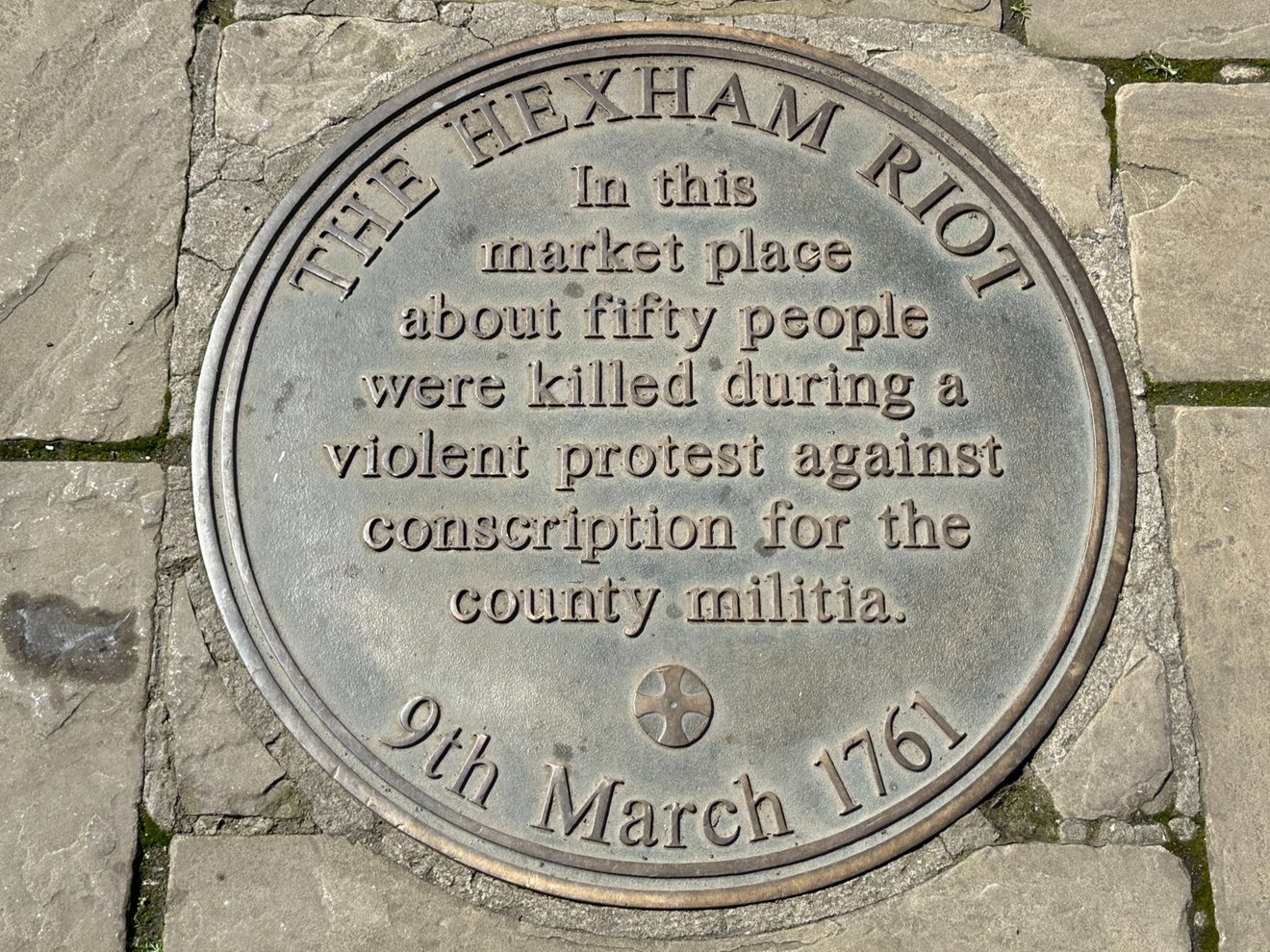
The Hexham Riot.
In this market place,
about fifty people
were killed during a
violent protest against
conscription for the
county militia.
9th March 1761
Hexham Riot Plaque
I could see now, under where he stood.
Where would you have stood?
An Allgood or a fighting farmer with bairns to feed?
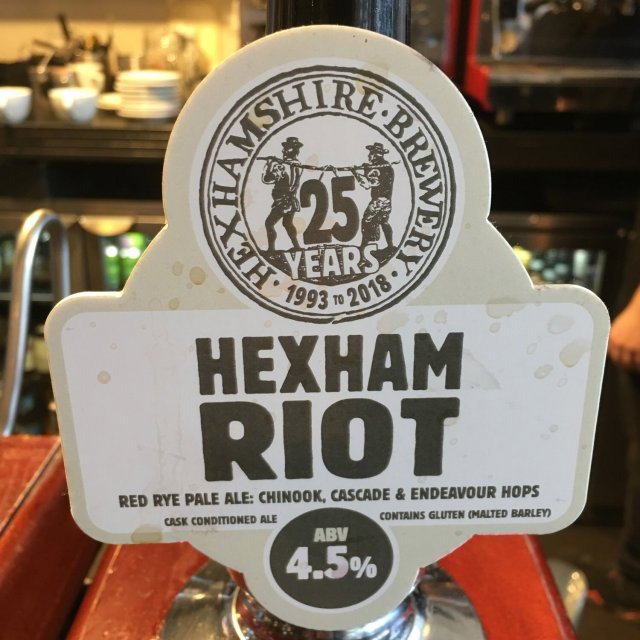
The memory has also been immortalised in some decent neck oil, to feed the souls of Tynedale and beyond, should the same situation ever arise again.
Get 2 points if you have visited this place. Already visited by 15 VIPs.
Login to bag this placeHelp fuel the next adventure
Fabulous North is free, with no annoying adverts and fuelled by an unhealthy desire to poke around castles, hills, churches and suspicious-looking bits of stone.
If you enjoy what we do, you can help keep us exploring.
Champion This Place
Got a special memory of Hexham Riot Plaque, a story to tell or simply a soft spot for it? Champion Hexham Riot Plaque and we'll add your name, photo and a short message to this page, while your support helps us keep Fabulous North exploring.
How To Find Hexham Riot Plaque
Where Is Hexham Riot Plaque?
Show Place On Google MapsLat / Long
54.971607, -2.1010293
What three words
Where To Park For Hexham Riot Plaque?
In the Market Square. Like many places in Northumberland, you need a disc to park in the streets, which is available from places like The Abbey Tea Rooms or Hexham Tourist Information Centre.
Contributed by Jos Forester-Melville
Highland loving human. Thalassophile. I love a good smile. Happiest heading for the hills with my pickup filled with kids and dogs! Working four days, we enjoy a Fridate, and usually spend it scouting out new scenery. I love a gated track, a bit of off roading and if it involves a full ford, well, that gets extra points! I go nowhere without a flask and binoculars, and love the small things in life that make it big…Goldcrests, dry stone walls, Deadman’s fingers, blackberries and quality clouds.
More Places from Jos
More Places In Hexham
Find more fabulous places in Hexham, Northumberland and if you know of a place we haven't listed, then let us know.
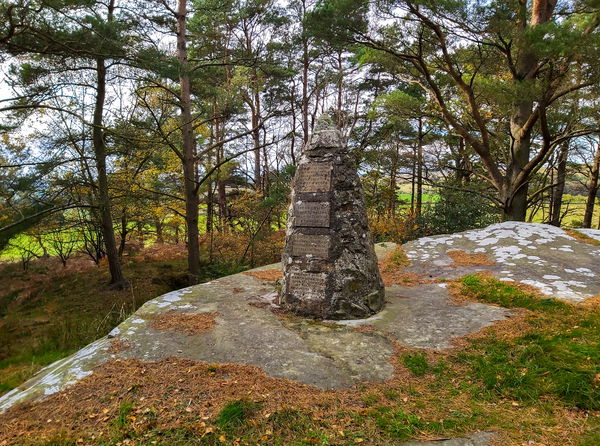
Scout Camp Memorial Cairn
Standing Stone Hexham NorthumberlandStone cairn near Carr Edge in Northumberland, built in 1927 to commemorate Baden-Powell’s 1908 visit for the first official Scout camp.
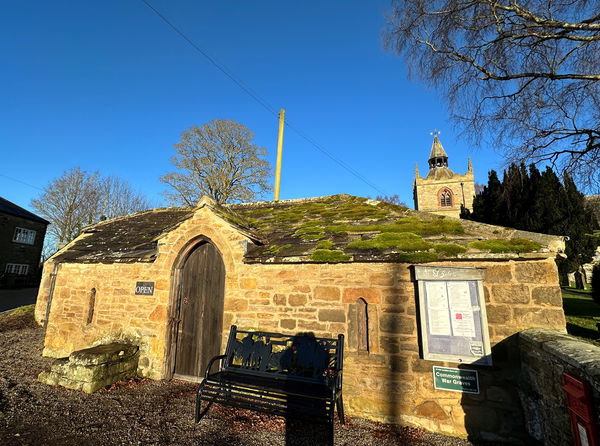
Hearse House at St Giles
Building Hexham NorthumberlandOne of a handful of hearse houses left in the UK with a little 'fun for free' museum.
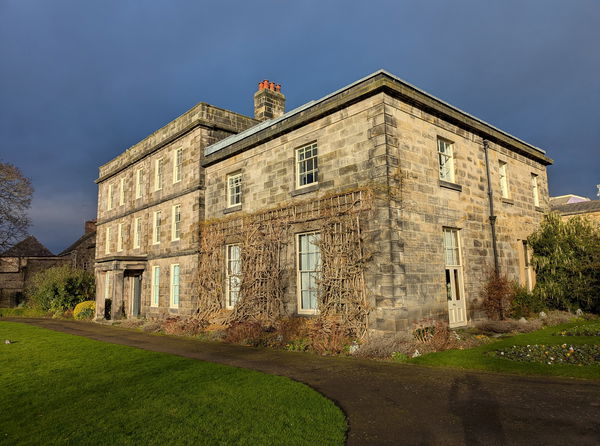
Hexham House And Nuclear Bunker
Building Hexham NorthumberlandHistoric 18th Century Grade II Listed Building and Grounds now used as a Registry Office with space for ceremonies and on-site accommodation, whilst the basement includes the remains of a Cold War Nuclear Bunker.
More Landmarks
So this landmark wasn't enough and you want more? Don't worry we have you covered.
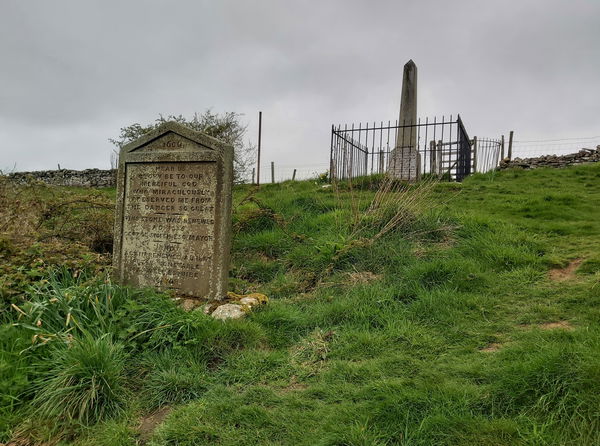
Willance's Leap
Landmark Richmond North YorkshireA monument to where a Richmond man's horse threw him over a cliff and his plan to stay alive.
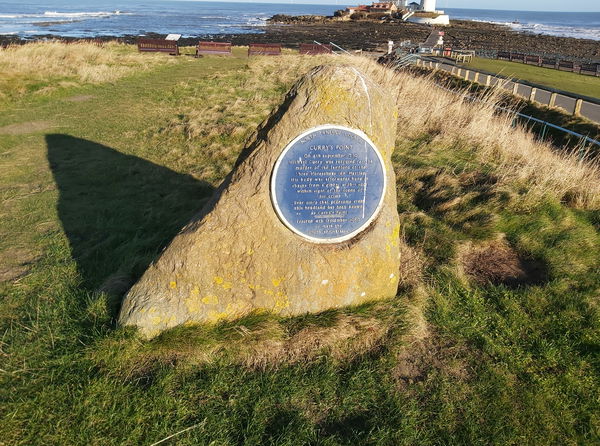
Curry's Point
Landmark Whitley Bay Tyne And WearA plaque marking the site of a gibbet where Michael Curry was chained for murder.
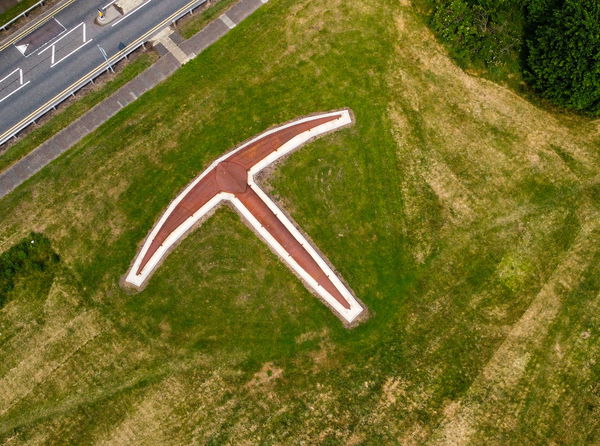
Alfred's Memorial Giant Pickaxe
Landmark Jarrow Tyne And WearA steel sculpture in the shape of a giant pickaxe in Jarrow, created as a memorial to the town’s mining heritage and the communities who worked in the pits.
Never Miss A Fabulous Place
If you are afraid of missing out on all the fabulous places we post, or just want to be the first to know, then sign up to the Fabulous North.
Each week we will email you all the brand new places that we visit.
Sign Up To Alerts

Find Us On Facebook
We post all our new places daily on our Facebook Groups page, so join the group today and be notified when we add a new place.
Join Our Facebook GroupHexham Riot Plaque was listed in Landmark // Northumberland // Hexham