
Wojtek The Soldier Bear
Art In Duns, Borders
A bronze cast statue of the remarkable war-time bear who lived and travelled with Polish soldiers, and ended his days living in the Scottish Border town of Duns, before retiring to Edinburgh Zoo.
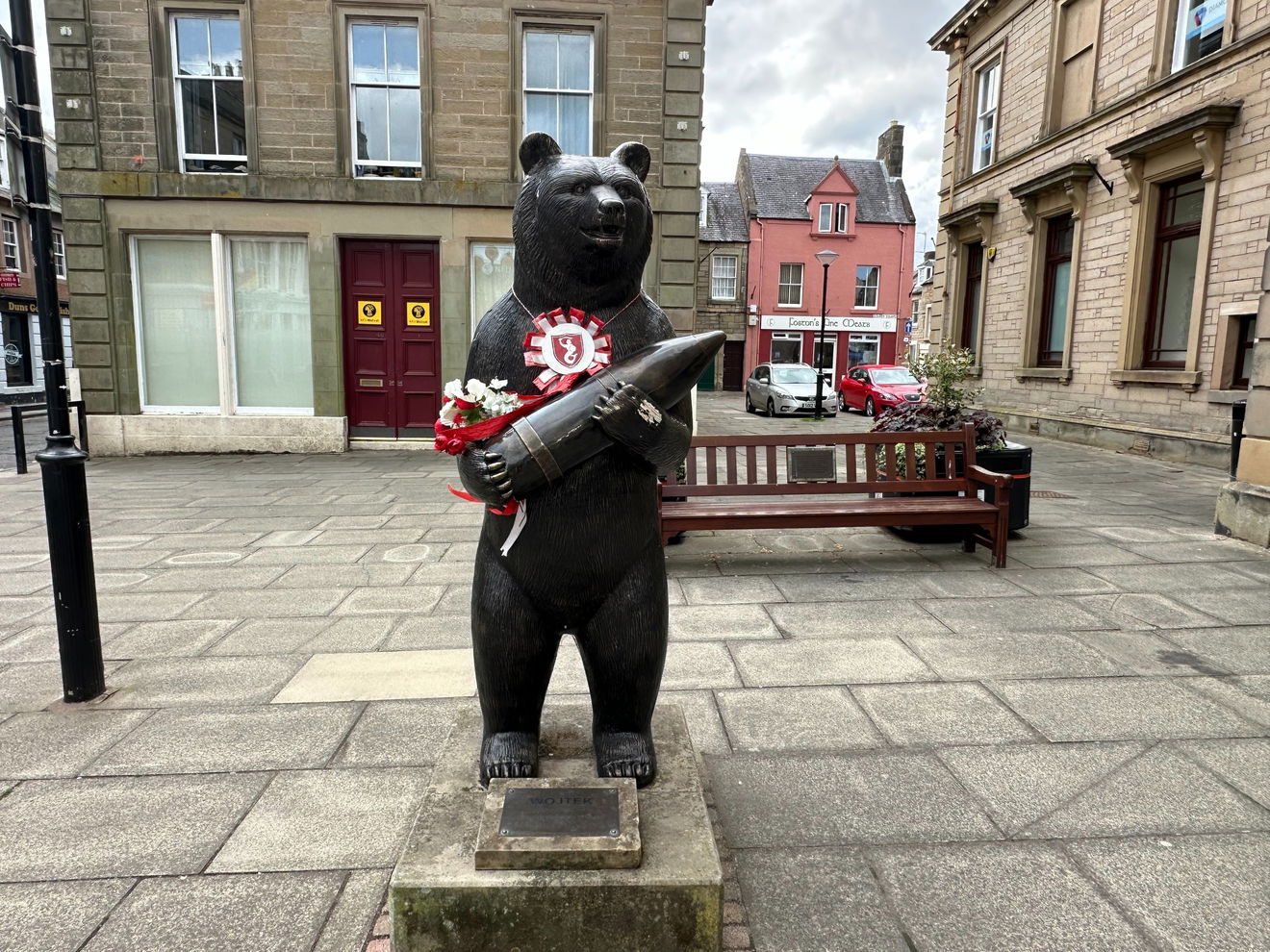
There's bears in them there Borders!
There's the Dunbar Bear, a symbolic tribute to John Muir, the father of the national parks, born and bred in Dunbar, so they gave the people a Dunbear.
But another bear, with a much more colourful history, a bear that actually lived in the Borders, and wasn't just a symbol, but a real living mascot of the people! Surely not.
Well, maybe...one...in the market square in Duns.
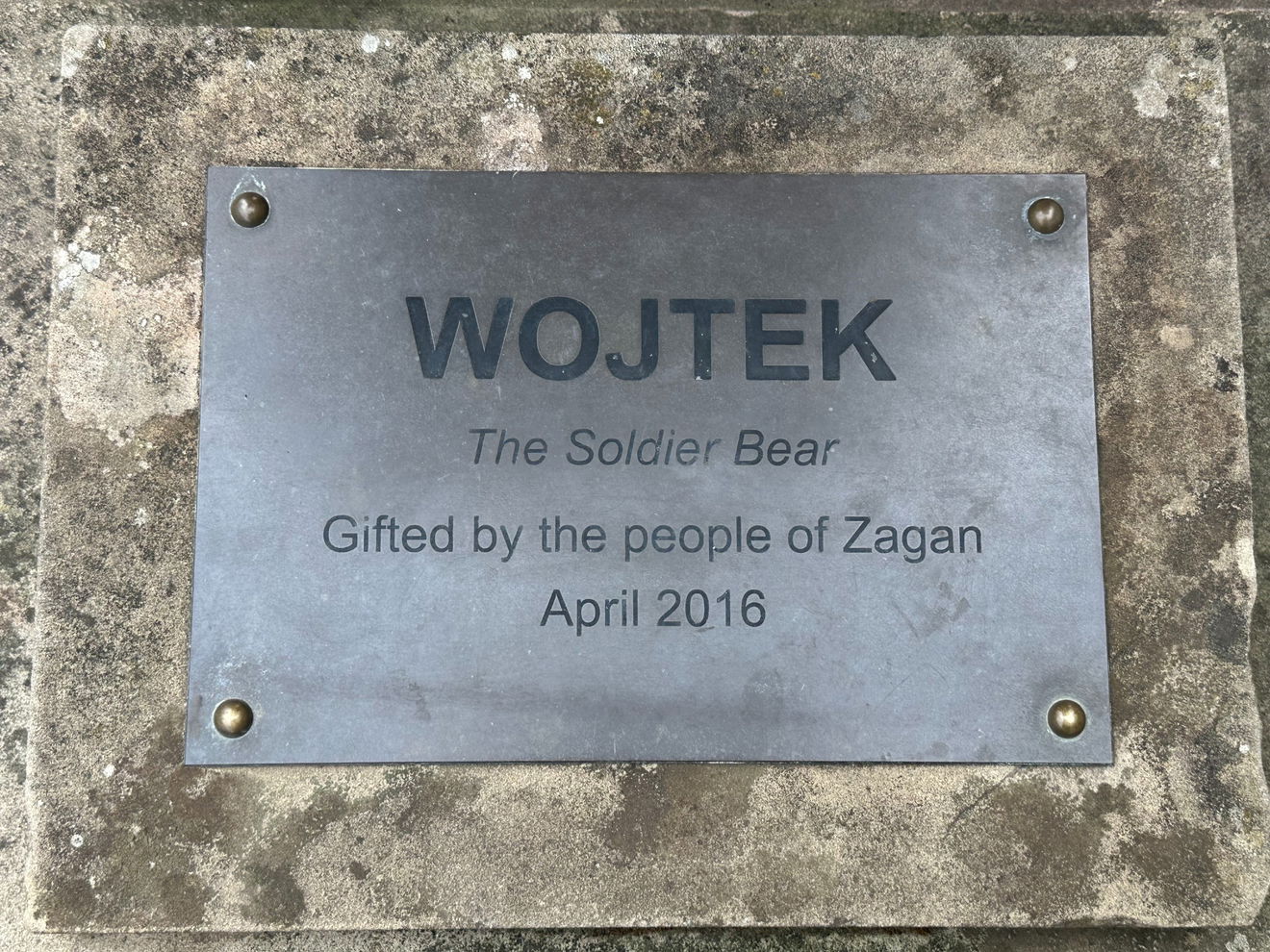
Meet Wojtek.
This statue standing proud in Duns is a reminder of the strength and support of animals in relation to human life, in this instance, to Polish soldiers stationed in Iran in WWII.
Polish families had been evicted from their homes in 1940 by Russian troops and moved from the borderlands of Kresy. They were moved to Siberia and forced to work in labour camps. In 1941, when Germany attacked Russia, there was a desperate need for a boost to troops, so Polish people were released from these camps and recruited for the Polish Army. Fragile and broken, people travelled far and wide to reach a labour camp which was to be for them, their key to freedom.
This remarkable story began in 1942 in the foothills of Iran, where a young boy found an orphaned Syrian Brown Bear. His mother had been shot by poachers. A young girl named Irena Bokiewicz, the niece of a general, fell in love with the bear, and a soldier bought the bear for her for a few small pennies.

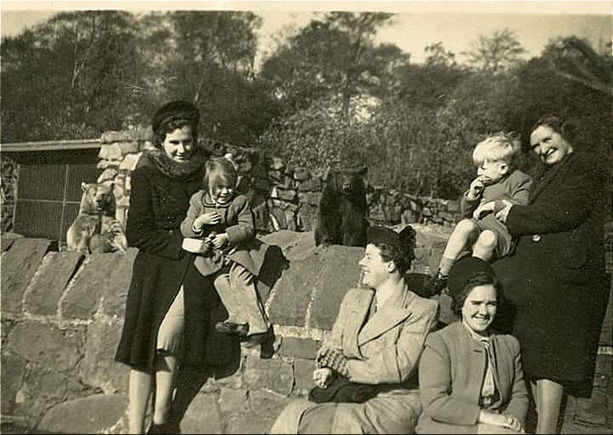
The following black and white images have been kindly shared by the Kresy Family Archive, who do a remarkable job of keeping the story of Wojtek alive. They show how Wojtek began as a small, furry ball, weak and malnourished.
After living in a civilian refugee camp for three months, it became apparent that this was no place to raise a bear, so he was gifted to the Polish Army, who would take care of him. He brought them companionship, and they cared for the bear, but he brought them a role and responsibility in return. The care and respect were mutual.
He was handed over to the 2nd Transport Company in Palestine on 22 August 1942, where the soldiers were happy to care for him. He raised morale and created a connection for the men.
They kept him and shared what they had with him. The soldiers cared for him and built up his strength.
They hand-fed him fruit, and he sometimes drank tea and on occasion beer from the men's bottles and sometimes tried to eat one of the soldiers' cigarettes. He ultimately mimicked their behaviour and became imprinted on his human companions, wrestling with them for fun. They named him Wojtek (pronounced Woyteck), which means Happy Warrior. He largely lived a human life, sleeping in their tents, and keeping them warm when they were cold. He kept vigil round the camp and warded off intruders.
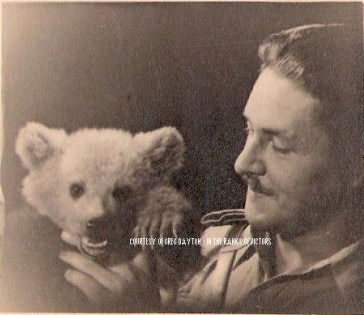
Wojtek learned to stand on two legs and walk like the soldiers. He lived like one of his comrades and travelled with them through Syria, Palestine and on through Egypt. By the time they reached Italy and the Battle of Monte Cassino he had grown to 14 stone.
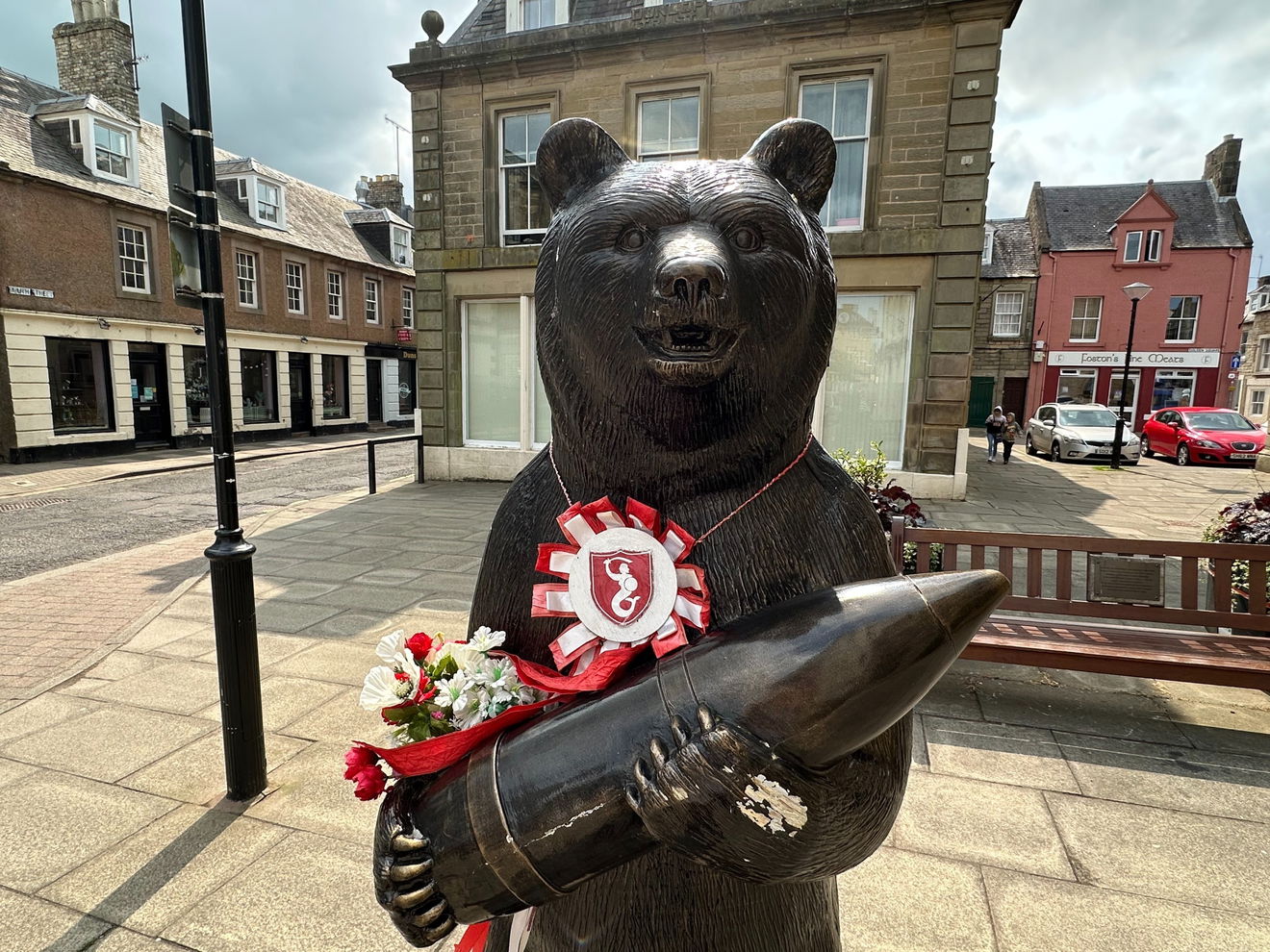
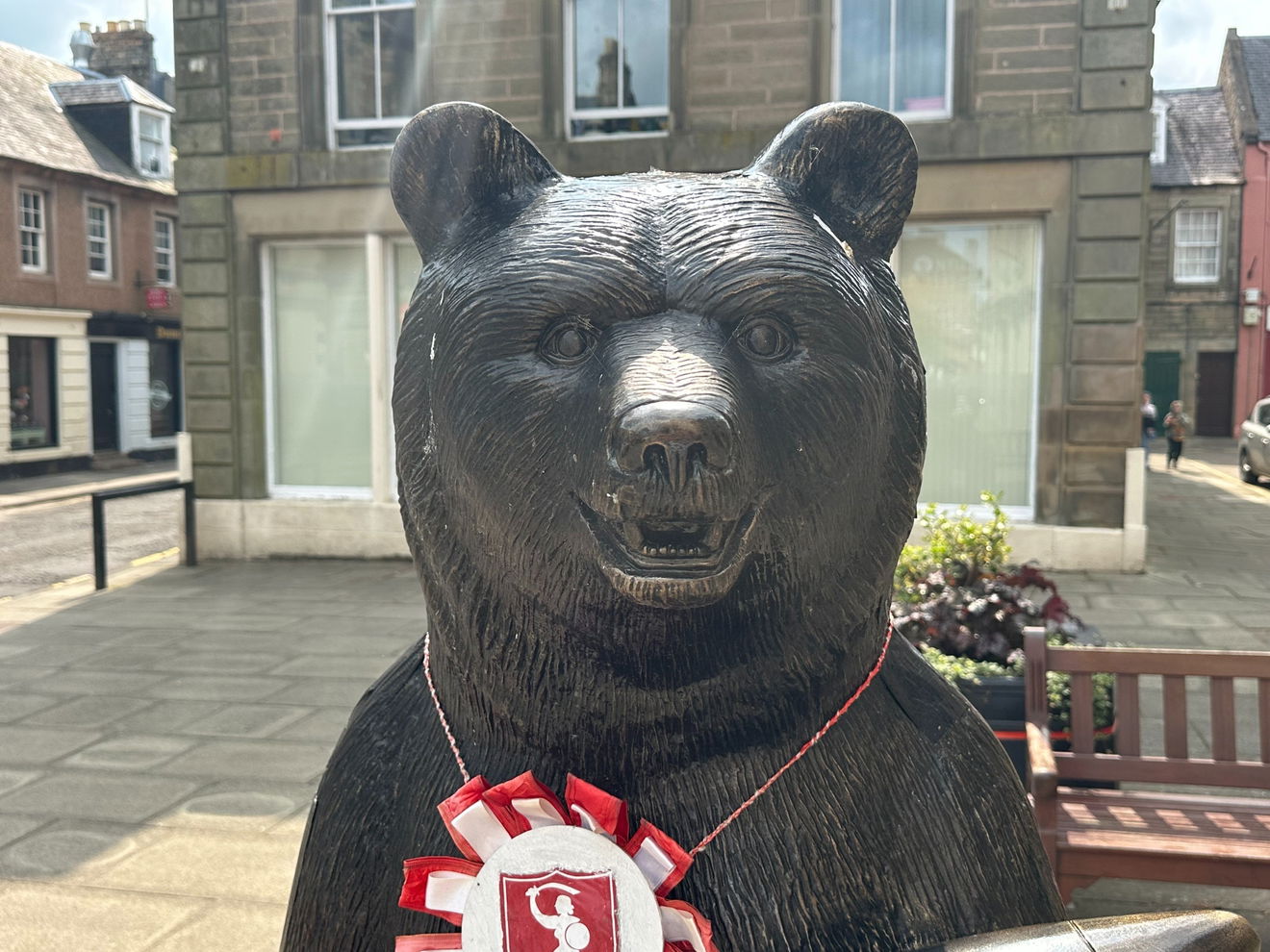
In the spring sunshine of Duns, the bear's almost human face looked at me bang in the eye.
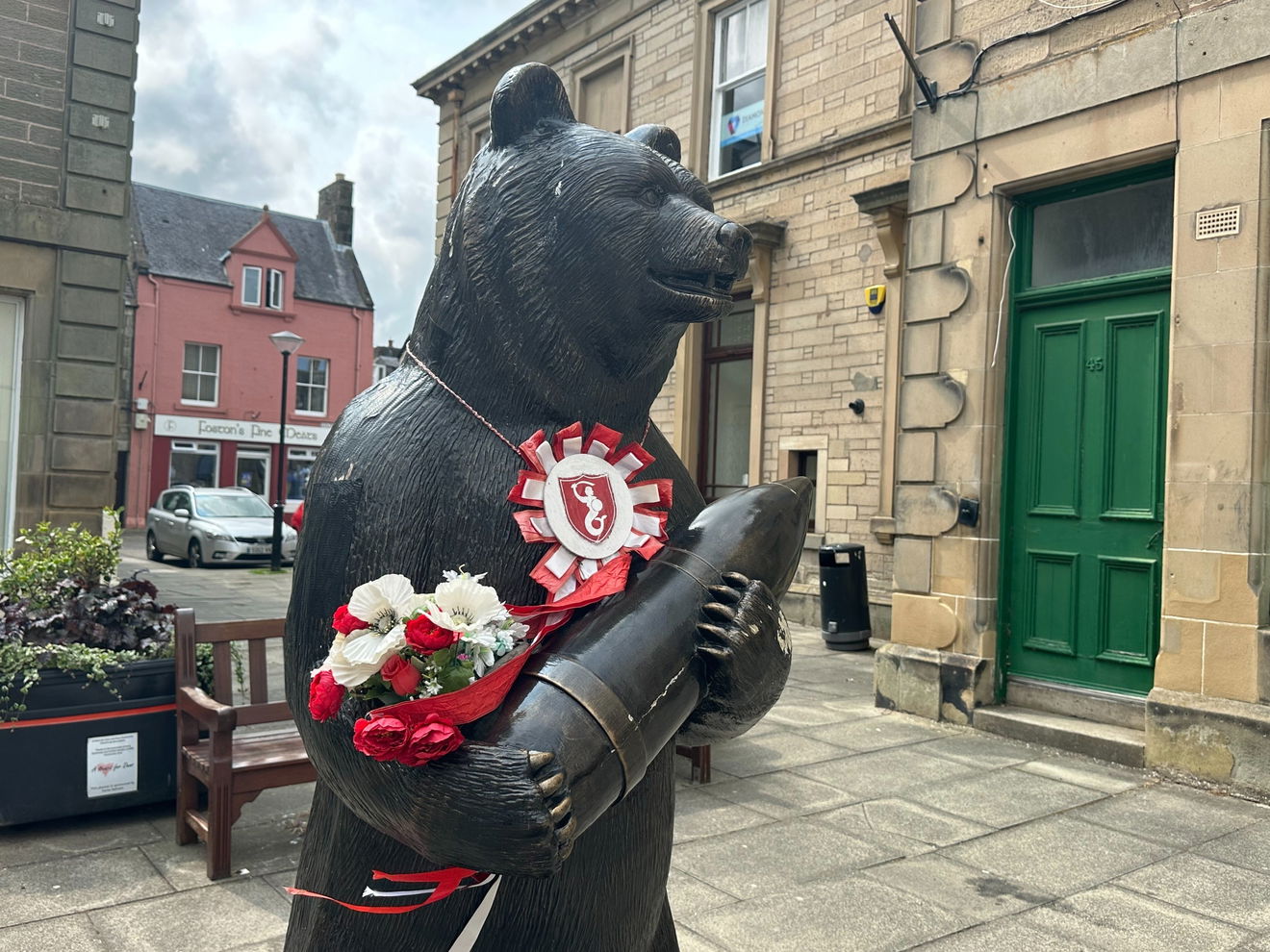
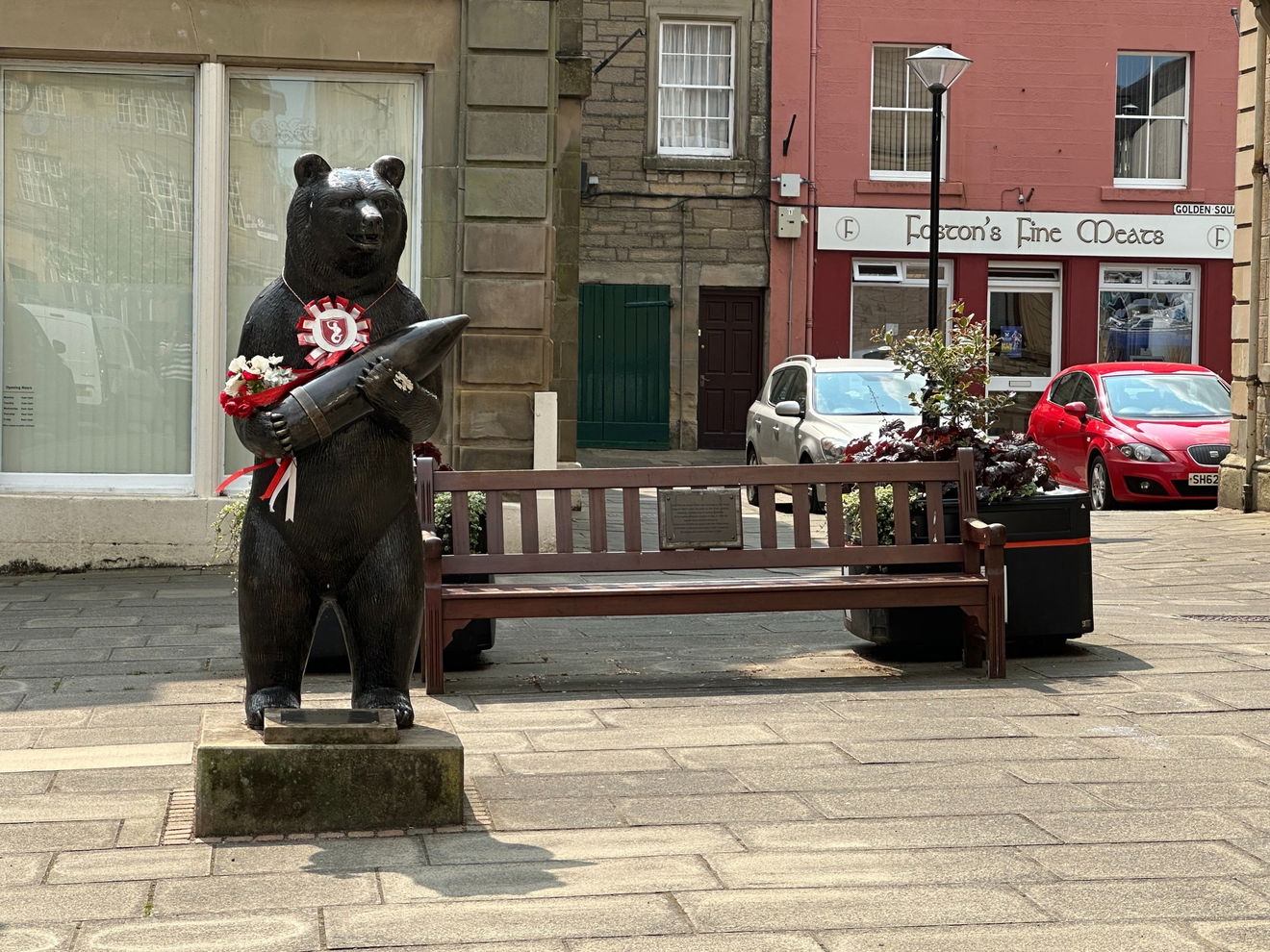
He was taller than me at a grand 7ft and held a shell ready for battle. I tiptoed around his lifelike body and saw the detail in his fur. Teeth as sharp as pins and eyes beady and on the ball. I saw inscriptions about how he came to be in Duns, and found him clutching recently laid flowers from Polish visitors, along with a rosette that depicts Syrenka Warszawska, a Polish mermaid, the symbol on the coat of arms of Warsaw.
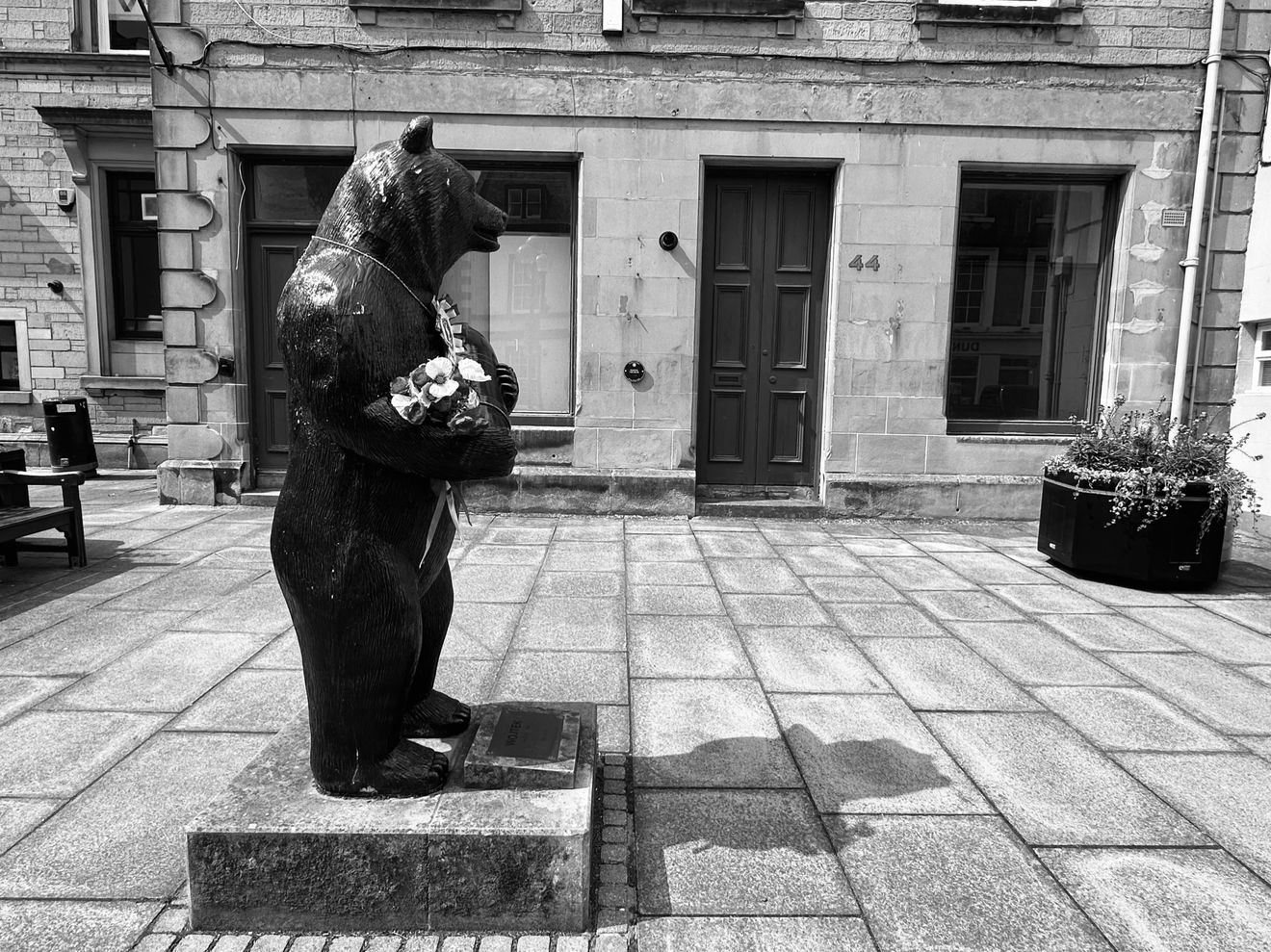
Designed by Scottish sculptor Alan Beattie Herriot, Wojtek the Soldier Bear was unveiled in 2016.
A fine figure of a bear cast in Powderhall Bronze, he is shown as a soldier in action, lifting artillery, although he was never actually on the front line with soldiers, who kept him safe back at the base camp. But how did this bear become resident in the Borders?
When the Polish II Corps were assigned to fight alongside the British Army, the regulations were that pets were not permitted to travel on a British Transport ship. The soldiers refused to leave their comrade. He was part of the unit, one of the lads. The only thing they could do was smuggle him aboard the ship as an officially enlisted soldier. He was given a serial number and awarded the rank of Private and somehow wiggled through the red tape.
In honour of their brave bear, the company changed their symbol to that of Wojtek carrying a shell. He became their military mascot and symbol and was promoted to the rank of Corporal.
There are many sculptures of Wojtek around the world, all celebrating this distinctive mammal/human relationship.
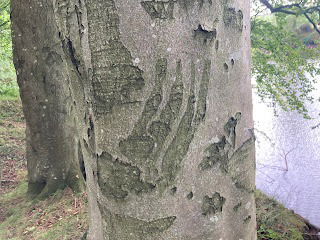
Because he had been raised in human company, Wojtek was never a threat to humans, and when the war ended, he and his fellow soldiers were relocated to Winfield Airfield, not far from Duns. He lived with the men at Sunwick Farm, keeping them entertained and giving the men a focus. Although the camp is long gone, the deep indentations of Wojtek's claws can still be seen in the bark of the trees where he clambered up, never forgetting his bear-like antics.
People in the Borders loved him and he became somewhat of a celebrity bear, with people travelling far and wide to catch a glimpse of this new Scottish citizen. The soldiers would sometimes take him out on trips in their wagon to Duns or Berwick, where as you can imagine, he drew in the crowds. As a result of his popularity, he was awarded honorary membership of the Polish-Scottish Association. The novelty of Wojtek's presence filled the social gap and distance between people who could not communicate through a lack of shared language.
The soldiers took him down to the Union Bridge at Horncliffe, and Wojtek would swim in the river. Imagine the faces of the people passing by when looking down from the suspension bridge, they spotted a full sized bear?
But the tide was turning, and this life for them all in the Borders was coming to a close. But what would become of the soldier bear?
He could have been sent back to Poland to repatriate with the men, but in 1947, at the end of the war, many men chose not to return to Poland, fearing the communist regime or feeling a loss of belonging. Many had become integrated into Scottish life. They had met partners, and some wanted to settle.
The options were scant. Having been hand-reared, he couldn't be returned to the wild and it was thought as winter was coming, and they had no suitable accommodation for him, that the only practical option was to euthanise the bear. But the men looked on Wojtek as family just couldn't face bringing about an abrupt end to the life of the bear. His comrades were faced with a decision to either end his days or find him a suitable home.
Discussions were had with Edinburgh Zoo, who were happy to oblige and gave him a home where he lived out the rest of his days enjoying visits from his old soldier friends, where he took comfort in hearing them speak to him in Polish. He was a familiar face at the zoo and on Blue Peter throughout the 50's and early 60's until he died in December 1963 at the age of 21 years...all lived in the company of humans.
What a colourful life lived for a small brown bear from Iran who grew to 7ft and travelled the Middle East and Europe, remembered and commemorated here, fondly by the people of Duns, which is twinned with the town of Zagan in Poland.
There are many other statues across the world to remember Wojtek and his anthropomorphic antics, with another by the same sculptor on Princess Street in Edinburgh. There is also a beautiful documentary by the BBC charting his life with humans.
Such a heartwarming story of human and animal endeavour, care and companionship, almost too good to be true, but it is!
The name is Polish and is pronounced Voyteck and means 'Happy Warrior'.
You can find this spectacular sculpture of Wojtek in the Market Square in Duns, in the Borders.
As a moral booster for the Polish soldiers, they kept him and fed him condensed milk, honey and marmalade from a Vodka bottle to build up his strength.
Designed by Scottish sculptor Alan Beattie Herriot, Wojtek The Soldier Bear stands at 7ft tall and was unveiled in 2016. A fine figure of a bear cast in Powderhall Bronze, he is shown as a soldier in action, lifting artillery.
He was rehomed at Edinburgh Zoo, where he lived until his death in December 1963 aged 21. He often saw his old soldier friends, enjoyed hearing Polish spoken, and became a familiar face at the zoo and on Blue Peter in the 50s and early 60s.
Get 2 points if you have visited this place. Already visited by 17 VIPs.
Login to the VIP area to add places to your bucket list, mark them as visited and more importantly see where you rank on the league table.
How To Find Wojtek The Soldier Bear
Where Is Wojtek The Soldier Bear?
Show Place On Google MapsLat / Long
55.777585, -2.344241
What three words
Where To Park For Wojtek The Soldier Bear?
We just parked in the street alongside the sculpture.
Contributed by Jos Forester-Melville
Highland loving human. Thalassophile. I love a good smile. Happiest heading for the hills with my pickup filled with kids and dogs! Working four days, we enjoy a Fridate, and usually spend it scouting out new scenery. I love a gated track, a bit of off roading and if it involves a full ford, well, that gets extra points! I go nowhere without a flask and binoculars, and love the small things in life that make it big…Goldcrests, dry stone walls, Deadman’s fingers, blackberries and quality clouds.
More Places from Jos
More Places In Duns
Find more fabulous places in Duns, Borders and if you know of a place we haven't listed, then let us know.
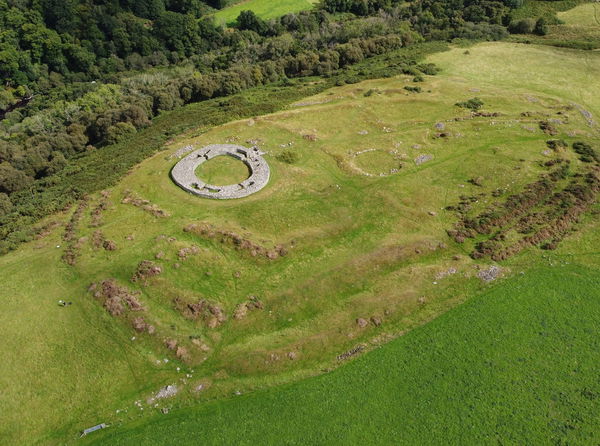
Edin's Hall Broch
Broch Duns BordersA type of roundhouse that was built during the Iron Age in Scotland and is located on the slopes of Cockburn Law.
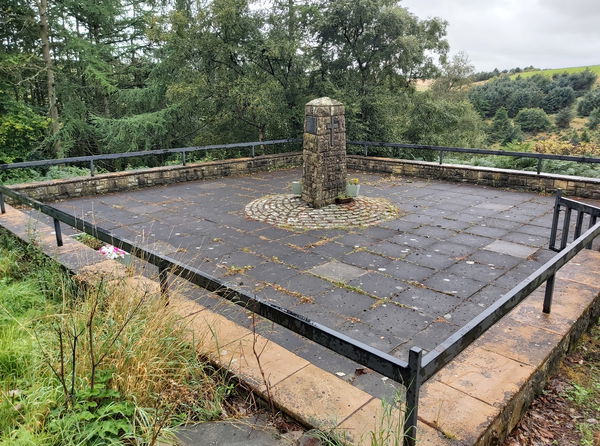
Penmanshiel Tunnel Monument
Landmark Duns BordersA monument to two engineers who died during the collapse of the Penmanshiel Tunnel expansion.
More Art
So this art wasn't enough and you want more? Don't worry we have you covered.
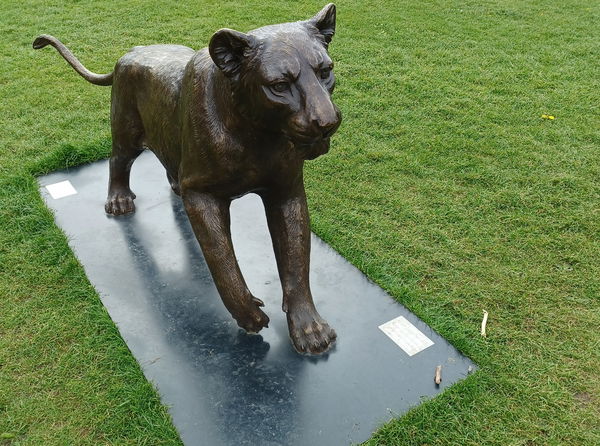
Born Free Lions
Art Newcastle City Centre Tyne And Wear25 bronze lion sculptures by artists Gillie and Marc, temporarily on display in Exhibition Park.
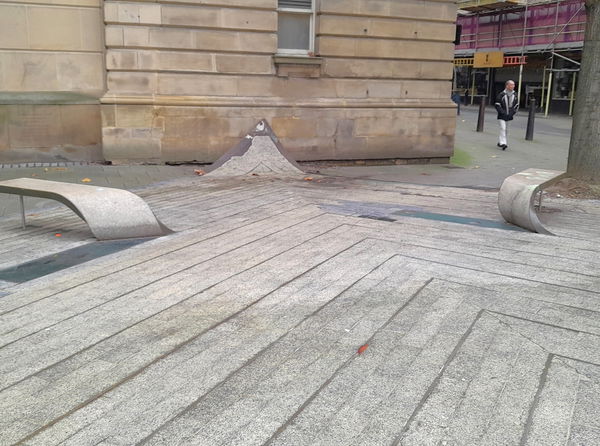
Blue Carpet
Art Newcastle City Centre Tyne And WearA blue carpet made out of crushed glass outside of the Laing Art Gallery in Newcastle. Part of an urban art project and created by Thomas Heatherwick.
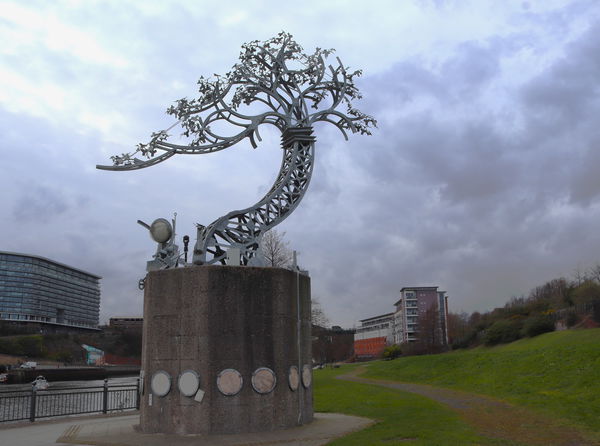
Shadows In Another Light
Art Sunderland Tyne And WearArtwork of a steel tree that stands at the location of an actual riverside crane.
Never Miss A Fabulous Place
If you are afraid of missing out on all the fabulous places we post, or just want to be the first to know, then sign up to the Fabulous North.
Each week we will email you all the brand new places that we visit.
Sign Up To Alerts

Find Us On Facebook
We post all our new places daily on our Facebook Groups page, so join the group today and be notified when we add a new place.
Join Our Facebook Group