
Ancrum Hogback Stone
Grave In Ancrum, Borders
A mysterious 900-year-old Hogback Stone in Ancrum, a rare medieval grave monument rediscovered beneath the churchyard grass.
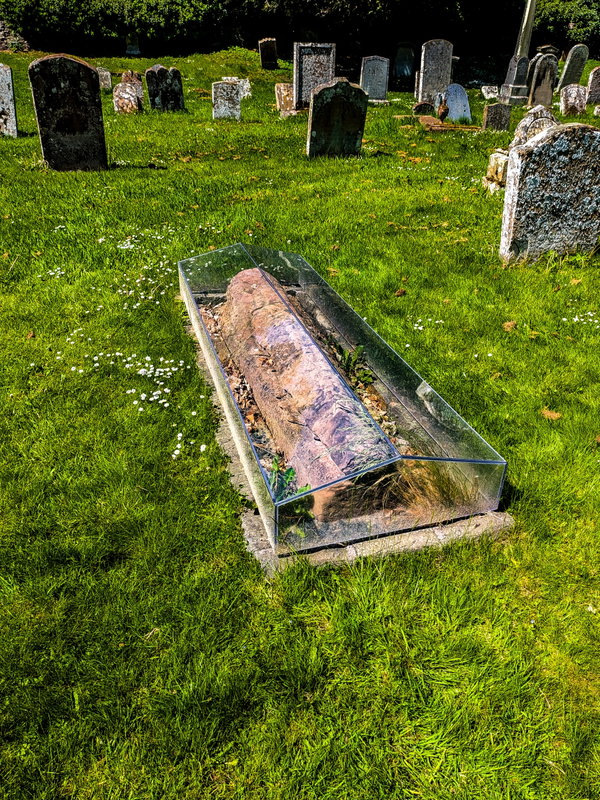
I spend an unhealthy amount of my spare time wandering around looking at old stones, usually in search of something I've convinced myself is going to be fascinating, only to find a weathered lump of sandstone that even Red5 drone struggles to make interesting.
So when I heard there was a 900 year old hogback stone lying in Ancrum churchyard, obviously I was going to have a look. There was only one slight problem. What the hell is a hogback?
Well, despite sounding like something Hagrid keeps in the garden, it's actually a type of medieval grave monument found mainly across northern Britain, particularly in areas with a bit of Scandinavian influence (like Top Of The Pops in the 80s with ABBA). And the Hogback Stone at Ancrum has a cracking story, mainly because for hundreds of years nobody seems to have known it was there.
Just short of a millennium ago, somebody died in Ancrum and somebody else went to a considerable amount of trouble to make sure they weren't forgotten. Instead of erecting your usual standard lump of stone, they commissioned a whopping great carved monument to cover the grave. Whoever was beneath it was presumably someone of importance, or at least had relatives with deep pockets and a stonemason on speed dial.
There was just one tiny flaw in this otherwise excellent plan for immortality. We haven't got the foggiest idea who they were. There's no inscription telling us their name and no surviving record identifying the person it commemorated. We can't even be certain the stone is still sitting exactly where it started out or whether a burial was ever confirmed beneath it.
So somebody in medieval Ancrum went completely overboard on the gravestone, then neglected to include the one piece of information we'd actually quite like to know.
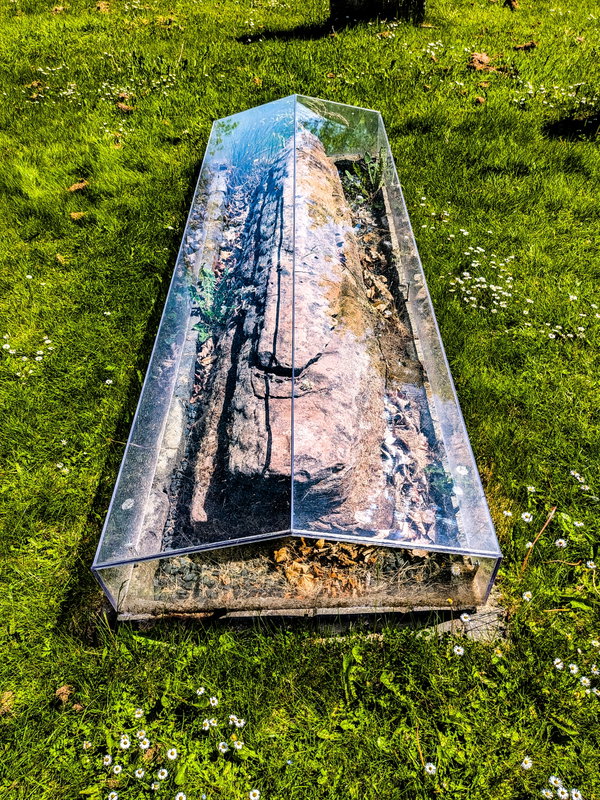
At some point over the centuries, the hogback gradually disappeared beneath the turf. Not in some Raiders of the Lost Ark sort of way. Nobody pinched it and took it to a secret warehouse. It simply became buried until little more than a bit of sandstone was sticking through the grass.
And that's where a chap called James Scott entered the chat. Scott was the church sexton and, around 1921, spotted this suspicious bit of stone poking through the lawn.
That's it. No archaeological expedition. No ancient manuscript. No bloke in a hat being chased by a giant boulder. Just a chap working in a graveyard thinking, "What's that"?
As luck would have it, a sculptor from Hawick called R. Robson was also working in the churchyard at the time. Scott showed him the stone, Robson thought it looked interesting enough to report and antiquarian J. Hewat Craw was eventually brought in to investigate. In 1922 it was finally excavated and recorded.
The random lump of rock in the grass turned out to be a substantial medieval grave monument dating from the early 12th century which we now call the Ancrum Hogback Stone. Which is precisely why I now have to investigate every suspicious lump of rock I find on a walk. But what Scott had stumbled across was genuinely unusual.
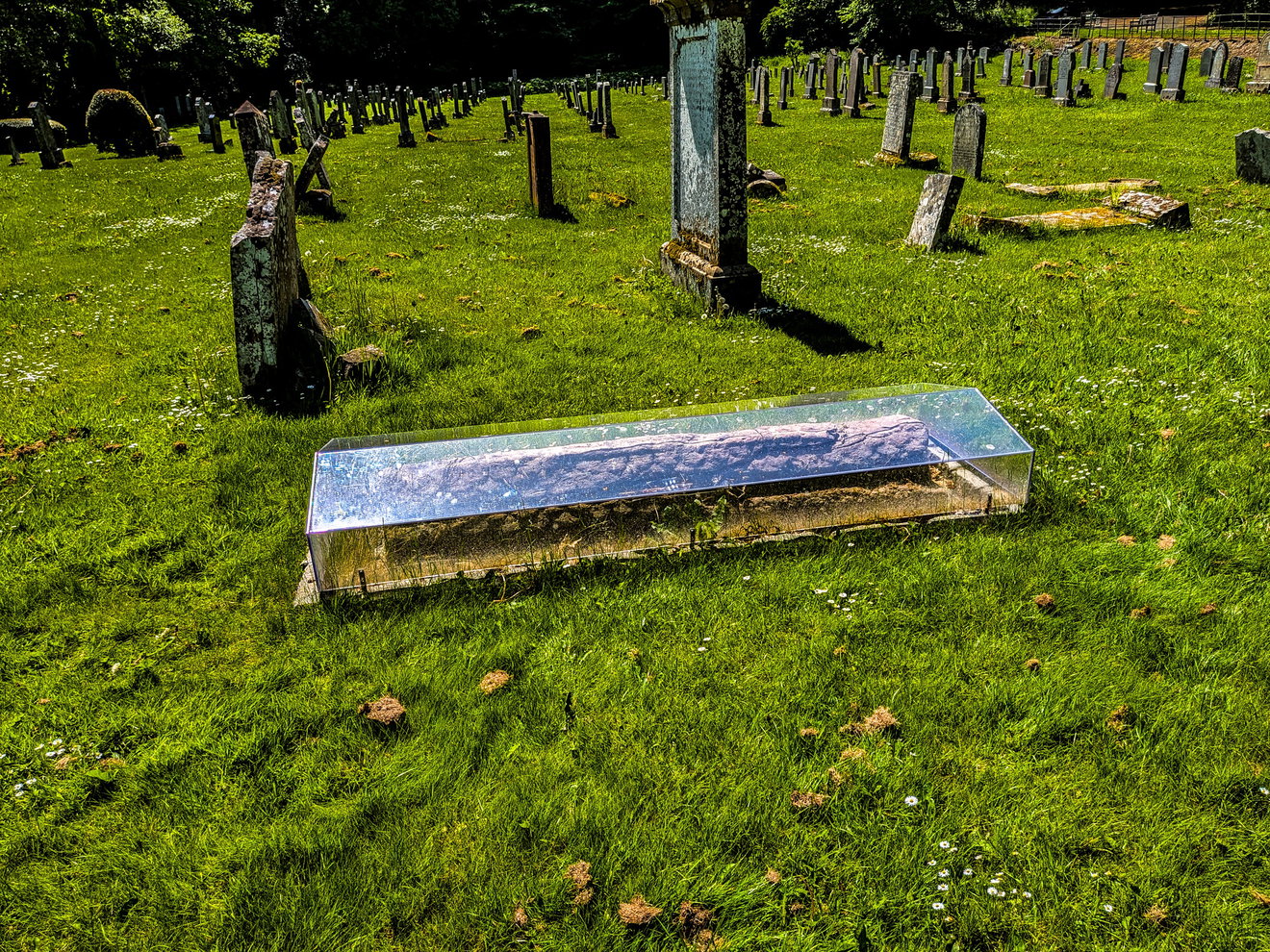
The Ancrum Hogback Stone belongs to a group of monuments known as hogbacks, which are particularly associated with areas of northern Britain that had a bit Scandinavian influence. They're basically huge stone grave covers, but rather than just being a big slab, they were carved to look like the roof of a building.
Which does raise the fairly obvious question of why it's called a hogback if it's supposed to be a house. We found out the name comes from the curved ridge resembling the arched back of a hog. So depending on how you look at it, we've either got a pig or a bungalow.
Along each side are five rows of overlapping semicircular carvings representing roof tiles or shingles. These are known as tegulae, because archaeologists have spent years at university and aren't about to call them 'the little roofy bits'.
You can get a much better look at them in this photo from 1922.
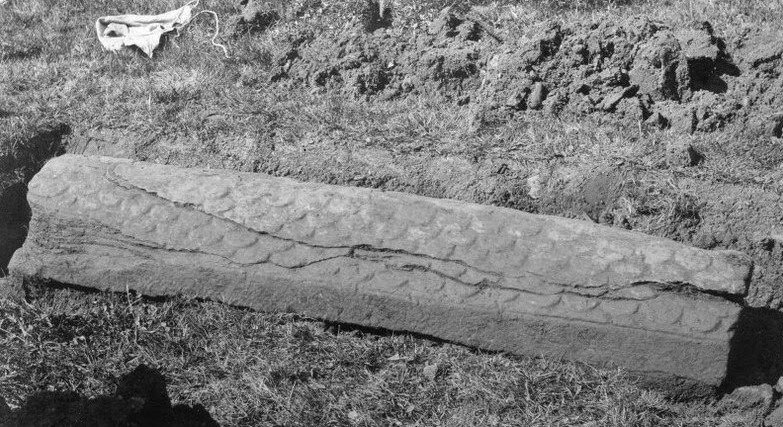 Photo courtesy of ADHS.
And this isn't some tiny model cottage either. Made from Old Red Sandstone and roughly two metres long, it's less of a gravestone and more of an extension. Whoever commissioned it clearly wanted something substantial. Something that would survive. Something that would make absolutely certain the person underneath wasn't forgotten.
Nine centuries later, we know what the little roofy bits are called but not the name of the person underneath them. Excellent work!
Even after the hogback was rediscovered, its fortunes didn't immediately improve. You'd imagine that once Craw had established that the random bit of sandstone sticking through the grass was a rare medieval monument, there would have been a frantic effort to protect it. Not quite.
When the Royal Commission recorded it in the 1930s, the stone was still lying largely beneath the turf, around 20 metres south of the ruined church. (We found the church poking through the trees nearby.)
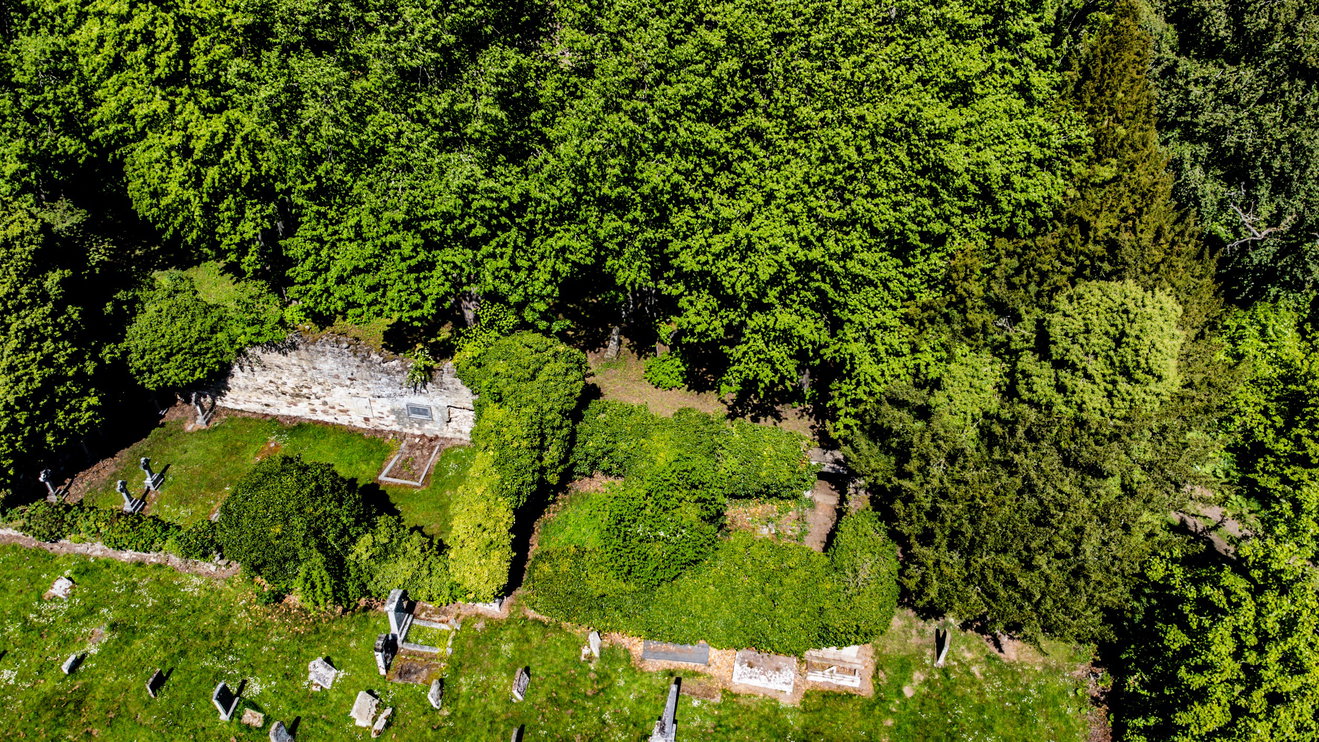
Then the Ordnance Survey checked it in 1967. Still there, still partly buried. At this point the conservation plan appears to have consisted largely of sending someone to Ancrum every few decades to check nobody had nicked it.
Unsurprisingly, Old Red Sandstone, 900 years and Scottish weather eventually began to fall out with one another. The upper section fractured, pieces began flaking away and some of the original carved detail was being lost. By the 21st century it was becoming clear that leaving it outside and hoping for the best probably wasn't going to see it through another 900 years. Thankfully, the Ancrum and District Heritage Society stepped in.
They began looking at ways to conserve the hogback in 2016, with fundraising starting the following year. Then, in 2018, nearly a century after James Scott first noticed it poking through the grass, the stone was finally lifted from the churchyard and taken away for specialist conservation.
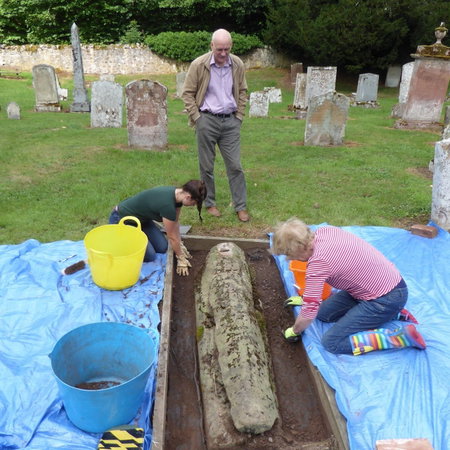
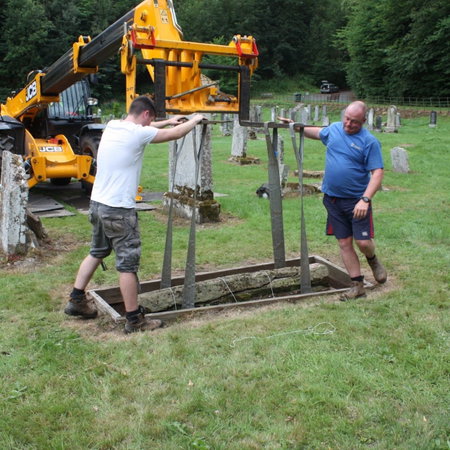
After surviving the Middle Ages, the Reformation, centuries beneath the turf and more Scottish winters than anyone should reasonably be expected to endure, the Ancrum Hogback was finally indoors getting some proper attention. Then along came the biggest villain of all. Covid!
The conservation work was interrupted and the stone ended up sitting in storage considerably longer than intended. Having survived roughly nine centuries outside, it was finally defeated by a government instruction to stay indoors. Work eventually resumed and in 2022 the hogback was cleaned, repaired and returned to Ancrum.
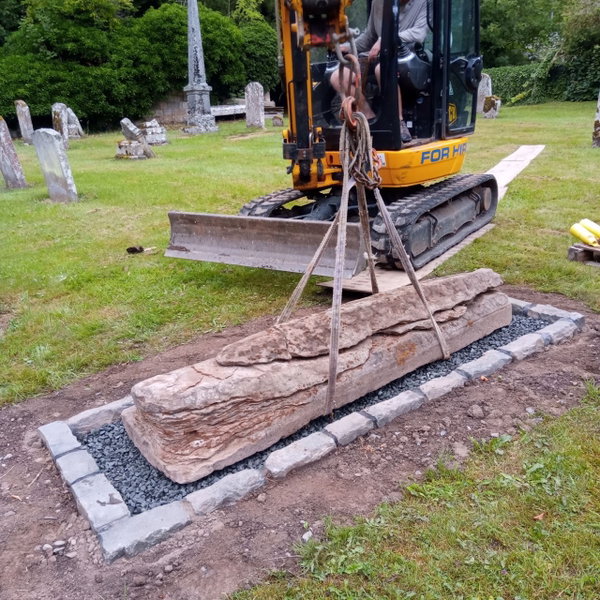 Photo courtesy of ADHS.
And they didn't just sneak it back into the churchyard when nobody was looking. There was a formal unveiling, a blessing and even a piper playing a lament. Which is quite the turnaround for something that entered the modern historical record because a bloke noticed a bit of rock sticking through the lawn.
After 900 years underground and out in the Scottish weather, the hogback now lives in something resembling Snow White's glass coffin. The substantial transparent cover protects the rather fragile sandstone from the elements and should hopefully keep it around for another few centuries.
It's a fantastic bit of conservation, although an absolute nightmare if you've turned up with a camera. Most of my photos contained more sky, gravestones and confused photographer than actual hogback. Disney neglected to mention how difficult the glass coffin was to photograph.
It really is a fascinating thing though. 900 years ago, somebody cared enough about another person to commission this enormous carved monument for their grave. It was designed to last and, against fairly considerable odds, it has. The person didn't fare quite so well. We don't know their name. We don't know what they did. We don't even know for certain whether they're still underneath it. But their whopping great stone roof is still sitting in Ancrum churchyard.
Thanks to the lovely people over at the Ancrum & District Heritage Society for allowing us to share their photos.
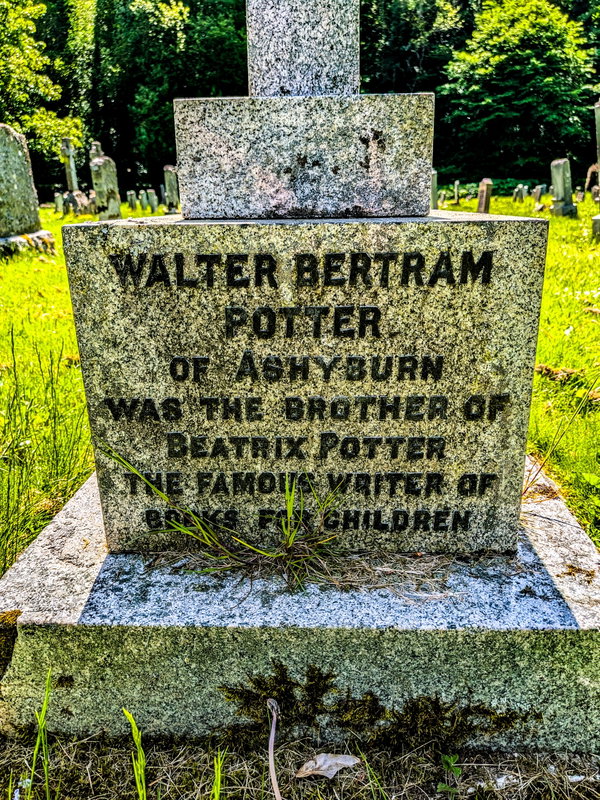
After you are done don't forget to explore the old kirk, then there is Castle Hill nearby too and also in the graveyard near the Hogback is the grave of Walter Bertram Potter, the brother of Beatrix Potter.
Get 2 points if you have visited this place. Already visited by 4 VIPs.
Login to bag this placeHelp fuel the next adventure
Fabulous North is free, with no annoying adverts and fuelled by an unhealthy desire to poke around castles, hills, churches and suspicious-looking bits of stone.
If you enjoy what we do, you can help keep us exploring.
Champion This Place
Got a special memory of Ancrum Hogback Stone, a story to tell or simply a soft spot for it? Champion Ancrum Hogback Stone and we'll add your name, photo and a short message to this page, while your support helps us keep Fabulous North exploring.
How To Find Ancrum Hogback Stone
Where Is Ancrum Hogback Stone?
Show Place On Google MapsLat / Long
55.51603109754711, -2.600814834191416
Where To Park For Ancrum Hogback Stone?
You can park right outside of the graveyard.
Contributed by Simon Hawkins
Thanks for checking out this place on the Fabulous North! I do enjoy a wander out in to the countryside trying to find hidden gems that not many people know about. You can't beat a rogue pele tower up a remote hill, a mysterious stone circle or a stunning waterfall secluded in a forest.
More Places from Simon
More Places In Ancrum
Find more fabulous places in Ancrum, Borders and if you know of a place we haven't listed, then let us know.
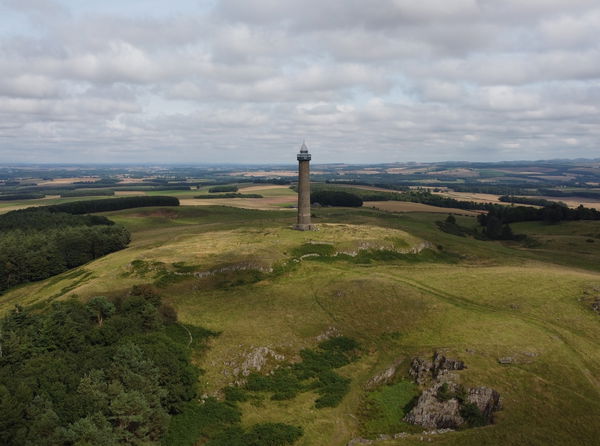
Waterloo Monument
Tower Ancrum BordersA monument commemorating the Duke of Wellington's victory over Napoleon at the Battle of Waterloo.
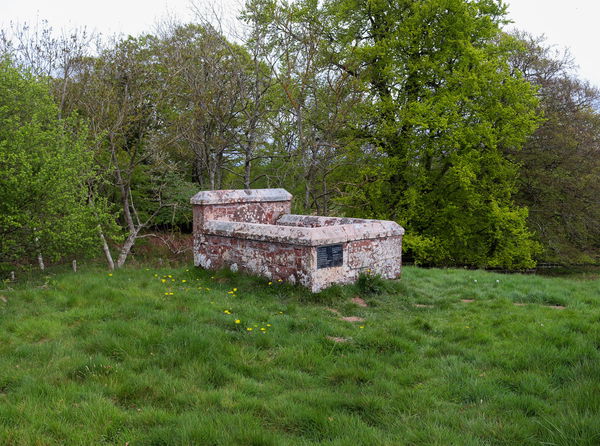
Lilliard's Stone
Grave Ancrum BordersLilliard’s Stone near Ancrum marks the grave of legendary Scottish warrior Lilliard, said to have fought in the Battle of Ancrum Moor in 1545.
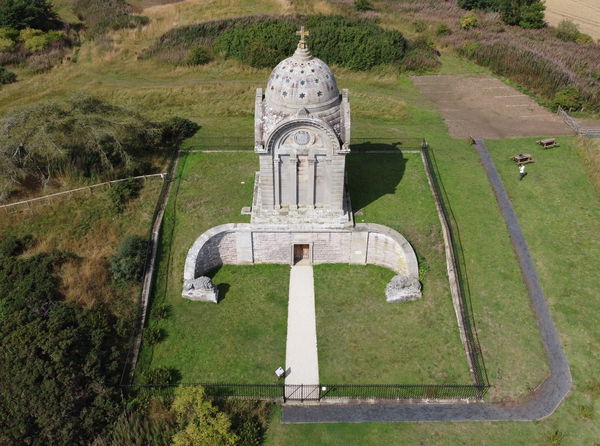
Monteath Mausoleum
Building Ancrum BordersA spectacular mausoleum for the British soldier Thomas Monteath Douglas.
More Graves
So this grave wasn't enough and you want more? Don't worry we have you covered.
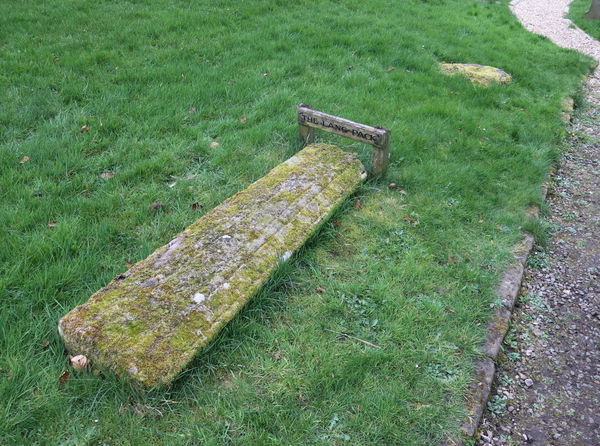
The Lang Pack
Grave Bellingham NorthumberlandAn unusual gravestone marking the final resting of a burglar trying to rob Lee Hall.
Lilliard's Stone
Grave Ancrum BordersLilliard’s Stone near Ancrum marks the grave of legendary Scottish warrior Lilliard, said to have fought in the Battle of Ancrum Moor in 1545.
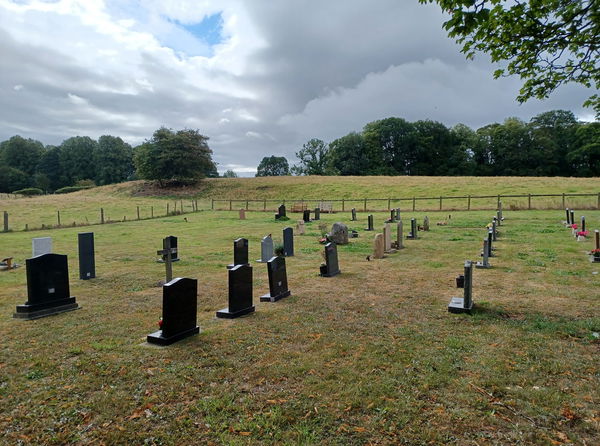
Hannah Hauxwell's Grave
Grave Barnard Castle County DurhamThe grave of celebrated Daleswoman Hannah Hauxwell.
Never Miss A Fabulous Place
If you are afraid of missing out on all the fabulous places we post, or just want to be the first to know, then sign up to the Fabulous North.
Each week we will email you all the brand new places that we visit.
Sign Up To Alerts

Find Us On Facebook
We post all our new places daily on our Facebook Groups page, so join the group today and be notified when we add a new place.
Join Our Facebook Group