
St Peter The Fisherman
Religious Place In Craster, Northumberland
A perfectly placed little mission church by the sea, curling up Haven Hill in Craster, and home to the last Leonard Evetts commission.
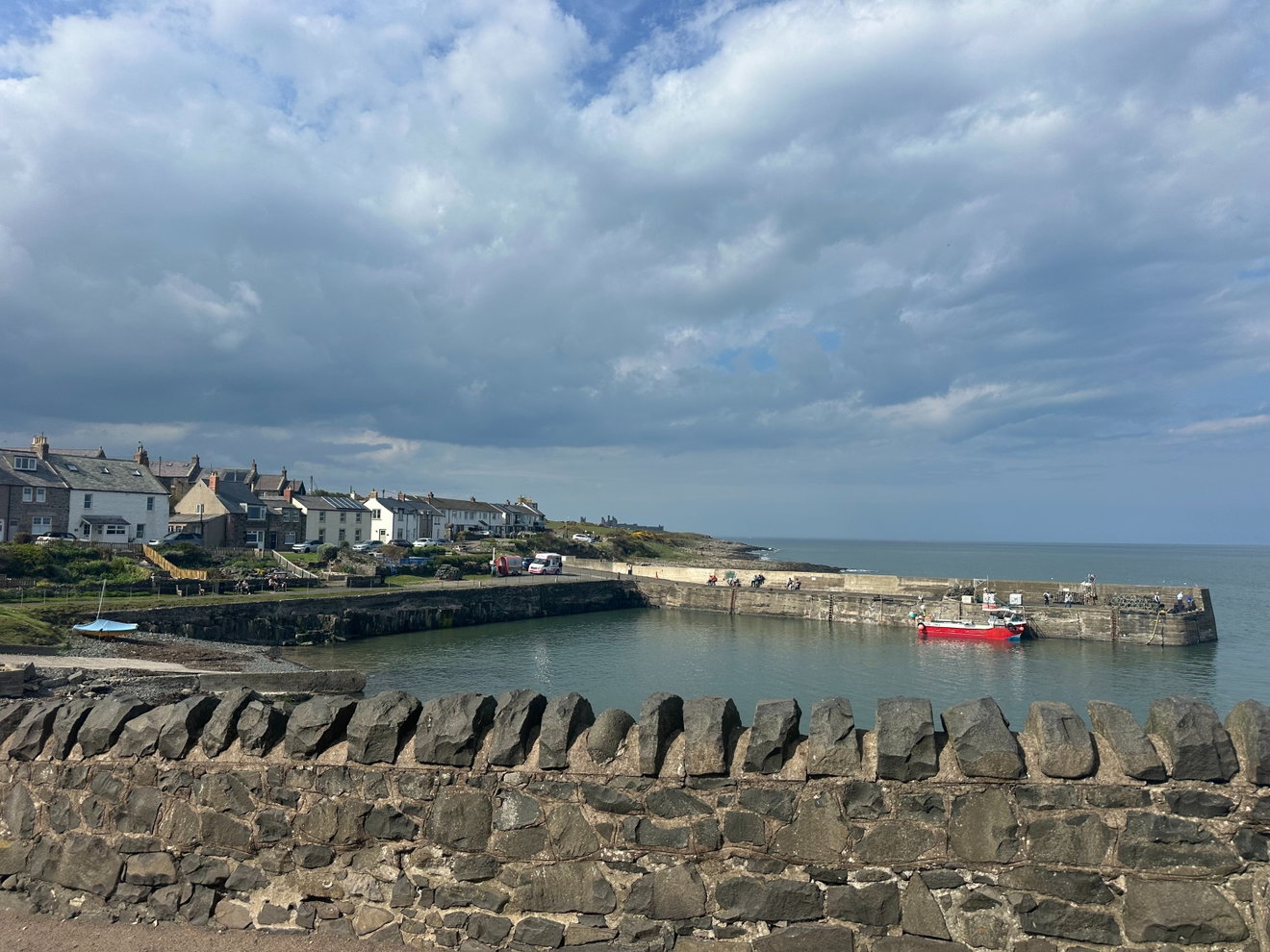
Just up from the tiny harbour of Craster...
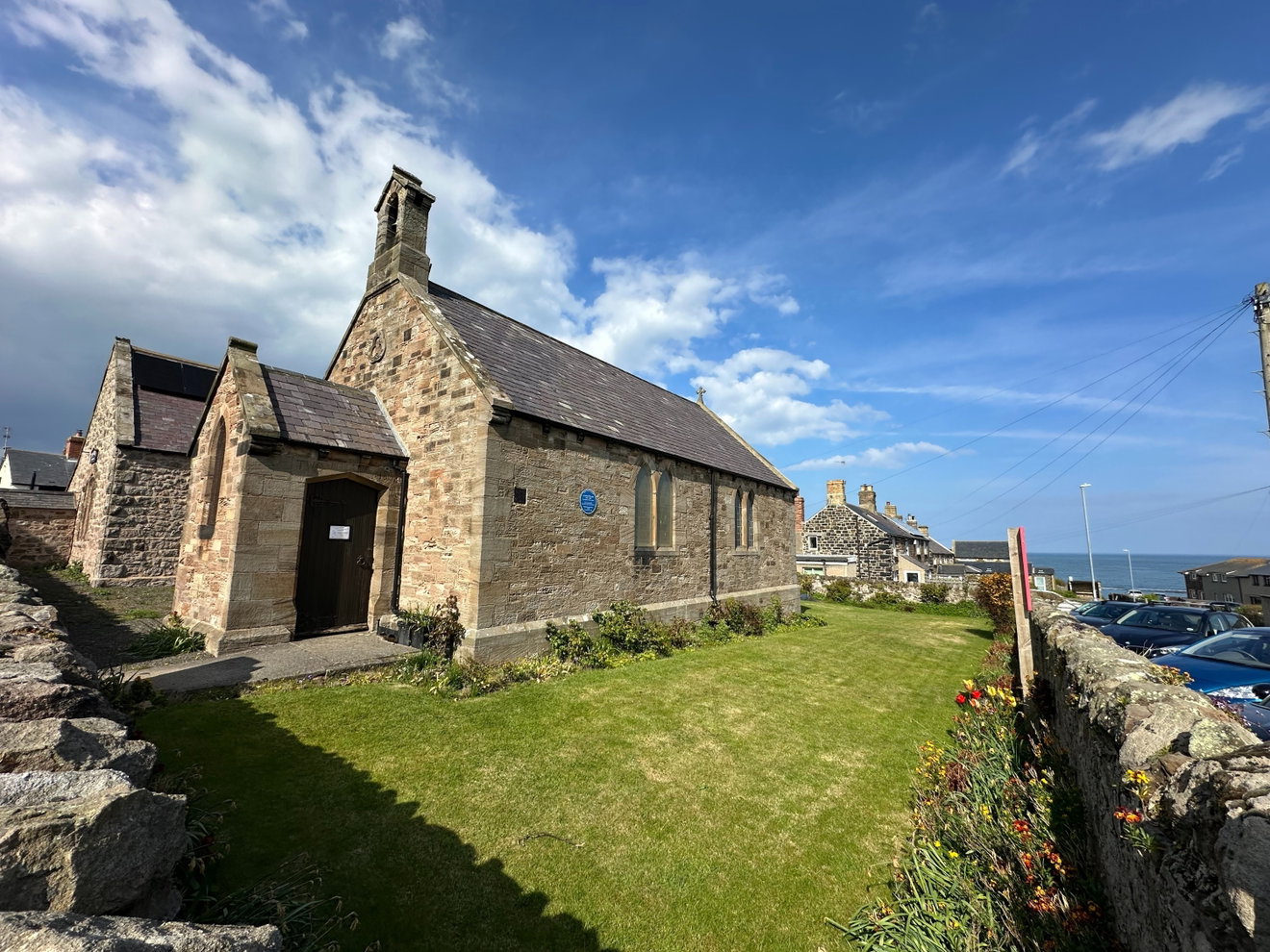
...is an equally infinitesimal chapel known as St Peter the Fisherman.
It's hugged up by houses, but has a view of the sea that reminds you it was a church with a purpose, for people who worked and lived by the times of the tide.
As its name suggests, St Peter was a fisherman. Originally named Simon, he was said to have been renamed Peter by Jesus, which means 'rock'. Peter is the patron saint of fishermen and net makers.
It's largely tucked out of view of the main curl of Craster, but is beautifully tended by the community who care for the building and garden.
A visit is widely encouraged. You can tell the congregation is warm as you're actively directed to collect the key from the Gallery on Haven Hill and let yourself in for a look around.
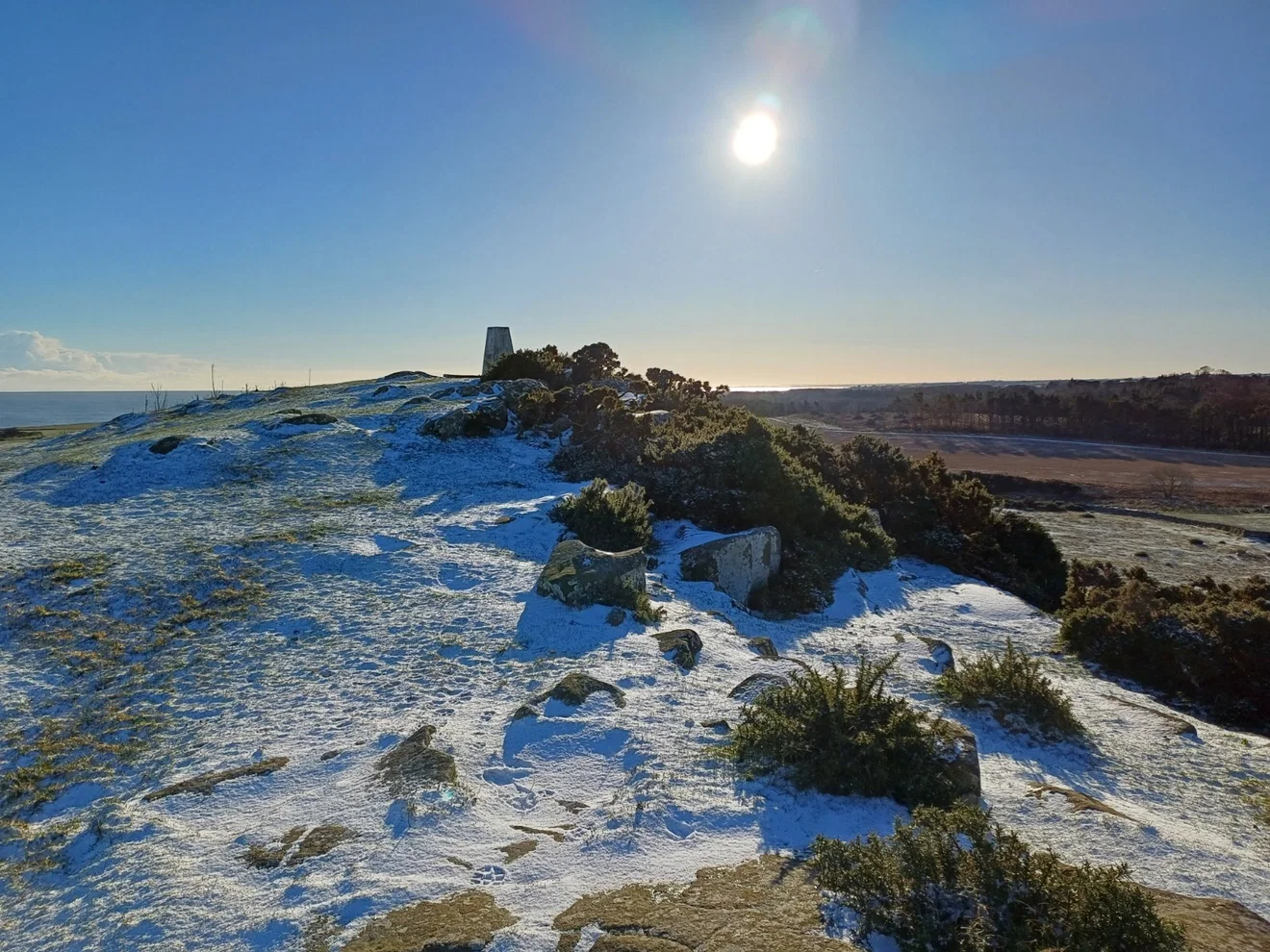
I learned that Craster was the place before the people. The name comes from the Old English 'Crawe' or crow and 'ceaster',which is an old camp or fort...Craweceaster. It has a ring to it!
It's thought that the name would have derived from Craster Heugh, which overlooks the village. The Craster family, one of Northumberland's bigwig families, has resided in the village since the 1300s.
Known for their ties to industry, the local fishing families, politics and community, the Craster family has a long-standing connection and influence that helped shape the social and political landscape in Northumberland, especially during the late Victorian and Edwardian periods.
Crasters still live in Craster Tower and maintain their links and legacy whilst remaining a great example of a medieval toponymic family whose surname is synonymous with the village.
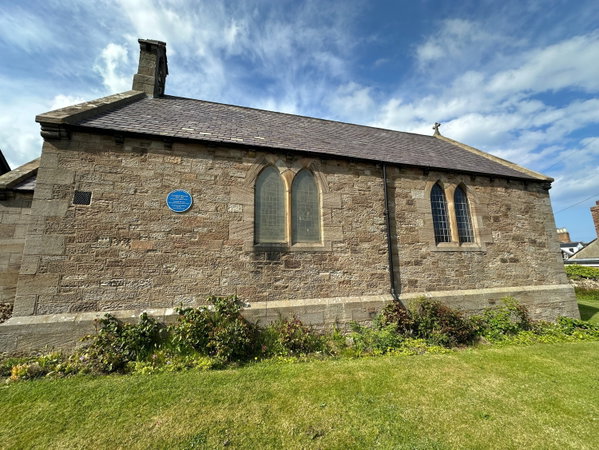
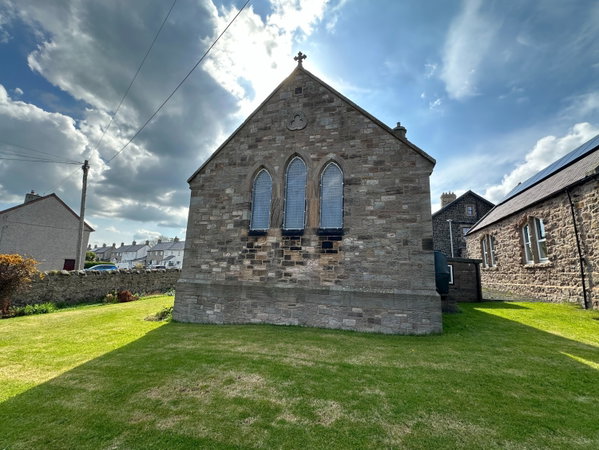
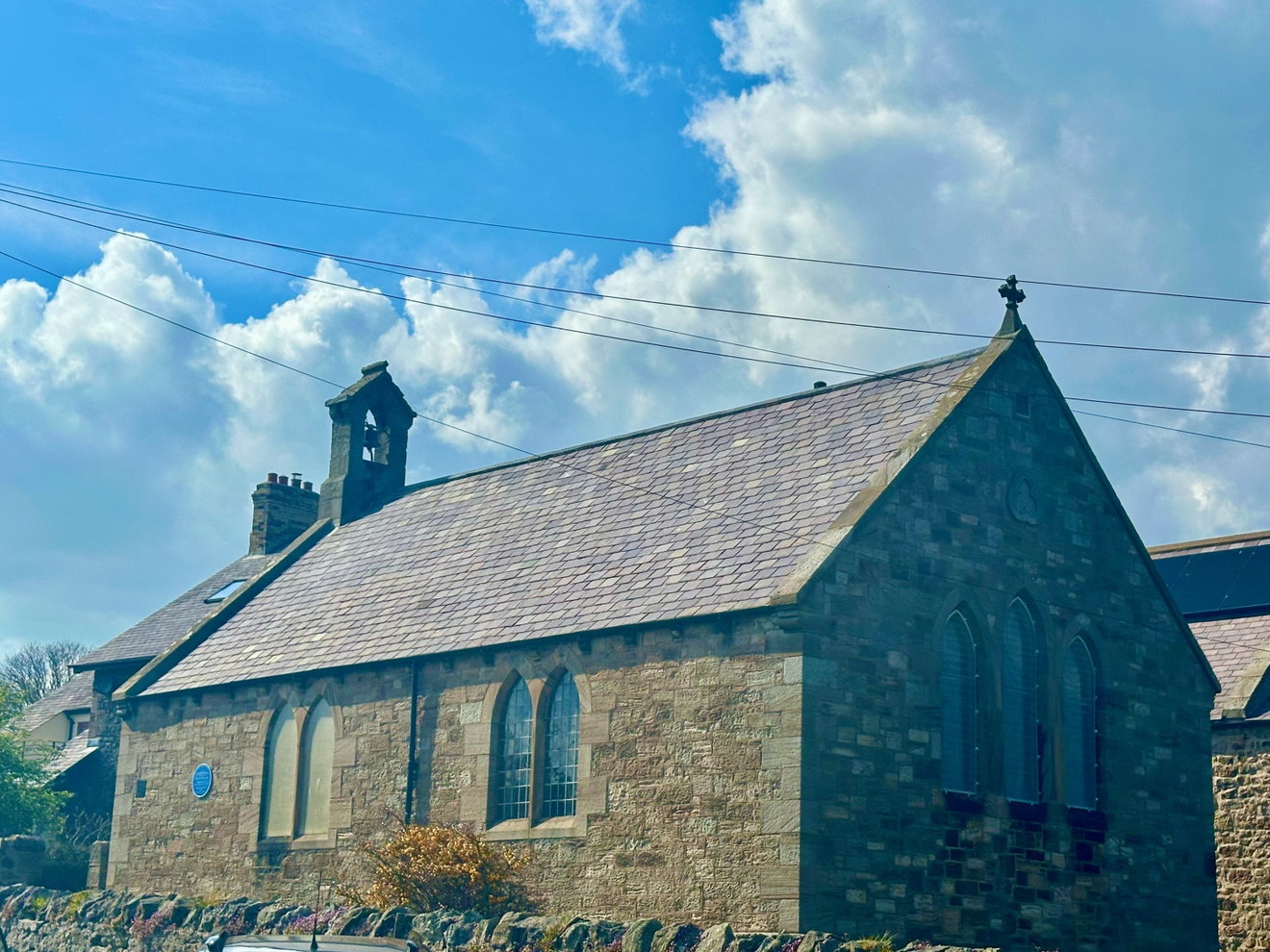
This little place of worship was built in memory of Thomas Wood Craster, who had served and supported the community. Outside St Peter the Fisherman, it's a humble affair, probably because it was never built to be a full-blown church but a Sunday School Mission Hall. These were developed to provide worship in areas that had no larger church but still wanted to encourage worship amongst the community. The next largest place of worship would be Holy Trinity at Embleton, but being close to the sea and a canny walk away from any main roads, it made sense that around 1870 this was erected.
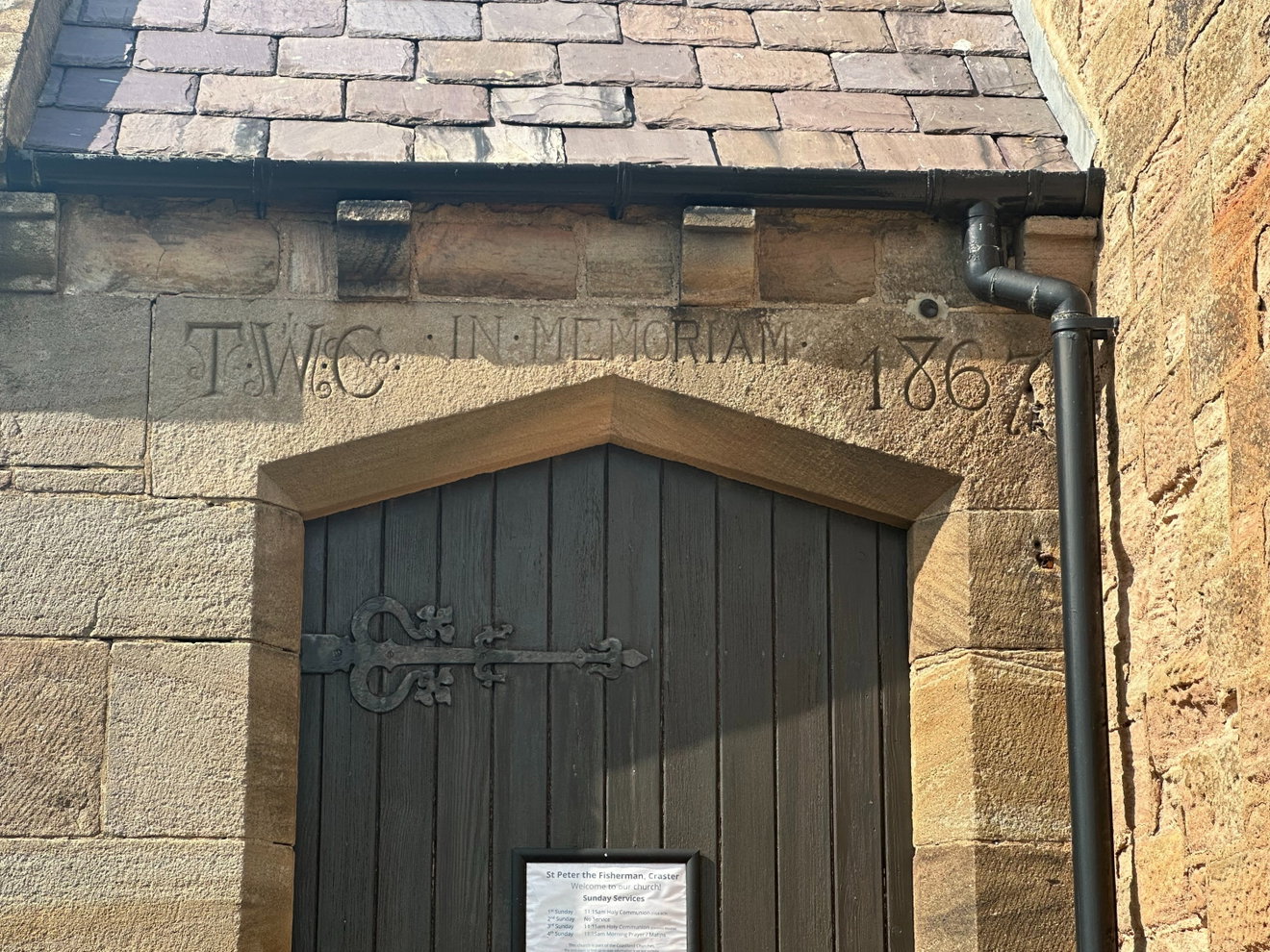
We are reminded that the building was in memoriam as we walk through the humble wooden door and look above at the delicately carved initials and date. Thomas Wood Craster had lived a long life, dying at the age of 80.
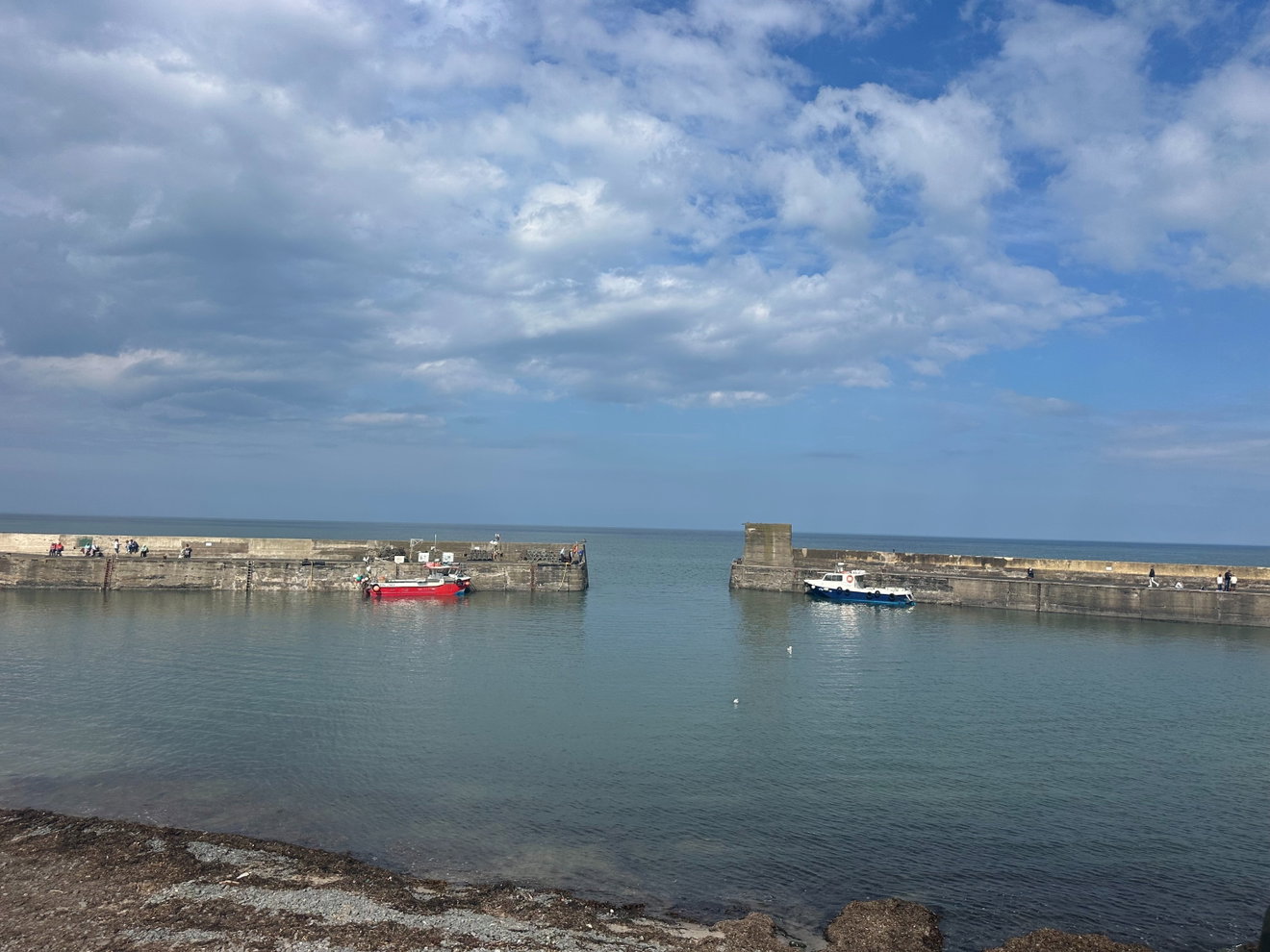
It served the local fishing community as well as the itinerant fishermen and women who chased shoals of silver darlings around the shores of the North East and Scotland, and the quarrymen who gathered great hulking stones that were sent to London to kerb the great ceremonial streets leading to Buckingham Palace. It was known then simply as Craster Mission.
The big stuff was sorted at the big church in Embleton...weddings, baptisms and funerals whilst the everyday worship was maintained at The Mission. It wasn't until 1978 that the Bishop of Newcastle blessed the church, and it became known as St Peter the Fisherman.
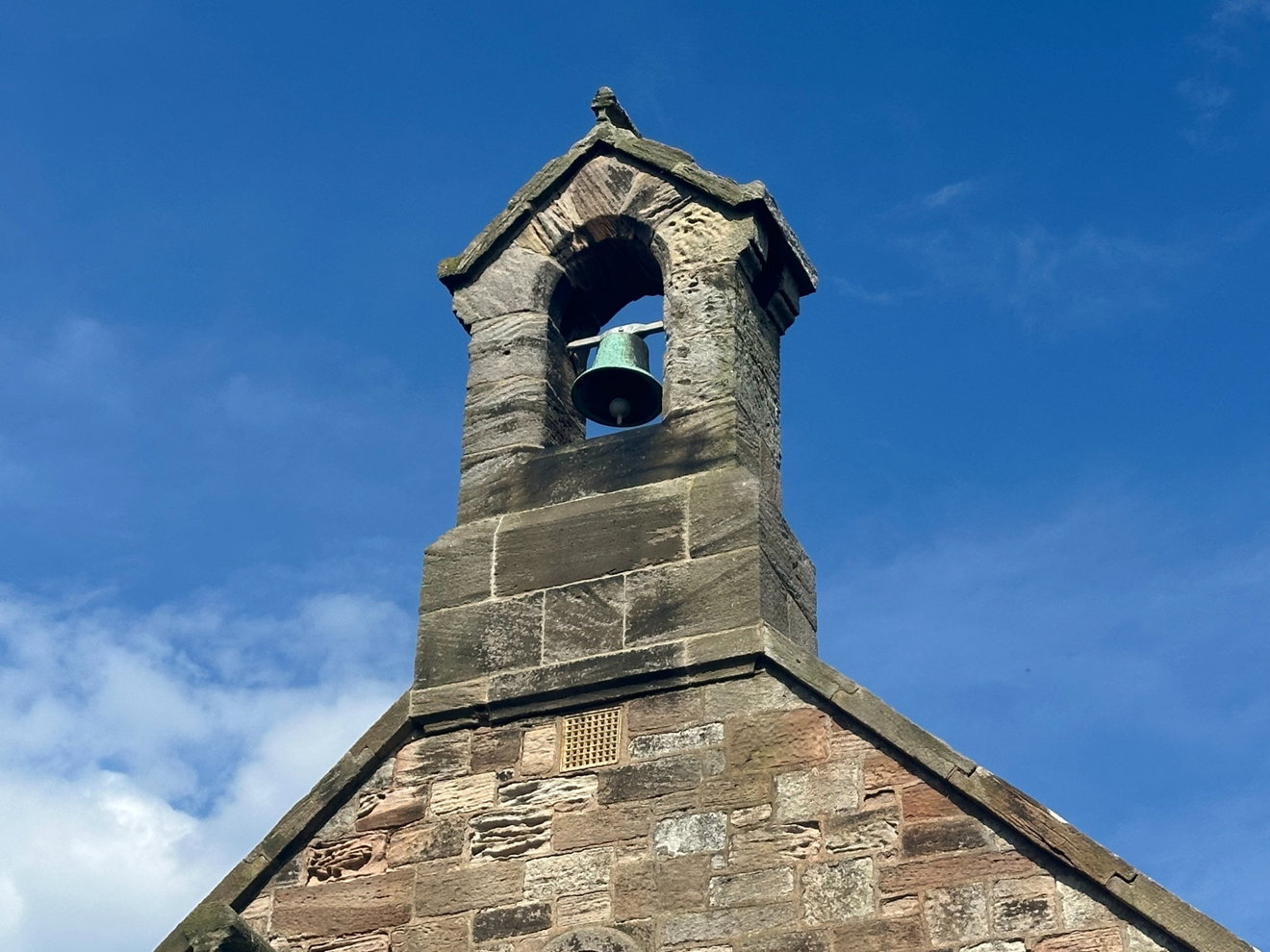
It's a cosy church. Built in local stone quarried in Craster. It feels like a homemade mission. I liked the traditional western bellcote with the single bronze bell, which dates from 1899 but was added when the church was blessed in 1978.
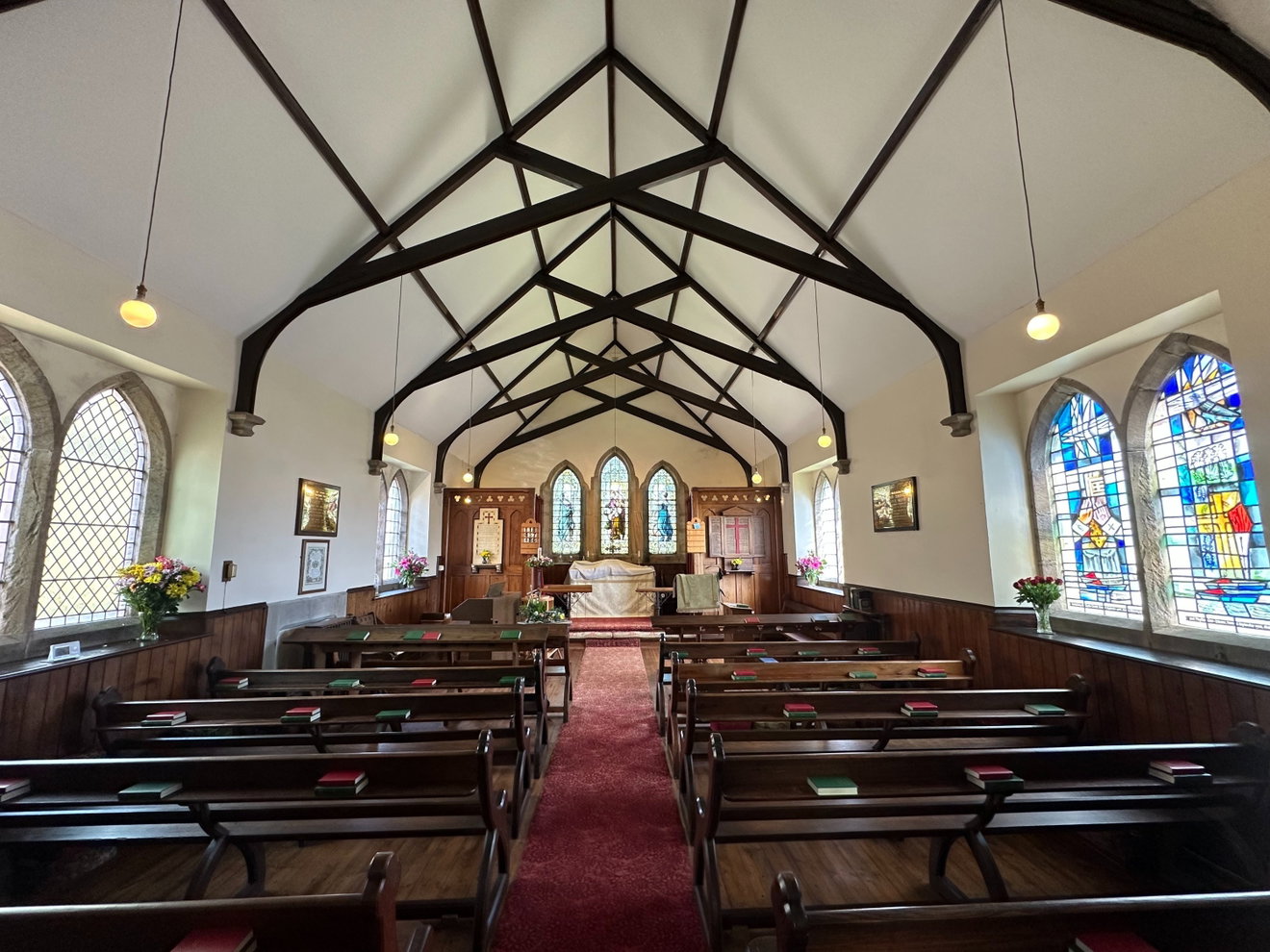
Once inside, the church is light and airy, despite its small stature. Many of the items inside have been gifted by the community. Open-back pews let the light stream through, and were gifted in memory of Thomas Wood Craster's widow, Charlotte Pulleine Craster.
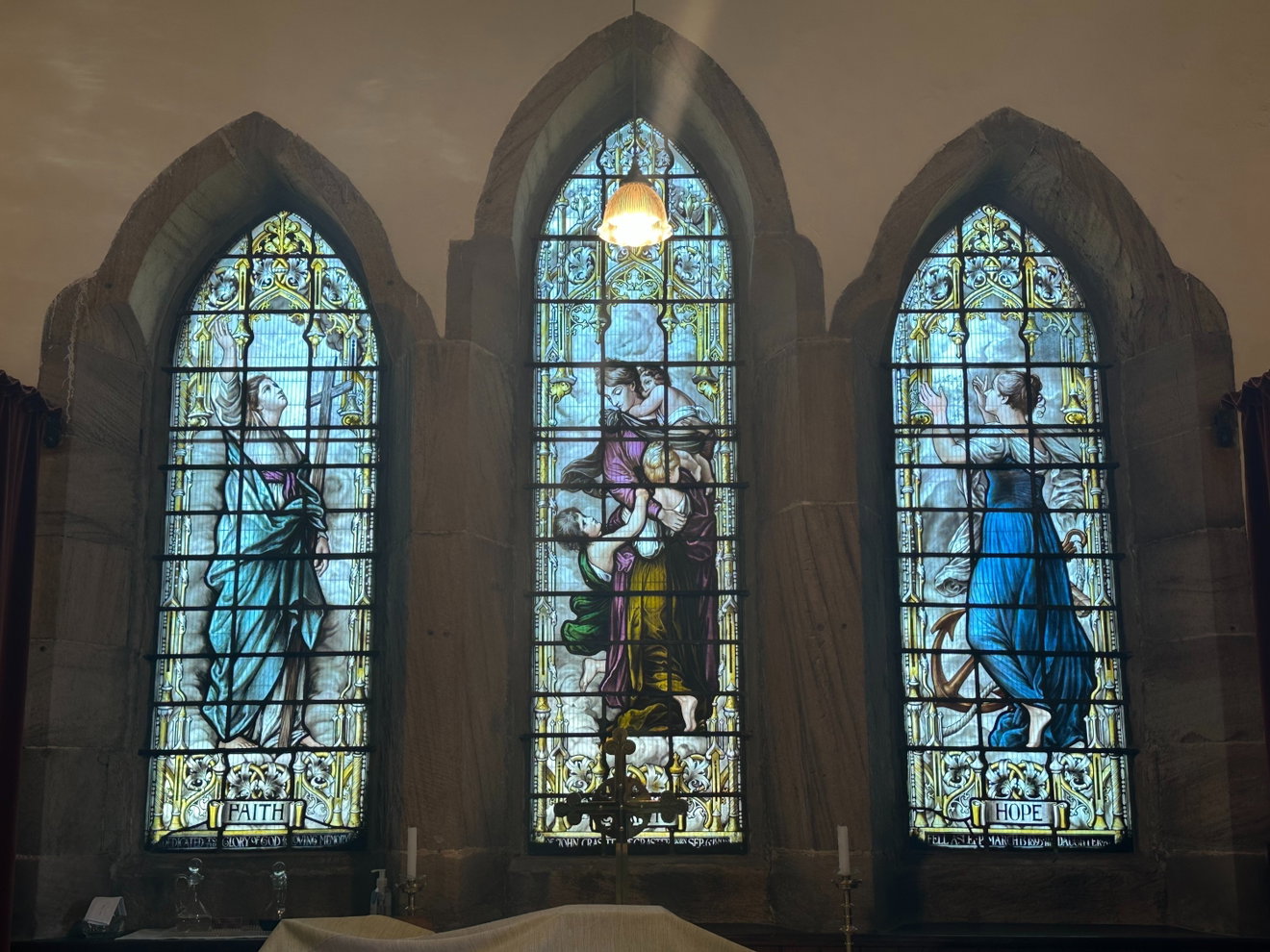
You're drawn to the East window, which shows the three theological virtues, Faith, Hope and Charity, which were directly copied from the West window of New College, Oxford, designed in 1778. Lady Harriet Sophia Burrard was the mother of the vicar of the Holy Trinity at Embleton, and was chosen by Sir Joshua Reynolds as a model for the initial stained glass at Oxford. She can be seen here in the centre, representing the Cardinal Virtue of Justice.
She must have been of exceptional beauty, as she was also painted by leading portrait painter Thomas Lawrence in her youth. The window was gifted by Amy Craster to commemorate the life of her father, John, who died in 1895.
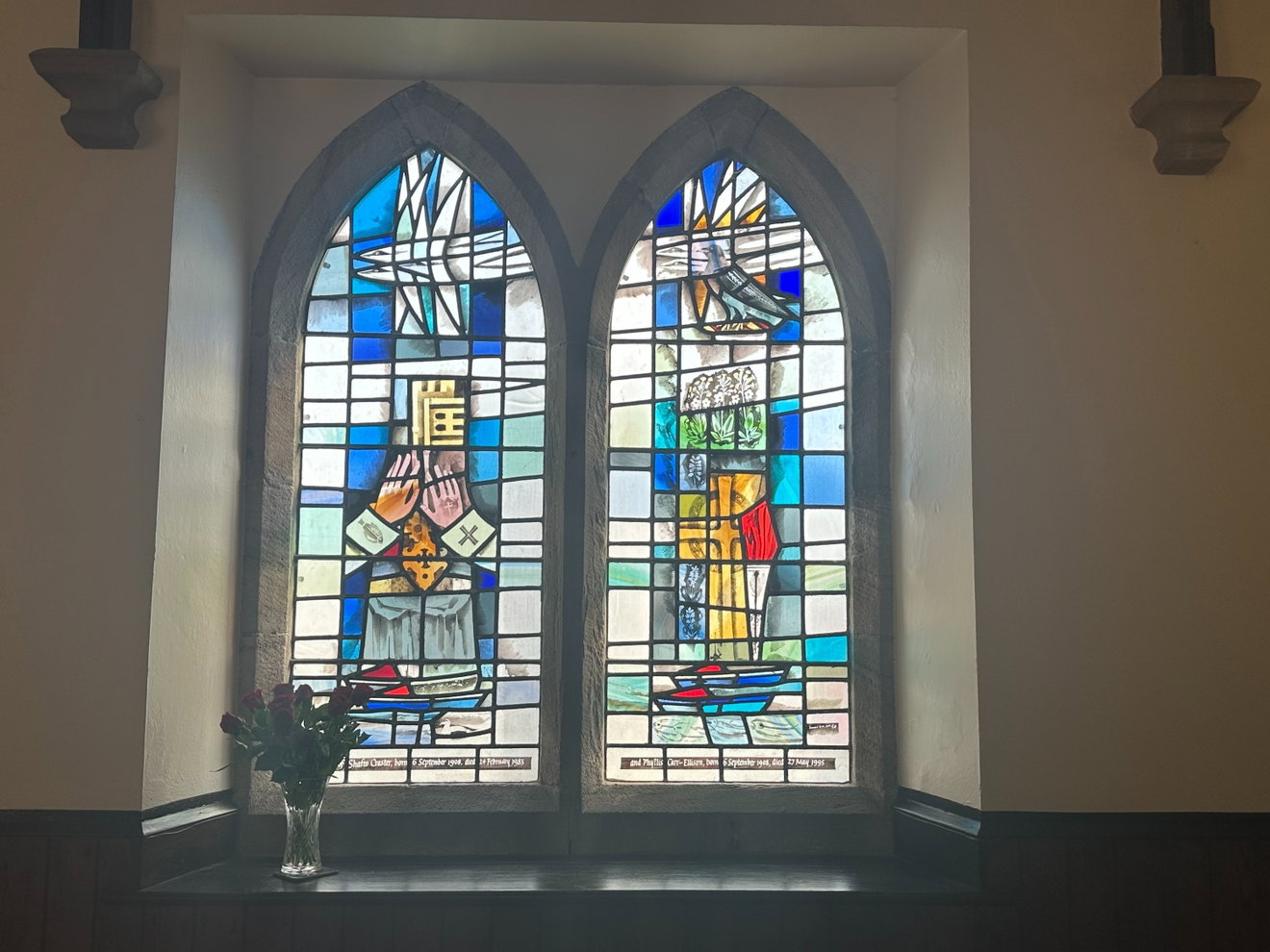
For me, though, the reason for my visit was the joy of the stained glass in the windows of North East adopted twentieth-century glass artist Leonard Evetts.
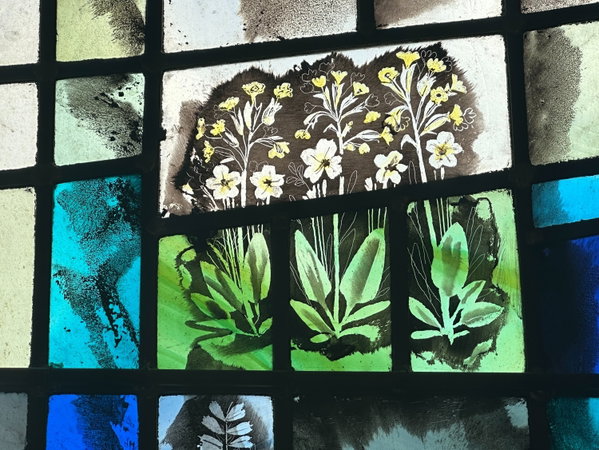
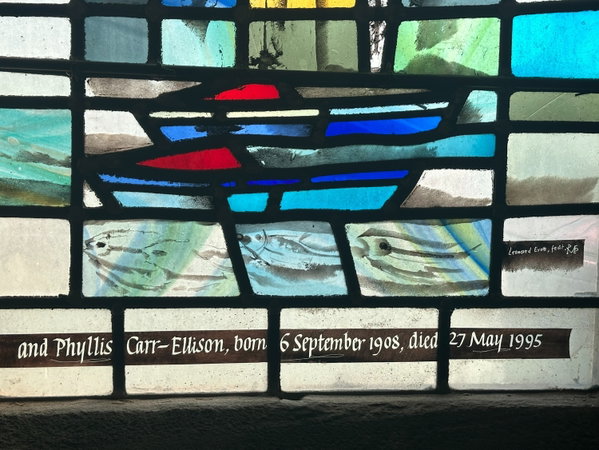
I really love his colour palette, his reflections on nature, environment, and the texture and tone he added to glass through his precise painting and use of ingredients and techniques.
These two windows are dedicated to twins, brother and sister Phyllis Carr-Ellison and Shafto Craster.
Evetts was an internationally renowned stained glass artist and calligrapher as well as a watercolour artist, painting many Northumbrian scenes. He started lecturing at King's College, Newcastle in 1937. It later became Newcastle University, and Evetts became the head of the School of Design.
I managed to track down one of Evetts' former students who studied under him at Newcastle University's Art Department in 1970 for three years. Phil told me -
As to his techniques, the ingredients of his oxide pigment mix might explain the textures he achieved. I was often told to go to the Fine Art Dept canteen to get stale milk for him. He used this as a binder instead of water and gum Arabic. I've never come across anybody else using this
Phill Crook - Vitrail Studios
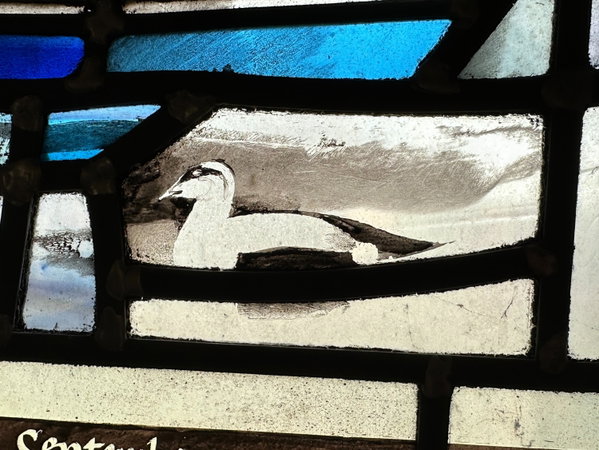
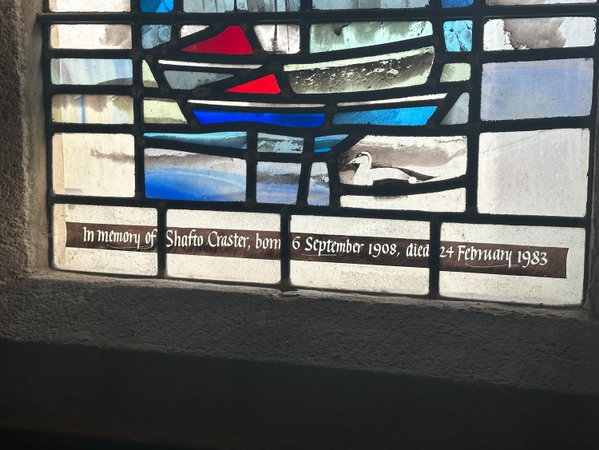
One of the things that draws me to Evetts' glass is his depiction of nature. I love the solitary Eider duck here, also known around the North East as Cuddy Ducks, an old Northumbrian name for them, giving a hat tip to the 7th-century bishop St Cuthbert, who lived on the Farne Islands. He encouraged them to nest near his living quarters on the island and ensured they were safe from harm from others.
Sea-swimming ducks would be a common sight in the North East seas. I love the way that through the smudging of paint, Evetts can suggest movement and buoyancy and the changes in weather and temperament on the North Sea.
Phil told me -
After drying on the glass, he would just rub the surface with his forefinger to get the grainy effects, sometimes breathing on the glass to soften the dried pigment.
Phill Crook - Vitrail Studios
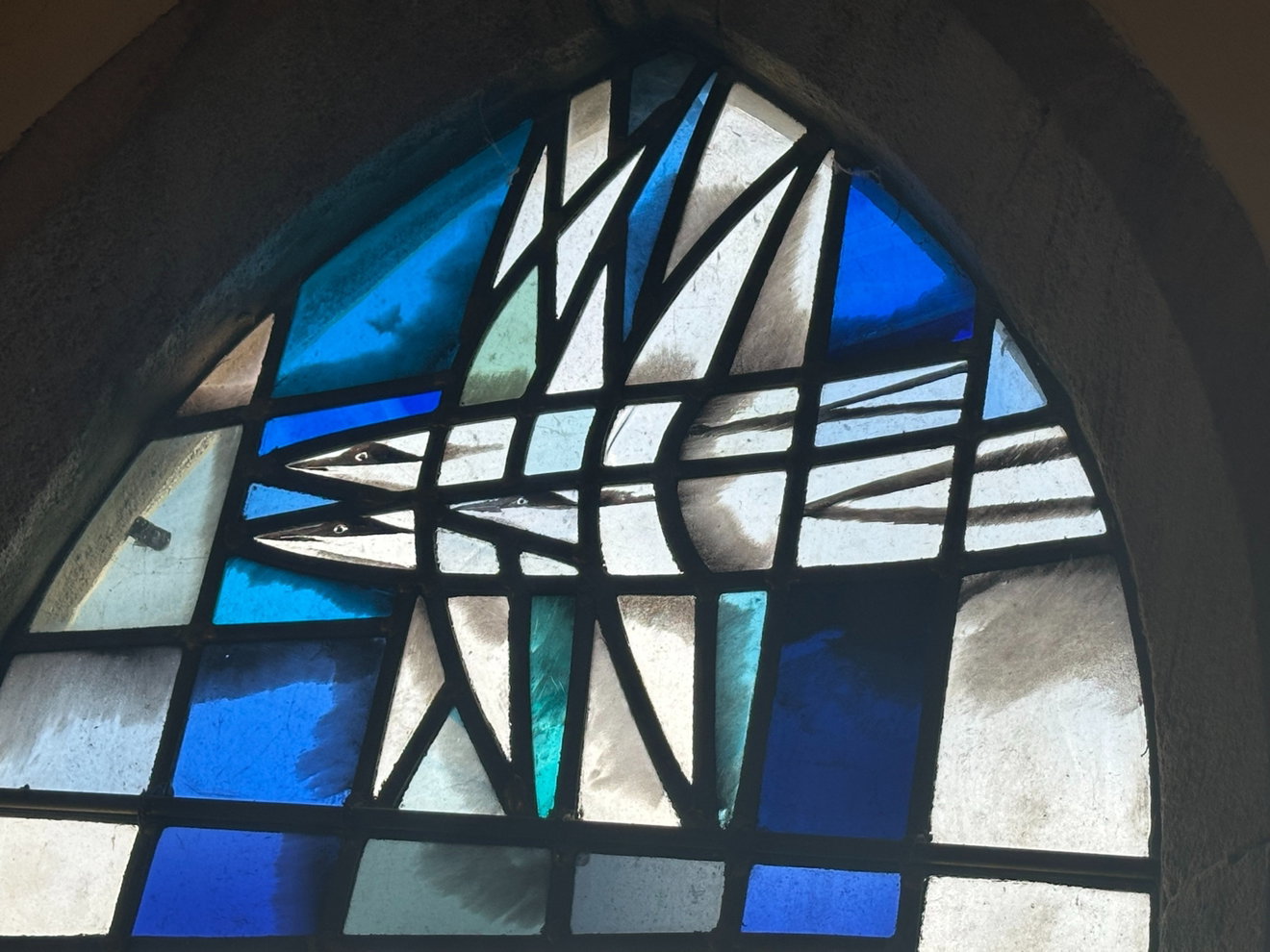
Then my eye was drawn to the flock of glassy swift, brief visitors to our shores who return for twelve weeks of the year to nest and breed before hurling themselves back into the skies to sub-Saharan Africa, depicted here in Evetts' work.
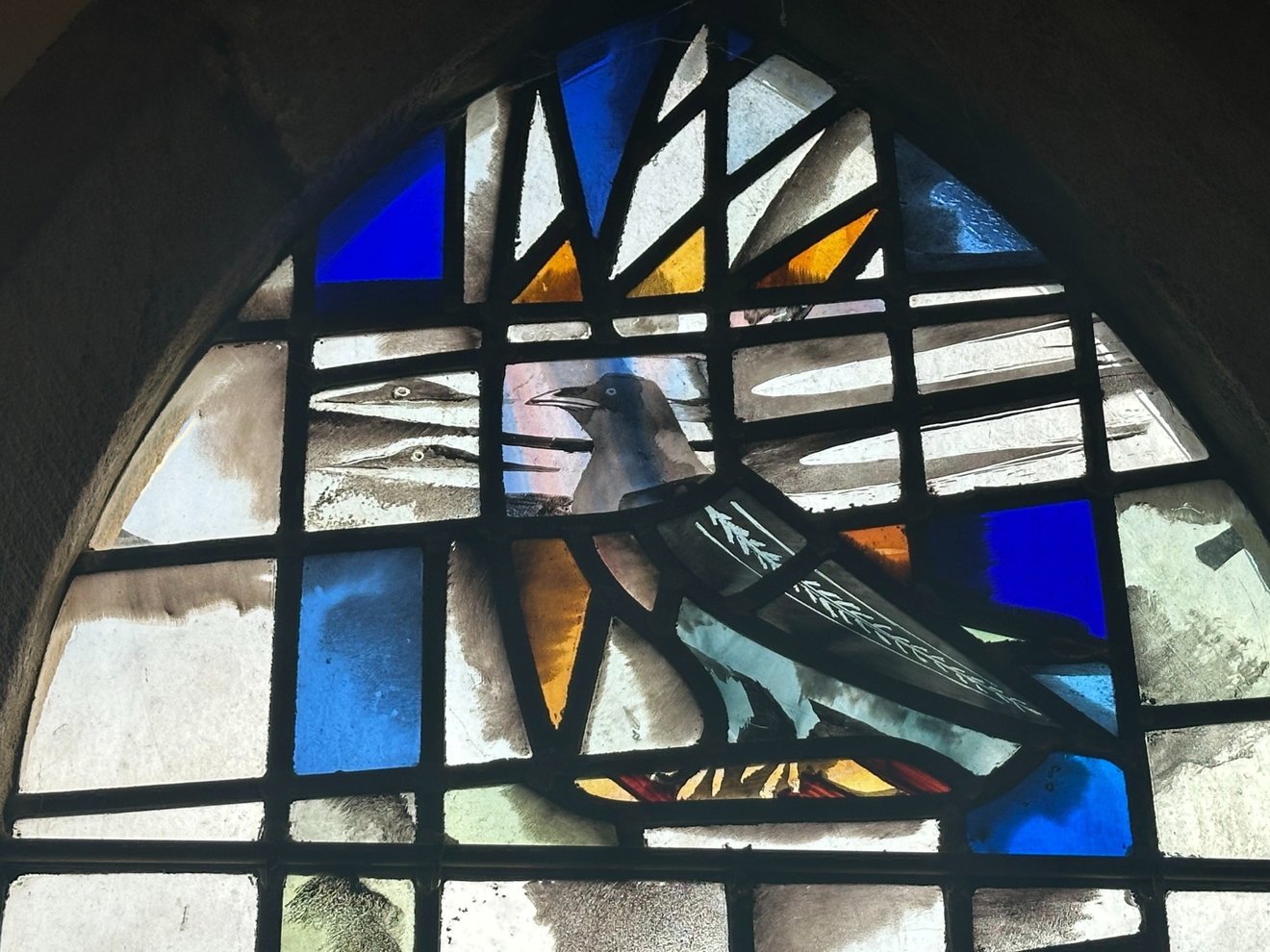
I like the way that one becomes two, and then maybe more, with a proliferation of wings, sharp and angular, cutting through the Craster skyline. You hear them before you see them, their shrill shriek swirling around the sky. And on the second window, the swifts sky is gatecrashed by a crow; maybe a Craweceaster quarry dwelling corvid. Phil explained about Evetts' use of outline -
He would paint the dark outlines first, as is normal practice, then place a wash over, after first firing the glass, with diluted oxide pigment and manipulate this layer when still wet with a badger hair brush to give graded levels of density, and when dry, with his finger and a pointed stick for textures and detail.
Phill Crook - Vitrail Studios
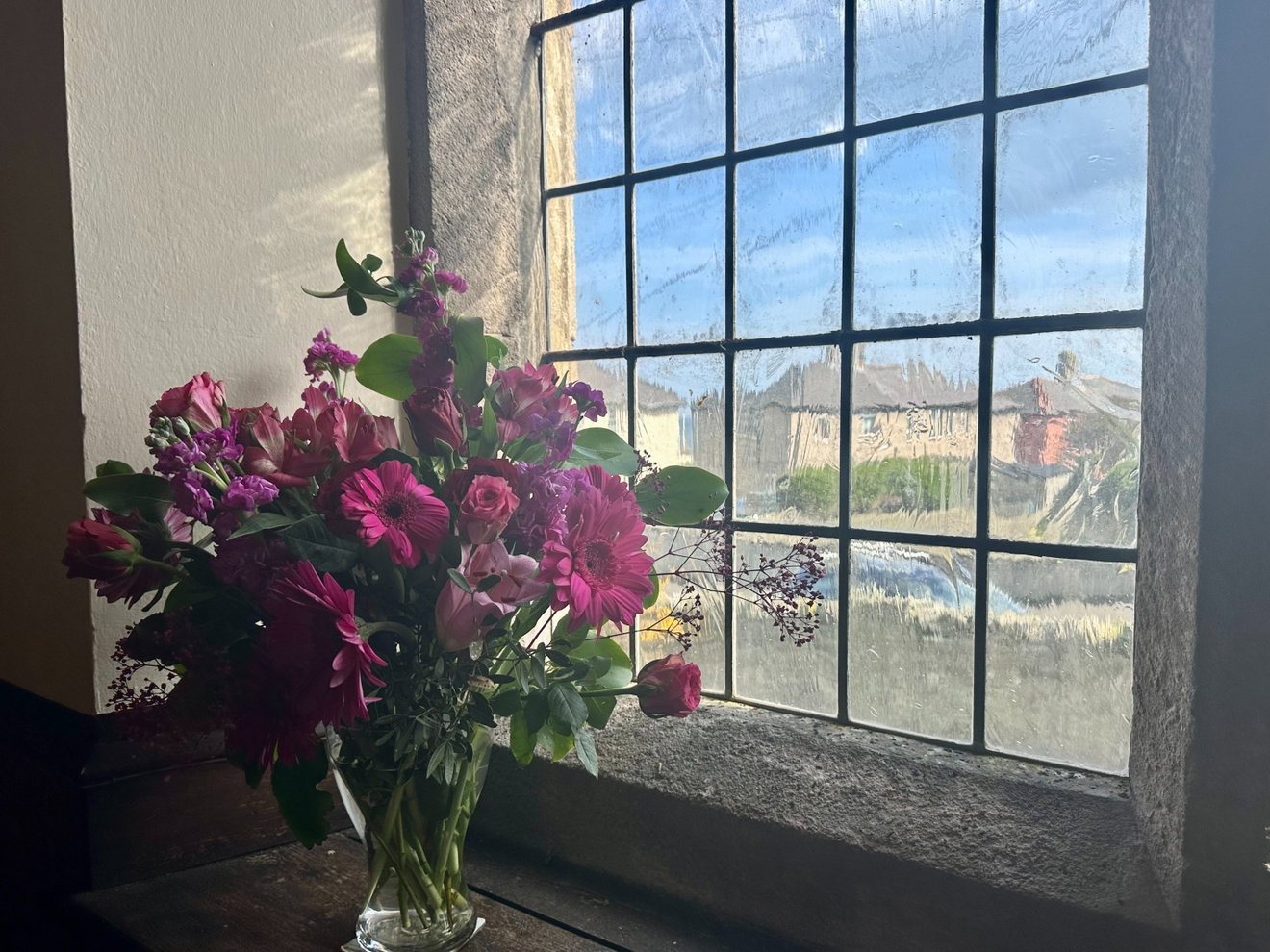
His techniques give a sense of motion to his work and create texture.
I love the plain, handblown glass with no colour or image. It has such beautiful movement to it, almost like transparent toffee cooling or thick ice on a pond. His main belief was that windows had a purpose
To let the light in.
Leonard Evetts
He aimed to move away from the heavy, dark imagery of Victorian windows. He hoped that, through his work, he'd achieve a different perception of light and shade according to the time of day, shifts in the weather, and seasonal changes in the environment outside, creating a backdrop for his work.
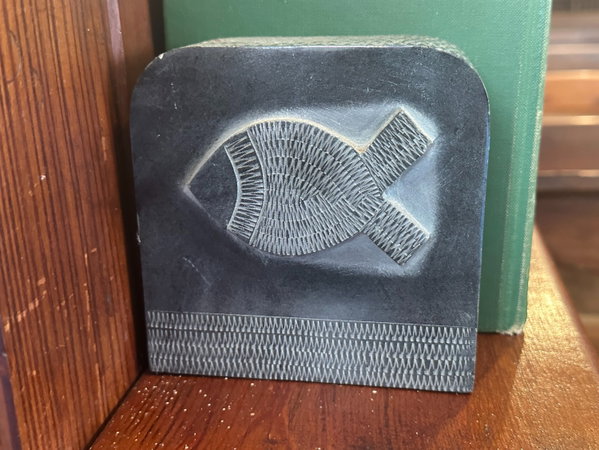
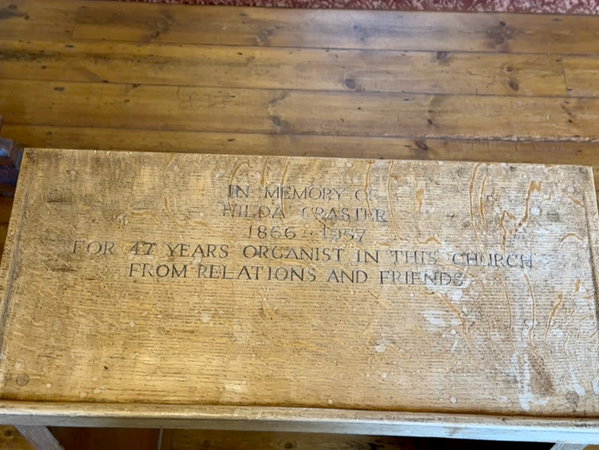
Then, inside, the tiny chapel is peppered with personalisation from the dolerite bookends to the reading desk designed by Robert 'Mousie' Thompson and gifted in memory of Hilda Craster who played the organ at the Mission for forty-seven years...such commitment.
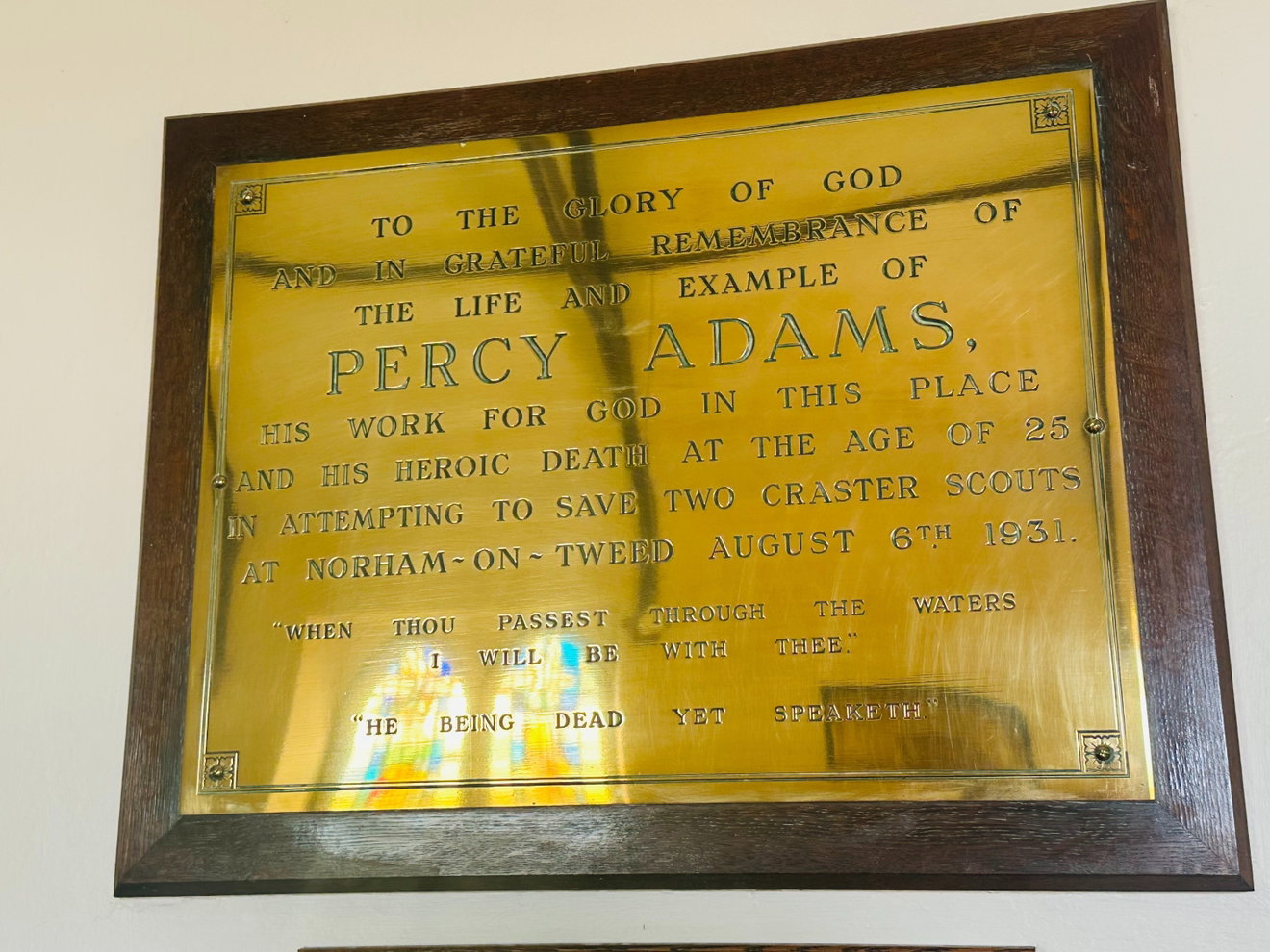
The sadness of loss is captured in brass, in memorial to a young scout leader, Percy Adams. He was brave beyond compare; aged only 25, he attempted to save two scouts, two brothers from Craster, in 1931, from the grasp of the Tweed at Ladykirk.
He lost his own life in the endeavour, and he and the two boys were found further downstream, him still holding on to them both and them both holding hands.
He was also a lay preacher at Embleton.
The brothers were 11 and 14. Adams and William Butters, the elder of the brothers, were both posthumously awarded The Bronze Cross, the highest award for bravery for the Scouts, for their attempts to save the youngest brother, 11-year-old Albert.
A small village, and even smaller chapel, but a tenacious and generous community. Even in the tiny, there is great.
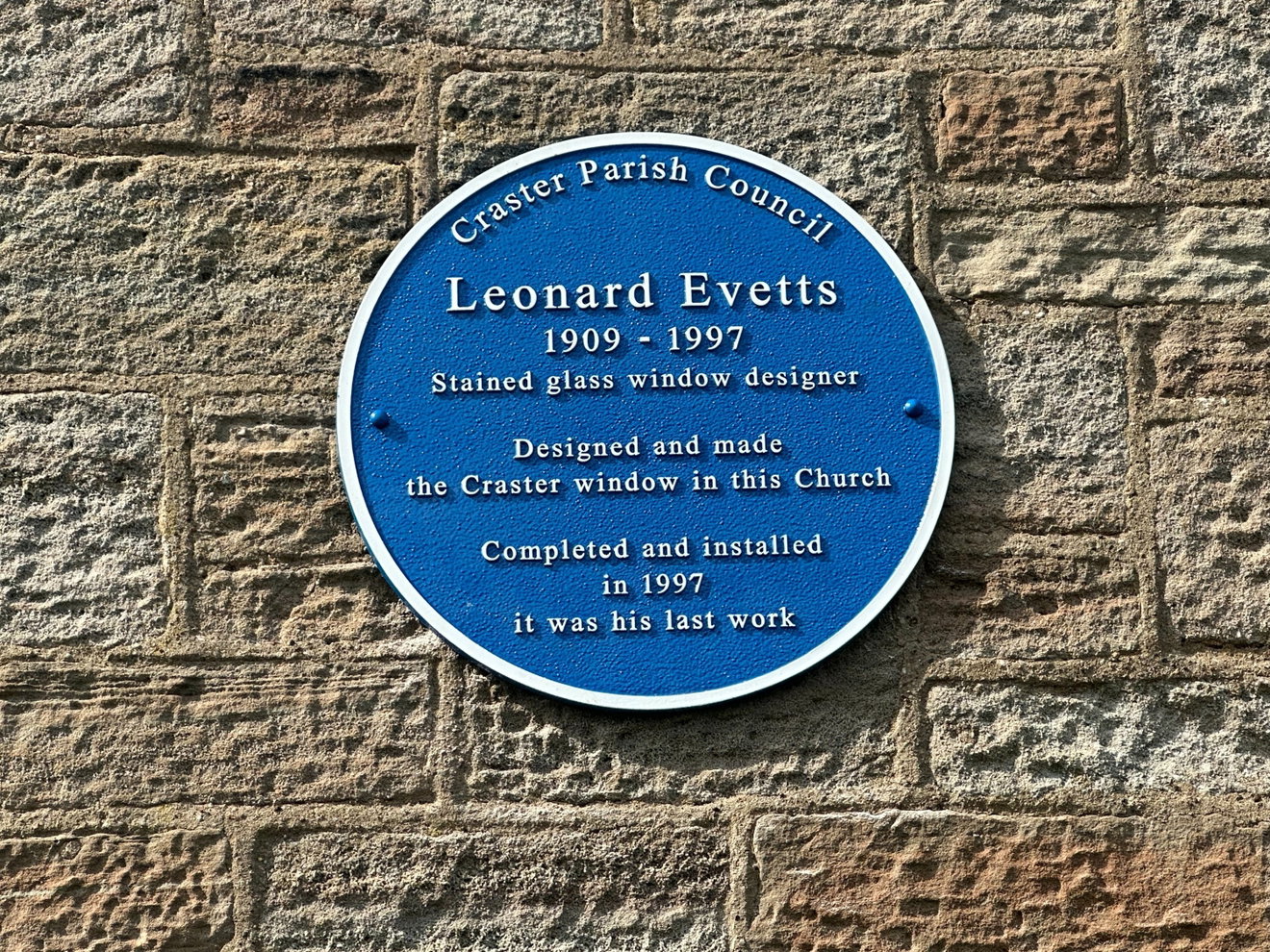
What made this doubly special for me was that this was the last commission Leonard Evetts took on before he died in 1997.
A blue plaque on the east-facing wall commemorates this; Evetts commemorated so many before this in the legacy of his glasswork.
In his lifetime, he made over 400 stained glass windows, which are dotted around the globe. The windows here were completed and installed in Craster just ten days before his death.
He was aged 88.
Get 3 points if you have visited this place. Already visited by 16 VIPs.
Login to bag this placeHelp fuel the next adventure
Fabulous North is free, with no annoying adverts and fuelled by an unhealthy desire to poke around castles, hills, churches and suspicious-looking bits of stone.
If you enjoy what we do, you can help keep us exploring.
Champion This Place
Got a special memory of St Peter The Fisherman, a story to tell or simply a soft spot for it? Champion St Peter The Fisherman and we'll add your name, photo and a short message to this page, while your support helps us keep Fabulous North exploring.
How To Find St Peter The Fisherman
Where Is St Peter The Fisherman?
Lat / Long
55.471586, -1.5935446
What three words
Where To Park For St Peter The Fisherman?
Lat / Long
55.471812, -1.596365
What three words
There is limited on-site parking mostly reserved for disabled visitors and church officials but there is a car park on the outskirts of the village with public toilets too.
Contributed by Jos Forester-Melville
Highland loving human. Thalassophile. I love a good smile. Happiest heading for the hills with my pickup filled with kids and dogs! Working four days, we enjoy a Fridate, and usually spend it scouting out new scenery. I love a gated track, a bit of off roading and if it involves a full ford, well, that gets extra points! I go nowhere without a flask and binoculars, and love the small things in life that make it big…Goldcrests, dry stone walls, Deadman’s fingers, blackberries and quality clouds.
More Places from Jos
More Places In Craster
Find more fabulous places in Craster, Northumberland and if you know of a place we haven't listed, then let us know.
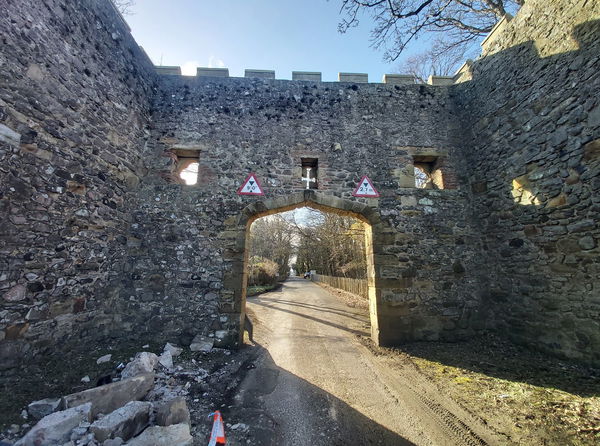
Craster Tower Gateway
Building Craster Northumberland18th century gateway to Craster Tower, now an iconic entrance to the village of Craster.
Hips Heugh Trig Point
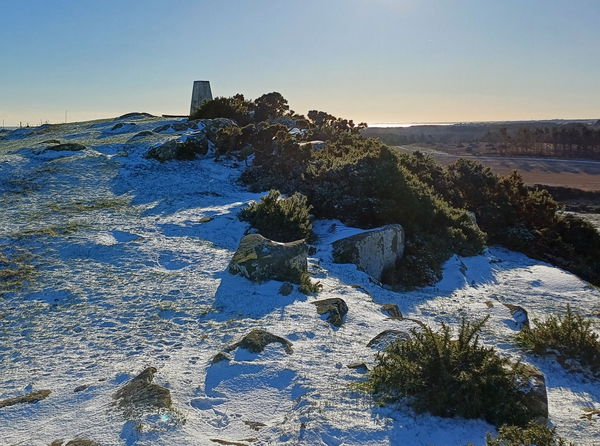
Trig Point Craster NorthumberlandThis is the trig point for Hips Heugh (58m) near Craster.
Embleton Quarry Nature Reserve
Landscape Craster NorthumberlandNature Reserve set in a former Whinstone Quarry in the village of Embleton
More Religious Places
So this religious place wasn't enough and you want more? Don't worry we have you covered.
Lady's Well
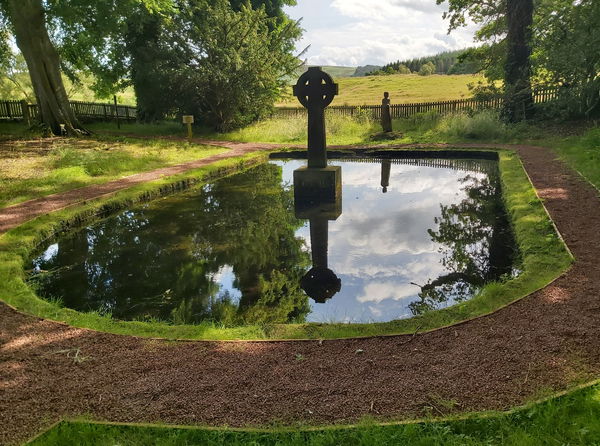
Religious Place Harbottle NorthumberlandAn atmospheric little pool surrounded by a grove of trees.
Old St. Helen’s Church
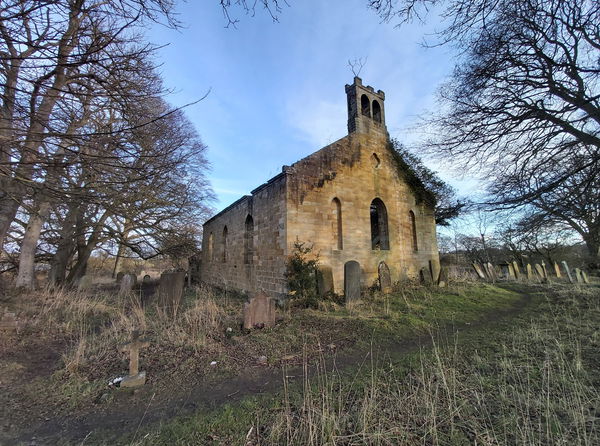
Religious Place Longhorsley NorthumberlandA ruined 18th century church currently being transformed by the local residents into another place for calm and reflection.
St Mary Magdalene Church Mitford
Religious Place Morpeth NorthumberlandA Grade I Listed Church in Mitford with a number of interesting architectural features and Grade II Listed tombstones and Lych Gate in the churchyard.
Never Miss A Fabulous Place
If you are afraid of missing out on all the fabulous places we post, or just want to be the first to know, then sign up to the Fabulous North.
Each week we will email you all the brand new places that we visit.
Sign Up To Alerts

Find Us On Facebook
We post all our new places daily on our Facebook Groups page, so join the group today and be notified when we add a new place.
Join Our Facebook GroupSt Peter The Fisherman was listed in Religious Place // Northumberland // Craster